Full detail · operator layer
← Back to chapter 10: Canada to US checklist12 · Canada to US checklist
What has to be true before the first jar crosses the border
Status as of 6 October 2026, from FDA, CBP, USDA and the US tariff schedule. Tariff rules changed several times this year; confirm the classification and origin with a licensed customs broker before the first entry.
Update from Plantd (after this research): Plantd is already listed with Lotus Light, which has moved almost no units, and there is no budget for a US broker. Read every Lotus Light step on this page as an existing listing that needs demand, not a future distributor. The no-broker plan is in the report's Distributors chapter.
- MustDrug-claim risk. In the US a product's intended use is set by its claims. A Canadian brand from Delta, BC (Bodywell Natural Skin Care) received an FDA warning letter on 27 March 2024 for claims like "Soothes Skin Irritation and Inflammation" and "Fast Healing of Wounds & Damaged Skin", and was put on an import alert. Aegeia Skin Care received one in 2017 for "healing … cracked or blistered skin". Plantd's "heals cracked skin and calms irritation", "anti-inflammatory", "Boosts collagen" and "Stimulates collagen + elastin" belong in the same family. Remove them from the site, the cartons and every listing.
- MustTariffs and USMCA. Canadian goods that are not USMCA-originating face an extra 10% under Section 301 (from 24 July 2026). Claim USMCA with a certification of origin to avoid it; a broker confirms the chapter 33 origin rule. A separate Section 338 duty of +50% (from 22 August 2026, no USMCA exemption) covers headings 3304.10, 3304.20 and 3304.30, but not 3304.99, where creams, balms and oils normally classify (MFN rate: free). Correct classification is worth a lot of money; get a written classification from the broker.
- MustImporter of record. Distributors and Amazon expect duty-paid delivery to US warehouses. Plantd either acts as a non-resident importer (CBP Form 5106 and a continuous bond) through a US customs broker, or uses a US 3PL that acts as importer. A US warehouse is practically required for Amazon, Faire speed, Lotus Light reorders and UNFI or KeHE appointments.
- MustDe minimis is gone. Duty-free treatment for low-value parcels has been suspended for all countries since 29 August 2025, and statutory termination follows on 1 July 2027. Every cross-border direct-to-consumer parcel is now a dutiable entry, which supports moving US stock into a US warehouse.
- MustMoCRA registration and listing. A foreign manufacturing facility registers with FDA and names a US agent physically in the US; each product is listed with its ingredients within 120 days of marketing, through Cosmetics Direct, and updated yearly. Businesses with under $1 million average annual US cosmetic sales are exempt from registration, listing and GMP, unless a product regularly touches the eye area. Marketing the cleansing balm as an eye-makeup remover could remove the exemption Estimate. Serious adverse events go to FDA within 15 business days.
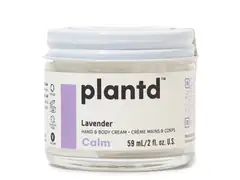
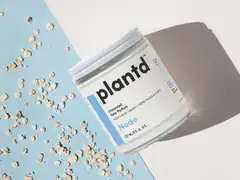
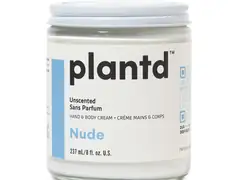
- MustUS label. Net quantity by weight for creams, balms and scrubs ("Net wt. X oz (X g)") in the bottom 30% of the front panel; fluid measure only for the oil ("1 fl oz (30 mL)"). Today's "60 ml" and "8 fl. oz." statements do not fit US practice for creams. Ingredients in English common names ("Water (Aqua)" rather than "Aqua/Water/Eau"); a US address, phone or website for adverse-event contact; "Made in Canada" in English. If French appears, every required statement must also appear in French.
- MustOrganic claims. Below 70% certified organic content, USDA rules allow "organic" only in the ingredient list (the asterisk Plantd already uses), never on the front panel, and no seal. Whole Foods applies the same rule. Cosmetics are outside the Canada Organic Regime entirely, so no Canada Organic logo either.
- DoInsurance. Product liability naming the buyer as additional insured: $2 million per occurrence for Threshold; $1 million/$2 million is the common retail floor.
- DoBarcodes. 11 of 12 UPCs pass the check digit, but the Spa 2 oz code (628942537016) fails: check it against the printed label and correct it now. Then confirm the GS1 licensee name matches "Plantd Skincare" exactly before Amazon and distributor item setup.
- MustDating and shelf life. Threshold needs the greater of 75% of dating or 18 months left at delivery; UNFI and KeHE need 75%. A 24-month cream must reach Threshold within 6 months of being made. Confirm the expiry date and stability data, and produce to purchase orders.
- DoSupplier documents before any retail pitch: bio-based origin for 1,2-hexanediol and propanediol, natural vanillin, plant-derived cetyl alcohol, and an IFRA certificate for each scent.
- CheckEntry review. FDA reviews imported cosmetics at entry and can refuse them for drug claims or labelling. Prior notice applies to food only, and ISF only to ocean freight, so neither applies to a truck shipment of cosmetics.
- CheckComing rules. FDA's fragrance-allergen labelling rule and the cosmetic GMP rule are both behind their statutory dates and not yet final. Plantd already declares allergens, which puts it ahead.
Other full-detail pages
- Who Plantd is: the 160 doors, social channels, the claim to fame, our verdict
- Every product: facts, ingredients, pains, wording, every review
- The full pain-point map (30 pains × 11 formulas)
- Buyer research: the avatar, six buyer types, evidence and awareness
- Positioning detail and the six candidate mechanisms
- Competitor deep dive: Meta ads and product pages
- Website audit, rebuild plan and page blueprints
- Meta account method, landing views and the 10 ads with copy
- Channel economics, Amazon comps, fees, listing copy and A+ plan
- US retail standards and entry routes
- Distributor profiles, terms and the price waterfall
- Canada to US regulatory and logistics checklist
- Phase plan, risks and questions for Plantd
- Sources, method, fact vs estimate, and all 324 customer quotes