01 · Jessica Whitney · Zenther BeetWise (beetroot nitrate capsules), "save up to 60%", 90-day guarantee · Health & Wellness · 154 days · listicle
Format. About 2,800 words. First-person persona ("Jessica Whitney", grandmother with hypertension), signed twice ("-Jessica Whitney") plus P.S. and P.P.S. Fake-persona signals: page name is a person's name, novelistic dialogue with named doctors (Abrams, Kessler), husband David, flawless scene writing. Short paragraphs, many one-line beats ("Negligence.", "Nineteen minutes."), no emoji, BP readings used as their own lines. Back third switches to headed sections ("## Why three brands of beetroot didn't work") like a sales letter.
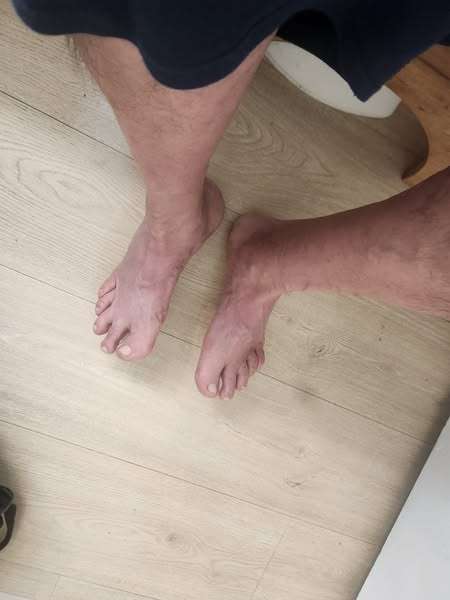
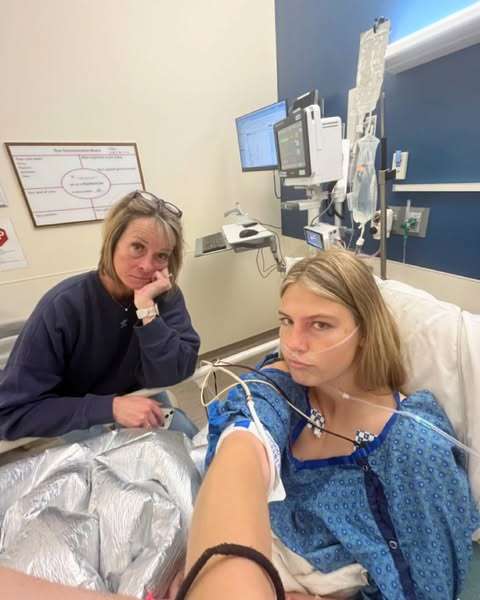
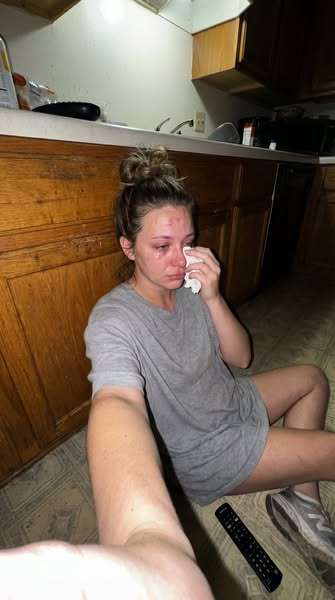
Image. UGC phone photo from a patient's seat in an empty exam room: denim leg and Birkenstock in frame, cabinets, wood floor. No product, no text. Stops the scroll because it looks like a friend's waiting-room post, and it sets up "something happened at the doctor's office" before a word is read.
Hook. "I've been labeled "non-compliant" by two doctors. I wear it as a badge of honor. Here's the medication I refused and what brought my blood pressure from 149/97 to 128/81 in 12 weeks." Mechanism: defiant confession + enemy (doctors) + precise before/after numbers + open loop (what brought it down).
Story spine. Family wound (mother died of stroke on meds) → kind slow doctor leaves → cold new doctor, "non-compliance" threat, Lisinopril slid across the counter → husband: "What if they're both wrong?" → 3 AM research, side-effect fear → discovery of beetroot nitrates → failed alternatives named by brand (HumanN SuperBeets, Nature's Way, Force Factor: "Three brands across seventeen weeks. Over two hundred dollars") → chance encounter with a "Clinical Nutritionist" in Whole Foods who explains heat processing → product named (BeetWise by Zenther, word ~1,226 of 2,837, 43%) → 19-minute felt effect → week-by-week cuff readings → triumph scene in doctor's office, doctor reads the COA and backs down → zoo with grandkids → 4-point "why this one works" section → 90-day guarantee → two-paths close → P.S./P.P.S. CTA.
Persuasion devices. Relentless specific numbers (136/88 in 2018, 141/90, 145/93, 149/97, 146/94 at 19 minutes, 133/84, 128/81). Named villain doctor with dialogue ("Whoever told you that was sufficient was being reckless with your life"). Named competitor brands as failed alternatives. Mechanism: "Cold-extracted" vs "high-heat spray drying" kills nitrates; dose gap "400 to 500 milligrams" in trials vs "ten to fifty" on shelf. Third-party authority (nutritionist, COA). Self-measurement proof ("You measure it yourself"). Objection: "How would I know it was working?" Guarantee: 90 days, "No questions, no return-shipping fees". Urgency in P.P.S.: "Every day spent waiting for two doctors to agree is another day your numbers stay where they are."
Link card + lander. Headline "I wear Non Compliance Like A Badge of Honor"; description "400mg verified nitrates per serving not 5mg like most brands... 90-day guarantee"; CTA "Learn more". Lander is a 5-reasons listicle ("5 Reasons Why Health-Conscious Adults Are Going Crazy Over This Natural Supplement"), each reason opening with a "You know that..." pain moment, then 4 short "Verified Buyer" reviews, "Order Now And Save Upto 60%", Shop Now. Does not repeat the story; restates the mechanism. No price shown in the captured text. Screenshot top shows product bottle with four callouts (cold extraction, 400mg, organic, third-party tested).
Steal this.
- Failed-alternatives-by-name with duration and dollars ("Three brands across seventeen weeks"). CHL: name the regular folic acid / drugstore B-complex she tried; Wonder: name the minoxidil/biotin she tried.
- Overheard-expert discovery scene that delivers the mechanism as dialogue. CHL (pharmacist explaining folic acid vs methylfolate and MTHFR) fits perfectly.
- "Bring your own data" triumph scene where the dismissive authority goes quiet. CHL (doctor who said "it's just stress"); Wonder (stylist who noticed).
- Two-stage proof: a fast felt signal, then a measurable result. CHL (fog lifts first, then focus); RAW could use "first night someone asks what you're wearing".
Weakness. Persona and doctors are clearly fictional; telling readers to refuse prescribed BP medication and a "19 minutes" BP drop claim is serious health-claim and Meta policy risk. Lander's "save up to 60%" and generic reviews undercut the story's specificity.
I've been labeled "non-compliant" by two doctors. I wear it as a badge of honor. Here's the medication I refused  and what brought my blood pressure from 149/97 to 128/81 in 12 weeks.

For eleven years my doctor was a man named Abrams. He watched my numbers climb year over year  136/88 in 2018, then 141/90 by 2020, and 145/93 by 2022. Every visit ended the same way. He'd close the chart and tell me we still had time. Diet, exercise, managing the stress, and we'd be fine.

I trusted him completely. He'd been in the room the night my mother died of a stroke at sixty-three. Her blood pressure medication never saved her, and he was the one person who knew the word "prescription" turned my hands cold every time someone said it out loud.

Then he moved his practice to Arizona.

His replacement was a woman named Dr. Kessler. Late thirties, wire-rimmed glasses, the kind of mouth that had never quite learned how to smile. My first appointment with her was supposed to be a handshake.

She opened my chart on her laptop and read it in silence for almost a full minute before turning the screen toward me.

"Five years of climbing numbers. No intervention from your previous physician. Walk me through this."

"Dr. Abrams was monitoring it. We were trying lifestyle changes."

She repeated "lifestyle changes" the way you'd say the name of a food that had gone bad in your refrigerator. "You're at 149 over 97. Stage 2 hypertension for two years. Whoever told you that was sufficient was being reckless with your life."

I tried to explain my mother. The word "stroke" barely cleared my mouth before she cut me off.

"That's exactly why you should have been on medication years ago. Not in spite of your mother's history. Because of it."

She printed a Lisinopril prescription, 10 milligrams, and slid it across the counter toward me.

"I don't want Lisinopril."

"Mrs. Whitney, if I let you walk out of this office unmedicated, I'm repeating the exact negligence your previous doctor committed."

Negligence.

That word hit me harder than the diagnosis. Dr. Abrams had held my hand at my mother's bedside the night she died. He called my house the week after the funeral to make sure I was eating. The first time a single elevated reading sent me into a panic, he sat in his office with me for forty-five minutes until my hands stopped shaking. To this stranger across the room from me, he was a negligent physician.

"Your refusal will be documented as non-compliance against medical advice."

The printer hummed. The paper landed face-up on the counter. She watched me to see what I'd do.

I picked it up. Walked out of the building. Drove home with the prescription on the passenger seat and didn't touch it once after I dropped it on the kitchen counter.

That night David found me at the kitchen table at midnight with my laptop open. The prescription was still where I'd thrown it five hours earlier.

"What are you doing?"

"Trying to figure out which one of them is right."

"About what?"

"Dr. Abrams said we had time. Dr. Kessler said he nearly killed me. They were looking at the same chart, the same numbers. One of them spent eleven years telling me to be patient. The other spent nine minutes accusing him of malpractice."

David sat down across from me. He's a quiet man  he thinks before he speaks  and it took him a long time to answer.

"What if they're both wrong?"

I looked up at him.

"What if Abrams was too slow and Kessler is too fast? What if neither one of them is giving you what you actually need?"

I didn't sleep that night. By 3 AM I had four browser tabs open on the kitchen table.

is 149/97 dangerous without medication

lisinopril side effects long term kidney

amlodipine stroke prevention real world data

Every article confirmed both fears at once. Stage 2 hypertension compounds organ damage quietly over years. Lisinopril carries its own price tag  dizziness, a chronic dry cough that some patients live with for the rest of their lives, kidney strain over time.

My mother surfaced as I read. Nine years on Amlodipine. Puffy ankles that never went down. A woman who gardened every morning, suddenly unable to make it up the porch steps without resting twice. The afternoon she fell in her own bathroom and broke her hip. Eight months after that, a stroke took her at sixty-three  while she was still on the pills that were supposed to be protecting her.

The medication managed her numbers. It didn't save her life.

I closed the laptop. The prescription was on the counter. I could see it from where I was sitting.

I didn't fill it.

Dr. Kessler's office called four days later, then again the following week.

"Mrs. Whitney, the doctor wants to confirm you've started the Lisinopril."

"Tell her I'm exploring other options."

"She strongly advises against delaying treatment."

I hung up.

That weekend I spent twelve hours researching at the kitchen table. The same word kept coming up  beetroot. Dietary nitrates. Nitric oxide pathway. University trials showing real systolic blood pressure reductions in older adults.

So I started buying.

HumanN SuperBeets first. The brand from the TV commercials. Six weeks at the recommended dose.

148/96. One point off the top.

Nature's Way Beet Root next. The Amazon top seller. Seven weeks at the listed dose.

147/95. Still solidly Stage 2.

Force Factor Total Beets from Walmart. Five more weeks.

The number didn't move at all.

Three brands across seventeen weeks. Over two hundred dollars in supplements that did nothing. My follow-up appointment with Dr. Kessler was nine days away.

I pictured walking into her office at the same number she'd written down at our first meeting. Her hand pulling up the chart. The word "non-compliance" coming out of her mouth a second time.

Seven days before that appointment, I was standing in the supplement aisle at Whole Foods holding a bottle of beetroot powder I'd already finished and replaced twice.

A man beside me was talking to a younger woman. His voice cut through the background.

"the nitrates are dead before they reach you. Heat processing kills them. That's why most of these don't work."

I turned. "What did you just say about heat processing?"

He looked at me. Sixties, calm, with a name badge that read "Clinical Nutritionist."

"Sorry. Habit. I was telling my niece why her mother's beetroot supplements aren't doing anything." He picked up a bottle off the shelf  the same brand I'd just put back. "Most of these are made with high-heat spray drying. It's cheap to manufacture, but the heat destroys dietary nitrates, which are the actual compounds that lower blood pressure."

"I've taken three different brands across four months. Not a single number moved."

He nodded the way someone does when they've heard the same sentence a hundred times. "Because the clinical research showing real reductions used 400 to 500 milligrams of dietary nitrates per day. Most of these contain ten to fifty. Whatever survived the labeling got killed by the heat anyway."

Four months of taking dead supplements. The aisle felt warm.

He pulled out his phone and tapped a name on his screen. "BeetWise by Zenther. Cold-extracted, so the nitrates survive processing. Standardized to 400 milligrams of dietary nitrates per serving  the actual clinical dose from the studies. They publish their full Certificate of Analysis with third-party lab results, exact nitrate content per batch, heavy metal screening. Everything most companies hide on purpose."

"How would I know it was working?"

"You'll feel it within twenty minutes the first time you take it. Energy, mental clarity. That's the nitric oxide pathway opening up  proof it reached your bloodstream. Then over two to four weeks your pressure drops on the cuff. You don't have to guess. You measure it yourself."

I ordered a bottle on my phone standing right there in the aisle.

It arrived two days later. I took the first dose with breakfast, sat down at my kitchen table with my hand on my coffee cup, and watched the second hand on the wall clock.

Nineteen minutes.

Then something shifted behind my eyes. The fog that had been sitting there for months lifted in one slow exhale. The pressure in my chest that had been there since Dr. Kessler's office four months earlier loosened, like someone had been leaning a forearm into my sternum and finally stepped back.

I checked my pressure.

146/94.

Three points off the top, three off the bottom, in nineteen minutes.

I checked again the next morning. Same chair as always, same arm, just after waking up.

143/91.

The week after that: 139/88. Below 140 over 90 for the first time in three years.

David noticed before the cuff did. He came home from work to find me upright at 8 PM, suggesting we walk to the park instead of collapsing on the couch.

"Something's different about you."

"Something's working."

Two weeks: 136/85.

Three weeks: 134/84.

The night before my appointment with Dr. Kessler I checked four times in twenty minutes. 134/84. 133/85. 132/83. 134/84. Below 140/90 every reading. Out of Stage 2 entirely for the first time since 2022.

I drove to her office with my home BP log printed out and folded inside my purse.

The nurse wrapped the cuff around my arm in the exam room. The machine pumped, beeped, and posted a number on the screen. She paused, wrote it down, took the cuff off, waited a minute, and did the whole thing again. Same result both times.

133/84.

She left without saying anything.

Dr. Kessler walked in. She pulled up my chart on her laptop, scanned the screen, looked up at me, then back at her laptop.

"133 over 84."

"Yes."

"You started the Lisinopril."

"No."

Her jaw tightened. "Mrs. Whitney "

I cut her off this time.

"I found a cold-extracted beetroot supplement standardized to 400 milligrams of dietary nitrates per serving. Third-party tested with a published Certificate of Analysis. Sixteen points off my systolic in four weeks."

I pulled the BP log out of my purse and laid it down on her desk.

She stared at it. Then turned to her keyboard and pulled up the BeetWise website on her own monitor. Read the research citations, scrolled through the lab results, opened the COA, and clicked into the full dose disclosure with the batch numbers.

A long silence.

"Continue what you're doing. We'll recheck every eight weeks. If this holds, no medication."

If this holds, no medication.

I sat in my car in the parking lot and called David.

"133 over 84. No prescription."

He exhaled  a long, shaking breath I could hear through the phone. "Jessica. You did it."

"Nobody did it for me. Not Abrams. Not Kessler. I had to bring my own data."

That was twelve weeks ago.

This morning's reading was 128/81. Normal range. Stable. Still no Lisinopril.

Last weekend David and I took our grandchildren to the zoo. Six hours on our feet, hauling a two-year-old on my hip when she got tired. I didn't get winded once. I didn't sit down on a single bench.

My granddaughter pointed at the flamingos and shouted, "Grandma, your cheeks are the same color as them!"

David laughed. "That's circulation, sweetheart."

I laughed too. Because he was right.

If you're reading this, you know exactly what it feels like to be told your gut is wrong by a doctor who doesn't have to live in your body. You've sat on the exam table while someone explained why you should be afraid of your own choices. And the word "non-compliant" written on a chart by someone who's known you for nine minutes? You know that one too.

Here is what I want you to know:

Dr. Abrams made me feel safe. Dr. Kessler made me feel reckless. They were looking at the same chart, the same numbers, the same five-year trend. Neither of them gave me what I actually needed.

I found it without them.

A supplement formulated correctly. Cold-extracted so the dietary nitrates survive processing. Dosed at the clinical amount the actual research used. Tested by a third-party lab that publishes its results in writing.

My blood pressure went from 149/97 to 128/81 in twelve weeks. My doctor monitors me every eight weeks now and writes nothing.

"Non-compliant" is still on my chart. I stopped trying to get it removed. It's the most accurate word anyone has ever used to describe me.

 -Jessica Whitney

## Why three brands of beetroot didn't work  and why this one did

I tried HumanN SuperBeets, Nature's Way Beet Root, and Force Factor Total Beets across seventeen weeks. None of them moved my numbers. Here's what I found out afterward, and what makes BeetWise different.

### 1. Cold-extracted, not heat-destroyed.

Standard supplement manufacturing uses high-heat spray drying because it's cheap and fast. The heat also destroys dietary nitrates  the actual compounds that lower blood pressure. By the time the powder hits the bottle, the active ingredient has already been killed.

BeetWise uses a cold-extraction process that preserves the heat-sensitive nitrates intact. They survive the bottling and reach your bloodstream when you swallow the dose.

I felt the difference at minute nineteen of my first capsule. My monitor confirmed it the next morning.

### 2. Standardized to 400 milligrams of dietary nitrates per serving.

The university trials showing real blood pressure reductions used between 400 and 500 milligrams of dietary nitrates per day. Most beetroot supplements on the shelf contain 10 to 50 milligrams.

BeetWise delivers 400 milligrams in every dose  the clinical amount, the dose from the studies the other brands quote on their packaging without ever matching.

### 3. Third-party tested with a published Certificate of Analysis.

BeetWise publishes everything: the COA, the exact nitrate content per batch, the heavy metal screening, the organic certification.

When I sat back down across from Dr. Kessler, I had the documentation in my purse. She pulled it up on her own monitor. That's why she capitulated.

### 4. Two-stage proof you can measure on your own kitchen table.

Within fifteen to twenty minutes of the first dose, you'll feel an energy lift and mental clarity  proof that the nitric oxide pathway is activating. Over the following two to four weeks of daily use, your home blood pressure cuff will show a measurable, repeatable drop you can write down every morning in your own notebook.

You don't need to trust a manufacturer's marketing. You measure it yourself, every day, at your own kitchen table.

## Try BeetWise for up to 90 days.

Track your blood pressure once a week.

If your numbers don't move, if you're not satisfied for any reason  full refund. No questions, no return-shipping fees, no fine print to read.

The risk is on them.

You're caught between two voices right now. One says wait. The other says medicate. Neither one is offering you a path that feels like it's actually about you.

Path one: take the prescription. Hope the side effects don't catch you the way they caught your mother. Hope the numbers come down without the trade-offs everyone in your family already paid.

Path two: try a supplement formulated to clinical specifications, track your own numbers across eight to twelve weeks, and walk into your next appointment with the data printed out on paper.

I chose path two.

My doctor respects my choice now  not because she changed her mind about supplements, but because I brought her something she could not argue with.

Twelve weeks ago I was sitting on an exam table being told I was reckless with my own life. This morning my pressure was 128 over 81 and the woman who told me that is monitoring me without writing me another prescription.

If you're stuck between two opinions and neither one feels like yours, try this. Track your numbers honestly across four weeks. Print the log out and bring it to your next appointment.

The data is louder than any doctor's voice in the room.

- Jessica Whitney

P.S. I felt the first effect at minute nineteen. My pressure dropped under 140/90 by week two. It hit normal range by week three. I brought the printed log to my appointment at week four and walked out without a Lisinopril prescription. Bring your own data to your next appointment. See what your doctor does when the numbers are sitting on her desk in front of her.

P.P.S. Every day spent waiting for two doctors to agree is another day your numbers stay where they are. Stop waiting. Order BeetWise. Track the data. Bring the proof.
ZENTHER.CO
I wear Non Compliance Like A Badge of Honor
Zenther Beetwise, 400mg verified nitrates per serving not 5mg like most brands. Cold-extracted beetroot supplement with published lab results. 90-day guarantee. Try BeetWise today.
Learn more
Close
02 · Supacore Performance · Supacore CORETECH® POTS compression leggings/shorts ($107 to $157), 30-day risk-free trial · Health & Wellness · 94 days · other (collection page)
Format. About 210 words. Brand voice (page is the brand, not a persona). Very short paragraphs, one fragment per line ("The long queue. The hot day. The work shift."), no emoji, ends in a credential list (TGA-listed, physiotherapist, rebate, NDIS). Not a native story ad; included as a short brand-voice benchmark.
Image. Designed brand static, not UGC: headline "WHY DOES STANDING FEEL SO HARD?", subline "For many women with POTS, MCAS & EDS, blood pooling may be part of the reason", four checked symptoms (Dizziness, Rapid Heart Rate, Brain Fog, Fatigue), woman wearing the black leggings, "TGA-Listed Medical Device", "30-Day Guarantee" badges and a button "Feel More Supported Every Day". Product appears (on the model). Stops the scroll by asking the exact question a POTS sufferer asks herself and listing her symptoms as checkboxes.
Hook. "POTS is not just about standing. It is the cost of staying upright." Mechanism: reframe of a known condition (the hidden cost), aimed at a diagnosed niche.
Story spine. Pain moments as a list (queue, hot day, shift, shops, travel, recovery) → mechanism (gravity pulls blood down, body works harder) → product (Supacore, word ~70 of 213, 33%) and what it compresses → honest limit ("It does not cure POTS.") → 30-day real-life trial → credentials → CTA. No villain, no failed alternatives, no characters.
Persuasion devices. Mechanism in one sentence (gravity, pooling). Named patented tech "CORETECH®". Authority: "TGA-listed Class 1 medical device", "Designed by physiotherapist Dr Carolyn Taylor". Payment objection handled: "Health rebate available", "NDIS participants may be able to purchase". Risk reversal: "Try Supacore risk-free for 30 days." The candid limit line builds trust.
Link card + lander. Headline "Try 30 Days of Upright Support", description "Try structured abdominal and pelvic support for 30 days risk-free", CTA "Shop now". Lands on a collection page ("WOMEN'S POTS COMPRESSION LEGGINGS & SHORTS") listing about 17 products at $107 to $157, then an SEO explainer (25+ mmHg, ARTG 372670, supplier to The Ehlers-Danlos Society), FAQs, and a 10%-off quiz popup ("Manage My POTS Symptoms"). The captured lander-top.png shows the bottom of the page under that popup, not the hero. No story continuation.
Steal this.
- Pain as a list of ordinary moments that cost too much ("The long queue. The hot day. The work shift."). CHL: "the 3 PM meeting, the school pickup, the grocery list you reread"; Wonder: "the car mirror, the overhead light, the zoom call".
- An honest limit line ("It does not cure POTS.") right before the trial offer. CHL fits (claims-sensitive category, older audience distrusts hype).
- Image as the sufferer's own question plus checked symptom boxes. CHL ("Why does your brain feel full of cotton?" + fog / forgetting words / fatigue / mood).
Weakness. Too short and brand-led to build story pull; a broad collection page with 17 near-identical SKUs and a popup is a weak bridge from a single-pain ad.
POTS is not just about standing.

It is the cost of staying upright.

The long queue. The hot day. The work shift. The walk through the shops. The travel day. The recovery after doing what should have been simple.

When you stand, gravity pulls blood downward. For people managing POTS, the body can end up working harder to keep circulation moving, especially through long upright moments.

Supacore is built to support more of the system.

With patented CORETECH® support, Supacore provides structured compression through the abdomen, pelvis, hips, groin, lower back, and core, areas that matter when the body is fighting gravity all day.

It does not cure POTS.

It gives mechanical support where daily life can take the most out of you.

Try Supacore for 30 days.

Wear it on real upright days. Test it through errands, work, walking, travel, heat, and recovery.

Not in theory. In your actual life.

TGA-listed Class 1 medical device in Australia.
Designed by physiotherapist Dr Carolyn Taylor.
All-in-one support, no belts, no layering.
Health rebate available.
NDIS participants may be able to purchase.

Give your body more support against gravity.

Try Supacore risk-free for 30 days.
SUPACORE.COM
Try 30 Days of Upright Support
Try structured abdominal and pelvic support for 30 days risk-free.
Shop now
Close
03 · Macular Foundation · VisionPure Lutein Eye Spray, "50% off" with countdown, 90-day money-back guarantee · Health & Wellness · 135 days · listicle (advertorial-styled, "Written By Dr. Raymond Holt")
Format. About 490 words. Second-person future-pacing ("you") under an authority-sounding page name ("Macular Foundation", posing as a nonprofit). Short lines, day-by-day timeline headers ("Day 1:", "Day 7:", "Day 14:", "Day 21:", "Day 30:"), fragments ("Without squinting. Without pulling it closer."), one "--" divider, a closing "👇👇" emoji pointer only.
Image. Split before/after simulation of AMD vision: left, a park path with a large black blot covering the center; right, the same park path fully clear. No product. Stops the scroll because anyone with AMD recognizes their own central blind spot instantly, and everyone else is curious.
Hook. "If someone with macular degeneration sprayed Lutein directly onto their closed eyelids every single day for 30 days, here is exactly what would happen to their macula:" Mechanism: hypothetical thought experiment with a novel act (spray on eyelids) and a promised exact timeline.
Story spine. Thought experiment → nutrient authority line → Day 1 to Day 14 imagined wins (texts, book, grandchild's face) → mechanism (product named, word ~143 of 493, 29%; "BlinkFusion™ Technology", same lutein as AREDS2 but skips the gut) → Day 21 driving independence → Day 30 doctor scene ("Whatever you are doing, keep doing it.") → villain: every capsule ("Less than 10% actually survives digestion") → usage ("two sprays a day... blink five times") → fear of progression ("disappear from the middle out") → made in USA, lab tested, 90-day guarantee → loss-framed close → CTA.
Persuasion devices. Day-by-day timeline. Named mechanism "BlinkFusion™". Borrowed authority (AREDS2 formula). Villain is the capsule format, not a person. Number "Less than 10%". Doctor dialogue as proof. Loss aversion: "The only thing you risk losing is the central vision you still have right now." Guarantee: 90 days. Simplicity ("That's it.").
Link card + lander. Headline "Restore Your Vision From Macular Degeneration", "VisionPure", CTA "Learn more". Lander: "5 Reasons Thousands Are Reversing Macular Degeneration With This Natural Eye Spray", byline "Dr. Raymond Holt | Top Ophthalmologist", repeats the capsule-vs-eyelid mechanism, adds a blue-light/UV villain, three "Verified User" testimonials echoing the ad's beats (driving, reading texts, "whatever you're doing, keep doing it"), an ophthalmologist quote, 90-day guarantee, "50% OFF FOR A LIMITED TIME ONLY!" with countdown timer and "Sell-Out Risk: High". No price in captured text. Screenshot shows the offer box and timer.
Steal this.
- The "If someone did X every day for 30 days, here is exactly what would happen" hook with a day-ladder. CHL (Day 3 fog lifts, Day 10 finds words, Day 30 doctor asks what changed); Wonder (Day 30 / 60 / 90 part line); Dog Academy (Day 1 to Day 14 of the plan).
- Villain = the delivery format competitors use ("dissolves in your gut long before it ever reaches"). CHL's folic acid that MTHFR bodies can't convert maps exactly.
- Picture of the symptom as the sufferer sees it. Wonder (overhead-light part line view); CHL (blurred to-do list).
Weakness. "Reversing macular degeneration" and lutein through eyelids "straight to your macula" are unsupported medical claims; fake foundation page name, fake doctor byline and fake countdown are the kind of thing that gets accounts shut down.
If someone with macular degeneration sprayed Lutein directly onto their closed eyelids every single day for 30 days, here is exactly what would happen to their macula:

Lutein is known as nature's most powerful eye nutrient. Exactly what your macula needs to rebuild itself.

Day 1: Lutein absorbs through your eyelids and reaches your macula directly.

You won’t notice anything at first. But inside your macula, the rebuilding has begun.

Day 7: Texts on your phone look clearer.

You pick up a book you had quietly put down months ago and get through the first chapter.

Without squinting. Without pulling it closer.

You forgot reading could feel this easy.

Day 14: You’re sitting across from your grandchild and you can see their face clearly.

Not a blur where their features should be.

Their actual expressions. Their eyes. Their smile.

Here’s how it works:

VisionPure contains the same Lutein formula as AREDS2.

But unlike capsules that dissolve in your gut before reaching your eye, VisionPure uses BlinkFusion™ Technology to deliver Lutein directly through your eyelids straight to your macula.

Your macula finally gets what it needs to rebuild itself.

Day 21: You’re back driving again. Not asking your daughter to take you. Not waiting on anyone.

Just getting in the car and going where you need to go.

The independence you thought AMD had taken from you permanently? It’s back.

Day 30: You go in for your routine checkup and your doctor runs the OCT scan.

He goes quiet for a moment. Then leans back.

"Your macular pigment has rebuilt significantly," he says. "Your visual acuity has improved as well."

He looks at you.

"Whatever you are doing, keep doing it."

For the first time in years, the fear of losing your central vision for the rest of your life is gone.

--

Here is the problem with every lutein supplement on the market:

Most brands sell lutein in a capsule. Which means it dissolves in your gut long before it ever reaches your macula.

Less than 10% actually survives digestion.

VisionPure Lutein Eye Spray is different. It delivers lutein directly through your eyelids, straight to the source where your macula actually needs to rebuild itself.

Just two sprays a day onto your closed eyelids and blink five times. That’s it.

Macular degeneration doesn’t wait. Without the nutrients it needs to rebuild itself, the damage keeps progressing.

The dark spot in your central vision keeps enlarging. Every single day.

Until the faces, the words, the road in front of you disappear from the middle out.

VisionPure is made in the USA. Third party lab tested. And comes with a 90 day money back guarantee.

If it doesn’t work you get every penny back.

But if it does, you get your independence back.

The only thing you risk losing is the central vision you still have right now.

👇👇 Learn more about VisionPure here:
TRYVISIONPURE.COM
Restore Your Vision From Macular Degeneration
VisionPure
Learn more
Close
04 · Sarah Mitchell · Neurobella 15-in-1 Advanced Eye Formula, $33.74 single (from $69.99), Buy 2 get 1 / Buy 3 get 2 bundles, 90-day guarantee · Health & Wellness · 94 days · PDP
Format. About 2,600 words. First-person persona (58-year-old woman, page named "Sarah Mitchell") in a ranting, spoken register ("you're gonna be pissed", "skeptical as hell"). One sentence per line, ALL-CAPS stress words (YEARS, WORSE, NOBODY, NOT), arrow bullet lists of symptoms ("→ Vision getting blurrier every year"), emoji only on the final link ("👉"). Fake-persona signals: generic name, polished copywriter pacing, three-part "One / Two / And three" opener.
Image. A clinical fundus photograph of a retina (orange disc, blood vessels, dark macula). No product, no text. Stops the scroll because it looks medical and unfamiliar in a feed; the target (AMD patients) has seen this exact image on their doctor's screen.
Hook. "My mother was on eye injections for 8 years. The treatment didn't save her vision. I refused to follow that path. And by the end of this, you're gonna be pissed." Mechanism: family-tragedy confession + defiance + promised anger at an enemy.
Story spine. Three-point enemy setup (countdown, system treats symptoms, "multi-billion-dollar pharmaceutical industry") → mother's 8 years on Eylea then Lucentis, falls, losing independence, doctor quotes ("Some patients stabilize, they don't improve") → narrator's own drusen diagnosis at 58 → did what she was told (greens, blue-light glasses), got worse, referral to specialist → rage, negotiated six months → rabbit hole, Irish researcher → mechanism: three macular carotenoids, meso-zeaxanthin guards the fovea → "You can't patent Lutein" conspiracy → failed alternatives by name (PreserVision, Ocuvite, Amazon generic; "three different brands for eight weeks") → forum thread → product named (Neurobella, word ~1,659 of 2,619, 63%) → dose list → 90-day guarantee → week-by-week results → doctor: "Whatever you're doing, keep doing it." → 18 months later → urgency (damage becomes "IMPOSSIBLE TO REVERSE") → symptom checklist → CTA with raw URL.
Persuasion devices. Named drugs as villains (Eylea, Lucentis, Avastin). Pharma profit motive ("There's no money in telling you to rebuild your macular pigment naturally"). "Secret" framing ("This is the protocol they don't want you to know about"). Named mechanism (three carotenoids, meso-zeaxanthin "protects the CENTER"). Dose comparison ("20mg of Lutein (most competitors use 5-10mg)"). Named competitors. Week-by-week result ladder. Doctor dialogue as proof. Guarantee. Urgency via irreversibility. Self-identification checklist.
Link card + lander. Headline "Support vision and eye health every day"; description is a second mini-hook ("After nearly losing my 27-year marriage because she couldn't even read a prescription bottle..."); CTA "Learn more". Lander is a long PDP: fall-sale countdown, "2,841 reviews", "45,000+ CUSTOMERS", bundle grid ($33.74 / $67.48 / $101.22 with free gifts, 25% off subscription), low-stock warning, expert quotes (named real researchers incl. AREDS2 lead), "As Featured In" generic badges, 15-ingredient explainer, percentage claims, reviews, "If we don't help you, we don't want your money" guarantee, 20+ objection FAQs. Does not repeat the story. lander-top.png shows only the footer with the FDA disclaimer.
Steal this.
- Inherited-fear opener: "I watched my mother go through X; I refused to follow that path." CHL (mother's "memory problems", antidepressants that didn't help); Wonder (mother's thinning crown).
- "Did everything they told me, got worse" beat before the mechanism. CHL (sleep, coffee, B-complex, still foggy); Wonder (biotin, gentle shampoo, still shedding).
- Missing-third-ingredient mechanism: competitors have 2 of 3, ours has the one that matters. CHL (methylfolate vs folic acid, active B12); Wonder if formula supports it.
- Link description used as a second hook with a relationship stake. RAW ("After three dates that ended with a handshake at her door...").
Weakness. Conspiracy and "they don't want you to know" framing plus implied reversal of AMD and anti-injection messaging is dangerous medical advice; lander quotes real named researchers next to a product they never endorsed, which is a legal exposure.
My mother was on eye injections for 8 years. The treatment didn't save her vision. I refused to follow that path.
And by the end of this, you're gonna be pissed.
Because there are three things happening right now:
One — Your blurry vision is giving you a countdown to injections or blindness that you don't want
Two — The medical system is pushing you toward treatments for life instead of fixing the root cause
And three — There's a multi-billion-dollar pharmaceutical industry that profits every single day you stay on expensive eye injections
So let me tell you what happened with my mother, because her story is gonna open your eyes to how messed up this really is.
For 8 YEARS, and I mean almost a decade straight, my mother was trapped on eye injection treatments.
Started with Eylea. Her retina specialist said it was "the gold standard" for wet macular degeneration. Said she'd need them regularly but they were "safe and effective."
Within six months, the anxiety started.
Not like normal worry. I'm talking that constant, gnawing dread about the next appointment. About having a needle put directly into her eyeball. About sitting in that waiting room knowing what was coming.
Her independence? Completely gone. She couldn't drive herself to appointments anymore. Had to rely on me or my sister for everything. Woman used to travel the world. Now she couldn't even get to the grocery store alone.
The vision loss got so bad she fell twice. Once on the stairs because she couldn't see the edge of the step. Another time in a parking lot because she didn't see the curb. My dad found her on the ground, crying.
And you know what the doctors said when we told them the injections weren't really helping?
"That's normal. Some patients stabilize, they don't improve."
"We can try a different medication if this one stops working."
"The injections are preventing it from getting worse faster."
So they switched her to Lucentis.
The anxiety stayed. Of course it did.
And you know what else?
Her vision got WORSE. Not better. Worse.
She went from reading large print books to needing a machine that magnified everything 10 times. Couldn't recognize faces across the room anymore. Stopped watching TV because she couldn't see it clearly.
My dad said it was like watching the woman he married slowly disappear into darkness.
And here's the part that made me sick to my stomach years later when I figured this out.
They had her on those injections for EIGHT YEARS.
Eight years of needles in her eyes. Eight years of watching her vision decline anyway. Eight years of doctor appointments where they'd adjust the treatment or switch the medication but never once, not ONE TIME, did anyone say "Hey, maybe we should look at what's CAUSING your macular degeneration instead of just treating the symptoms forever."
So fast forward to two years ago.
I'm 58 years old. I go to my annual eye exam. Doctor dilates my eyes and looks inside.
She frowns. Looks again.
And she says those words I'd been dreading my entire adult life:
"I'm seeing some early changes in your macula. Drusen deposits. It's the beginning of macular degeneration. We'll need to monitor this closely."
I felt my chest tighten.
Because I knew EXACTLY what that meant.
I'd watched my mother suffer for 8 years. The constant injections. The anxiety. The vision loss that kept progressing anyway. The complete loss of independence where she couldn't drive, couldn't read, couldn't see the faces of her grandchildren.
And I made a decision right there in that doctor's office.
I am NOT going on injections for the rest of my life.
I'm not following my mother's path.
There has to be another way.
So I did what they told me to do, right?
I started eating more leafy greens. Bought blue light blocking glasses. Started wearing sunglasses religiously outside.
Six months later, I go back for my follow-up appointment.
The drusen? Still there. Maybe slightly worse.
My doctor pulls out her referral pad.
"I think it's time we get you in to see a retina specialist. We need to monitor this more closely. If it progresses to wet AMD, we'll need to start injections immediately."
I looked at that referral and I felt rage building in my chest.
Because I'd DONE everything she told me to do. Everything the medical establishment says you're supposed to do. And it wasn't enough.
And now the only solution they have is the exact same injection protocol that failed to save my mother's vision for 8 years?
So at this point, I'm furious.
And I started asking questions that nobody wants you to ask.
Why are doctors so quick to "monitor" a condition that's actively destroying your vision but never fix the root cause?
Why do they act like macular degeneration is just something you manage with injections forever instead of something you can actually prevent or reverse?
And why does nobody ever talk about REBUILDING the macular pigment that's supposed to protect your vision in the first place?
I told my doctor I wanted six more months before seeing the specialist. She wasn't happy about it. Gave me this whole speech about "the risks of progression" and "we need to be proactive about this."
But I stood my ground.
Six more months.
And I went down a rabbit hole. I mean a DEEP rabbit hole.
I started researching everything about macular degeneration. What causes it. Why some people progress rapidly and others don't. What actually protects the macula at a cellular level.
And every mainstream medical site was giving me the same answers: "Eat leafy greens. Don't smoke. Wear sunglasses. Take AREDS supplements. Get injections if it progresses."
But then I stumbled across this research paper from an ophthalmologist in Ireland who was studying macular pigment optical density.
And he mentioned something I had literally never heard anyone talk about in the context of macular degeneration.
The three macular carotenoids.
Now pause for a second.
You know what's insane?
We learned about eye health in school. Carrots. Vitamin A. Don't stare at the sun. But nobody, and I mean NOBODY, ever taught us that your macula needs THREE SPECIFIC CAROTENOIDS to actually protect itself from damage.
And that's not an accident.
Because once you understand what these three carotenoids do in your macula, you realize that the reason your vision keeps declining even though you're "doing everything right" is because you're missing the nutrients your macula actually NEEDS to rebuild its protective pigment.
Here's what the three macular carotenoids actually do:
Lutein protects the outer ring of your macula.
Zeaxanthin protects the middle layer.
Meso-Zeaxanthin protects the CENTER — the fovea — where your sharpest, most critical vision lives.
Together, they form a yellow pigment layer that filters damaging blue light and neutralizes the oxidative stress that destroys your photoreceptors.
When your macular pigment is dense and healthy? Your macula is protected. Your vision stays sharp. Degeneration slows or stops.
But when you're depleted?
That's when everything goes wrong.
Your macula is completely exposed. Blue light damage accelerates. Oxidative stress destroys your photoreceptors. And no amount of leafy greens or sunglasses is gonna fix the underlying problem.
So you get:
→ Vision getting blurrier every year even though you're "doing everything right"
→ Doctor visits that feel like countdowns to injections
→ That sinking feeling when they dilate your eyes and look inside
→ Lying awake at night wondering if you're gonna end up like your parents
→ Watching the calendar knowing your next appointment is coming
→ That heavy dread every time you think about starting injections for life
→ The fear of needles in your eyes that you've watched other people suffer through
→ Feeling trapped between vision loss and treatments you don't want
And here's the part that made my blood boil:
The medical system KNOWS about the three macular carotenoids. They know macular pigment is essential for protection. But unless you specifically ask about it, they don't tell you whether you're getting enough in your diet or supplements.
Why?
Because there's no patented pharmaceutical drug they can prescribe for macular carotenoids.
You can't patent Lutein or Zeaxanthin.
There's no money in telling you to rebuild your macular pigment naturally.
There IS money in putting you on Eylea, Lucentis, Avastin, and every other injection for the REST OF YOUR LIFE while your vision never actually gets better, just "stabilized" with drugs.
See how that works?
So I kept digging. Reading clinical studies. Research papers. Talking to people in online forums who'd managed to improve their macular health naturally.
And I found out there's actual RESEARCH on this. Real clinical trials.
The three macular carotenoids — especially when you include Meso-Zeaxanthin — can actually rebuild the protective pigment layer in your macula.
And study after study was showing that complete macular carotenoid supplementation was supporting healthy vision naturally. Not minor improvements. I'm talking meaningful, measurable increases in macular pigment density.
But you'll never hear your eye doctor mention it.
So I started looking for eye supplements with all three carotenoids.
And here's where I hit a wall.
Most eye supplements are garbage. They only have ONE or TWO of the three carotenoids. They're missing Meso-Zeaxanthin entirely — the one that protects the CENTER of your macula where degeneration hits first.
PreserVision? Only has Lutein and Zeaxanthin. No Meso-Zeaxanthin.
Ocuvite? Same problem. Missing the most important one.
That generic eye vitamin from Amazon? Probably just Lutein alone at a pathetically low dose.
I tried three different brands for eight weeks.
My next eye exam? Drusen still there. Maybe slightly worse.
I was about to give up and just accept the injections.
But then I found this forum thread where someone mentioned they'd actually seen their macular pigment density IMPROVE using a specific supplement that had all THREE carotenoids at clinical doses.
The brand was called Neurobella.
So I went to their website, ready to be disappointed like I had been with every other eye supplement I'd tried.
And I almost fell out of my chair.
They had all THREE macular carotenoids — Lutein, Zeaxanthin, AND Meso-Zeaxanthin — at the exact doses used in clinical research.
→ 20mg of Lutein (most competitors use 5-10mg) → 2mg of Zeaxanthin → 2mg of Meso-Zeaxanthin (most competitors skip this entirely)
Plus Saffron Extract, which clinical studies show improves retinal cell function.
Plus Astaxanthin, which is 6,000 times more powerful than Vitamin C at stopping oxidative damage.
Plus Bilberry and Ginkgo Biloba to improve blood flow to the retina.
Plus Omega-3s, Zinc, and Copper in the AREDS2 ratio.
15 ingredients total. Complete macular protection. Not the incomplete two-carotenoid formulas that were failing everyone.
But that's not even the part that sold me.
When I dug into the company? They weren't trying to cut corners with cheap, underdosed ingredients. They understood something simple: your macula needs ALL THREE carotenoids to rebuild its protective pigment. So they focused on delivering them at clinical doses.
And here's what really got me: they offer a 90-day money-back guarantee. If you don't notice a difference within 90 days, just reach out and they'll refund you. No questions asked. That's how confident they are in what they're selling.
So I ordered it.
And I'm not gonna lie, I was skeptical as hell. I'd been burned by supplements before. But I figured a few more months before my specialist appointment anyway. And with the 90-day guarantee, what did I have to lose?
I started taking it every morning. One capsule daily with breakfast.
Week one? Nothing noticeable. Vision still the same.
Week two? Maybe slightly less eye fatigue at the end of the day. Hard to tell.
Week three? I noticed the glare from headlights at night wasn't bothering me as much.
Now I'm paying attention.
Week four? Colors looked... brighter? More vivid? Like someone had adjusted the saturation on reality.
Week six? I could read the menu at a restaurant without squinting. First time in two years.
Eight weeks in? The blur that had been creeping into my central vision seemed to be lifting.
I go back to my eye doctor at the six-month mark. She dilates my eyes and looks inside.
She looks at my retinas for a long time. Looks at me. Looks back at the scans.
"Well," she says, "the drusen haven't progressed. In fact, your macular pigment density looks better than last time. Whatever you're doing, keep doing it."
No referral to a specialist. No talk of injections. Just "keep doing it."
I've been taking Neurobella for 18 months now.
My macular pigment? Continues to improve at every checkup.
My vision? Clearer than it's been in years. Colors are vibrant. Night driving is easier. I can read fine print again.
And most importantly?
I'm NOT on injections. I'm NOT dealing with needles in my eyes every month. I'm NOT watching my vision decline while doctors tell me "it could be worse."
I broke the pattern.
My mother went blind waiting for injections to save her.
I'm KEEPING my vision by giving my macula what it actually needs.
This is the protocol they don't want you to know about.
Because the second you rebuild your macular pigment with all three carotenoids at clinical doses, you don't need their injection treatments anymore.
You don't need their side-effect-riddled procedures.
Your macula starts PROTECTING ITSELF the way it's supposed to.
Now here's the thing I need you to understand:
The longer you wait, the more damage depleted macular pigment allows to happen. And photoreceptor death from chronic macular starvation becomes IMPOSSIBLE TO REVERSE once it's happened.
Right now, if you're dealing with early macular changes, drusen, blur that keeps getting worse, and your doctor's talking about "monitoring" or injections, you can still rebuild your protection naturally.
But if you wait six months? A year? The photoreceptor damage accumulates. Your macular pigment depletes further.
And then it becomes permanent vision loss.
Every month that goes by, people dealing with macular degeneration they can't stop realize they should have tried this earlier.
They've been put on injections they don't want, watching their vision decline anyway, and suddenly everyone's scrambling to find natural solutions that actually work.
So if you're dealing with ANY of this:
→ Vision getting blurrier every year → Floaters drifting across your eyes → Glare and halos at night → Colors looking washed out → Doctor "monitoring" your macular changes → Terrified of following your parents' path to injections and blindness → Desperately trying to avoid needles in your eyes for life → Watching your vision decline despite "doing everything right" → Feeling trapped between going blind and treatments you don't want
...this is literally the time.
Not in six months when you're sitting in a retina specialist's office being told you need injections.
Right now.
I put the link below. And honestly? Even if you're skeptical like I was, grab one bottle. Try it for 90 days — and if you don't see results, they'll give you a full refund. Check how your eyes feel weekly and see if your vision responds the way mine did.
Because the medical system isn't coming to save you. They profit too much from keeping you on injections for life.
You have to save yourself.
Go get it. And use the clear vision you get back to finally stop worrying and start living again.
👉 https://neuro-bella.com/products/15-in-1-advanced-eye-formula
NEURO-BELLA.COM
Support vision and eye health every day
After nearly losing my 27-year marriage because she couldn’t even read a prescription bottle without holding it 2 inches from her face while her central vision faded to a gray smear...
Learn more
Close
05 · Amanda Foster · Balmve "More Than Collagen" (undenatured Type II collagen powder), Buy 1 Get 1 Free, $0.83/day, 60-day guarantee · Health & Wellness · 44 days · PDP (long story-style product page)
Format. About 1,760 words. Page is a person's name ("Amanda Foster") but the copy is an unsigned narrator in investigative/conspiracy voice, not first-person. Every sentence its own paragraph separated by blank spacer lines; heavy fragments ("Dried out. Cracks apart against the bone."); no emoji. Reads like a classic "suppressed cure" sales letter.
Image. Black-and-white archival photo of a nurse in a 1930s/40s uniform holding a cup to a seated patient's mouth against a brick wall. No product. Stops the scroll because it looks like a history post, not an ad, and it visually backs the "buried 1993 research" story with institutional-medicine imagery.
Hook. "In 1993, drug company researchers discovered a form of collagen that could rebuild the worn cushion inside aching joints. They buried it to protect billions in surgery profits." Mechanism: date-stamped conspiracy reveal with an enemy and a cover-up.
Story spine. Secret meeting ("the Drake Hotel in Chicago. March 3, 1993") → named concept "the cushion gap" → buried research, scientists reassigned → reader blame flip ("You blamed your age.") → "$60 billion" market → doctor's ladder of failed alternatives (ibuprofen, stronger pills, cortisone, surgery; glucosamine and skin collagen also fail) → biology of cartilage → "peer-reviewed research keeps confirming" → objection "I'll just grab some myself" → mechanism of failure (heat shatters Type 2; shelf collagen is Type 1 and 3 for skin; "40mg of it works better than 1,500mg of glucosamine") → product named (More Than Collagen, word ~1,224 of 1,762, 69%) → one scoop in coffee → Week 1 to Week 8 ladder → one-woman case (cancelled second knee replacement) → reframe and CTA ("Click below to learn about More Than Collagen").
Persuasion devices. Fake-specific date and place. Coined mechanism "the cushion gap". Villains: drug companies, surgeons ("surgeons profit from the silence"), the "Eight years of medical school. Zero hours" line. Number contrast (40mg vs 1,500mg). Week ladder with tiny domestic wins ("grip the kettle without wincing", "forget to reach for the banister"). Anonymous case study. Blame removal ("Your joints weren't permanently worn out by age."). No guarantee or price in the ad itself.
Link card + lander. Headline "Rebuild Your Joints With Type II Collagen"; description scraped from the PDP ("FREE GIFTS TODAY · Sale ends in 02:14:42... Buy 1 Get 1 Free"); CTA "Learn more". Lander is a very rich PDP that drops the conspiracy entirely and goes calm and warm: "Most collagen goes to your skin. This also goes to your joints.", 4.7 from 50,000+, review ticker of one-line wins, FrontrowMD clinician badge, "Can we guess what's in your cabinet?" comparison of ibuprofen/cortisone/glucosamine/turmeric/plain collagen, Day 0 to Month 12 slider, fake Facebook-comment section, head-to-head table ($0.97 vs $1.83 per serving), "This is not for you if", cost-of-pieces vs $0.83/day, batch-scarcity tracker ("3,812 of 5,000 reserved"), "step count test" guarantee, closing letter "A month from now". Screenshot shows the "who is this for / not for" block with a sticky "1 Packet + 1 Free / Start Now" bar.
Steal this.
- "Can we guess what's in your cabinet?" audit of every failed alternative with "does it actually reach the X". CHL (folic acid, B-complex, coffee, Adderall-adjacent fixes); Wonder (biotin, minoxidil, rosemary oil, thickening shampoo).
- Wrong-type mechanism: "you bought the right category, the wrong form" ("Type 1 and 3 is for skin"). CHL (folic acid vs methylfolate) is a near perfect copy; Wonder possible.
- Self-test guarantee: "Count how many steps... Retest at week 8." Dog Academy (count how many times he jumps on a guest today, retest after the plan); CHL (write down three words you forgot this week).
- Fake-comment social proof styled as "Straight off the ads" where commenters admit "I had no idea there was more than one kind". CHL lander.
Weakness. The 1993 Drake Hotel cover-up is invented and defames doctors and surgeons as a class; "rebuild cartilage" and cancelled-surgery claims are unsubstantiated. The lander's calmer tone is the better asset than the ad.
In 1993, drug company researchers discovered a form of collagen that could rebuild the worn cushion inside aching joints. They buried it to protect billions in surgery profits.
The meeting took place at the Drake Hotel in Chicago. March 3, 1993. Executives from every major drug and joint-surgery company in America.
Their problem? Research proving a cheap collagen could rebuild worn joints.
Their solution? Convince the world that worn joints can't be rebuilt.
But there was another problem they never told the public about.
Their own scientists had found something that actually worked.
Before 1993, those researchers understood exactly what age does to your joints. They knew it wasn't just about wear and tear. It was about collagen.
Age stops the cells that rebuild the cushion in your joints. Without them working, the cushion thins. Dries out. Cracks apart against the bone.
They called it "the cushion gap." And they'd found the collagen that could rebuild it.
Type 2 collagen to rebuild the worn cushion. Hyaluronic acid to pull water back in. Vitamin C so your body can build collagen.
Internal trials showed people bending knees they'd been unable to bend for years without pain. Stiffness eased. Cushions started rebuilding.
But there was a catastrophic problem.
If these companies admitted a cheap collagen could rebuild joints, they'd be admitting the surgeries and pills were never needed.
Every knee replacement. Every cortisone shot. Every woman who gave up gardening for good. The lawsuits would have bankrupted the whole industry.
So on March 3, 1993, they made a decision.
Bury the research. Blame old age. Spread the story that joints just wear out. The findings were stamped "proprietary" and locked away.
The scientists who ran the trials were quietly reassigned. The collagen that closed the cushion gap was never mentioned again.
Here's the part that should make you angry.
You blamed your age.
You thought your knees were just worn out. Just old. Just done.
But the companies that sold you collagen for years knew exactly what your joints needed. And they knew exactly what could rebuild them.
They chose their profits over your ability to walk.
For 31 years, they've watched people with arthritis limp through life on joints the right collagen could rebuild.
Not because the fix didn't exist. Because admitting it meant admitting the surgeries were never needed.
And admitting that meant bankruptcy.
Today, the joint pain and surgery market generates over $60 billion annually.
The surgery industry inherited that silence. Different companies, same strategy.
Your doctor hands you ibuprofen. It numbs the pain on top. The surface ache.
The ache you'd already learned to live with anyway.
But underneath that pain sits the worn-out cushion.
The cushion gap those scientists documented 31 years ago.
Ibuprofen doesn't rebuild it. Neither does glucosamine.
Neither does skin collagen.
So you get a few good hours. The pain quiets. Then it creeps back. You take another pill. The cycle repeats. Eventually, ibuprofen barely touches it at all.
So they give you something stronger. Then something stronger than that. Then cortisone shots. Then surgery. Each step more invasive. More expensive. More permanent.
But none of them rebuild the worn cushion that those scientists identified three decades ago.
Your surgeon has never learned what actually closes the cushion gap.
Because the industry buried the research. And surgeons profit from the silence.
Here's what those company scientists documented before their findings were classified:
Type 2 collagen — rebuilds the worn cartilage cushion your joints are actually built from. Hyaluronic acid — pulls water back into the cushion so it can absorb shock again. Vitamin C — the one thing your body can't build new collagen without. MSM — calms the swelling and heat deep inside the joint.
This was documented in controlled trials. Measured. Scanned. Put through rigorous testing.
Until March 1993. When those executives decided their profits were worth more than your ability to walk.
Within a single quarter, the research disappeared.
Your surgeon today has never seen it.
Not because the science wasn't solid. But because admitting joints could be rebuilt meant admitting the surgeries were unnecessary.
Eight years of medical school. Zero hours learning that the cushion gap can be rebuilt — or that the industry knew about it 31 years ago.
So when you limp in barely able to bend your knee — a cushion problem the industry buried — they reach for the only tools they were taught: pills that only mask the pain.
But here's what they couldn't erase from biology:
Your joints are cushioned by cartilage — a soft pad built from Type 2 collagen. That cushion sits between your bones and soaks up every step.
This is your body's natural shock absorber. When it's full, your joints move smooth and quiet.
Age drained your Type 2 collagen. Without it, the cushion thinned. Dried out. Cracked against the bone. Created the cushion gap that every painful step grinds into.
This is exactly what those scientists documented in their suppressed research.
But your doctor treats it as a "pain problem" needing stronger pills, when it's really a rebuilding problem that needs the exact collagen your cushion is made from.
The collagen that closes the cushion gap and rebuilds your cartilage? The industry made sure your doctor would never learn it exists.
For 31 years, people have blamed their age while the answer sat locked in corporate archives.
But modern peer-reviewed research keeps confirming what those scientists documented in 1993.
Studies in arthritis journals show undenatured Type 2 collagen rebuilds worn cartilage. Research in joint pharmacology demonstrates hyaluronic acid restores cushion hydration while easing inflammation. Clinical studies confirm Type 2 collagen calms the immune attack on your joints — and helps cartilage regrow.
This isn't a gimmick. It's published, peer-reviewed science.
But your doctor will never prescribe it.
Because the industry buried the research. And surgeons have no reason to dig it up.
Now you might be thinking: "If Type 2 collagen works, I'll just grab some myself."
There's one final reason why the original trials worked — and why the collagen on the shelf fails today.
The form it's in.
Almost every collagen on the shelf is blasted with heat to make it a powder. That heat shatters the Type 2 structure your cushion needs.
What's left is Type 1 and 3 — the kind for skin. Only a trace stays the whole Type 2 your joints use.
And even that trace gets used up by your skin first.
Your joints receive almost none of what you paid for.
That's why the collagen you tried never closed the cushion gap. It was never the right kind.
The original trials used whole, never-heated Type 2. Kept raw. Delivering the exact collagen the cushion is built from.
That's why serious joint studies use undenatured Type 2 — never heated powder. Just 40mg of it works better than 1,500mg of glucosamine.
Heated collagen does almost nothing. More Than Collagen delivers whole, never-heated Type 2 made to close the cushion gap.
Undenatured Type 2 collagen to rebuild the worn cushion.
Hyaluronic acid to pull water and cushioning back into the joint. Vitamin C so your body can lay down fresh collagen. MSM and astaxanthin to calm the swelling inside.
All in one scoop of unflavored powder you stir into your morning coffee — carrying whole Type 2 straight to the worn-out cushion.
The exact collagen the industry buried. Made whole, never heated.
You drink it daily. The cushion rebuilds over 8 weeks.
Week 1: nothing. You wonder if it's doing anything at all.
Week 2: the morning stiffness lifts a little sooner. You can grip the kettle without wincing.
Week 4: you come down the stairs and forget to reach for the banister.
Week 6: you get down on the floor with your grandkids and get back up on your own — nobody helps you, and you don't even mention it.
Week 8: you open a jar without asking anyone. You stand at the sink and realize your knees went quiet weeks ago.
Not because you're masking the pain with another pill. Because the cushion is finally rebuilding underneath.
Thousands of people with worn joints are now using the collagen the industry tried to bury.
One woman was on max-dose ibuprofen every day. Barely getting through the afternoon.
Her surgeon had already booked her second knee replacement. She started More Than Collagen. Week 3, the morning stiffness eased, the cushion finally rebuilding.
Week 6, she walked her dog around the block without stopping for the first time in years. Month 3, she cancelled the surgery and got back in her garden.
These aren't miracles. They're the predictable result of rebuilding the cushion instead of just masking the pain.
Your joints weren't permanently worn out by age.
They were starved of the collagen the industry knew how to replace — and chose to hide.
You've blamed your age long enough.
The damage you thought was permanent? It's a cushion gap that the right collagen can rebuild. The industry buried the fix to protect their profits. But they couldn't erase it from biology.
Type 2 collagen still rebuilds cartilage. Hyaluronic acid still refills the cushion. Vitamin C still lays down new collagen.
And your body still responds exactly the way it did in those suppressed 1993 trials.
Click below to learn about More Than Collagen and join thousands rebuilding their cushion with the collagen the industry buried 31 years ago.
Your joints don't need more painkillers. They need the collagen that was hidden from you.
And now you know exactly what they didn't want you to find out.
BALMVE.COM
Rebuild Your Joints With Type II Collagen
FREE GIFTS TODAY · Sale ends in 02:14:42 BALMVEFormerly Balmbare Results Stories Ingredients FAQ Buy 1 Get 1 Free Buy now Type I, II & III · Superblend Most collagen goes to your skin.This also goes to your joints. More Than Collagen is built on whole Type II collagen, never heated, never brok...
Learn more
Close
06 · Linda Johnson · Kovaria TheraWrap red-light wrist wrap, "Fall Sale: Up to 60% Off" (also "72% discount"), free gifts, 90-day guarantee · Health & Wellness · 89 days · listicle (11 reasons, bylined "Laura Bennett")
Format. About 1,520 words. First-person persona ("My name is Linda, I'm 48, and I've worked as a dental hygienist for 25 years"), signed "— Linda". One or two sentences per paragraph, plain spoken voice, no emoji. Fake-persona signals: generic page name ("Linda Johnson") matching the narrator, no photo of her, and a perfectly built stakes arc.
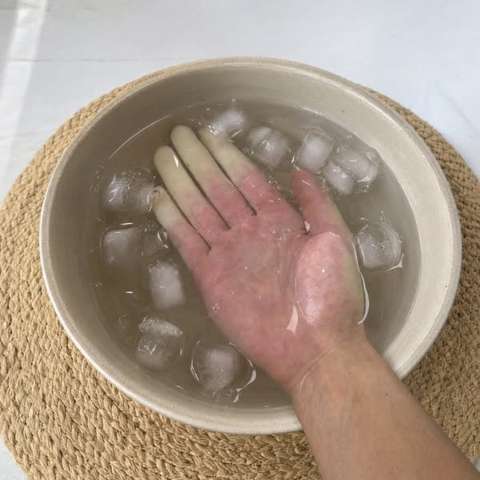
Image. UGC-style phone photo of a hand in a bowl of ice water on a jute placemat, fingers turning white and blotchy (Raynaud-like circulation look). No product. Stops the scroll because the discolored fingers look alarming and real, and it visualizes "starving for blood" without a word.
Hook. "If your hands go numb when you're sleeping, driving, or holding something, that's your nerve sending a final warning before it dies permanently. And once it's gone, no amount of surgery or therapy brings it back." Then: "Which means I can't work, my daughter can't go to college and everything I've worked for disappears." Mechanism: symptom callout + fear of permanence, immediately raised to a family stake.
Story spine. Persona and job → symptom escalation (sleep, driving, coffee cup, work) → stake: only income, daughter's Penn State dream → doctor 1: "$19.99" brace, failed → cortisone, "It lasted six weeks." → surgery referral: "$8,400 out of pocket", "There's no guarantee it'll work", "About 1 in 4" still have symptoms → crying in car → mechanism lesson (median nerve squeezed, no blood flow, no oxygen, no ATP, cells die) → why all three treatments miss it → niece's text, article about a doctor → photobiomodulation → product named (Kovaria, word ~976 of 1,522, 64%) → 660nm and 850nm explanation → skepticism + 90-day guarantee → first night slept through, week 2, week 4 → 8 months, no surgery → daughter starts at Penn State → plea to others ("it's about the people who depend on you") → urgency (cells die) → discount "because they keep selling out" → soft CTA ("You don't have to buy it. But please, at least look into it before you let a surgeon near your wrist.").
Persuasion devices. Concrete prices ($19.99 brace, $8,400 surgery). Failure stats (1 in 4). Dismissive doctor dialogue ("Yep, carpal tunnel."). Simple causal chain mechanism ("No blood flow means no oxygen. No oxygen means no ATP."). Named wavelengths (660nm, 850nm). Third-party discovery (niece's text, doctor-developed). Family-stake emotion (Penn State sweatshirt). Guarantee 90 days. Scarcity ("keep selling out"). Soft, non-salesy close.
Link card + lander. Headline "My Numb Hands Almost Destroyed My Daughter's Future", "Kovaria", CTA "Learn more". Lander: "11 Reasons Why TheraWrap Is Finally Stopping The Nerve Damage...", byline "Laura Bennett", restates the ad's mechanism as numbered reasons (starving nerve, wrong-place treatments, US hand specialist, two wavelengths, 15 minutes at home, night numbness first to go, "94% of users felt less pain within 14 days"), repeated sale box ("UP TO 60% OFF", "Sell-Out Risk: High", free shipping, 90-day guarantee). No price in text. Screenshot shows the black wrist wrap glowing red over the sale box.
Steal this.
- Raise the pain to a dependent's stake (daughter's college). CHL (mom who can't keep up for her kids, risk of job); Dog Academy (dog that might have to be rehomed, kids who can't have friends over).
- Escalating doctor ladder with prices and a quote at each step. CHL ("it's just stress", SSRI, "your labs are normal").
- Plain three-step causal chain ("No X means no Y. No Y means no Z."). CHL ("No methylation means no ... means fog"); Wonder ("no blood flow to the follicle means no anchor means shedding").
- Ice-bowl style picture that shows the invisible symptom. Wonder (hair in the shower drain on a hand); CHL less obvious.
Weakness. "Dies permanently", "no surgery brings them back" and "heal your nerve" overstate red light evidence and discourage surgery; inconsistent discount ("60%" vs "72%") and fake consumer-study stats look manufactured.
If your hands go numb when you're sleeping, driving, or holding something, that's your nerve sending a final warning before it dies permanently. And once it's gone, no amount of surgery or therapy brings it back.

Which means I can't work, my daughter can’t go to college and everything I've worked for disappears.

My name is Linda, I'm 48, and I've worked as a dental hygienist for 25 years. About two years ago my right hand started going numb at night.

At first I thought I was just sleeping on it wrong, so I'd wake up at 3 in the morning shaking my hand trying to get the feeling back.

Then it started happening when I was driving.

Then when I was holding a coffee cup.

Then when I was trying to scrape teeth at work, which is kind of a problem when you do what I do for a living.

Especially when you're the only one paying for your daughter's college.

My daughter was a junior in high school at the time.

She'd been talking about going to Penn State since she was 12, where her friends were going.

Where she'd visited 3 times and cried when we left because she loved it so much.

And my income as a hygienist was the only way we were going to afford it.

That means if I lost my job, she'd stay home, take classes online, and watch her friends live the life she's supposed to be living.

I couldn't let that happen, so I finally went to my doctor.

I showed him my hand and told him about the numbness, the tingling, the way I kept dropping things.

He pressed on my wrist for maybe 10 seconds. Then he said, "Yep, carpal tunnel."

He handed me a wrist brace, the kind you can buy at CVS for $19.99, and he said, "Wear this at night, should help."

That was it.

The brace did nothing.

Three months later I went back and told him it was getting worse.

This time he gave me a cortisone shot, stuck the needle right into my wrist, and said it should last six months.

It lasted six weeks.

A few weeks after that I went back again. This time he didn't even examine me. He just pulled up a referral form and started typing.

"You need surgery," he said.

He told me they'd cut open the ligament in my wrist to relieve the pressure. $8,400 out of pocket after insurance. Six to eight weeks of recovery.

And then he said "There's no guarantee it'll work."

About 1 in 4 people who get the surgery still have symptoms afterward.

I made it to my car before I started crying because I realized that if the surgery didn't work, I'd lose my job.

And if I lost my job, my daughter would have to give up Penn State.

She'd have to tell her friends she wasn't going and have to watch them pack up and leave while she stayed home.

And even IF it DID work, I would be down $8,400 which I simply cannot afford. Not if my daughter was going to University.

I went home that night and sat at the kitchen table for two hours, just staring at my hands.

And that's when I realized none of those treatments were actually fixing what was wrong.

Let me explain what's really happening inside your wrist, because once I figured this out, everything changed.

Inside your wrist there's a tiny tunnel.

Running through it is your median nerve, the nerve that controls feeling and strength in your thumb, pointer, middle, and half of your ring finger.

When you do repetitive things with your hands, like typing, scraping teeth, or gripping a steering wheel, the tissues inside that tunnel swell up.

And when they swell, they squeeze your median nerve like a vice grip.

That squeezing cuts off the blood flow to your nerve. And without blood flow, your nerve cells can't get the oxygen and glucose they need to produce energy.

In science, that energy is called ATP. It's the fuel every cell in your body runs on.

No blood flow means no oxygen. No oxygen means no ATP. And no ATP means your nerve cells start to die, one by one.

That's why your hand feels numb. That's why it feels weak. That's why you wake up at 3am shaking your hand trying to get feeling back.

Your nerve is suffocating inside your wrist. And every day it goes without blood flow, more of it dies.

Those pins and needles you feel aren't random. They're pain signals from nerve cells that are literally running out of fuel.

But when I finally understood what was happening, I couldn't believe how much time I'd wasted.

Because the truth is, a wrist brace doesn't restore blood flow. A cortisone shot doesn't restore blood flow. Even surgery doesn't restore blood flow.

Surgery just cuts open the ligament to make the tunnel bigger. But the damage to your nerve is already done. The ATP is already gone.

That's why so many people get the surgery and still have symptoms.

I spent weeks researching this.

Late nights, after my daughter went to bed, googling everything I could find about carpal tunnel, about nerve damage, about why nothing was working.

And then one night, my niece sent me a text. "You need to see this," she said.

It was an article about a doctor who had spent years watching his patients fail every standard treatment.

Braces, shots, surgery.

So he started looking at the research on something called photobiomodulation.

It's a fancy word, but the idea is simple.

Certain wavelengths of red and near-infrared light can trigger your blood vessels to open up and flood the area with oxygen.

He teamed up with a US-based health company called Kovaria and built a device that does exactly that. It wraps around your wrist and uses two specific wavelengths of light to heal your nerve from the inside.

Here's how it works.

660nm red light reduces the inflammation inside your carpal tunnel. Less swelling means less pressure on your median nerve.

850nm near-infrared light penetrates deeper and tells your blood vessels to release nitric oxide. That makes your blood vessels open wider, flooding your starving nerve cells with oxygen and glucose.

And that means your nerve cells can produce ATP again. The fuel comes back. The cells start to heal.

That's the part no other treatment does. Braces, shots, and surgery try to reduce the pressure. But none of them restore the ATP your nerve needs to come back to life.

I'll be honest, I was skeptical. I'd already spent over thousands on treatments that didn't work. But I also knew that if I didn't fix this, I'd lose my income. And then we'd lose everything.

The device came with a 90-day money-back guarantee. So I figured worst case, I send it back.

The first night I used it for 15 minutes while I watched TV. I didn't feel anything dramatic.

And then I slept through the night.

For the first time in over a year, I didn't wake up at 3am shaking my hand.

By the end of the second week, the numbness during the day was almost completely gone.

By week four, my grip strength was back. I could scrape teeth again without my hand cramping up.

I never got the surgery.

It's been about eight months now, and my hand feels normal. Like a hand is supposed to feel.

And my daughter?

She starts at Penn State in the fall.

She's already picked out her dorm room, already talked to her roommate, already bought the sweatshirt she's been wanting since she was 12.

And I didn't have to choose between fixing my hands and paying her tuition.

If you're reading this and your hands go numb at night, if you drop things, if you wake up shaking your hand trying to get feeling back, please don't wait.

Because it's not just about your hands. It's about the people who depend on you. Your kids, your family, the people who need you to show up.

And they're counting on you to fix this before it's too late.

Every week your nerve goes without proper blood flow, more of those cells die. And once they're dead, they're dead. No surgery brings them back.

The device I used is made by Kovaria. They're a US company and they're the only ones I trust because they actually worked with the doctor who developed this.

Right now they're running a discount on their next batch because they keep selling out. They also offer that 90-day money-back guarantee, so if it doesn't work for you, you get every penny back.

I'm linking it below. Just click "learn more"

You don't have to buy it. But please, at least look into it before you let a surgeon near your wrist.

Because your family needs you. And you need your hands to take care of them.

— Linda
KOVARIA.COM
My Numb Hands Almost Destroyed My Daughter's Future
Kovaria
Learn more
Close
07 · Reddit Relief: Stories, Discussions & More · Onecompress bamboo compression gloves, $49 one pair / BOGO $30 a pair / 3-pack $24 a pair, 60-day guarantee · Health & Wellness · 121 days · PDP
Format. About 1,160 words. First-person, unnamed 62-year-old woman; page posing as a Reddit-style story aggregator ("Reddit Relief"). Long run-on sentences joined with "and", lowercase-feeling typos ("would of", "cant", "dont") that read as real. Short paragraphs, no emoji, no headers. The most "human" voice of the batch.
Image. Phone photo of a beige sedan's open fuel door with the gas cap hanging on its tether, low autumn sun, cracked asphalt. No product, no person, no text. Stops the scroll because it is a mundane, unexplained object; the meaning clicks only after the hook (the gas cap she could not open).
Hook. ""I just want to open my own car door without needing help." I typed that into Google at 11pm on a Tuesday night and then stared at it for a long time before I hit search..." Mechanism: confession via a private search query, a vulnerable sentence the reader may have typed too.
Story spine. Search-bar confession → back up: gas station, couldn't unscrew the cap, a stranger did it silently → 20 minutes in the car, "inventory" of losses (mother's necklace in the box for eight months, slip-on shoes, Face ID, ordering food that needs no knife, pullovers instead of button-downs, 20-minute morning hand ritual) → four doctors, Aleve, pamphlet, "Nobody has ever said here's something you can do about it tonight." → "my world had gotten smaller" realization → failed alternatives (ibuprofen, Voltaren, paraffin wax) → Facebook arthritis group, a woman said her hands felt "quiet" → product introduced generically as bamboo compression gloves (word ~659 of 1,162, 56%; brand never named in the copy) → first morning "the noise was lower", 40% stiffness → seven weeks, 20 minutes down to five → honest limit ("they're not going to fix my hands") → wore her mother's necklace → daughter noticed → 60-day guarantee → "Start with tonight."
Persuasion devices. Specific small losses as proof of pain (Face ID, knife, clasp). Named emotional object (mother's necklace) that pays off at the end. Overheard word "quiet" as the discovery hook. Honest limitation ("Not a miracle but it helped."). Soft numbers (40%, 20 to 5 minutes, seven weeks). No villain beyond indifferent doctors. Guarantee 60 days. No urgency, no mechanism claim.
Link card + lander. Headline "take your hands back", description "60 Day Money-Back Guarantee", CTA "Learn more". Lander is a straight PDP: "Autumn Relief Sale | Up to 60% OFF", 11,822 reviews, colour picker, "Less hand pain in 2 weeks or it's free", bundles ($49, BOGO $60 for 2, 3-pack $72), nerve-lotion upsell, symptom checklist, bamboo benefits, FAQ, mystery-discount popup. Story is not continued. Screenshot shows reviews under a "You've Got A Mystery Discount" popup.
Steal this.
- The "inventory of what it took from me" list of tiny adaptations. Wonder (part changed, ponytail stopped, avoiding overhead lights, hats in photos); CHL (sticky notes, rereading emails, saying "what was I saying"); RAW (the inventory of nights out that ended alone).
- A stranger's small act that makes the pain undeniable (man unscrewing the gas cap). RAW (the friend who gets the number while you get the handshake); Dog Academy (neighbor crossing the street to avoid your dog).
- An emotional object set up early and paid off at the end (mother's necklace). Wonder (wearing her hair down at a daughter's wedding); CHL.
- Typed-search confession hook. CHL ("why do I keep forgetting words at 52").
Weakness. The product is not named and the mechanism is thin, so the lander has to do all selling; "prevent permanent cartilage damage" on the lander is an unsupported claim, and the Reddit-branded page name is deceptive.
"I just want to open my own car door without needing help."

I typed that into Google at 11pm on a Tuesday night and then stared at it for a long time before I hit search, because seeing it written out like that made it real in a way I'd been avoiding.

Let me back up.

I'm 62 and I was at a gas station last week and I couldn't unscrew my gas cap.

Both hands twisting as hard as I could and my fingers wouldn't grip and my ring finger locked up halfway through and I just stood there with my hands on a gas cap that wouldn't move.

A man at the next pump walked over and unscrewed it for me, didn't say anything, just did it and nodded and went back to his car.

I sat in my car for twenty minutes after that.

I didn't cry, I think I was past crying about it by then.

I just sat there looking at my hands and for the first time I actually took inventory of what they'd taken from me.

I stopped wearing jewelry, not because I don't like it anymore but because I can't work a clasp.

My mother's necklace has been in the jewelry box on my dresser for eight months because I cant put it on by myself and I refuse to ask someone to do it for me.

I switched to slip-on shoes because laces are a fight I stopped having.

I changed my phone to face ID because my thumb stopped being reliable enough for the passcode.

I order the same thing every time we go out to eat, because it doesn't require a knife.

I wear pull-over sweaters now and I used to love my button-downs, I look at them hanging in my closet and just grab the pullover because it's easier and I don't have to think about it.

My mornings all start the same way, sit on the edge of the bed and spend 20 minutes opening and closing my hands waiting for them to come online.

My ring finger and middle finger lock up overnight and I have to manually straighten them out every morning with my other hand, I've been doing it so long it feels normal now and that's maybe the scariest part.

I've made something normal that would of horrified me two years ago.

My doctor says it's osteoarthritis with trigger finger, degenerative.

She gave me exercises and a pamphlet and told me to take Aleve.

I've been to four doctors now and they all say some version of the same thing, manage it, surgery is an option eventually.

One of them mentioned cortisone shots but said they don't always last and she didn't want to start me on that yet.

Nobody has ever said here's something you can do about it tonight.

Not once in four visits.

I sat in that gas station parking lot and I realized my world had gotten smaller, not all at once and not in any way I would have noticed on any single day, but slowly one thing at a time over about a year and a half I had quietly rebuilt my entire life around what my hands couldn't do anymore.

And I didn't even see it happening until a stranger unscrewed a gas cap for me.

That night I searched, not for a diagnosis because I have four of those, I searched "how to use your hands again when you have arthritis" because that's what I actually wanted to know and I was done pretending everything was fine.

I found the usual stuff, ibuprofen and Voltaren and paraffin wax dips and a lot of people in forums who sounded exactly like me, tired and frustrated and some of them angry they'd spent hundreds on things that didn't work.

Then I was reading through a Facebook arthritis group and a woman wrote that she'd been wearing bamboo compression gloves to bed and woke up and her hands felt "quiet."

I stopped scrolling on that word because my hands haven't been quiet in over a year, they throb and ache and click and lock and remind me every single second that they're there, and the idea that they could just be quiet sounded like something from another life.

The gloves were bamboo, soft with open fingertips so you can still do things, and you wear them overnight for gentle compression while you sleep.

I read every review I could find and most of them were women like me in their 50s and 60s with stiffness and trigger finger and mornings that take forever to get through, and they kept saying the same thing, it helped.

Not a miracle but it helped.

I ordered them that night, two pairs so I'd always have a clean set.

First morning I woke up and my hands felt different, I don't know how else to say it except the noise was lower.

The stiffness was there but it was maybe 40% of what it normally is, and I made a fist slowly but I made one without pain for the first time in months.

It's been about seven weeks now and I wear them every night.

My mornings went from 20 minutes of working my hands open to about five, my fingers still click sometimes but they haven't locked on me in over a month and I can grip things again, not perfectly but enough that I'm not constantly bracing for something to slip out of my hands.

I want to be honest, they're not going to fix my hands.

I have degenerative arthritis and that's not going anywhere, some mornings are still harder than others and I don't think that ever fully changes.

But last week I wore my mother's necklace for the first time in eight months.

I worked the clasp myself, it took me a minute but I did it and I stood in front of the mirror and just looked at it and thought about how something that small shouldn't feel that big, but it did.

I wore button-downs twice this week and I ordered something different at dinner Saturday because I felt like I could manage a knife.

My daughter noticed, she didn't say anything but I could tell from the way she looked at me.

The world is getting a little bigger again, one thing at a time, same way it shrank.

They have a 60 day guarantee so if they dont help you just send them back.

I ordered mine at 11pm on a Tuesday after Googling something I never thought I'd have to Google and they're the best thing I've done for myself in two years.

I'll leave the link below.

If your world has been getting smaller and you haven't said it out loud yet I understand, mine was too.

Start with tonight.
ONECOMPRESS.COM
take your hands back
60 Day Money-Back Guarantee
Learn more
Close
08 · Grace Shelmer · Vibit Roll vibrating foot roller with pressure points, "Up To 40% Off", free AU shipping, 30-day guarantee, bonus tutorial videos · Health & Wellness · 39 days · advertorial ("Japanese secret", bylined "Dr. Kyle Richmond, DPM")
Format. About 260 words. First-person customer-review voice (62-year-old, page named "Grace Shelmer"), written to read like a pasted product review ("I'm not being paid for this review just to set the record straight"). Three paragraphs, no emoji, religious note ("Praise the Lord"). The ad is the testimonial; the lander does the selling.
Image. Real-looking UGC phone photo: a sock-covered foot on a light-blue textured roller resting on a worn office chair seat, tattooed leg in frame, cluttered room. Product appears. Stops the scroll because it is an unpolished customer photo, the opposite of a brand shot.
Hook. "I'm not being paid for this review just to set the record straight. I got my Vibit Roll late yesterday." Mechanism: pre-emptive disclaimer of authenticity plus immediacy (arrived yesterday).
Story spine. Disclaimer and product named immediately (word ~16 of 256, 6%) → 2 years of plantar fasciitis, can't reach the mailbox or make dinner → refused cortisone ("wear off and damage my tissue") → morning dread ("first step would feel like broken glass") → 15 minutes on the roller, cried within 10 → 4am pain-free step → kitchen without holding the counter → 12 hours pain-free → "wasting thousands" before → will buy one for her sister. No mechanism, no villain beyond cortisone, no offer.
Persuasion devices. Authenticity disclaimer. Sensory pain image ("broken glass"). Overnight result with timestamps (10 minutes, 4am, 12 hours). Age as identity ("A pain-free 62-year-old is alive again."). Gift intent as social proof ("I will order another for my sister.").
Link card + lander. Headline "How I took control of my plantar fasciitis after almost two years of pain.", CTA "Shop now". Lander is a full doctor advertorial: ""I've Treated 3,853+ Plantar Fasciitis Patients. Here's Why Orthotics, Cortisone, and PT Kept Failing Them... 91% Walking Pain-Free In Just One Week"", collagen micro-tear "suspension bridge cables" mechanism, failed alternatives with prices (orthotics $300 to $800, cortisone $300 each, PT $150 to $200 per session), "What 90-Year-Old Japanese Farmers Know", "ashi no ura bushi" Kampo pressure points, "thixotropic effect" of vibration, "follow the money" industry villain, product reveal, 91%/87% stats, bonus tutorial video series ("private patients who pay $350 per session"), "I'm not a businessman. I'm a doctor.", 40% off, 30-day guarantee, two-paths close, family guilt, "last batch sold out in 48 hours", reviews and fake Facebook comments. Screenshot shows the doctor headline under a "Transfer me now" geo popup.
Steal this.
- Ad = one raw customer review with a real customer photo; lander = the full mechanism article. Wonder (a review with a shower-drain or part photo); Dog Academy (owner's review with a photo of the dog calmly lying by the door).
- Pre-emptive "not being paid" authenticity line. RAW (customer: "Not sponsored, I just need to tell someone what happened Saturday").
- Lander "bonus protocol" that adds perceived value beyond the product. Dog Academy (the custom plan is the bonus framing); CHL (a 14-day fog-lifting routine PDF).
Weakness. The ad's overnight "pain-free for over 12 hours" claim and the lander's invented doctor, invented Kampo technique and percentages are fabricated; geo-redirect popup on the lander adds friction.
I’m not being paid for this review just to set the record straight. I got my Vibit Roll late yesterday. I have suffered with extreme plantar fasciitis pain for almost 2 years. It had gotten so bad I couldn’t walk to the mailbox, stand long enough to make dinner, or even get out of bed without bracing myself. I refused to keep getting cortisone shots that just wear off and damage my tissue. I was in pure misery from the constant stabbing pain.

Going to bed just meant dreading the morning. Knowing that first step would feel like broken glass.

So... I put my feet on this thing for 15 minutes last night. Within less than 10 minutes I cried. My feet had almost no tightness or pain. I was blown away.

I woke up around 4am and literally couldn’t stop smiling because I stepped down without pain. This morning I woke up and my feet felt normal for the first time in years. The stabbing was gone and the tightness was manageable. I walked around the kitchen making breakfast without holding onto the counter.

Today I’ve been pain-free for over 12 hours. I can’t thank you enough for this ingenious product. Praise the Lord. I’m so happy that a product actually does what it’s advertised to do. I ordered it cautiously after wasting thousands. I will order another for my sister. A pain-free 62-year-old is alive again.
VIBIT.COM.AU
How I took control of my plantar fasciitis
after almost two years of pain.
Shop now
Close
09 · Dr. Michael Thompson · SleepEase Pro under-chin NEMS anti-snoring device, 100-night money-back trial (no price shown) · Health & Wellness · 130 days · advertorial (doctor-bylined)
Format. About 220 words. "Doctor" persona (page named "Dr. Michael Thompson"), speaking to camera-style FAQ answer. Short paragraphs, plain words ("That's it. Nothing complicated."), one "👇" pointer at the end.
Image. Photo of a classroom whiteboard with handwritten marker text: "It's crazy how men with sleep apnea are still suffering in silence with CPAP when this exists. Made specifically for sleep apnea. Works from night one. Click below to get your sleep back ↓". Eraser and markers on the tray. No product. Stops the scroll because handwritten whiteboard notes read as a person's message, not an ad, and the CPAP callout targets a specific sufferer.
Hook. "Patients ask me this almost every day: "Dr. Thompson, is there a way to stop snoring and sleep apnea without the CPAP?"" Mechanism: authority answering a frequently asked question the reader also has.
Story spine. FAQ setup → simple mechanism (throat muscles relax, collapse, block airway) → failed alternatives with prices (CPAP "most patients abandon", "$2,000" mouthguards, "$25,000" surgery) → new device "I recommend to my patients" → how it works (tones throat muscles under the chin) → fear (heart attacks, stroke, cognitive decline) → timeline ("first week", "3 to 4 months" retrained) → product named (SleepEase Pro, word ~195 of 222, about 88%) → 100-night trial → CTA.
Persuasion devices. Doctor authority. Mechanism in two sentences. Price anchors on the alternatives. "No mask. No hose. No surgery." Health-risk fear. Muscle "retrained" promise (not a lifetime device). Risk reversal: "Try it for 100 nights. If you're not satisfied, you don't pay."
Link card + lander. Headline "Patients Ask Me How To Stop Snoring For Good", description restates the 100-night trial, CTA "Learn more". Lander is a long doctor advertorial ("Your Snoring & Sleep Apnea Keep Getting Worse — Because Every Treatment You've Tried Ignores What's Really Causing Them", "By Dr. Michael Thompson", "4.9/5 Rating | 15,000+ Reviews"): symptom mirror (partner in another room, fog, 3 AM gasping), "It's not a noise problem. It's a suffocation problem.", Year 1 / Year 2 to 3 / Year 5 / Year 10+ decline timeline, mechanism ("Narrow airway = snoring. Blocked airway = sleep apnea."), failure of strips/CPAP ("medical shackle")/mouthguards, NEMS explained, "95% of patients find they no longer need the device", partner section ("She's back in our bed."), 3-step usage, Night 1 to Month 3-4 timeline, FAQ, 100-day guarantee, disclaimer that the doctor has no financial relationship. No price on the page text. Screenshot shows FAQ accordions and the red "Try SleepEase Pro Risk-Free for 100 Days" button.
Steal this.
- Whiteboard handwritten-note image with the whole pitch in one sentence. RAW ("It's crazy how many guys still wear the same cologne every guy at the bar wears..."); CHL ("It's crazy how many women with MTHFR are still taking folic acid...").
- "Patients ask me this almost every day" hook from an expert. CHL (pharmacist or nurse persona); Dog Academy (trainer: "Owners ask me every week how to stop the jumping without yelling").
- Partner-as-victim section ("She's back in our bed."). RAW (inverse: she stays the night); CHL (husband noticing she's back).
- Decline timeline by year as the "cost of waiting". Wonder (Year 1 wider part, Year 3 scalp shows in photos).
Weakness. "Cure protocol", "95%... no longer need the device" and suggesting tapering off CPAP are dangerous unsupported medical claims; the doctor is almost certainly fictitious and the "no financial relationship" disclaimer is likely false.
Patients ask me this almost every day:
"Dr. Thompson, is there a way to stop snoring and sleep apnea without the CPAP?"

Let me tell you where it all comes from. Snoring and sleep apnea come from the throat muscles. When you fall asleep, they relax, they collapse, and they block your airway. That's it. Nothing complicated.

For 20 years, all we could do was treat the symptoms. CPAP, which most patients abandon. Custom mouthguards at $2,000 that shift your jaw and hurt. Or throat surgery — $25,000, painful, and risky.

Now there's something different. A small device I recommend to my patients. You wear it under your chin while you sleep. It gently tones the throat muscles so they stop collapsing. No mask. No hose. No surgery.

And I'm telling you to take this seriously. Untreated sleep apnea is linked to heart attacks, stroke, and early cognitive decline. It's not just snoring.

Most patients see results in the first week. After 3 to 4 months, the muscles are retrained.
SleepEase Pro. Try it for 100 nights. If you're not satisfied, you don't pay.

👇 Tap the photo below to see the device and how it works.
TRYSLEEPEASE.CO
Patients Ask Me How To Stop Snoring For Good
Try it for 100 nights. If you're not satisfied, you don't pay.
Learn more
Close
10 · The Nutrition Insider · Gold Seal "Magnesium Complete™" (4-form magnesium with L-Threonate), "$0.83/Day", Halloween sale, 90-day guarantee · Health & Wellness · 87 days · listicle (comparison "Top 5" review page on a magnesium.news-styled domain)
Format. About 210 words. Page-as-publisher ("The Nutrition Insider", "We tested 47"), editorial "we" voice. Four ❌ bullet findings, then a short reveal and a symptom "if... if... if..." paragraph. Display URL "HTTPS://MAGNESIUM.NEWS/" and "✅ Verified" in the link card reinforce the review-site disguise.
Image. AI-looking lifestyle photo of a tired woman (30s to 40s, messy bun, grey cardigan) holding a mug in a kitchen, staring out the window, with a top text band styled like a truncated post: "Most people taking magnesium don't realize THIS is why it's not working...more". No product. Stops the scroll because the "...more" mimics an organic caption and the tired-woman-with-coffee image is the 2PM fog moment.
Hook. "We tested 47 magnesium supplements for brain fog, cortisol, and sleep. Here's what we found:" Mechanism: number + independent-tester authority + promised findings (investigation).
Story spine. Test claim → four failure findings (80% oxide at "4% absorption", glycinate "secretly buffered with oxide", none cross the blood-brain barrier, doses too low) → "Only 5 brands passed" → #1 pick described without brand name (L-Threonate + Bisglycinate + Malate + Taurate + P-5-P) → symptom mirror ("3AM wake-ups", "brain fog rolls in every afternoon like clockwork") → blame removal: "The magnesium was working. It just never reached your brain." Brand is never named in the primary text (0%); only the link card points to the review page.
Persuasion devices. Big test number (47, 5 passed). Absorption stat (4%). Insider-sounding exposé ("secretly buffered"). Mechanism: blood-brain barrier as the place symptoms "originate". One form per body system. Failed-alternative absolution ("if you've tried magnesium before and felt nothing — this is why").
Link card + lander. Headline "The Best One For Anxiety, Cortisol & Finally Sleeping Through The Night", "✅ Verified", CTA "Learn more". Lander: "Advertorial ⓘ", "MAGNESIUM NEWS", "The Best Magnesium of 2026: A Buyer's Guide", byline "John Anderson... Renowned Nutritional Researcher"; opens with the fog symptoms ("walk into rooms and forget why... lose words mid-sentence"), stats ("150 Million Americans are magnesium deficient", "reversed cognitive age by 7.5 years in 6 weeks"), at-risk list ("Adults Over the Age of 40"), tap-to-check symptom quiz, guide to magnesium types, "3 reasons your magnesium isn't working", warning signs, comparison table vs NOW Foods, Nature Made, Doctor's Best, Pure Encapsulations, #1 scorecard "9.9/10 (20,456 votes)", pros/cons (con: "Sells Out Often"), $0.83/day, Halloween sale "Deal expires October 31st", "Promotion Detected" link, 90-day guarantee, footnote admitting "We do not test the products ourselves." Screenshot shows the Doctor's Best scorecard with red ✗ cons.
Steal this.
- "The X was working. It just never reached Y." blame-removal line. CHL near verbatim: "The folate was working. Your body just could never convert it." Wonder: "The serum was fine. It just never reached the follicle."
- Comparison listicle that names real competitors and fails them on one criterion only we pass. CHL (folic acid vs methylfolate column; fillers/stearates column from the "no fillers" secondary line); Wonder.
- Fake-truncated "...more" caption band on the image. Any brand; strong for CHL and Wonder statics.
- Tap-to-check symptom quiz on the lander ("Losing words mid-sentence or forgetting names"). CHL fits this exact audience.
Weakness. Disguised review site owned by the seller with a buried "We do not test the products ourselves" admission, and invented vote counts and "47 tested" claim; "reversed cognitive age by 7.5 years" is a stretch of one study.
We tested 47 magnesium supplements for brain fog, cortisol, and sleep. Here's what we found:

❌ 80% use cheap magnesium oxide (only 4% absorption — most passes straight through)
❌ Many "glycinate" products are secretly buffered with oxide
❌ Zero formulas cross the blood-brain barrier — where your actual symptoms originate
❌ Most doses are too low to trigger any measurable change in brain magnesium levels

Only 5 brands passed our test.

The #1 pick is the only formula using clinical-dose Magnesium L-Threonate — the one form proven to cross the blood-brain barrier and raise brain magnesium levels. It stacks four targeted forms in one bottle: L-Threonate for your brain, Bisglycinate for deep sleep and calm, Malate for cellular energy, and Taurate for your heart. No oxide. No fillers. Active B6 as P-5-P so your body can actually use what it absorbs.

If you haven't slept through the night in months… if the 3AM wake-ups won't stop… if the brain fog rolls in every afternoon like clockwork… if you've tried magnesium before and felt nothing — this is why. The magnesium was working. It just never reached your brain.
HTTPS://MAGNESIUM.NEWS/
The Best One For Anxiety, Cortisol & Finally Sleeping Through The Night
✅ Verified
Learn more
Close
11 · Gary Plouffe · LivingCore Organic Ceylon Cinnamon Powder (12:1, "7,200mg raw bark equivalent"), Buy 1 Get 1 Free $29.99, bundles to $89.97, subscription refills $39.99, 90-day guarantee · Health & Wellness · 75 days · PDP
Format. About 3,600 words, the longest in this set. First-person persona ("My name is Paul Hendricks. I'm 61 years old."; page name "Gary Plouffe" does not match the narrator, a clear fake-persona signal), signed "-- Paul Hendricks", P.S. and P.P.S. Novel-style scenes with dialogue (wife Linda, brother Tom, doctor, lab technician), headline-style title sentence at the top, week/day log lines ("Week 4: 146. Higher."), no emoji, ends with four bolded "why it worked" sections and a raw URL.
Image. UGC phone photo of an older man's hands holding a spiral notebook with handwritten dates (5-16 to 6-1) and fasting glucose readings stuck at 141 to 146, a glucose meter showing 144, a mug and rainy window. No product. Stops the scroll because it is the reader's own failure log: the same number every day.
Hook. "I Took Ceylon Cinnamon Soft Gels Every Single Morning For 11 Weeks. My Fasting Glucose Didn't Drop A Single Point. The Foam In My Toilet Never Cleared. Then A Lab Technician Showed Me Why." Mechanism: failed-alternative confession with a precise duration, a visceral symptom (foam in the toilet), and an expert-reveal open loop.
Story spine. Believer in the science (named journals, MHCP mechanism) → stakes: glucose 144, creatinine 0.9 to 1.4, foam, father on dialysis → wife finds a review blog, buys "$29.99" soft gels → week-by-week log flat at 143 to 146 → doctor warns of more medication and "a different conversation" → sleepless night → farmers market, overheard lab technician → three-problem mechanism: wrong species (Cassia, "over 90 percent"), wrong dose (1,200mg vs 6,000 to 7,200mg), wrong format (gelatin shell degrades actives) → powder you can taste to verify → product named (LivingCore, word ~1,570 of 3,613, 43%) → tastes "lighter, sweeter, almost citrusy" → day 3 to day 28 drops (144 to 110), foam gone → doctor: creatinine 1.1, GFR 65 to 76, "No additional medication." → garden bed with grandkids, "This is 61." → reader mirror → four-point recap → 90-day guarantee → P.S./P.P.S. urgency.
Persuasion devices. Precise numbers everywhere (144, 77 mornings, $60, 250x coumarin, 12-to-1). Named meter brand. Three-part "wrong species, wrong dose, wrong format" mechanism. Self-verification by taste ("That taste is my verification."). Overheard insider (lab tech) as discovery. Family villain-of-fate (father's dialysis chair). Doctor reversal scene. Reframe: "The science was never wrong. The delivery was." Guarantee 90 days.
Link card + lander. Headline "Blood Sugar Support That Actually Works—Or You Pay Nothing", description "Support healthy glucose metabolism with LivingCore Organic Ceylon Cinnamon", CTA "Learn more". Lander is a standard PDP: "Rated 4.8 Excellent | Over 25,000 Sold", BOGO $29.99 / 2+2 $59.98 / 3+3 $89.97, auto-refill disclosure, "sold out 12 times last year" notice, benefits, week timeline, comparison vs "Other Brands" (Cassia, low potency), reviews that are mostly about customer service, FAQ. Much softer "supports healthy levels" language than the ad. Does not repeat the story. Screenshot shows footer and sticky "$39.99 $59.99 Add to cart" bar.
Steal this.
- "Right idea, wrong form" three-part failure (wrong species / dose / format). CHL exactly: folic acid (wrong form), low dose, filler-laden tablets. Wonder: right ingredient, wrong delivery to the scalp.
- Handwritten log photo showing a stuck number. CHL (a notebook of "forgot why I walked in" tallies); Wonder (dated hair-count in the brush); Dog Academy (a fridge tally of jumps or barks per day).
- Sensory self-verification ("you can taste it, so you know it's real"). RAW (she notices within an hour; you smell the difference on the first spray); CHL harder.
- Overheard expert at an everyday place (farmers market) delivering the mechanism in dialogue. CHL (pharmacist at the counter).
Weakness. Claims to reverse kidney damage (creatinine, GFR, protein in urine) from cinnamon are serious unsupported disease claims; persona name mismatches the page name; lander reviews are about customer service, not results.
I Took Ceylon Cinnamon Soft Gels Every Single Morning For 11 Weeks. My Fasting Glucose Didn't Drop A Single Point. The Foam In My Toilet Never Cleared. Then A Lab Technician Showed Me Why.

My name is Paul Hendricks. I'm 61 years old.

I believed in Ceylon cinnamon the way some people believe in prayer.

Not casually. Not as a "maybe this will help" afterthought.

I believed because I'd read the studies. Real ones. Published in the Journal of Medicinal Food and Diabetes Care. Researchers giving subjects Ceylon cinnamon extract and watching fasting glucose drop measurably within weeks.

I'd read the research on MHCP and insulin sensitivity from peer-reviewed journals. I understood the pathway. Ceylon cinnamon contains a compound that mimics insulin at the cellular level, helping cells start responding again so glucose clears from the bloodstream. Blood sugar drops. The kidneys stop filtering sugar-saturated blood hour after hour.

My fasting glucose at my last panel: 144.

My creatinine had gone from 0.9 to 1.4 in two years. My GFR was dropping every quarter. My ankles swelled by evening. I was up two, three times a night. And one morning I flushed the toilet and the foam sat there. Thick. Frothy. Just sitting on top of the water.

My father spent the last four years of his life in a dialysis chair three days a week.

The science was clear. Ceylon cinnamon was my answer. I was sure of it.

My wife Linda found a supplement review blog that rated the top Ceylon cinnamon brands. Every single one was a soft gel. The blog said soft gels were the best delivery format because the oil inside helped with absorption. Made sense to us. We ordered a highly rated brand from Amazon. $29.99 for a 60-count bottle. "True Ceylon Cinnamon" printed right on the label.

Every single morning. Seven days a week. I popped two soft gels with breakfast and washed them down with water.

There was no taste. No smell. Nothing. Just two translucent capsules that went down like any other pill. Linda would set them next to my coffee mug each morning before I came downstairs. A little ritual.

We were in this together.

I bought a home glucose meter. Contour Next One. The same one my endocrinologist recommended.

Week 1: Fasting glucose 144. Foam still there every morning. No change.

"Give it time," Linda said. "The studies said it takes a few weeks."

Week 2: 143. Within the margin of error. Foam unchanged.

Week 3: 144. Back up. Foam sitting thick on top of the water after every flush.

Week 4: 146. Higher.

I stared at the meter. Checked the strip. Pricked my finger again.

I sat at the kitchen table. The bottle of soft gels was sitting right there next to my coffee. I picked it up and looked at the label again. "True Ceylon Cinnamon. 1,200mg. Premium Quality."

"It takes longer," Linda said from the doorway. She didn't sound convinced.

Week 6: 143.

Week 8: 145.

Week 11: 144.

Eleven weeks. Seventy-seven consecutive mornings. Two soft gels every single day without missing once. Almost sixty dollars across two bottles.

The exact same number I'd started with. And the foam was still there every single morning.

My next panel was in ten weeks. My doctor had been clear at the last visit: "If your next panel shows the same trend, we're adding another medication. And honestly, Paul, if the GFR keeps dropping, we need to start having a different conversation."

I knew what conversation she meant.

That night I didn't sleep. I lay in the dark and thought about my father. The three-hour sessions. The machine that cleaned his blood because his kidneys couldn't do it anymore. The look on his face when he told me he couldn't travel anymore because he couldn't miss a session. The way he stopped being himself at the end.

Linda rolled over. "You're awake again."

"I don't understand. The studies, the research is real. It works. Why doesn't it work for me?"

Her hand found mine in the dark. She squeezed it. Didn't answer. Because she didn't know.

Neither did I.

The next morning was a Saturday. I drove to the farmers market. Not to buy cinnamon. I couldn't even think about cinnamon without feeling defeated. I went for Linda. She wanted heirloom tomatoes.

I was standing near a spice vendor's booth when I overheard two women talking.

"Yeah, I actually work at a supplement testing lab. We run species verification and potency assays on commercial cinnamon products. You'd be amazed at what we find."

My ears locked in.

The woman was in her forties. Glasses. Matter-of-fact voice.

"Like what?" the other woman asked.

"Most products labeled Ceylon cinnamon are not Ceylon at all. They're Cassia. Completely different species. Different chemical profile. Almost none of the active compounds that the clinical research is based on. And Cassia contains up to 250 times more coumarin than real Ceylon. That's a compound that stresses your liver at daily supplement doses."

My stomach dropped.

I stepped closer. "Excuse me. Did you say most Ceylon cinnamon products are actually Cassia?"

The woman with glasses turned. "Oh, yes. We test for species authenticity in our lab. Over 90 percent of products labeled Ceylon are partially or fully Cassia. The suppliers substitute because Cassia costs a fraction of the price. Most companies never verify because species testing costs money."

My jaw tightened. "What about soft gels? I've been taking soft gels."

She tilted her head. "Soft gels are actually the worst format for this particular problem. And I don't say that lightly. Here's why. You cannot taste what is inside a soft gel. You cannot smell it. You cannot verify it in any way. So if a company puts Cassia inside a gelatin capsule and prints Ceylon on the label, you would never know. And most of them do. We test these products in our lab and the mismatch rate is staggering."

"But the label said True Ceylon."

"The label can say whatever they want. Without DNA verification at the species level, there is no regulation requiring them to prove it. And soft gels are exactly the format where this substitution happens most often, because the consumer has no way to check. You can't open a soft gel and taste the difference. With a powder, you could. Real Ceylon tastes completely different from Cassia. It's lighter, sweeter, almost citrusy. Cassia is that harsh, sharp, burning flavor. If you'd been taking powder, you would have known within the first sip whether it was real."

I felt the blood drain from my face. Eleven weeks. Seventy-seven mornings. And I might have been swallowing Cassia the entire time.

"Okay. What about the dose? I was taking 1,200mg."

"That's the second problem. The clinical research showing measurable results on fasting glucose and insulin sensitivity uses doses equivalent to 6,000 to 7,200 milligrams of raw Ceylon bark daily. 1,200mg is a fraction of that. You would need to take six of those soft gels a day to even approach the bottom of the clinical range, and 12 to match the upper range. That's not a small gap. That's the difference between a dose that might do something and a dose that the research actually showed works."

"And the third problem?"

"The format itself. Soft gels compress raw material inside a gelatin shell packed with glycerin, binding agents, and fillers. That shell has to fully dissolve in your stomach acid before the contents are even released. And Ceylon's active compounds, the MHCP and cinnamaldehyde, they're sensitive. By the time the shell breaks down and the compounds are exposed to your digestive system, a significant portion has already been degraded by the acid that dissolved the shell. You're absorbing a fraction of a fraction."

"So I was potentially taking the wrong species, at a fraction of the dose that the research actually used, in a format that degrades most of the active compounds before they even reach my cells."

"That's about the size of it. And honestly, you're not alone. We see this constantly. People who believe in the science, who've done the research, who know Ceylon cinnamon works, and who are taking something that was never going to move their numbers because everything about the product was wrong except the idea."

I stood there. The farmers market noise, the chatter, the kids running between booths, it all sounded like it was underwater.

Eleven weeks.

Seventy-seven mornings.

And I had been swallowing what might have been the wrong species at a fraction of the dose in a format that couldn't deliver what little was there.

"Is there," I cleared my throat, "is there any way to actually get all three right?"

"A concentrated powder extract. That solves everything at once. If the extraction is a true 12-to-1 concentration, the cellulose walls of the bark are broken down during the process so the MHCP and cinnamaldehyde are already available to your body. No shell to dissolve through. No degradation from stomach acid. And because it's powder, you can taste it. Real Ceylon has a flavor that's completely distinct from Cassia. Lighter, sweeter, almost citrusy. You know immediately whether what you're taking is real. That's your verification. Every single morning. A soft gel can never give you that."

"Does something like that exist?"

She pulled out her phone. "We actually tested one recently that surprised me. LivingCore. Concentrated 12-to-1 Ceylon powder. Verified Sri Lankan Ceylon. 7,200 milligram raw bark equivalent per teaspoon. And they publish their Certificate of Analysis. Every batch. Full transparency."

"You tested it in your lab?"

"We did. Species matched. Dose matched. Active compound concentration matched what the label claimed. Which almost never happens in this category. Most products we test come in at a fraction of what they claim, when they're even the right species at all."

I ordered it on my phone before I left the farmers market. Didn't even walk back to the tomato stand. Texted Linda: Found something. Coming home.

The bag arrived Monday.

I opened it that evening. The smell hit me before I even pulled the seal back. It smelled nothing like the generic cinnamon in our spice cabinet. It was lighter. Warmer. Almost sweet. I stirred a teaspoon into a cup of coffee and tasted it.

And I knew.

That was not the same thing I had been taking for eleven weeks. Not even close. If the soft gels had contained real Ceylon, I would have expected something closer to this flavor. What I tasted in that coffee was exactly what the lab technician described. Light, sweet, citrusy. Nothing harsh. Nothing sharp. No burn.

I sat on the back porch with the coffee. Skeptical. Eleven weeks of soft gels had beaten the hope out of me.

By the third morning, something shifted.

The low-grade fatigue that had been dragging me down every afternoon was lighter. The grogginess that normally lasted until 10 AM was gone before 8. I stood in the bathroom, flushed the toilet, and looked.

The foam was thinner.

Not gone. But thinner. For the first time in months, the surface of the water cleared in under a minute.

I went to the kitchen. Pulled out the Contour Next.

I blinked. Checked the strip. Pricked my finger again.

Down from 144. In three days.

I sat there staring at the number.

Please let this be real.

I didn't tell Linda. Not yet. Didn't want to get her hopes up. Not again.

I stirred a teaspoon into my coffee every morning. Same time. Same mug. Thirty seconds. No pills. No bottle of capsules I couldn't verify. Just powder I could see, smell, and taste every single morning.

Day 7: Fasting glucose 134. Foam barely visible. Ankle swelling easing by evening.

Linda noticed something before the meter confirmed it. I was awake at 6 AM on a Sunday. Making coffee. Humming. I hadn't hummed in months.

"You seem different," she said carefully.

"I feel different."

Day 10: 129. Foam gone. The water was clean.

Day 14: 124.

I showed Linda the log I'd been keeping. Two columns. Date. Reading. And a third column. Foam. Yes or no.

Her eyes tracked down the numbers. The slow, steady descent. The column of yeses turning to noes.

Her hand came up to her mouth. "Paul..."

"I know."

"But the soft gels. We did everything right."

"It wasn't the cinnamon that was wrong. It was everything else. The soft gels probably weren't even Ceylon. The dose was a fifth of what the studies used. And the gelatin shell degraded most of the active compounds before they even reached my cells. The studies work because they use the right species at the right dose in a form the body can actually use. The soft gels couldn't give us any of that. This powder can. I can taste it every morning. I know it's real."

Day 21: 116. No foam. Ankle swelling gone. Sleeping through the night without a bathroom trip.

I called my brother Tom that weekend. Tom's blood sugar had been climbing too. Runs in the family.

"116," I told him. "And the foam is gone."

"What foam?"

"Protein leaking into my urine. The kidney damage. The foam cleared in ten days."

"How?"

I explained everything. The wrong species hiding inside a soft gel. The fraction of the dose. The gelatin shell degrading the actives. The powder that solved all three at once. The taste that tells you immediately whether it's real.

"I'm sending you a bag," I said. "Stop messing around with the soft gels. It's not the same thing."

Day 28: 110.

Week eight was my follow-up appointment.

The nurse took blood. I sat in the room for twenty minutes waiting.

My doctor walked in. Pulled up my chart. Looked at the screen. Looked at me.

"Paul. Your creatinine came back at 1.1. It was 1.4 at your last panel."

Silence.

"Your GFR is at 76. It was 65."

She scrolled.

"Protein spillage is down significantly. And your fasting glucose is lower than it's been since your first panel with us."

She looked at me. "What changed?"

I told her. The wrong species hiding in soft gels. The fraction of the dose. The gelatin shell degrading the actives. The concentrated powder that got all three right. The taste verification every morning. The published lab results for every batch.

She listened. Took notes. Nodded slowly.

"I'll be honest. The research on Ceylon cinnamon and insulin sensitivity is solid. If you're getting verified species at the clinical dose in a form that absorbs, the mechanism is sound." She closed her laptop. "No additional medication. Keep doing exactly what you're doing. I want to see you again in twelve weeks."

No additional medication. No dialysis conversation.

I sat in my car. Hands on the steering wheel. Chest tight. But not from blood pressure.

I called Linda.

"Creatinine 1.1. GFR 76. No new medication. No dialysis conversation."

I heard her gasp. Then silence. Then a sound that might have been a laugh or might have been a sob.

"You did it," she whispered.

"We did it. We just needed the right form."

That was three months ago.

My fasting glucose this morning: 106. No foam. No ankle swelling. No bottle of soft gels sitting on the counter that I can't taste or verify. No gelatin capsules degrading the compounds before they ever reach my cells.

One teaspoon. Stirred into my coffee. Thirty seconds. Done.

Some mornings I bake with it. Some mornings I add it to oatmeal. Linda started putting it in her smoothies even though her blood sugar is fine. She says it tastes too good not to.

Last weekend, Linda and I spent the entire afternoon in the backyard building a raised garden bed for the grandkids. Four hours of digging, leveling, hauling soil. I didn't sit down once.

Linda took a photo of me with my hands in the dirt, the grandkids planting tomatoes beside me.

She texted it to our daughter with one line: "This is 61."

Our daughter texted back: "What happened to the dad who couldn't make it through dinner without falling asleep?"

I laughed. Because I remembered that guy. That was five months ago. That guy was swallowing soft gels every morning and watching the foam in his toilet wondering when the dialysis conversation would start.

That guy didn't know the problem was never the cinnamon.

It was the form.

If you're reading this, you see yourself in my story.

You believe in the science. You've done the research. You know Ceylon cinnamon works.

But the soft gels aren't working for you. Or the capsules. Or whatever supplement you've been taking from Amazon.

Your numbers aren't moving. The foam is still there. And your next appointment is getting closer.

Here's what I want you to know:

I spent eleven weeks taking Ceylon cinnamon soft gels every single morning. Two capsules a day. Almost sixty dollars. And my fasting glucose didn't move. The foam never cleared.

I thought cinnamon didn't work for me. I thought my genetics were too strong. I thought I was destined for the same chair my father sat in three days a week.

I was wrong.

The cinnamon worked. The delivery method didn't. The soft gels gave me what was probably the wrong species at a fraction of the dose in a format that degrades the active compounds before they reach your cells and gives you no way to verify any of it. I was doing the right thing in the wrong form.

If your numbers aren't moving, don't give up on Ceylon cinnamon. Give up on soft gels.

Try a concentrated powder. Track your numbers. Give it an honest trial.

Your medicine cabinet will thank you. Your kidneys will too.

I tried soft gels for 11 weeks with zero results. Here's why LivingCore powder worked when soft gels didn't:

Verified Sri Lankan Ceylon (Not Cassia Hiding Inside A Soft Gel)

My soft gels could have been Cassia. I had no way to know. No way to verify. You cannot taste what is inside a soft gel, and 90 percent of what is sold as Ceylon is actually Cassia. Cassia contains almost none of the active compounds that support insulin sensitivity at the cellular level. Plus up to 250 times more coumarin, a compound that stresses the liver at daily supplement doses.

LivingCore is a powder. I tasted it the first morning and knew immediately it was real Ceylon. Lighter, sweeter, almost citrusy. Nothing like Cassia. That taste is my verification. Every single morning. No label required.

Clinical Dose, 7,200mg Raw Bark Equivalent (Not A Fraction Of What The Studies Used)

My soft gels were 1,200mg. The clinical research showing measurable results uses 6,000 to 7,200 milligrams of raw bark equivalent. I would have needed 6 to 12 soft gels a day to match the dose range the studies actually used.

LivingCore is a 12-to-1 concentrated extract. One teaspoon delivers the full 7,200mg equivalent. Every morning. No guessing.

Powder That Absorbs (Not A Gelatin Shell That Degrades The Actives)

Soft gels compress raw material inside a gelatin shell packed with fillers and binding agents. The shell has to dissolve in stomach acid before the contents are even released. By that point, a significant portion of the MHCP and cinnamaldehyde has already been degraded. You're absorbing a fraction of a fraction.

LivingCore's 12-to-1 extraction breaks down the cellulose walls of the bark so the active compounds are available to your body the moment they reach your gut. No shell to dissolve through. No degradation. And you can stir it into coffee, cook with it, bake with it. It fits into what you're already doing without adding another pill.

Third-Party Tested With Published Results

Soft gels have no transparency. You can't taste what's inside. You can't verify the species. You can't confirm the dose. You trust the label and hope for the best.

LivingCore publishes everything. Independent lab testing. Species verification. Active compound concentration. Every batch. Full transparency. And your own taste buds confirm the species every single morning on top of it.

Try LivingCore for up to 90 days. Track your fasting glucose weekly. Watch the foam. Note the energy.

If you're not satisfied for any reason. If your numbers don't improve. If the foam doesn't clear. If you don't feel the energy lift. Full refund.

No questions asked. You risk nothing.

One teaspoon every morning. Stirred into your coffee. That's the whole protocol.

I switched. My fasting glucose dropped from 144 to 106. My creatinine reversed direction. My GFR climbed. The foam disappeared. My doctor cancelled the medication conversation entirely.

The science was never wrong. The delivery was.

https://www.trylivingcore.com/pages/address-insulin-resistance

-- Paul Hendricks

P.S. I tasted the difference within the first sip. Saw the foam thinning by day five. Fasting glucose dropping measurably by day seven. Creatinine reversed and GFR climbing at my eight-week follow-up. Avoided additional medication entirely. The bottle of soft gels is in the trash now. Your timeline might be different. But you won't know unless you try.

P.P.S. Every morning you spend swallowing a soft gel is another morning of a species you can't verify at a dose that doesn't match the research in a format that degrades the actives before they reach your cells. Every day that passes is another day of glucose-saturated blood passing through kidney filters that are already damaged. Stop guessing. Start tasting. Order now.
TRYLIVINGCORE.COM
Blood Sugar Support That Actually Works—Or You Pay Nothing
Support healthy glucose metabolism with LivingCore Organic Ceylon Cinnamon — pure, organic, and easy to add to your daily routine
Learn more
Close
12 · Jacob Nash · SPNutrition magnesium bisglycinate gummy (price and offer not visible; lander blocked) · Health & Wellness · 202 days · advertorial (URL "advertorial-magnesium-lie-for-men"; page failed to load)
Format. About 1,970 words. First-person male persona (page "Jacob Nash", prediabetic man whose dad went from metformin to insulin). One sentence per line, mechanism-heavy, a looping "The more X the less Y" cascade, arrow bullets for the nightly protocol ("→ Take two gummies before bed."). No emoji. Unsigned, ends with a "Read it here →" bridge.
Image. Mirror selfie of a bearded man in a locker room wearing a grey Under Armour tee with a sweat patch, gym bag, shaker bottle and a supplement bottle on the bench. Product bottle is small and unbranded-looking in the background. Stops the scroll because it is a normal guy's gym selfie (male peer, not a model), and the sweat patch and serious face say "trying hard, not working".
Hook. "If Your A1C Is 5.7 Or Higher, Your Liver Is Dumping Glucose Into Your Blood While You Sleep. And the reason your doctor never told you this is because the real villain isn't your diet. It's cortisol." Mechanism: number-qualified callout (your lab value) + hidden-cause reveal + named enemy (cortisol) + doctor withheld it.
Story spine. Mechanism first (cortisol spikes make the liver dump glucose, insulin resistance, visceral fat) → why cutting carbs fails ("You were fighting your fork when you should have been fighting your cortisol.") → personal story: A1C 6.1, doctor threatens metformin in six months, father's 11 years on metformin then insulin → did the diet, A1C went up → r/prediabetes thread, retired endocrinologist's comment → magnesium bisglycinate as cortisol "off switch" via GABA (magnesium first named at word ~714 of 1,968, 36%) → pharma motive ("$3.8 billion... Metformin does.") → research citations (Diabetes Care, 500,000-patient meta-analysis, "15% per 100mg") → depletion trap loop → metformin "overrides the symptom" → week 1 to 4 results (sleep, energy, fasting 118 to 96) → doctor: "A1C is 5.4... You don't need metformin." → buying warning (oxide 4%, citrate) → why bisglycinate (glycine carriers) → product type revealed: gummy (word ~1,708, 86%), absorbs in mouth, bypasses stomach acid → nightly protocol → recap → soft CTA to "a full breakdown". Brand is never named in the ad.
Persuasion devices. Lab-number callout. Named villain hormone. Reddit/endocrinologist discovery. Pharma money motive. Real-sounding journal citations and a per-100mg stat. Doctor reversal dialogue. Purchase warning that pre-disqualifies competitors (oxide, citrate). Format mechanism (gummy absorbs under the tongue). Persona-family fear (father injecting insulin at the kitchen table).
Link card + lander. Headline "My A1C Was 6.1. My Doctor Wanted Metformin. I Found This.", description "Read more", CTA "Learn more". The lander (spnutrition-us.com advertorial-magnesium-lie-for-men) did not load: it returned "Access Restricted. For security reasons, using browser developer tools is not permitted on this site." (anti-scraping cloaking). lander.txt has only that message; lander-top.png shows the block dialog. Price, bundles and guarantee unknown.
Steal this.
- Lab-value callout hook ("If your A1C is 5.7 or higher"). CHL ("If your homocysteine is over 10" or "If you've been told you carry MTHFR"); Wonder less fit.
- "You were fighting your X when you should have been fighting your Y." CHL ("fighting the fog with coffee when you should be fighting the folate you can't convert"); Wonder ("fighting the shedding with shampoo when the problem is at the follicle"); Dog Academy ("fighting the dog when you should be fighting the routine").
- Late product reveal: sell the category (bisglycinate) and the buying mistakes for 85% of the ad, reveal the format last. CHL (sell methylfolate, warn about folic acid, reveal the brand last).
- Peer mirror-selfie image for a male audience. RAW (an ordinary guy's mirror selfie before going out, cologne on the counter).
Weakness. "You don't need metformin" and implying magnesium prevents diabetes progression is dangerous medical advice; the lander cloaks itself from inspection, which is a red flag for policy evasion.
Scores. Hook 9 · Story pull 7 · Mechanism credibility 8 · Offer bridge 5 (lander not verifiable)
Full ad copy
If Your A1C Is 5.7 Or Higher, Your Liver Is Dumping Glucose Into Your Blood While You Sleep.

And the reason your doctor never told you this is because the real villain isn't your diet.

It's cortisol.

Specifically — cortisol that never switches off.

Here's what's actually happening inside your body right now.

Every time your cortisol spikes — from stress, from poor sleep, from skipping meals, from the low-grade anxiety of modern life — your liver receives a direct signal to dump glucose into your bloodstream.

It's a survival mechanism.

Your body thinks you're being chased by something. It floods your blood with sugar so your muscles have fuel to run.

But you're not running.

You're sitting at your desk. Lying awake at 3AM. Stuck in traffic. Answering emails.

The glucose hits your bloodstream. Your pancreas fires insulin to deal with it. Your cells — already exhausted from doing this 40 times a day — start ignoring the insulin signal.

That's insulin resistance.

The glucose has nowhere to go.

So your liver does the only thing it can.

It converts the excess glucose to fat and packs it around your organs.

That's visceral fat.

That's the belly that won't move no matter how clean you eat.

That's what an A1C of 6.1 actually looks like from the inside.

And here's why cutting carbs doesn't fix it.

You're not eating the glucose.

Your own liver is producing it.

Every cortisol spike triggers a fresh dump of glucose into your bloodstream regardless of what's on your plate. You can eat nothing but grilled chicken and vegetables and your cortisol will still tell your liver to flood your blood with sugar at 2AM while you sleep.

Your A1C measures that.

All of it. Every spike. Every dump. Averaged over three months.

Which is why you did everything your doctor told you and your A1C went up anyway.

You were fighting your fork when you should have been fighting your cortisol.

I learned this the hard way.

My doctor handed me my bloodwork results fourteen months ago.

"A1C is 6.1. That puts you in the prediabetic range."

I asked him what I should do.

"Lose weight. Cut back on carbs and alcohol. If it's not below 5.7 in six months we'll need to start you on metformin."

My dad was on metformin for 11 years before his diabetes got worse and he ended up on insulin.

That night I couldn't sleep thinking about him injecting insulin every morning at the kitchen table.

So I grabbed my phone and Googled "how to lower A1C naturally."

Same advice everywhere. Eat less. Move more. Cut sugar.

I'd been doing that for the past eight months.

My A1C went UP anyway.

Then I found a thread on r/prediabetes titled: "Why your A1C won't drop even when you do everything right."

The top comment stopped me cold.

A retired endocrinologist wrote it.

"Your A1C isn't just about what you eat. Most prediabetics are losing a battle they don't even know they're fighting. The battle isn't against carbs. It's against cortisol."

He explained it like this.

Your liver has two jobs relevant to blood sugar.

Job one: store excess glucose as glycogen when blood sugar is high.

Job two: release glucose slowly and steadily between meals to keep your brain and body fueled.

When your liver is healthy, it does both jobs perfectly. Blood sugar stays stable. A1C stays low.

But cortisol overrides both functions.

Cortisol tells your liver to RELEASE glucose — regardless of whether your blood sugar is already high. Regardless of whether you just ate. Regardless of whether it's 3AM and you haven't moved in six hours.

Chronic cortisol means your liver is constantly releasing glucose on a hair trigger.

Blood sugar spikes. Insulin fires. Cells resist. Liver converts excess to visceral fat.

Round and round. Every single day.

While you're eating salads and wondering why nothing is working.

He said: "The medical system treats prediabetes as a diet problem. It's not. It's a stress hormone problem that expresses itself through blood sugar. Until you deactivate the cortisol response your liver will keep flooding your blood with glucose and your A1C will keep climbing regardless of what you eat."

Someone asked him how to deactivate the cortisol response.

He said: "Magnesium. Specifically magnesium bisglycinate. Magnesium is the biological trigger for GABA — the neurotransmitter that tells your cortisol to stand down. Without sufficient magnesium your cortisol has no off switch. It stays elevated around the clock. While you sleep. While you sit at your desk. While you lie awake at 3AM. Your liver never stops dumping glucose. Your A1C never drops."

He said: "Magnesium deficiency is the hidden driver of cortisol-related prediabetes that nobody in conventional medicine is talking about. Not because it doesn't work. Because magnesium can't be patented. A $20 mineral deficiency doesn't generate $3.8 billion in pharmaceutical revenue. Metformin does."

I went and looked up the research.

A study published in Diabetes Care found that higher magnesium intake was significantly associated with lower risk of type 2 diabetes — independent of other dietary factors.

A clinical trial in the Journal of Human Nutrition and Dietetics showed that magnesium supplementation significantly reduced fasting blood glucose and improved insulin sensitivity in prediabetic patients.

A landmark meta-analysis covering over 500,000 patients found that for every 100mg increase in daily magnesium intake the risk of developing type 2 diabetes dropped by 15%.

Not a little. 15%. Per 100mg.

And here's what made me furious when I read it.

Magnesium is involved in over 300 biological functions in the human body.

It is the literal activation switch for the GABA response that deactivates cortisol.

It directly regulates the liver's glucose release mechanism.

It improves insulin sensitivity in muscle and liver cells.

And 80% of adults are chronically deficient in it.

Because modern farming has stripped magnesium from our soil.

Because chronic stress — the very thing magnesium is supposed to control — burns through magnesium reserves faster than food can replace them.

Because every cortisol spike causes your kidneys to excrete magnesium through urine.

The more stressed you are the more magnesium you lose.
The more magnesium you lose the less your cortisol can deactivate.
The less your cortisol deactivates the more glucose your liver dumps.
The more glucose your liver dumps the higher your A1C climbs.

A biological trap that no low-carb diet ever addresses.

A biological trap that metformin never touches.

And here's the thing your doctor didn't tell you about metformin.

Metformin suppresses your liver's glucose output by force.

It doesn't fix the cortisol. It doesn't restore the GABA response. It doesn't replenish the magnesium deficiency driving the whole cascade.

It just overrides the symptom while the underlying dysfunction gets worse.

Which is why metformin doses always go up.

Which is why prediabetes on metformin almost always becomes type 2 diabetes eventually.

You're not failing the medication.

The medication is failing to address what's actually wrong.

I ordered magnesium bisglycinate that night.

Here's what I want to tell you honestly about the timeline.

The first week I didn't notice much.

Week two I started sleeping through the night. Properly. Not waking up at 3AM with my mind racing. Seven hours straight. I hadn't done that in years.

Week three the afternoon energy crashes I'd had every single day for as long as I could remember started disappearing. I made it to 5PM without reaching for coffee. Then 6PM. Then I stopped noticing it entirely because it just wasn't happening anymore.

Week four I bought a home glucose monitor and started testing.

Fasting blood sugar before breakfast: 96. It had been sitting at 118 for months.

Two hours after dinner: 104. It had been spiking to 161.

I tested every day for three weeks. Same pattern. Consistently lower. Consistently stable.

At three months I went back to my doctor.

He pulled up the bloodwork.

Stared at the screen for a moment longer than felt normal.

"A1C is 5.4."

He looked up.

"That's normal range. That's a significant drop. What have you changed?"

I told him about the cortisol connection. About the magnesium bisglycinate. About everything I'd read.

He'd heard of magnesium. Not the cortisol-glucose cascade. Not the GABA connection. Not the liver's role as a glucose dump on a cortisol hair trigger.

He wrote it down.

He said: "Whatever you're doing, keep doing it. You don't need metformin."

6.1 to 5.4.

In three months.

Without metformin. Without a prescription. Without starving myself on a diet I couldn't sustain.

Because I wasn't fighting a diet problem.

I was fighting a cortisol problem.

And cortisol has one off switch.

Now here's what you need to know before you go buy magnesium.

Do NOT grab the first bottle you see at CVS or Amazon.

Most magnesium supplements on the market are magnesium oxide. It has a 4% absorption rate. Your body uses almost none of it. It passes straight through. Your cortisol stays elevated. Your liver keeps dumping glucose. Your A1C keeps climbing. You conclude magnesium doesn't work.

But you never actually got any magnesium.

Some supplements use magnesium citrate. Better than oxide. Still missing the critical component that makes bisglycinate work differently.

Bisglycinate means the magnesium is bound to two glycine amino acids.

Those glycine carriers do two things nothing else can replicate.

First: they escort the magnesium directly past your gut lining and across the blood-brain barrier. That's where the GABA receptors live. That's where the cortisol off switch is located. Standard magnesium never gets there. Bisglycinate does.

Second: glycine itself is a calming amino acid that directly reduces cortisol and lowers core body temperature at night — the biological trigger for deep restorative sleep. Deep sleep is when your liver resets its glucose regulation. Deep sleep is when insulin sensitivity restores. Deep sleep is when the cortisol cascade finally gets interrupted.

Fix the sleep. Fix the cortisol. Fix the liver. The A1C follows.

I tested every magnesium supplement I could find.

Capsules. Powders. Gummies. Cheap store brands. Expensive brands. Different doses. Different forms.

Most were disappointing. Underdosed. Fillers cutting the formula. Oxide hiding inside a bisglycinate label. No third-party testing. Stomach issues from citrate doses large enough to actually work.

One stood out.

A gummy with 100% pure bisglycinate at a full therapeutic dose. No oxide. Sugar-free and no stomach issues.

And here's why the gummy format matters specifically for blood sugar.

Gummies begin absorbing the moment they hit your mouth — through the mucous membranes under your tongue and along your cheeks. They bypass stomach acid entirely. By the time you're asleep the bisglycinate is already crossing the blood-brain barrier and activating your GABA response.

Capsules have to survive stomach acid first. For anyone over 45 with reduced stomach acid production absorption drops significantly before the magnesium ever reaches your bloodstream.

The gummy bypasses all of that.

→ Take two gummies before bed.
→ Bisglycinate crosses the blood-brain barrier.
→ GABA activates. Cortisol drops. Liver stops dumping glucose on a hair trigger.
→ Blood sugar stabilizes through the night.
→ Fasting glucose drops. Post-meal spikes reduce. A1C starts falling.

Not because you're eating less.

Because you finally turned off the thing that was telling your liver to flood your blood with sugar in the first place.

My A1C was 6.1.

My doctor wanted me on metformin.

My A1C is 5.4 now.

I never took a single metformin pill.

Because I didn't have a blood sugar problem.

I had a cortisol problem caused by one mineral deficiency nobody ever tested for.

I linked a full breakdown of the exact bisglycinate I use and why 95% of magnesium products are a waste of money. Read it here →
SPNUTRITION-US.COM
My A1C Was 6.1. My Doctor Wanted Metformin. I Found This.
Read more
Learn more
Close
13 · Alicia Darling · Nuora Feminine Balance Gummies (pineapple bromelain + Bacillus coagulans), $34 one month / $49 two / $58 three, 30-day returns · Health & Wellness · 320 days (longest-running in this set) · PDP
Format. About 840 words. First-person young woman (page "Alicia Darling"), very casual spoken voice ("And honestly?", "like", "literally"), run-on sentences, small typos ("whaft", "its", "bodys") that read as real. Short paragraphs, no emoji, no headers, raw product URL at the end.
Image. Instagram-story style phone shot looking down at black leggings and white sneakers on a gym floor, cable handles nearby, a flip-clock sticker "PM 10 45" and caption sticker "Black leggins so I hope no one notices😭". No product. Stops the scroll because it looks like a real friend's story and the late hour plus the caption hint at a secret embarrassment.
Hook. "For 8 months I'd literally wait until late at night to go to the gym and position myself way in the back corner by the stretching mats where no one goes. Because until I stumbled across a Reddit post about why the smell keeps coming back & what fixes it, I couldn't handle the anxiety of someone catching a whaft of my vagina." Mechanism: shameful behavior confession (avoidance ritual) that names the taboo bluntly, with a Reddit-fix open loop.
Story spine. Avoidance behavior (late gym, back corner, black leggings) → failed alternatives (showers, pH wipes, "$45 probiotic", gyno + metronidazole) → resignation ("this is my life now") → midnight Reddit, microbiologist explains biofilms → mechanism: biofilm shields bacteria, antibiotics and wipes hit the surface only; "2019 study from Milan" says pineapple enzyme dissolves "93% of biofilm"; "96% of probiotics die" in the stomach; Bacillus coagulans survives → "OB/GYN formulated gummies" (product type at word ~531 of 836, 63%) → skepticism ("another $40") → day 1 to 5 nothing, day 8 tying a shoe, week 2 full leg day → 3 months, normal life → reader reframe ("it's really not about showering more") → brand named (Nuora, word ~783, 93%) with link.
Persuasion devices. Taboo said plainly. Specific avoidance behaviors as pain proof. Named failed alternatives incl. prescription. Reddit microbiologist as neutral authority. Coined-sounding mechanism (biofilm) with two stats (93%, 96%). Honest slow start ("first five days I still smelled it"). Squat/lunge test as proof moment. No guarantee or urgency in the ad.
Link card + lander. Headline "This helped me a LOT", description "Prioritize your vaginal health with Nuora Premium Feminine Gummies...", CTA "Learn more". Lander is a PDP: "FALL SALE" countdown, "4.8/5 | 7139+ Happy Ladies", claims (BV and yeast, pH), price per day ($1.21 / $0.88 / $0.69), subscription default with "BUY ONCE - NO SAVINGS", counterfeit warning, repeating reviews, ingredient cards, "24-HOUR pH SHIELD", very sexual reviews ("tastes like pineapple candy"), 30-day returns, "Try your luck" card-match spin popup. The story is not continued; the lander pivots from odor anxiety to sex appeal. Screenshot shows only the gamified popup.
Steal this.
- Avoidance-ritual hook: the thing you do so nobody finds out. RAW (going home early, standing at the back of the bar, not leaning in for the kiss); Wonder (only wearing it up, avoiding windy days, hats in photos); CHL (pre-writing what to say on calls so you don't lose words).
- Name the taboo bluntly in line one. RAW (say "not getting laid" plainly, as his rules already ask); Wonder ("my scalp shows under the bathroom light").
- Instagram-story-style image with a timestamp sticker and a confession caption. RAW ("11:48 PM, uber home alone again"); CHL ("2:15 PM, read the same email 4 times").
- "First five days nothing, day 8 the small moment" honest timeline. All brands.
Weakness. Disease claims (BV, yeast, infection prevention), "OB/GYN formulated" without a named doctor, and explicit sexual reviews would get Meta and FTC attention; lander tone mismatches the anxious ad.
For 8 months I'd literally wait until late at night to go to the gym and position myself way in the back corner by the stretching mats where no one goes.

Because until I stumbled across a Reddit post about why the smell keeps coming back & what fixes it, I couldn't handle the anxiety of someone catching a whaft of my vagina.

And honestly? Going late worked, kind of.

Like I could work out without that constant anxiety of someone being directly behind me. But I was still smelling it, I just didn't have any witnesses anymore.

And obviously I tried everything to fix it.

I'd shower before every single gym session, use pH wipes in the locker room, take probiotics religiously every morning and only wore black leggings.

And I'd feel okay for maybe an hour tops.

But by the middle of my workout the smell was back every single time.

So eventually I went to my gyno thinking, okay something is seriously wrong with me. But she ran all the tests and just said to continue with my metronidazole.

But I was already doing that, so I kind of just accepted this is my life now, late night gym sessions and strategic positioning mixed with constant awareness of where people are around me.

But then about three months ago, I was scrolling Reddit at like midnight because that's what you do when you're too anxious to sleep. And I came across this microbiologist explaining why the smell keeps coming back even when you shower constantly.

And she said it's actually not about hygiene or being "pH sensitive" or whatever, it's about something called biofilms.

So basically the bad bacteria build these protective layers on your vaginal walls.

And when you take antibiotics like metronidazole or use wipes, you're only reaching the surface layer but the biofilm underneath stays completely intact.

So the bacteria multiply from that protected layer and the smell just comes right back.

And that literally explained why I'd shower, go to the gym and feel totally fine for like 30 minutes but then smell it again halfway through my workout.

Because the bacteria were just rebuilding from the biofilm that never actually got removed in the first place.

And she linked to this 2019 study from Milan showing that the enzyme in pineapple, (you know the one that makes your mouth feel funny when you eat too much), well it actually dissolves like 93% of biofilm structure.

But here's the catch, you need to pair it with a probiotic that actually survives your stomach acid to rebuild the good bacteria once the biofilms gone.

Because apparently 96% of probiotics die before they even reach your vagina.

So that $45 probiotic I'd been taking every single morning for like six months straight, it was completely dead in my stomach doing absolutely nothing.

But it said this one strain Bacillus Coagulans has this natural protective shell that lets it survive your stomach acid and actually colonize down there.

So when you combine the enzyme that breaks the biofilm with the probiotic that actually survives, your body just stops producing the odor.

And she recommended these OB/GYN formulated gummies that had both ingredients in them.

And honestly I'm sitting there thinking, "Great, another $40 I'm about to waste on something that won't work."

But at that point I'd already spent like hundreds of dollars on products that didn't do anything, so I just ordered them anyway.

And when they arrived I took 2 a day but for the first five days I still smelled it during workouts and figured it was just another scam.

But on day 8 I squatted down to tie my shoe at home and I didn't smell anything... So I thought maybe it was just like a good day or something.

But 2 weeks in I did a full leg workout, squats, lunges, everything and didn't smell myself once. And that hadn't happened in literally eight months.

So its been like three months now, and I just stopped planning my entire life around avoiding the smell. Because it genuinely wasn't there anymore.

I can go to the gym whenever I want, don't position myself away from people or panic mid-squat checking if someone's standing near me.

Because the biofilm is actually gone and my bodys not rebuilding the bacteria that cause the odor anymore.

So if you've been adjusting your entire life around the anxiety of smelling yourself in public, it's really not about showering more or buying more wipes or any of that.

It's about breaking down the biofilm that's making the smell rebuild no matter what you do.

The gummies I got are called Nuora, and they have the actual pineapple enzyme not just flavoring mixed with the special good bacteria that actually survives the journey. Here: https://mynuora.com/products/feminine-balance-gummies-1
MYNUORA.COM
This helped me a LOT
Prioritize your vaginal health with Nuora Premium Feminine Gummies. Formulated with proprietary probiotic blend, Hawaiian pineapples and potent Vitamin C.
Learn more
Close
14 · Dr Anna Poweld - Menopause Specialist · Kalm magnetic/acupressure bracelet, $64.90, "TWO for the price of ONE" fall sale, 30-day money-back · Health & Wellness · 236 days · PDP
Format. About 1,250 words. First-person 52-year-old woman, despite the page posing as a doctor ("Dr Anna Poweld - Menopause Specialist"), a mismatch that is itself a fake-persona signal. Section headers with trailing colons ("The Body I No Longer Recognized :", "My 12 Week Transformation :"), short declarative paragraphs, numbers everywhere, no emoji, raw URL at the end.
Image. Phone photo from a recliner looking down at two very swollen, red lower legs and bare feet, cream sofa and carpet behind. No product. Stops the scroll through shock and recognition: severe swelling is visceral, and the casual living-room setting reads as real.
Hook. "You can't be 52. The ER doctor stared at my chart in disbelief. My blood pressure was 168/94 and I had gained 42 pounds in two years. That is when I knew menopause was killing me." Mechanism: dramatic authority quote + crisis numbers + mortal stakes.
Story spine. ER scene (stroke within five years warning, mother's stroke at 61) → before/after body numbers (146 to 188 lb, waist 30 to 42 in, BP 118/76 to 168/94) → failed alternatives with costs (walking five miles, salads, BP meds raised twice, "$1,200 on a Mediterranean diet program... $800 on online coaching... $1,400 treadmill that became a place to hang laundry", total "$3,400") → family gathering, cousin Barbara transformed → "A bracelet." (word ~592 of 1,245, 47%) and her disbelief → mechanism: chronic stress, cortisol, belly fat; bracelet "helps your body switch out of stress mode" (brand Kalm named at word ~765, 61%) → week 1 to 12 ladder (sleep, -9 lb, -19 lb, 42 to 34 in) → doctor rechecks BP three times, 122/78 → five months: -38 lb, size 8, 118/74, meds reduced → "$65 did what $3,400 couldn't" → CTA "Just $64.90".
Persuasion devices. ER doctor quote. Dense specific numbers (weights, inches, BP series). Itemized wasted spend with a funny detail (treadmill as laundry rack). Relative as discoverer (cousin Barbara). Simplified cortisol mechanism. Doctor recheck scene ("took my blood pressure three times"). Price contrast ($65 vs $3,400). Mother's stroke as fear anchor. No guarantee in the ad; link-card urgency ("supplies are running low").
Link card + lander. Headline "Reduces menopause symptoms naturally", description "Get TWO original Kalm Bracelet for the price of ONE... largest discounts of the year", CTA "Learn more". Lander is a jewelry-style PDP: "Excellent | 1 538+ reviews", "Acupressure & Magnetotherapy to naturally improve hormonal balance", "LIMITED STOCK: NEXT RESTOCK IN 40 DAYS", color picker, $64.90 BOGO "ENDS TODAY", short reviews, founder story ("I'm Vanessa... During a trip to traditional Asia"), self-run "study" (94% fewer hot flashes in 9 days, 13 lb in 9 weeks), "Us vs Meds" table, FAQ, 30-day guarantee. Story not continued; cortisol mechanism is replaced by "magnetotherapy". Screenshot shows the footer only.
Steal this.
- Itemized "what I already spent" with one absurd detail ("$1,400 treadmill that became a place to hang laundry"). Wonder (salon treatments, $90 serums, PRP quotes); CHL (therapist, coach, supplements drawer).
- Relative-as-messenger discovery (cousin looked different at a family gathering). Wonder (sister's hair looked fuller at Thanksgiving); RAW (friend who suddenly does well with women).
- "$X did what $3,400 couldn't" price contrast close. Wonder and CHL.
- Authority "you can't be 52" disbelief line. CHL ("You can't be 48," when describing memory test results); Wonder less fit.
Weakness. Magnetic bracelet causing 38 lb loss and BP normalization is not credible and a clear health-claim violation; the doctor page name versus patient narrator is deceptive, and the image (severe leg swelling) has nothing to do with the product.
You can't be 52. The ER doctor stared at my chart in disbelief. My blood pressure was 168/94 and I had gained 42 pounds in two years. That is when I knew menopause was killing me.

He asked me three times if I had a history of heart disease. I told him no. He asked if I was on any medications. I told him no. He looked at my numbers again and said he needed to run more tests because something was not adding up.

I was 52 years old with the blood pressure of someone twenty years older. He told me if I didn't make serious changes, I would be looking at a stroke or a heart attack within five years.

I sat on that hospital bed in a paper gown and thought about my mother. She had her first stroke at 61. She never fully recovered.

The Body I No Longer Recognized :

At 49, I was healthy. I was active. I walked three miles every morning with my neighbor. I ate reasonably well. I was a size 8 and I never thought much about my weight.

Then everything shifted.

It started with the hot flashes. Then the sleep problems. Then the weight. It came on fast and it came on hard.

In two years, I went from 146 pounds to 188 pounds. My waist went from 30 inches to 42 inches. I gained four dress sizes. Nothing in my closet fit anymore.

But it wasn't just the weight.

My blood pressure had always been perfect. 118/76 at every physical. Then it started climbing. 134/82. Then 148/88. Then the night I ended up in the emergency room with chest pains and it read 168/94.

The ER doctor told me I was a textbook case of metabolic syndrome triggered by menopause. He said my body was under constant internal stress and it was destroying my health from the inside out.

Before The ER Visit :

I want to say this up front. I didn't ignore what was happening to me.

When the weight started coming on, I did everything I was supposed to do.

I went back to my morning walks and added miles until I was walking five miles a day. Still gaining weight.

I cut out sugar, white bread, and pasta. I ate salads for lunch every single day for four months. I gained six more pounds.

My doctor put me on blood pressure medication and increased the dosage twice. It barely helped.

I spent $1,200 on a Mediterranean diet program. I spent $800 on online coaching. I bought a $1,400 treadmill that became a place to hang laundry.

Over two years, I spent $3,400 trying to fix this. The scale kept going up. My blood pressure kept going up. And then I ended up in the emergency room thinking I was having a heart attack.

The Family Gathering That Changed Everything :

Three weeks after the ER visit, I was at a family gathering. My cousin Barbara came up to me and hugged me. I hadn't seen her in almost a year.

She looked different. Slimmer. Calmer. Healthier.

Barbara is 58. She had gone through the same thing I was going through. Weight gain after menopause. High blood pressure. The whole nightmare. I remembered seeing her at Thanksgiving two years ago looking exhausted and heavy.

Now she looked like a different person.

I asked her what she had done. She told me she had found something that actually worked. Not a diet. Not a new exercise routine. A bracelet.

I almost walked away. I was so tired of trying things that didn't work, so tired of spending money on promises that turned out to be lies.

But Barbara grabbed my arm. She told me her blood pressure had dropped 30 points in three months. She had lost 34 pounds. Her doctor had actually reduced her medication.

I asked her to show me.

How This Actually Works :

Barbara sent me the link that night. Before I ordered it, I spent two hours researching how this could possibly work.

Here is what I learned.

When you're under chronic stress, and menopause puts your body under constant stress whether you feel it or not, your nervous system gets stuck in high alert. Your body keeps producing cortisol because it thinks you're in danger.

When cortisol stays elevated, it tells your body to store fat around your belly. It raises your blood pressure. It disrupts your sleep. It creates inflammation throughout your system. Your body is preparing for a crisis that never ends.

The Kalm bracelet helps your body switch out of stress mode and back into a calmer, regulated state. When the stress response finally drops, the hormonal signal that makes you store belly fat eases up. Your body can start burning stored fat instead of holding onto it.

That's when the bloat goes down. Your waistline starts tightening. Blood pressure starts normalizing. And weight loss feels natural and steady again.

My 12 Week Transformation :

I ordered the bracelet and put it on the day it arrived. I didn't change my diet. I didn't increase my exercise. I just wore it every single day.

Week 1 through 3. I noticed I was sleeping through the night for the first time in months. The constant tension in my shoulders started to ease. I felt less anxious.

Week 4 through 6. My pants started feeling loose. I stepped on the scale and I had lost 9 pounds. The puffiness in my face was gone.

Week 7 through 12. The weight kept coming off. Another 19 pounds. My waist went from 42 inches to 34 inches. I was tucking in shirts again.

Then I went back to my doctor for a follow up. She took my blood pressure three times because she didn't believe the first reading.

122/78.

She pulled up my chart and looked at my history. She asked me what I had changed. I told her about the bracelet. About Barbara. About what I had learned about stress and cortisol.

She didn't dismiss me. She didn't roll her eyes. She asked me to send her the information so she could look into it.

Where I Am Now :

It has been five months since I started wearing the bracelet.

Total weight loss. 38 pounds. I went from 188 to 150. My waist went from 42 inches to 32 inches. I'm back in a size 8.

My blood pressure at my last physical. 118/74. My doctor reduced my medication. She said if my next reading is the same, she might take me off it completely.

I'm not going to have a stroke at 61 like my mother did.

The bracelet cost me $65. It did what $3,400 in programs, diets, and equipment couldn't do.

If your body has been gaining weight since menopause, if your blood pressure keeps climbing no matter what you try, if you feel like your health is slipping away from you, this might be the missing piece.

Click below to get the Kalm Bracelet from the official store. Just $64.90.

Wear it every day. Give it 12 weeks. Let your body finally calm down.
Your heart will thank you.

https://mykalm.co/original-bracelet
MYKALM.CO
Reduces menopause symptoms naturally
Don't miss out! Get TWO original Kalm Bracelet for the price of ONE. These are our largest discounts of the year. and supplies are running low. Secure yours now while they last!
Learn more
Close
Format. About 330 words. First-person 58-year-old wife under a niche-community page name ("Posture After 60"). Short paragraphs, conversational ("The truth? I'm SO embarrassed by my neck."), one "👉" before the URL. Clean, no headers.
Image. Three-panel real-looking photo set of a grey-haired woman in a cream tank top: full side profile showing a visible hump at the base of the neck, a close-up of her hand touching the back of the neck, and a close-up of the hump. No product. Stops the scroll because it shows the exact body part women hide, plainly, on a real-looking person.
Hook. "I almost never wore open necklines anymore and it frustrated my husband. I'd get dressed for dinner and put on a turtleneck in July, and he looks at me like I'm crazy." Mechanism: hiding-behavior confession with a spouse's reaction (identity tension), before naming the body part.
Story spine. Hiding behavior (turtleneck in July) → admission "I'm SO embarrassed by my neck" at 58, worst in side photos → "tried every posture tool... Nothing worked." → neighbor notices the high collar, asks → confession: stopped being in family photos, rebuilt wardrobe → neighbor "had the same thing" → product named (Cevera, word ~176 of 330, 53%) → 10 minutes nightly on two foam nodes, reached what rollers and braces didn't → 8 weeks, side mirror check, "Not perfect or anything but wow" → beach trip with daughters, center of photos → ordered a second for her sister ("wearing scarves in summer and stepping to the back of every photo").
Persuasion devices. Concrete hiding behaviors (turtleneck in July, back of photos, scarves). Spouse and daughters as witnesses. Peer referral (neighbor, sister). Honest partial result ("Not perfect"). No numbers, no mechanism, no villain, no offer in the ad itself.
Link card + lander. Headline "Finally wearing open necklines again", description "First time showing my neck in years", CTA "Learn more". Lander is a full long-form advertorial: "Top Physical Therapists: "This Is the Fastest Way to Reduce Your Neck Hump For Good"", "Dear Friend With a Neck Hump", "If... If... If..." symptom openers, "$47 billion posture and spine industry... They bury it." villain, PT persona's mother Dorothy who couldn't hang the Christmas star, failed alternatives with prices (chiropractor "$2,280 a year", PT, brace, doctor's "It's part of aging"), "$14,000 on continuing education", mechanism (suboccipital muscles lock, "every inch your head tilts forward... 10 pounds", the hump is a protective cushion), threats from industry and licensing complaint, product intro, 10-minute phases, stats (91%, 4,800+ reviews, <1% refunds), cost table, "50% OFF 'IN THEIR FACE' DISCOUNT" $44.95, 90-day guarantee, 72-hour countdown and unit counts, two-paths close, P.S. x3, and a disclaimer that "The story depicted on this website is illustrative." Screenshot shows the tool in use (woman lying on the black two-node block) above the green "CHECK AVAILABILITY NOW" bar.
Steal this.
- Hiding-in-plain-sight wardrobe/photo behaviors as the hook. Wonder exactly (hair always up or always down, hats, avoiding side profile and overhead light in photos, standing at the back); RAW (staying in the back of the group photo of the night out).
- Short warm ad, all heavy proof and mechanism moved to the lander. Wonder (keep the ad a short peer story, put the follicle mechanism and price on the lander).
- "Ordered a second for my sister because she's been doing the same thing I was." Wonder, CHL.
- Lander reframe: "It is not a disease... It is your body trying to protect itself." CHL (fog as the brain conserving energy when it can't use folate); Dog Academy (jumping as excitement with no plan, not a bad dog).
Weakness. Lander invents a DPT, a licensing-board fight and industry threats, and admits the story is "illustrative"; "reverses your neck hump in 10 minutes" overclaims.
Scores. Hook 9 · Story pull 8 · Mechanism credibility 6 (ad has none; lander's is plausible) · Offer bridge 8
Full ad copy
I almost never wore open necklines anymore and it frustrated my husband.

I'd get dressed for dinner and put on a turtleneck in July, and he looks at me like I'm crazy.

The truth? I'm SO embarrassed by my neck.

My posture used to be straight. But at 58, the rounding at the base of my neck looked like something that wasn't mine anymore, especially in photos from the side.

I tried every posture tool I could find. Nothing worked.

Then my neighbor came over for coffee and noticed I was wearing a high collar on a summer afternoon. She pulled me aside and said okay what's going on.

I finally admitted it. Turned to the side and showed her my neck. Told her how self conscious I'd been feeling. How I'd stopped being in family photos. How I'd rebuilt my entire wardrobe around hiding it.

She didn't laugh or brush it off. She just said I had the same thing, let me send you something.

She dropped off this release tool from a company called Cevera.

I started using it every evening before bed, just lying back on the two foam nodes for ten minutes. It reached something that none of the foam rollers and braces I'd been using ever touched.

Eight weeks later I'm getting dressed and I actually stop to look at my reflection in the mirror from the side. The rounding was noticeably less. Not perfect or anything but wow, actually different. Like visibly different.

Last month I actually went to that beach trip with my daughters. Wore what I wanted. Stood in the middle of the photos and everything.

Now I'm kind of obsessed with Cevera. I just ordered a second one for my sister because she's been doing the same thing I was — wearing scarves in summer and stepping to the back of every photo.

👉 https://trycevera.com/pages/adv-womens-wellness-report
TRYCEVERA.COM
Finally wearing open necklines again
First time showing my neck in years
Learn more
Close
Format. About 1,180 words. First-person persona with a credential ("I'm Rhonda Ellis. I've been a spine surgery nurse for 22 years."), signed "~ Rhonda Ellis", one "👉" before the URL. A diary ladder ("Day 1:", "Day 3:" through "Day 30:"), then three named mechanism concepts. Short paragraphs, calm and exact, no hype words.
Image. Real-looking photo of a grey-haired woman on her brick-house porch scowling and giving a thumbs-down while holding the dark grey SmoothSpine pad. Product appears, clearly. Stops the scroll because a thumbs-down next to a product is a contradiction (looks like a bad review), which matches the reverse-psychology hook.
Hook. "Please don't buy this back massager. I was told I needed an L4-L5 fusion three years ago. Here's what happened when I used this for 30 days." Mechanism: reverse psychology ("don't buy") + specific diagnosis + 30-day result open loop.
Story spine. Insider credential (spine surgery nurse who teaches patients to "accept" it) → her own surgeon recommends L4-L5 fusion; pre-op packet unopened on the counter for three years → insider fear (patients' "Injections at 52. Fusion at 55. Revision at 59.") → colleague mentions the device (product type in hook at word 6; brand never named in copy, only the URL) → skepticism about traction → 30-day diary of tiny milestones (no roll-and-brace, no 3 AM wake-up, sitting through a meal, socks standing, no wedge cushion, foot numbness gone, dog walk, picking up a fork, sleeping both sides, up off the floor with granddaughter; husband "dropped his phone") → surgeon: "take you off the surgical list for now" → "I'm furious" (what she was never taught) → three named mechanisms: "The Blood Supply Blind Spot", "The Domino Trade", "The Overnight Refill" → traction "3 to 7 millimetres", heat "122°F", massage; miss one and you're back in "twenty minutes" (her inversion table failed) → 90-day guarantee → reverse-psychology close ("So don't buy it. There'll be more for me.") → "If... If..." reader mirror → sign-off.
Persuasion devices. Insider authority who was part of the system. Unopened pre-op packet as a recurring symbol. Day-by-day micro-milestones that are pure lived detail. Named mechanism trio with memorable labels. Specific specs (3 to 7mm, 122°F). Failed alternative (inversion table). Surgeon reversal scene. Scarcity via reverse psychology ("Hopefully they don't sell out again"). Guarantee 90 days.
Link card + lander. Headline "My Honest Experience…", description lifted from the lander ("if you're reading this with a heating pad pressed against your back, popping pills like candy..."), CTA "Learn more". Lander is a different persona: a PT/MD conspiracy advertorial ("I'm about to piss off every chiropractor, pain clinic, and spine surgeon in America", wife sobbing at "2:47 AM", "$23,000 on treatments", "$47 billion back pain industry is built on a lie", jelly-donut disc analogy, "DECOMPRESS / REHYDRATE / RESET", cease-and-desist drama, cost breakdown of chiropractor/pain management/surgery, $299.95 to $119.95 "60% OFF 'IN YOUR FACE'", 72-hour countdown, "3,847 units left", 90-day guarantee with "0.3%" refunds, fake Facebook comments). Same template skeleton as the Cevera lander (#15). Screenshot shows the discount/scarcity section with a yellow "Check Availability Now" bar.
Steal this.
- "Please don't buy this" reverse-psychology hook with a thumbs-down product photo. RAW ("Please don't buy this cologne. My roommate already took mine twice."); Wonder.
- Day-by-day ladder of tiny, physical, specific milestones (socks standing, picking up a fork). Dog Academy (Day 3 he sat at the door, Day 9 the doorbell rang and he stayed); CHL (Day 4 remembered the grocery list, Day 12 finished a book); RAW (night 1, night 3, night 7 reactions).
- Insider-turned-believer persona ("I taught patients to accept this"). CHL (nurse or pharmacist who handed out folic acid for years); Dog Academy (former shelter worker).
- Name each mechanism piece with a sticky label ("The Domino Trade"). CHL ("The Conversion Gap"); Wonder.
Weakness. Ad persona and lander persona contradict each other; lander's conspiracy, legal-fight story and invented stats (91%, 74% avoided surgery) are fabricated, and "rehydrate discs" is a stretch.
Please don't buy this back massager. I was told I needed an L4-L5 fusion three years ago. Here's what happened when I used this for 30 days.

I'm Rhonda Ellis. I've been a spine surgery nurse for 22 years. I teach patients how to roll out of bed, how to sit, how to lift a laundry basket, and how to accept that this is something they will be managing for the rest of their lives.

Three years ago I sat in an exam room and heard my own surgeon say the same words I have said to hundreds of people. This is degenerative. We'll start conservative. If it doesn't hold, we'll talk about fusing L4-L5.

She handed me the pre-op packet. I took it home. It has been sitting on my kitchen counter, unopened, for three years.

I couldn't do it. Not yet. I've spent 22 years watching patients sign that consent form, follow every instruction perfectly, and come back for the level above. Injections at 52. Fusion at 55. Revision at 59. By 62 they've spent a fortune and they hurt more than the day I met them. I know the trajectory. I teach the trajectory. I wasn't ready to walk it.

A colleague at a continuing education conference mentioned this device. She said her sister was walking her dog again in ninety days. Traction, deep heat and muscle work, all at the same time, fifteen minutes lying down. I'd heard the traction claims for years and dismissed every one of them, because every device I'd ever seen just stretched you for ten minutes and let go the second you stood up.

I figured I had nothing to lose. The packet would still be on the counter if this didn't work.

Day 1: Fifteen minutes before bed. Didn't expect anything.

Day 3: I got out of bed without the roll-and-brace. The thing I teach patients to do. I did it wrong, the normal way, and nothing happened. I didn't say anything to my husband.

Day 5: The 3 AM wake-up didn't come. I'd had it most nights for two years and I'd stopped calling it anything. It just didn't come.

Day 7: I sat through an entire meal at the table. All of it. I've been eating standing at the counter since the spring.

Day 10: I put my own socks on standing up, holding the dresser. For 22 years I've told patients that's a milestone. This week I finally understood why they cry when they hit it.

Day 14: I drove to work without the wedge cushion. Forty minutes each way. I didn't notice until I was parking.

Day 17: The numbness along the outside of my left foot. I noticed it was gone because I could feel the seam of my sock against my little toe. I sat in my car in the staff lot and just felt my own foot.

Day 21: I walked the dog to the end of the street and back. My husband watched from the porch and didn't say a word. He's been carrying this with me for three years.

Day 24: I bent down and picked up a dropped fork. Without planning it first. Without doing the maths.

Day 27: I slept on my left side. Then the right. Both sides, same night.

Day 30: I got down on the floor with my granddaughter. And I got back up on my own.

No help.

My husband came in and saw my face. What's wrong?

I told him I'd got up off the floor.

He dropped his phone.

Six weeks after I started, I went back to my surgeon.

She watched me walk in. Watched me sit down. Watched me stand up out of the chair without pushing off the arms.

What did you change?

I told her. The traction, the heat, the fifteen minutes.

She made a note. Then she said something I wasn't expecting. Whatever this is, keep doing it. Let's take you off the surgical list for now and see where you are in six months.

The pre-op packet is still sitting on my counter. Unopened. Three years old.

I'm furious.

I'm furious because I've spent 22 years teaching patients that this is a management condition. That you pace yourself forever. That the goal is fewer bad days, not good ones. And nobody at any conference in any of those years told me about the height, the fluid, the fifteen minutes.

Here's what I learned.

Most treatments never reach the disc. Your discs have almost no blood supply of their own after about age 20. They are the largest structure in the human body without one. Which means a pill in your bloodstream and a cream on your skin physically cannot get to them. The Blood Supply Blind Spot.

Surgery removes the symptom, not the cause. A fusion takes the movement out of one level and hands that load straight to the level above it. That's why so many of my patients come back. The Domino Trade.

The answer is to feed the disc the only way a disc can be fed. A disc without a blood supply drinks. It draws fluid in whenever the pressure comes off it, which is why you're taller in the morning than at night. Take the pressure off long enough and warm the tissue while it's off, and the disc refills and regains height. That's The Overnight Refill, and it's the one thing nothing I ever taught was designed to do.

Traction opens the space, 3 to 7 millimetres. Infrared heat at 122°F lets the fluid actually move. Massage down the paraspinal muscles stops them hauling everything shut the moment you stand up. Miss any one of the three and you're back where you started in twenty minutes, which is exactly why the inversion table in my garage never worked.

Fifteen minutes at night. Lying on your own bed. That's all I did.

90-day money-back guarantee. If nothing changes, you pay nothing.

So don't buy it. There'll be more for me. Hopefully they don't sell out again, because I'd like to order a second one for my sister and I'd rather it was still there when I do.

If the pain just started running down your leg. If your surgeon just handed you a packet. If it's sitting on your counter and you can't make yourself open it. If you were told this is manageable and something in you refuses to accept that management is the whole story.

Try this. Give it 30 days. Watch what your mornings do.

I went from eating standing up to getting off the floor on my own. From a surgical date to my own surgeon asking me to come back in six months so she can see it again.

The pre-op packet is still unopened.

~ Rhonda Ellis

👉 https://try.smoothspine.com/tfbm-coc-adv2
TRY.SMOOTHSPINE.COM
My Honest Experience…
And if you're reading this with a heating pad pressed against your back, popping pills like candy, or sleeping in that weird twisted position that sometimes helps...
Learn more
Close
17 · Doctors Studio · Ozone therapy for prostate at a private-pay clinic in Palm Beach County, FL; offer = free phone consultation (no price) · Health & Wellness · 46 days · other (lead-gen clinic landing page with application form)
Format. About 300 words. Clinic voice ("Doctors Studio uses...", "schedule a free phone consultation with us"), explanatory and plain, not a persona. Short paragraphs, link repeated twice with "👉" and a "⌛". Not a story ad; included as a service lead-gen benchmark.
Image. Designed static over a dark photo of an older man sitting on a bathroom floor beside the toilet, face in his hands. Text: "Been told to "watch and wait"?", "Waiting Isn't Neutral. The Drivers Keep Growing.", buttons "FIND THE ROOT CAUSE" and "DON'T SETTLE FOR HALF ANSWERS", bottom bar with Fox News, ABC News, NBC News logos, "APPLY", "4.7 | Trusted by 500+ Men Nationwide". No product. Stops the scroll with despair at the toilet (the nighttime urination moment) and attacks the exact doctor phrase men hear.
Hook. "Recurring prostate problems can be a lot more serious than most men think, as they can be a sign of something more..." Mechanism: fear-of-hidden-seriousness with an ellipsis open loop.
Story spine. Fear → mechanism analogy (prostate "like a sponge", bacteria trapped, a hardened "wall") → failed alternatives (oral antibiotics only clear the outside; Flomax relaxes muscles but "doesn't actually help restore the prostate") → cancer-risk fear → solution: Ozone Therapy injected "directly into the prostate" (word ~210 of 296, about 71%) → benefits → CTA: free phone consultation. No characters, no results timeline.
Persuasion devices. Simple sponge analogy. Named drug as failed alternative (Flomax). Biofilm-style "wall" mechanism. Cancer fear. Low-commitment offer (free call). Image adds media-logo authority and a review score.
Link card + lander. Headline "Get Ozone Therapy To Treat Your Prostate 👉", description "...restore prostate health and reverse prostatitis naturally. Book your free evaluation call today.", CTA "See details". Lander is a clinic lead form: "Recurring Prostate Problems? Ozone Therapy Could Be the Solution You've Been Waiting For.", SMS/email consent, "Schedule Free Consultation", "Clarity Call" pitch, "proprietary prostate fluid analysis detects hidden infections in 9 out of 10 men", "3-hour, 15-minute diagnostic", "Premium Medicine — Not a Quick-Fix or Insurance Plan", founder story (Dr. Lisbeth Roy, "After losing my son to a medical system that chased symptoms"), Google reviews widget (one mentions "the fee was a little high"). No price. Screenshot shows the review card and clinic footer (Boca Raton address).
Steal this.
- Quote the exact dismissive line the sufferer has heard and attack it ("Been told to "watch and wait"? Waiting Isn't Neutral."). CHL ("Been told it's just stress? Stress isn't the root."); Wonder ("Been told it's just hormones?"); Dog Academy ("Been told he'll grow out of it?").
- Household-object analogy for the mechanism (sponge). CHL (folic acid as a key that doesn't fit the lock); Wonder.
- Free consult as low-friction offer. Dog Academy (free evaluation call or quiz before the custom plan).
Weakness. Injecting ozone into the prostate and "reverse prostatitis" plus cancer-risk fear selling is a serious medical-advertising risk; news-network logos on the image imply coverage that is not shown.
Recurring prostate problems can be a lot more serious than most men think, as they can be a sign of something more...

These problems happen because the bacteria inside the prostate isn't properly cleared out. Imagine the prostate
like a sponge. Just like a sponge, it can trap bacteria inside its tiny holes.

When you take oral antibiotics, they can only clear the bacteria around the outside of the prostate. Over time, the bacteria inside the prostate becomes hard and forms a wall. This wall makes it difficult for oral antibiotics to get through and kill the bacteria. As a result, prostate issues keep coming back.

Other treatments, like Flomax, aren't much better. Flomax works by relaxing the muscles in the prostate and bladder, which helps with urine flow.

But it doesn't actually help restore the prostate back to health. That's why these treatments don't work well for chronic prostate problems.

If prostate problems keep happening, it can increase the risk of prostate cancer. This is why it's important to treat it now.

Doctors Studio uses a special treatment called Ozone Therapy. This therapy involves injecting ozone directly into the prostate, which cleans it from the inside out.

👉 https://prostagenmethod.com/ozone

This makes it much more effective in treating prostate problems.

Ozone Therapy has many benefits. It can help get rid of harmful bacteria and reduce inflammation. It can also help improve blood flow and overall prostate health.

To learn more about Ozone Therapy and how it can help with your prostate problems, schedule a free phone consultation with us to find out more 👉 https://prostagenmethod.com/ozone ⌛
PROSTAGENMETHOD.COM
Get Ozone Therapy To Treat Your Prostate 👉
Discover how ozone therapy can restore prostate health and reverse prostatitis naturally. Book your free evaluation call today.
See details
Close
18 · Menshealthinsider · Zalvo Prostate Health Chews (Reishi, beta-sitosterol, pomegranate), $47.95 "SAVE 50%" (from $95.90), "up to 71% off" bundles, 90-day guarantee · Health & Wellness · 99 days · PDP
Format. About 2,400 words. First-person wife persona ("I have been a nurse for 28 years"), under a publisher-ish page name ("Menshealthinsider"). Unsigned, four P.S. lines. Short paragraphs, measured, emotional, no emoji except a "☝️" in the link-card headline. Speaks to the wife as buyer for the husband.
Image. Faded 1970s family snapshot: a family at a kitchen table with lobster wall decor, wood-paneled wallpaper, a grumpy boy in front, a man in glasses and a smiling mother. No product. Stops the scroll through nostalgia and curiosity; it frames the story as being about the narrator's father and family history.
Hook. "My husband refused Flomax for four years. Here's what happened to his prostate." Then "I have been a nurse for 28 years. I have catheterized men who could not empty their own bladders." Mechanism: defiance of a named drug + insider credential + "what happened" open loop.
Story spine. Nurse credential, doctors' phrase "Give it some time" ("might be the most dangerous phrase in medicine") → father's 11 years on tamsulosin: dizziness, recliner at 6pm, "slept in the same bed like polite strangers", belt analogy ("loosening your belt because your waistline keeps growing"), ER, surgery, incontinence, death at 71 → husband Robert waking every 90 minutes; she counts trips in the dark → doctor offers tamsulosin; Robert asks for a few months, keeps monitoring → failed alternatives with costs and durations (saw palmetto "Forty dollars a month", pygeum cramps, cutting fluids, underdosed heat-processed beta-sitosterol) → nearly fills the prescription → patient, 64, rested: "A prostate chew" (word ~1,010 of 2,394, 42%) → research: prostate microbiome, bacteria and yeast fuel inflammation; drugs "loosen the belt" → product named (Zalvo, word ~1,335, 55%) and three ingredients with doses → day 4, week 2, week 3 sat through a two-hour movie, week 4 slept through → doctor: "keep it up" → "I forgot what it feels like to not think about it." → "I am not writing this to sell you anything" → wife-to-wife mirror ("if you are lying in bed right now counting your husband's trips down the hall") → URL → P.S. nurses on her floor, label-check advice, guarantee vs drug companies, cold-batch scarcity.
Persuasion devices. Insider nurse authority. Named drug and its side effects as villain (dizziness, fatigue, intimacy loss). Father's tragedy as fear anchor. Belt analogy. Itemized failed alternatives. Patient-as-messenger discovery. Specific ingredient doses vs underdosed competitors. Movie-without-getting-up proof scene. Honest framing ("This is my husband's experience, not a promise."). Doctor stays in the loop (reduces risk perception). Guarantee 90 days. Scarcity via "cold-batch". Slogan close: "3 a.m. is for sleeping, not for peeing."
Link card + lander. Headline "Read This Before Your Next Prostate Pill ☝️", "Zalvo", CTA "Learn more". Lander is a short PDP: "FINAL HOURS: UP TO 71% OFF", "4.8〡3,791+ 5 Stars Review", claims ("Eliminates hidden overgrowth"), "only 37 left" Reishi scarcity, "Feel better or it's free!" 90-day guarantee, $47.95 vs $95.90, percentage results (91% went from 4 to 5 wake-ups to 1 to 2), comparison vs "Others", ingredient cards, three reviews, FAQ. Story not repeated. Screenshot shows FAQ and footer.
Steal this.
- Write to the partner who watches the pain ("if you are lying in bed right now counting your husband's trips down the hall"). RAW (the friend or sister who watches him go home alone every weekend); CHL (husband or daughter watching her lose words); Dog Academy (spouse who wants the dog gone).
- One home analogy repeated through the piece ("loosen the belt"). CHL ("taking folic acid with MTHFR is pouring water into a cup with a lid on"); Wonder.
- Ordinary proof scene that has nothing to do with the symptom directly (sat through a whole movie). RAW (she stayed for breakfast); CHL (finished a book club novel); Wonder (wore it down at the wedding).
- Label-check P.S. that makes the reader audit a competitor bottle ("Look at the label of whatever he took"). CHL (check if it says folic acid), Wonder.
Weakness. "Antifungal" prostate microbiome mechanism and "eliminates hidden overgrowth" claims are unsupported; lander's 91%/86% stats are self-reported; image is unrelated stock-style nostalgia.
My husband refused Flomax for four years. Here's what happened to his prostate.

I have been a nurse for 28 years.

I have catheterized men who could not empty their own bladders.

I have charted notes on men coming back every three months with the same complaints. The urgency. The weak stream. The getting up four, five, six times a night.

And I have watched their doctors adjust the dose and say the same four words every single time.

"Give it some time."

Then my husband started getting up every ninety minutes.

And I realized "give it some time" might be the most dangerous phrase in medicine.

Before I tell you what happened to Robert, I need to tell you about my father.

Because until you understand what I watched happen to him, nothing else I am about to say will land the way it should.

My father was told he had an enlarged prostate at 58.

His doctor started him on tamsulosin the same afternoon. Flomax. One pill a day.

He was a good patient. The kind who never missed a dose. He cut back on coffee. Stopped drinking anything after seven.

For a while his symptoms eased a little. His doctor looked at the flow test and smiled. "Looking better, Frank. Stay the course."

Stay the course.

For eleven years, he stayed the course.

But the side effects were never part of the conversation.

The dizziness started in year two. He could not stand up from a chair without grabbing the wall.

The tiredness was constant. He would fall asleep in his recliner at six in the evening like someone had pulled the plug.

And the thing he never spoke about, the thing my mother only told me after he was gone, was what it did to the two of them. For the last years of their marriage they slept in the same bed like polite strangers.

The medication relaxed the muscles around his bladder. That is all it was ever designed to do.

It did nothing about whatever was making the prostate itself keep changing.

Think of it like loosening your belt because your waistline keeps growing.

The belt buys you comfort for a while. It does nothing about the reason your waistline is growing in the first place.

At 67, my father ended up in the emergency room, unable to go at all.

I will spare you the rest. The surgery. The months that were supposed to be temporary and were not. A proud man who built his own deck and was the guy the whole street called when something broke, now carrying spare underwear in a plastic bag every time he left the house.

Eventually he stopped leaving the house.

He passed at 71.

I have thought about him every single day since. And I have wondered what would have been different if anyone, once, had talked to him about supporting his prostate instead of only managing the symptom while the years went by.

Three years ago, I heard the sound again.

The mattress shifting. Feet on the floor. The bathroom light clicking on down the hall. Robert.

Once a night at first. Then twice. Then four times. Then every ninety minutes like clockwork.

I would lie there in the dark and count. I had done it for my father. Now I was doing it for my husband.

His doctor examined him. Blood work. The exam. "Robert, your prostate is moderately enlarged. Very common at your age. I would like to start you on tamsulosin. We will recheck you in ninety days."

He reached for the prescription pad.

And all I could see was my father. The dizziness. The recliner. The silence in their bedroom.

Robert took the slip of paper. He looked at me. I looked at him.

He asked his doctor a question I will never forget. "Before I start a medication I may be on for the rest of my life, can I have a few months to support this properly first, as long as you keep an eye on me?"

His doctor agreed to recheck him.

Robert kept every appointment he was ever given. He never skipped a test. I would not have let him.

But he wanted to try feeding his body first.

So for three years, we tried everything.

Saw palmetto capsules from the drugstore. Five months. The night trips went from four to three, then drifted back to four. Forty dollars a month for a number that barely moved.
Pygeum bark. Three months. Stomach cramps so bad he stopped eating dinner.

Cutting off fluids after six. He went to bed thirsty every night for half a year and still got up three times, now dehydrated on top of it.

Beta-sitosterol pills from the vitamin aisle. Four months. A small change in the first few weeks, then nothing. When I finally read the label, the dose was a fraction of what the research I would later find had actually used. And they were cheap, heat-processed capsules. Whatever was in them was half gone before it reached his stomach.

Meanwhile the sound in the night never really changed.

Robert was 60 years old and looked closer to 70. He was sleeping in four short blocks, night after night, and it was showing in his face, his mood, everything.

I almost gave in. I found the original prescription still folded in the kitchen drawer. I nearly called it in.

Then, about ten weeks ago, one of my long-time patients changed everything.

A good man. 64. I had watched him struggle for years. The urgency so bad he mapped out every bathroom before he left the house. The exhaustion in his eyes at every visit.

That day he looked different. Rested. There was color in his face I had not seen in a long time.

I asked how he was sleeping.

He said, "Straight through. I have not gotten up in the night in about three weeks."

I nearly dropped the blood pressure cuff.

"My daughter found something," he said. "A prostate chew. Not another pill. I chew one a day. Been on it about two months."

I have heard every prostate pitch there is. Saw palmetto. Zinc. Nettle. Lycopene. None of them had done a thing for my husband.

But this man was sleeping through the night. And he told me he had just sat through a two-hour movie without once thinking about a bathroom.

That night, Robert got up four times.

I opened my laptop.

And what I started reading reframed the whole thing for me.

Here is the story every man gets told. The prostate grows. It presses on the tube you pee through. A drug relaxes the muscle so urine can squeeze past. Symptoms ease. Simple.

Here is what that story leaves out. Your prostate, just like your gut, has its own microbiome. And as that microbiome balance breaks down, whether from repeated antibiotics, years of chronic stress, or simply getting older, harmful bacteria and yeast can begin to take hold, quietly fueling the chronic inflammation that keeps the prostate swollen year after year.

Those drugs were never designed to target the root cause. They loosen the belt. They do not address why the waistline keeps changing.

That was the part no one had ever mentioned to my father. And it was the part every product we had tried completely ignored.

Saw palmetto works on one hormonal pathway. Flomax relaxes a muscle. Cutting fluids just leaves you thirsty.

None of them were designed to eliminate the harmful bacteria and yeast driving that chronic inflammation in the first place.

The chew my patient was taking was built around that entire mechanism. Every part of it, from the ingredients to the delivery format, was designed with that goal in mind. And the chew itself wasn't a gimmick. Several of its key compounds are fat-soluble, and a soft chew starts breaking down immediately instead of sitting inside a hard capsule waiting to dissolve.

It is called Zalvo Prostate Health Chews.

I read every ingredient. As a nurse, this is the part where most supplements lose me. This one did not.

Reishi mushroom extract. Not the cheap powdered mushroom you find in most supplements, but a concentrated extract equivalent to 2,000 milligrams of raw Reishi. This was the ingredient that caught my attention because it was chosen to go after the harmful bacteria and yeast quietly disrupting the prostate instead of simply masking the symptoms.

Beta-sitosterol. Robert had already tried it once before. The difference was this time it wasn't sprinkled into the formula as a marketing ingredient. It was there at a dose that actually matched the research, working alongside the Reishi to help calm the inflammation and support a stronger urinary flow.

Pomegranate peel extract. A concentrated 10 to 1 extract. Its job was to help create a healthier environment inside the prostate, making it a much less welcoming place for the harmful bacteria and yeast driving the problem.

Three compounds, at doses that actually matched the research, in a soft chew designed for better delivery instead of another hard capsule. All working toward the same goal.

I ordered a bag that night.

I did not announce it to Robert's doctor and I did not stop his appointments. I simply started him on it. One chew a day.

Here is what I watched happen. And I want to be honest with you as a nurse. This is my husband's experience, not a promise. Every man is different.

The first thing I noticed was the mornings.

By about day four, he was not waking up with that desperate, sprint-to-the-bathroom urgency. He still got up, but it was a trip to the bathroom now, not an emergency.

By week two, I counted two trips instead of four. He did not believe me. I had been lying awake counting for three years. I knew the difference.

By week three, something happened that had nothing to do with a bathroom.

We were at his nephew's birthday. After dinner someone put a movie on. Robert sat down on the couch.

And he stayed.

Two hours. He did not get up once. He did not even do that restless shifting I had learned to read as "I need to go but I am trying to hold it."

He just sat there and watched the movie and laughed at the funny parts like any other man in the room.

I sat next to him and tried not to cry, because I could not remember the last time he had done something that simple without planning his exit first.

By week four, I woke at a quarter past six and the bed had not moved all night. He was still asleep. I lay there staring at the ceiling for ten minutes because I did not want to wake him. I wanted him to have it.

At his next appointment, his doctor looked him over and looked at his notes and looked at Robert.

"Whatever you have changed," he said, "you are clearly sleeping better and you look a great deal more like yourself. Let's keep monitoring you and keep it up."

That was it. Robert stayed in his care. He just walked in looking like a man who had his life back.

In the car afterward he was quiet for a while. Then he said something I did not expect.

"I forgot what it feels like to not think about it."

Not think about it.

For three years, every hour of his day had been organized around a bathroom. Where is the nearest one. Can I make it through this. Should I take the aisle seat. How many times tonight.
And now he simply did not think about it.

I am not writing this to sell you anything. I am a nurse. I do not sell supplements.

I am writing it because I watched my father spend eleven years having a symptom managed while no one ever talked to him about the rest of it. And I nearly watched my husband walk the same road.

So if you are lying in bed right now counting your husband's trips down the hall, I hear you. I was in that bed.

If he is already on Flomax and the dizziness and the tiredness and the quiet in your bedroom are wearing the man you married down to nothing, I hear you. That is what happens when something only loosens the belt.

If he has tried saw palmetto, pygeum, cutting back on fluids, and nothing has moved the needle, I hear you. Because none of those were built to target the root cause.

Zalvo Prostate Health Chews. One chew a day. Reishi, beta-sitosterol, and pomegranate, at doses that match the research, in a format built to actually absorb. It works with his body instead of just quieting the alarm.

You can see it here: https://getzalvo.com/products/prostate-health-chews

Remember, 3 a.m. is for sleeping, not for peeing. Take back your nights and your life.

P.S. I told three nurses on my floor. Two of them took it home to their husbands. Both of those men are sleeping better than they have in years. Word travels fast on a nursing floor.

P.P.S. If your husband has tried a cheap prostate supplement before and felt nothing, do not let that decide this for you. Look at the label of whatever he took. If the beta-sitosterol dose was a fraction of what the research uses, or it was a hard capsule rushed through the stomach, he never gave the actual compounds a fair chance. Dose and delivery are the whole game.

P.P.P.S. Zalvo comes with a 90-day money-back guarantee. If it does not help him, you send it back and you get your money back. In 28 years of nursing I have never once seen a drug company offer to refund you when their pill left your husband dizzy and exhausted.

P.P.P.P.S. They cold-batch these, so the multi-bag packages do sell out. If you have been meaning to give his body a real chance to be supported properly, it is worth checking availability while the bundle is in stock. I waited far too long to find this for Robert. I would not wait if I were you.

https://getzalvo.com/products/prostate-health-chews
GETZALVO.COM
Read This Before Your Next Prostate Pill ☝️
Zalvo
Learn more
Close
19 · The Wellness Observer · Virigel™ transdermal erection gel (UK), "UP TO 50% OFF WITH FREE SHIPPING" with countdown, 90-day money-back guarantee (no price shown) · Health & Wellness · 54 days · listicle (5 reasons, bylined "Dr. James Fletcher, Urologist")
Format. About 1,780 words. "Urologist" persona voice ("As a urologist, I examine thousands of men every year") under a publisher-style page ("The Wellness Observer"). Unnamed doctor, no sign-off. Short paragraphs, frank sexual language ("going soft mid-sex", "morning wood", "dead bedroom"), no emoji. Three named patient mini-cases near the end.
Image. Phone photo of a smiling woman in blue scrubs with a hospital ID badge, standing by a corkboard of NHS-style patient notices in a clinic corridor. No product. Stops the scroll because it looks like a real clinician's staff photo, borrowing medical trust for a sexual topic; mismatch with the male-doctor copy (the ad says "I" as a urologist, the photo is a woman nurse/doctor).
Hook. "As a urologist, I examine thousands of men every year, and I have finally confirmed why so many develop erectile dysfunction, even when their testosterone levels are completely normal. And no, Viagra or quitting porn do not help." Mechanism: expert authority + discovery claim + contrarian dismissal of the two popular fixes.
Story spine. Authority → patient types by age (30, 45 on Viagra, 50 in a "dead bedroom") → useless advice ("Manage your stress"... "Lose some weight"...) → emotional observations (avoid eye contact, stopped initiating, bed early) → myth list: not testosterone, porn, stress or age; men tried Viagra, pumps, rings, sprays → real cause: blood flow → coined condition "Nitric Oxide Collapse" (word ~540 of 1,779, 30%) → fear: smooth muscle "dying off", "a window... closes" → why Viagra fails ("The pill did not change. The vessels did.") and "I tell almost every one of my patients on Viagra to stop" → restore NO at the source → product named (Virigel™, word ~1,143, 64%), transdermal, "No prescription. No pill window." → cases: James 44 (ten mornings in a row), William 37 (twice in one night), Craig 52 with implant brochure, note: "Cancel it." → urgency (window shrinking) → absolution ("Just know it was never on you.") → 90-day guarantee → link.
Persuasion devices. Doctor authority. Contrarian "not testosterone, not porn" opener. Coined named condition. Fear of permanent loss and a closing window. Viagra as villain with a crisp line ("The pill did not change. The vessels did."). Named patient cases with ages and a two-word note payoff ("Cancel it."). Blame removal. Guarantee. Scarcity line "The link might still be working".
Link card + lander. Headline "Here's How To Really Fix Erectile Dysfunction.", description "In a market saturated with products for men, it takes something genuinely different to stand out...", CTA "Learn more". Lander: "adv" page, countdown "UP TO 50% OFF", "Struggling in the bedroom? Why 87% of men over 45 are switching to this fast-acting gel, and what your GP has never told you", "By Dr. James Fletcher, Urologist", five reasons (gel "10 times more effectively than tablets", "A visible increase of up to 10 cm", "Firm erections in a matter of minutes", "stamina to go up to 7 times", "developed for men over 50"), each with a UK-city testimonial, "Risk of selling out: High", fake comments, "YES, GET 50% OFF / LOWEST PRICE EVER". The lander abandons the ad's careful mechanism for crude size and stamina claims. No price in text. Screenshot shows the comment thread and CTA with the Virigel logo.
Steal this.
- Contrarian dismissal of the two fixes the audience already tried, in line two ("And no, Viagra or quitting porn do not help."). RAW ("And no, a new shirt or a better opener won't fix it."); CHL ("And no, more coffee or a B-complex won't fix it."); Wonder ("And no, biotin or a new shampoo won't fix it.").
- Behavioral pain detail a peer would notice ("Stopped initiating at home. Started finding every excuse to go to bed early."). RAW fits exactly: the guy who stopped approaching, leaves the bar first.
- Named-patient micro-cases with one punchy payoff line ("Cancel it."). RAW (three guys, three nights, one-line texts from her); CHL.
- "It was never on you" absolution after a list of failed fixes. All brands.
Weakness. The lander's "up to 10 cm" size claim and "7 times" are absurd and would fail Meta adult/health policy; unnamed "urologist" plus a female scrubs photo is an obvious fake-authority mismatch; telling men to stop Viagra is reckless.
As a urologist, I examine thousands of men every year, and I have finally confirmed why so many develop erectile dysfunction, even when their testosterone levels are completely normal.

And no, Viagra or quitting porn do not help.

Let me explain.

I know what erection problems look like, because I have seen it all.

The 30-year-olds who came in, convinced they had permanently broken themselves.

The 45-year-olds who had been on Viagra for two years, watching it lose ground month after month.

The 50-year-olds whose wives had stopped putting up with their erectile problems and were in a dead bedroom for years, worried they would never have satisfying sex again.

Different ages. Different situations. But the exact same problem every single time.

And almost none of them knew what it actually was, because nobody was able to give them the information they actually needed to reverse their situation.

They came in after hearing the same useless advice from their doctor.

"Manage your stress"... "Lose some weight"... "Let us see what happens in six months"...

Six months later, they were still completely struggling to get hard, going soft mid-sex, watching their morning wood and sex drive disappear.

And the truth is that the issue was never found because the right question was never asked.

And here is the thing. After all my years as a urologist, I have truly come to know what erectile dysfunction looks like up close. Not just the physical side.

I see it in how the man sits down, how they avoid eye contact while they are talking.

How they describe all their issues with shame, like they are confessing a sin.

They stopped initiating at home. Started finding every excuse to go to bed early. Stopped going after the experiences they wanted because they already knew how it was going to end.

Most of these men had been dealing with this for years before they walked into my office.

Carrying it alone. Not telling anyone. Or just watching as the damage slowly destroyed their relationship while trying things that did not work, and blaming themselves when nothing changed.

And here is the first thing I tell all of them.

The real cause of erectile dysfunction is not your testosterone. It is not porn. Stress. Or even your age.

And I know those are all the answers you have already been given and that brought you nowhere.

Most of them even acted on that same advice.

Their testosterone exams came back normal. They quit porn for ninety days, usually longer.

They tried Viagra. Pumps. Rings. Sprays.

But every single one of them eventually stopped working over time.

And in the end, nothing changed and they were left to suffer with the same erection problems and everything that comes with them.

And look, they were not wrong to try. That is not why nothing worked.

They were just pointed in the wrong direction each time, completely missing the real problem.

Their blood flow.

And the only reason it was actually being destroyed is from something that nobody in a doctor's office ever mentions, yet it is pretty much the cause of almost every man's erectile dysfunction that I have ever treated.

Specifically, a condition I call Nitric Oxide Collapse.

After your mid-thirties, the blood vessels responsible for erections start producing less nitric oxide every year.

Nitric oxide is the compound that tells those vessels to open up and fill with blood.

When your nitric oxide production is normal, you get rock-hard erections, last multiple rounds during sex, and start seeing your morning wood consistently, because your blood flow and circulation are healthy.

But once production drops, that is when your erections start becoming weaker, less consistent, less reliable.

You start going soft halfway through and your sex drive completely disappears, leaving your partner frustrated over time.

Another thing. Every month you do not address Nitric Oxide Collapse, the smooth muscle inside your penis that holds blood during an erection starts dying off and getting replaced by tissue that cannot hold blood the way smooth muscle can.

Which means your erection that was just weak becomes unreliable, then inconsistent, until the point where you cannot have a proper erection again no matter what you try.

I have seen this with my patients, and it is not something to take lightly, especially if you are already seeing signs of erectile dysfunction.

Now there is a window where the damage can be reversed. But it closes the longer you do nothing about Nitric Oxide Collapse, until it is eventually too late.

But how do you actually reverse Nitric Oxide Collapse and fix erectile dysfunction for good?

To start, you cannot rely on Viagra, at least as a long-term solution.

In fact, I tell almost every one of my patients on Viagra to stop taking it immediately, and there is an important reason why.

The blue pill does not fix Nitric Oxide Collapse. Nor does it restore production inside your body.

Instead, all Viagra does is force blood through your already-damaged blood vessels while the real damage keeps worsening underneath.

That is why it stops working over time. The pill did not change. The vessels did.

Another common thing I see is men quitting porn, when the truth is it does nothing for vessel function that has been declining for years.

Which means your blood flow will not actually be affected regardless of whether you watch porn or not.

And it is the same thing with testosterone, which has nothing to do with your nitric oxide production.

That is why you can have normal or even higher testosterone levels and still struggle to maintain a real erection during sex.

Instead, the only way to actually fix blood flow and bring back rock-hard erections, stamina, and a real sex drive is by restoring nitric oxide production directly in the blood vessels where it is needed.

You cannot mask it or simply force blood. That will not do anything for you over time.

You simply need to restore the ability to produce what the body needs, on its own, at the source.

Once that happens, your erections come back hard, long-lasting, and reliable. You start having the kind of stamina that lets you go multiple rounds. Your morning wood starts showing up consistently. Your sex drive comes back, just like you had in your younger years.

And the penile tissue that was deteriorating starts recovering, so your erections are no longer in danger.

Now I need to be transparent, because this is easier said than actually done. Throughout my decade of practice, I have found almost nothing that can restore nitric oxide reliably.

There is only one approach I found that actually addresses this correctly. And I am so confident in it that I have recommended it to all my patients dealing with this.

It is called Virigel™.

Applied directly. In minutes. No prescription. No pill window. No side effects.

I have confirmed the mechanism myself, which is why I am so certain it works.

Virigel™ uses a direct transdermal delivery system that bypasses digestion and liver breakdown entirely. Active ingredients are absorbed straight through the skin into the local tissue, igniting real nitric oxide release precisely where it is needed, in minutes.

Not a pill forcing blood through damaged vessels. A direct delivery of the compound that tells your vessels to open properly.

And honestly, the results speak for themselves, because I have watched once-desperate patients' lives completely change for the better when they finally started fixing the real problem.

Like James, 44 years old. He had been on Viagra for eighteen months and still could not manage a proper erection. On top of that, he was planning sex with his wife around a pill, something neither of them could just ignore. Six weeks into using Virigel™, he told me he woke up hard nearly ten mornings in a row and had not needed to touch a pill once.

Or William, a 37-year-old who was convinced his erectile dysfunction was psychological and that he had some kind of performance anxiety. Eight weeks later he said he had sex twice in one night, and that his partner looked at him afterwards like she did not recognise him, completely in shock.

But some of the cases still move me. Like Craig, 52 years old. He walked in with a surgical implant brochure from another doctor. He was ready to literally have surgery because he thought there were no other options left.

I had him hold off for a few months, to at least try Virigel™ first. And not even three months later, he sent a handwritten note to my receptionist.

It had only two words.

"Cancel it."

But look, there is something important to keep in mind.

Nitric Oxide Collapse does not wait for you to do something to fix it. It will only get worse until you actually address it.

Every month production drops a little more while your blood vessels continue becoming damaged and the tissue that was holding your erections together keeps deteriorating.

Which means weaker erections, worse stamina, and a lower sex drive. And the window to reverse that damage before it is too late only gets smaller every month.

Do not let your sex life, your relationship, and your confidence deteriorate to the point where you wish you had acted sooner. Especially if you have already been looking for a way to fix this.

The link might still be working, so you could be in luck.

If you have been having erection problems. Weak erections, going soft, disappearing sex drive and morning wood. And slowly but surely you have watched them destroy your confidence, your sex life, and even your relationship.

Even if you have tested your testosterone, taken every dosage of Viagra, and tried everything else.

Just know it was never on you. And none of those things were the actual problem.

It was your blood flow, and the thing that caused it. Nitric Oxide Collapse. It has a name now, and a real fix.

Believe me. I have seen the worst cases take the greatest turns for the better. Your problem is fixable.

90-day money-back guarantee. If nothing changes, you keep every penny.

Applied directly. No prescription. No planning.

Start taking back your sex life here:

https://www.serraphea.com/uk/virigel/sp

I have had patients walk in hopeless, thinking they would never get hard again.

Those same patients started having sex so good their partners could hardly recognise them.
SERRAPHEA.COM
Here's How To Really Fix Erectile Dysfunction.
In a market saturated with products for men, it takes something genuinely different to stand out and become the obvious choice.
Learn more
Close
20 · Diane Hansen · Orvia Labs Liposomal NAC 1,200mg, $29.90 single (from $54.90), Buy 2 Get 1 $59.90, Buy 3 Get 2 $89.90, free eBook, 90-day guarantee · Health & Wellness · 118 days · PDP
Format. About 2,690 words. First-person wife persona (page "Diane Hansen", husband David, 52, an accountant). Long flowing paragraphs mixed with one-line punches ("Managing. The. Decline."), quoted doctor lines as a list, no emoji except "👉" before the link. Opens with the same "you're going to be furious / three things happening right now / One. Two. Three." frame used in ad #04, which suggests a shared copy template across advertisers.
Image. Phone photo of an ultrasound monitor showing a grainy liver scan, with the header "HABANA SCHOOL OF SONOLOGY" and a date stamp "16 MAY 2026". No product. Stops the scroll because a scan on a real screen signals a serious diagnosis moment and invites "what did they find?".
Hook. "If your husband comes home and goes straight for the couch every single night, if his belly keeps growing no matter what he eats, if his liver enzymes keep climbing and his doctor keeps saying the same useless thing, just lose some weight and we'll keep an eye on it, then I need you to read this." Mechanism: wife-addressed symptom callout (stacked "if" clauses) + dismissive doctor quote + promised secret.
Story spine. Three-point enemy frame (liver screaming, system blames diet, the fix "can't be patented") → David's numbers (ALT 142, AST 116, scarring toward stage 3, "transplant got said out loud") → visible symptoms (bloating "six months pregnant", asleep on the couch at six, rib ache, swollen ankles, ring too tight, accountant losing numbers, "Early dementia scared") → doctors' quotes ("Lose weight.", "Here, take some milk thistle.", metformin and a statin) → failed alternatives (milk thistle eight months, ALT went up; detox tea; Mediterranean diet six months, progressed) → anger, "Managing. The. Decline." → research rabbit hole → glutathione (word ~1,014 of 2,690, 37%) → clogged-filter engine analogy → "you can't patent it" villain → NAC, the ER drug for Tylenol overdose (word ~1,560, 57%) → functional-medicine doctor quote → catch: cheap NAC is 600mg, poorly absorbed, sulfur burps → product named (Orvia Labs, word ~1,853, 68%), liposomal, 1,200mg → week 2 bloating, week 3 fog lifts (spreadsheet makes sense), week 6 rib ache quiet, week 8 ALT 142 to 38, scan stage 1 → eight months, ring back on, football with kids → David's quote ("My liver had just run out of what it needed.") → urgency (stage 1 to 2 to 3) → symptom list → "You have to be the one to do something." → link → Buy 2 Get 1, 90-day guarantee.
Persuasion devices. Lab numbers (ALT 142 to 38). Visible, domestic symptoms (wedding ring, couch at six). Profession-specific loss (accountant losing numbers). Quoted dismissive doctors. Named failed alternatives (milk thistle, detox tea). Villain: system that "manages the decline" plus "can't be patented". Mechanism: depleted glutathione, NAC as precursor, ER-use authority. Dose and delivery gap (600mg vs 1,200mg, liposomal). Analogy (clogged oil filter). Wife as agent ("Nobody else is coming"). Offer tied to the result window ("three months is right about the window").
Link card + lander. Headline "The liver fix doctors don't know about", "Orvia Labs", CTA "Learn more". Lander is a dense PDP: countdown "END OF SUMMER SALE | Up To 60% Off", "4.8 (7.574 reviews)", bundle grid with per-day prices ($0.99 / $0.67 / $0.60), free eBook, "less than 1%" refund claim, doctor quote (Dr. Stephen Caldwell), "Why Milk Thistle & Other Supplements Don't Work", week timeline, "WHO's List of Essential Medicines", segmented accordions ("For those diagnosed with fatty liver", "For those whose enzymes won't come down"), many reviews with ALT before/after numbers, comparison table vs milk thistle and other NAC, FAQ including "Will this clear my brain fog?". Does not repeat David's story but mirrors its beats. Screenshot shows a "Mystery Discount" symptom-segmentation popup (Liver issues / Fatigue & brainfog / Bloodsugar / Bloated).
Steal this.
- Wife-as-buyer framing with a stacked "if your husband..." opener. CHL (inverse: "If your wife keeps losing words mid-sentence and her doctor says it's just stress"), or daughter-to-mother; Dog Academy ("If your husband says the dog has to go").
- Profession-specific loss that makes the fog concrete (an accountant who can't add a column). CHL exactly (teacher who loses the lesson plan, nurse who rechecks doses, bookkeeper).
- "Right molecule, wrong dose, wrong delivery" competitor audit plus the "you can't take X directly, Y is the way in" line. CHL near verbatim ("you can't use folic acid if you can't convert it; methylfolate is the way in").
- Discount popup that segments by symptom. CHL lander (Fog / ADHD focus / Mood / MTHFR).
Weakness. Reversing stage 3 fibrosis to stage 1 in eight weeks with an OTC supplement is a dangerous disease claim; the frame is copied from another advertiser's template (#04), and the "can't be patented" conspiracy undermines a product whose real story (ER use of NAC) is strong enough on its own.
If your husband comes home and goes straight for the couch every single night, if his belly keeps growing no matter what he eats, if his liver enzymes keep climbing and his doctor keeps saying the same useless thing, just lose some weight and we'll keep an eye on it, then I need you to read this. Because I'm about to tell you what they are not telling him, and why they will probably never tell you the real answer.

And by the time you finish this, you're going to be furious.

Because there are three things happening right now.

One. His liver is screaming that something is seriously wrong.

Two. The whole system is quietly making both of you believe this is just his diet, or his weight, or his age. It isn't.

Three. The thing that actually turned it around for my husband is cheap, it can't be patented, and there's no profit in it, so almost nobody ever hears about it.

Let me tell you what happened with David, because once you hear his story you're going to see how broken this really is.

For almost three years, I watched my husband disappear in front of me.

His ALT was 142. His AST was 116. His last scan had his liver scarring trending toward stage 3, which the specialist told us was one step away from the kind of damage you don't come back from. The word transplant got said out loud in that room. He is fifty two years old.

The bloating was the part you could see. By dinnertime he looked six months pregnant, every night, and it didn't matter what he ate. Salad. Grilled chicken. Didn't matter. His stomach would swell up like something inside him was pressing against everything. He stopped tucking his shirt in. He stopped wanting to go to restaurants because he couldn't stand how he looked. He'd push his plate away and say he wasn't hungry. I knew the truth. He was humiliated.

The exhaustion was worse. He'd walk in the door at six and be asleep on the couch before the kids finished their homework. On weekends he'd sleep till noon and still look like he hadn't slept at all. Every afternoon around two there was this wall he'd hit where the man I married just wasn't there anymore.

There was a dull ache under his right ribs that never fully went away. Some days sharp enough that I'd hear him catch his breath getting out of the car. Other days just a pressure he'd press on without even noticing, like his body was reminding him something was wrong.

His ankles puffed up every evening. His wedding ring got so tight he stopped wearing it. And the fog. David is an accountant. Numbers were his entire world, the thing he was better at than anyone I know. And he started losing them. He'd stare at a column that wouldn't add up like it was written in another language. He started keeping notes on his phone for conversations we'd had an hour earlier because he couldn't trust his own memory. I was genuinely scared it was something worse. Early dementia scared.

And the part that still makes me angry. He did everything right for three years. Every instruction. Every diet. Every supplement they pointed him to. And every six months the numbers came back the same or worse.

So of course he went to doctors. Plenty of them. His regular doctor, a gastroenterologist, even a consult with a liver specialist. Thousands of dollars in appointments and bloodwork and ultrasounds and scans.

And you know what every single one of them said?

"Lose weight."

"Cut back on the drinking." He barely drinks. Maybe a beer twice a month.

"Try a Mediterranean diet."

"Here, take some milk thistle."

"We can start you on metformin and a statin to manage things."

Manage things. His liver is one step from the point of no return and they want to manage his blood sugar and his cholesterol while the actual problem keeps getting worse.

And here's where it really got to me.

They put him on milk thistle. The thing every doctor and every website and every liver forum on earth tells you to take. He took it religiously, twice a day, for eight straight months. Next bloodwork? His ALT had gone up. Not down. Up.

Then they told him to try one of those liver detox teas. Flush your system. That tea had him running to the bathroom for two weeks. Cramps, nausea, the works. Labs after? Identical. Not one number moved.

Then he cut all the sugar. No fried food. Mediterranean diet to the letter for six months. The bloating stayed. The fatigue got worse. The ache never left. And the next scan showed it had progressed anyway.

He was getting worse while doing everything they told him to do.

At that point I wasn't scared anymore. I was angry.

Because I was watching my husband follow every instruction, spend thousands of dollars, take their supplements, eat their diet, and get worse every six months while his doctors shrugged and talked about managing the decline.

Managing. The. Decline.

Not fixing it. Not reversing it. Not even trying to figure out why. Just managing how fast his liver fell apart.

And that's when I started asking the questions nobody wanted to answer. Why are they so quick to hand out metformin and statins that cover up the symptoms but never touch what's actually wrecking his liver? Why do they treat the scarring like it's just inevitable? Why does every liver supplement on the shelf contain the same ingredient that did absolutely nothing for him? And why did not one single doctor ever explain what a liver actually needs to clean and repair itself?

So I went down a rabbit hole. A deep one. I stopped reading wellness blogs and started reading actual research. Hepatology studies. The boring stuff.

And I kept hitting one word I had never once heard anyone connect to a fatty liver in my life.

Glutathione.

Now stop for a second, because this is the part that made me put the phone down.

Every liver supplement out there is about what you put into the liver, or what you cut out of your diet. Protect the liver cells. Eat less fat. Take the herb. But almost nobody talks about the one molecule the liver actually uses to clean itself out. That molecule is glutathione. It's what your liver runs on to grab all the junk and the damage and flush it out.

And it is not an accident that nobody talks about it.

Here's what I learned.

Your liver depends on glutathione to do its job. It's the thing that neutralizes the toxins and the waste and clears them out so the liver can repair itself. When you've got enough of it, the liver processes the damage, the fat doesn't pile up, the inflammation settles, the enzymes come down.

But glutathione drops as you get older. And it drops a lot faster after years of processed food and sugar and everyday stress, the exact things that give a person a fatty liver in the first place. So you end up with a liver full of damage it needs to clear, and almost none of the one thing it uses to clear it.

And once that happens, it stops mattering what you put in or cut out. The damage has nowhere to go. Fat gets trapped because there's nothing to move it out. Inflammation builds. And scar tissue starts to form. That's the scarring that was showing up on David's scans, getting worse every six months.

He was pouring supplements and clean diets into a liver that had lost the one tool it needed to actually use any of it. Like pouring fresh oil into an engine with a completely clogged filter. Nothing flows. Nothing gets cleaned. Nothing heals.

And here's the part that made my blood boil.

This isn't hidden science. Glutathione being the liver's master cleanup molecule is established, basic biochemistry. Any doctor can look it up.

But nobody builds a plan around it. Why? Because you can't patent it. There's no expensive drug to sell you for it. There's no sales rep walking into a doctor's office to talk about it, and no ad budget pushing it. There's no money in telling someone how to help their liver rebuild itself.

There IS money in metformin every month. Statins every month. Four hundred dollar specialist visits every six months where they watch the numbers climb and shrug. Scans. Liver supplements that don't work. And eventually, the conversation about a transplant.

Manage every single stage of the decline. Never touch the thing that would actually let the liver heal.

So I kept digging. And I found out there's a compound your body uses to rebuild its own glutathione from the inside.

And this is the one that stopped me cold.

It's the exact thing hospitals put on an IV drip when somebody's liver is in real trouble, like a Tylenol overdose. That is not marketing. That is what an emergency room reaches for when it has to save a liver fast. It floods the body with the raw material it needs to rebuild glutathione, and it does it fast.

It's called NAC. N-Acetyl Cysteine.

And you can't just swallow glutathione directly, by the way, because your stomach destroys most of it before it does anything. NAC is the way in. It's the precursor your liver uses to make its own glutathione, the real thing, on the inside.

David finally found a functional medicine doctor who actually understood this. And this man told him almost word for word what I'd been reading for weeks.

"Your liver isn't failing because of your diet. It's run out of what it needs to clean and repair itself. We have to give that back, and we have to get it in a form your body can actually absorb."

For the first time in three years, somebody explained to my husband what was actually wrong. Not lose weight. Not take this pill. An actual reason.

But then came the problem.

Because here's the catch nobody tells you about NAC. Most of it barely absorbs. The cheap capsules on Amazon are usually half the real dose, six hundred milligrams when the liver research uses twice that, and even that little bit mostly gets destroyed by stomach acid before it ever reaches the liver. David tried one early on. Did nothing, and gave him the sulfur burps everybody complains about. So like a lot of people, he almost wrote the whole thing off as another dead end.

He spent weeks trying to find one that was actually dosed right, that actually absorbed, that was actually tested and not just powder in a bottle from a company nobody's heard of. It was exhausting and most of it was junk.

And then one night I'm scrolling on my phone, stress researching because his next bloodwork was coming, and I came across a company called Orvia Labs.

So I go to their site fully expecting to be disappointed, the way I had been with every other liver supplement I'd looked at.

And it was the first one that got everything right.

A liposomal NAC. Liposomal just means the NAC is wrapped in a tiny protective shell, the same material your own cells are made of, so it survives your stomach and actually gets delivered into your body instead of straight down the drain. That was the missing piece for every person who'd ever tried NAC and felt nothing.

The full 1,200 milligram clinical dose, the amount the actual liver research uses, not the watered down six hundred most brands hide behind. Third party tested. Made in the USA. And honestly, the name landed too. It's a lab. After everything we'd been sold, that mattered.

He started taking it. Two capsules a day, with a meal.

After about two weeks, the bloating started to ease. First time in years he ate dinner and didn't look pregnant an hour later.

After three weeks, the fog started lifting. He told me he felt awake for the first time in months. He sat down with a spreadsheet one night and the numbers just made sense again.

After about six weeks, that ache under his ribs, the one he'd had so long he'd stopped mentioning it, went quiet. He pressed on the spot out of habit and there was nothing there.

And after eight weeks, his doctor called the house. His ALT had come down from 142 to 38. His AST was normal for the first time in three years. She actually thought the lab had made a mistake and wanted to run it again.

They ran it again. Same result. And his follow up scan came back at stage 1, down from nearly stage 3. His specialist looked at the screen and said he didn't think they needed to talk about the worst case anymore.

David squeezed my hand and we both cried right there in the office. Good tears this time.

He's been taking it for eight months now.

His ALT has stayed normal for five straight months. His scan is stable and improving. The bloating is gone. The exhaustion is gone. The fog is gone. His ankles are normal. The ache under his ribs is a memory. His wedding ring is back on his finger.

His boss told me he's like a different person at work. Last weekend he was out in the yard throwing a football with our kids at four in the afternoon, laughing, full of energy, instead of unconscious on the couch.

He looked at me that night and said, "Three years I thought my body was just shutting down. I thought this was what fifty two felt like. I was getting my head around a transplant list. I wasn't dying. My liver had just run out of what it needed. And not one person ever told me I could give it back."

This is the part they don't make easy to find. Because the moment a liver gets what it needs and starts healing itself, the whole conveyor belt stops. The monthly prescriptions. The endless specialist visits where they watch the numbers climb and tell you to keep losing weight. The slow, managed decline.

A liver is built to repair itself. It just can't do it empty.

Now here's what I need you to understand.

A scarring liver does not wait for you to figure this out. Every month it sits there without what it needs is another month of fat building up and scar tissue forming. Stage 1 becomes stage 2. Stage 2 becomes stage 3. And most people with serious liver scarring have no idea how far it's gone until it becomes a crisis.

So if your husband is dealing with any of this, the enzymes his doctor can't explain, the bloating that won't go away, that dull ache under his right ribs, the exhaustion no amount of sleep touches, the fog, the swollen ankles, this is the time. Not next month when his labs come back worse. Not in six months when the scan shows it's progressed. Right now.

I'll put the link below. And honestly, even if you're skeptical, especially if you're skeptical, get him one bottle and try it for a month. See if his body responds the way David's did.

Because nobody else is coming to fix this for him. The appointments are going to keep being lose some weight and we'll watch it. You have to be the one to do something.

👉 orvialabs.co/products/liposomal-nac

Right now Orvia Labs is running a buy 2 get 1 free deal, which is three months, and three months is right about the window where we saw the real difference. It's backed by a 90-day money back guarantee too. If his numbers and his energy don't change, you send it back and you're out nothing.
ORVIALABS.CO
The liver fix doctors don't know about
Orvia Labs
Learn more
Close
21 · Michelle Anderson · Cloud9 Daily Restore (liver/hangover supplement, 8 ingredients; no price in ad) · Health & Wellness · 112 days · lander: advertorial-style "10 tips" article (product not visible in captured text; lander-top.png rendered blank)
Format
About 2,190 words. First-person confession from a woman ("Judy") under a personal-name page ("Michelle Anderson"), so the page name and narrator name do not even match. Fake-persona signals: personal-name page, hospital selfie, named nutritionist "Elizabeth", invented doctors ("Dr. Emily Johnson", "Dr. Micheal Smith"). Short paragraphs, 1 to 4 lines, no emoji, ellipses for drama ("This is not a sob story..."). The tail repeats an older draft of the story (ALT "85 to 32") after the CTA, a pasted-twice seam.
Image
UGC-style hospital-bed selfie: young blonde woman in a gown with nasal cannula and wristbands giving two thumbs up, phone and drink cups on the tray. No product. Stops the scroll through contrast (cheerful thumbs up in a hospital bed) and because it reads as a real friend's post, not an ad.
Hook
"I have alcoholic liver damage... and it's terrible. It has dehumanized me to the point where I dont feel like a normal person anymore." Mechanism: medical confession plus visceral symptom list ("I throw up daily for no reason").
Story spine
1. Pain: daily vomiting, reflux, exhaustion.
2. Backstory: 15+ years of "moderate" drinking, ignored yellow eyes and right-side "feeling".
3. Crisis: ER, bilirubin 15.2, hemoglobin 6.9, 11 days in two hospitals, transplant talk, "4 months" prognosis.
4. Villain-lite: the rule "NO DRINKING, AT ALL, EVER AGAIN" and nutritionists who are "taught that alcohol is simply unhealthy".
5. Discovery: nutritionist Elizabeth (first named at word ~476, 21%) says "I don't expect you to give up drinking" and has a formula.
6. Test: drinks two bottles with her sister, then blood test: ALT 32, AST 25, GGT 35. Doctor: "you know Judy, I think you deserve a drink."
7. Second test 4 months later, even better numbers.
8. Mechanism: glutathione depletion, NAC, milk thistle, DHM, ashwagandha, 5-HTP, thiamine, potassium/sea salt, each tied to an institution (NIH, Mayo, "May Clinic").
9. Product named: "Daily Restore" at word ~1,881 (86%), 4.80 stars, two reviews.
10. CTA: "If you drink moderately, I recommend getting a large supply."
Persuasion devices
Hard lab numbers (bilirubin 15.2, MELD 26, ALT/AST/GGT before and after); named characters and quoted dialogue; permission-giving enemy (the "never drink again" rule) so the product sells continued drinking; authority borrowing from NIH, American Liver Foundation, University of Maryland, Mayo; mechanism name "master antioxidant" glutathione; 4.80/5 rating; two first-name testimonials; "large supply" stocking nudge. No guarantee or scarcity in the ad.
Link card + lander
Card: "DAILYNIGHTCAP.COM / I'm in late stage alcoholic liver failure, and it's terrible. / Discover how Cloud9 Daily Restore can help protect your liver..." CTA "Learn more". Lander captured is a generic "10 Practical Tips to Support Your Liver Health as a Social Drinker" by "Dr. Jennifer Matthews", with no product, price or offer in the text, and lander-top.png is blank white. This looks like a safe/compliance page (rtkcid tracking param suggests a cloaked or rotated route). No story continuation, no price, no guarantee captured.
Steal this
- Permission villain: the rule everyone tells you ("never again") is the enemy and the product lets you keep the life you want. Fits RAW (you do not need to change who you are, just how you smell to her) and Wonder (keep your styling, protect the hair).
- Before/after lab numbers inside a personal story. Fits CHL (homocysteine or energy markers, MTHFR test result as the turning point).
- Third-party expert discovery ("my nutritionist secretly...") so the narrator is not the seller. Fits CHL and Dog Academy (the trainer who told me the thing vets do not).
Weakness
Life-threatening medical claim (cirrhosis reversed, "drink and take care of my liver") is dangerous and would get a real brand banned; invented doctors and a page name that contradicts the narrator. Duplicated tail text looks sloppy.
I have alcoholic liver damage... and it's terrible.
 It has dehumanized me to the point where I dont feel like a normal person anymore.

I throw up daily for no reason. I have acid reflux so bad I can no longer sleep laying down. Im ALWAYS tired. I can sleep on a dime, but I never feel energized (no matter how much I sleep).

This is not a sob story...

I’m only sharing this in the hope that someone sees what can really happen. I always thought this stuff happened to other people. But anyone can be the “other people.”

72 hours before I discovered I had cirrhosis, I was “healthy” without any signs of 15+ years of moderate alcohol use catching up to me other than advanced wrinkles...

But, I started to notice a yellowing in my eyes. Now, for years I had a very slight, dull, “feeling” on my right side - I say feeling, because it truly wasn’t painful, it was just ‘there’.

I ignored this, as well as a multitude of other alarming red flags - such as GI issues and vomiting - thinking I was too young for it to be serious. I convinced myself that the yellowing was normal, my liver was simply shedding toxins it had been holding on to, and I would be okay since I wasn’t drinking. This was about 3 days into my 'sober stint.'

By day 9, the yellowing had only gotten worse, and at the begging of my loved ones I finally agreed to go to an urgent care. At urgent care they took blood and urine samples. The doctor came in and said the words I was dreading to hear, “there’s a serious problem, you need to go to the emergency room immediately.”

I was admitted with a hemoglobin of 6.9, my bilirubin was 15.2 (normal is around 0.40 or less), my other liver levels were in the hundreds. They weren’t sure how I was still walking and functioning. The doctors could not believe I hadn’t experienced life-threatening withdrawals when I stopped drinking 9 days prior. I still can’t explain that part.

I spent 11 days in two hospitals. I was transferred halfway through to a hospital that specialized in liver transplants when it looked like that was inevitable. At the worst, they told my family that without a transplant I wouldn’t make it more than 4 months, my MELD was about a 26, I believe. My liver went from not functioning at all, to somehow trickling back to life. After slow improvements, they finally discharged me on a laundry list of medications and instructions - the most important of which was NO DRINKING, AT ALL, EVER AGAIN. They made this part very clear.

Then, I was sent to a nutritionist who’d guide me through my dietary changes. And yes, there it was, Elizabeth, my nutritionist, immediately told me to stop drinking as well.

During a routine visit with Elizabeth, I just straight up told her: “Listen Elizabeth, I’ve been doing this for 11 weeks now, and you’re doing a fantastic job, but I just can’t give up drinking for the rest of my life. I just want to be able to have a glass or two, and let my hair down.”

To my surprise she said; “I don’t expect you to give up drinking, nor do I think you are required to. But, I did challenge you so your liver could restore a little. After all, compared to others, your liver is simply more sensitive, and needed a little rest.

But, even with a sensitive liver, there are nutrients that can help you break down alcohol faster, and reduce and restore the damage to your body, including your liver.”

She went on to say; “most nutritionists don’t know about these nutrients, because it’s not taught. As you can imagine, most nutritionists are taught that alcohol is simply unhealthy, and that’s that. Just avoid it.

But, we all know that avoiding alcohol (forever) isn’t always an option, not even for me as a nutritionist. That’s why I went on to research how nutrients could repair and restore the damage from alcohol. And, after lots of trial-and-error, I’ve put together just the right thing.”

Suddenly, it felt like a weight was lifted off my shoulders. Not just because my nutritionist also wasn’t a saint (although that was part of the relief haha), but first and foremost that I could drink, and take care of my liver at the same time (or so I thought)

I started taking it. The first week, I still didn’t dare to drink, but the second week my sister came over with her daughters, and yes, I couldn’t resist.

We shared two bottles together, and it was sooo much fun. I’m not too ashamed to say, I missed having those evenings with her.

But, I dreaded the next day, because I had my check up with my doctor. He was going to do my blood readings (again), and I felt I had failed him.

This was the real test to Elizabeth’s liver-”booster.”

To everyone’s surprise…
My ALT dropped to 32 U/L—solidly back in the healthy range.
My AST moved to 25 U/L—another healthy number.
My GGT improved 35 U/L—also within normal limits.

My doctor was surprised to say the least and said, “Whatever you’re doing, keep doing it!” It felt incredible to have some control over my health again—without having to give up my social life.

In awe I listened as he said “you know Judy, I think you deserve a drink.”

And so, I celebrated (always listen to your doctor people).

But, my doctor had still scheduled one last blood test 4 months from now, and to be honest, I went straight back to my normal life.

I had forgotten about my liver problems (or just pretended to be oblivious), I didn’t see or think about my doctor, and I didn’t see my nutritionist Elizabeth.

But, despite all of that, I did continue to take Elizabeth’s potion.

And, as the weeks passed, and my sister and I got our buzz on I still felt a light anxiety for that final blood-test.

Would it be as bad as it was before I started all this?

Finally, the day came. The ultimate test. Can I drink ’normally,’ and have a healthy liver?

I showed up at the doctor’s office like it was Judgment Day. A small voice in my head kept saying, Remember what happened last time. Yet another part of me was hopeful—after all, I had faithfully stuck to Elizabeth’s “liver potion” even when I wasn’t exactly ‘holy’ about the rest of my lifestyle.

My doctor walked in with the results, a curious smile on his face:

“Well, Judy, it looks like your liver is still very happy.
Your ALT is at 28 U/L (last time it was 32 U/L).
Your AST is at 22 U/L (down from 25 U/L).
Your GGT is at 33 U/L (slightly lower than 35 U/L).
All of these are well within normal limits—nice work!”

I blinked back surprised. “You mean… even with all my social gatherings, I’m… I’m still good?”

He chuckled. “Whatever you’re doing, keep it up. It’s clearly working.”

Now, I know this is just my story, and I don’t know how this will end up for other people. After all, we’re all slightly different, but if you worry about your health, and your liver cause you have the occasional drink… I do recommend checking out this potion.

It has changed my life to a point where I don’t have to worry about drinking anymore. I can just do me, knowing that my liver, and body are in fine shape. Something that used to be a very anxious topic for me. Check it out if you’re interested.

I asked Elizabeth, my nutritionist, to explain to me how her liver potion works, and this is what she replied.

Well, it contains 8 alcohol counter-acting ingredients, which I’ll cover shortly.

When digested, alcohol is broken down by the liver, and detoxified by glutathione… also known as the master antioxidant. Glutathione neutralizes the toxic and destroying effects of acohol on your body.

But, during this process, this master antioxidant gets depleted. Giving free roam to the toxins.

But, studies have shown that you can now counter this.

Multiple research projects, including those from the National Institute for Health, prove that N.A.C. (a supplement) boosts glutathione levels, helping the liver detoxify alcohol faster.

N.A.C. helps to neutralize the poisonous toxins much faster. Protecting your liver, and body from damage.

But, there are more promising findings.

The American Liver Foundation has found that Milk Thistle Milk when digested into the body, covers the liver with a protective layer, preventing toxins from entering and damaging the liver.

If the liver does get damaged, Milk Thistle actually helps the liver to heal faster!

And, on top of that,

The University of Maryland Medical Center also confirms that Milk Thistle boosts the production of the master antioxidant glutathione.

Enabling your body to break down the poisonous toxins even faster.

You rarely find this combination though, NAC, and Milk Thistle combined, but, there’s a product out now, which contains Milk Thistle, and N.A.C.

(+6 more alcohol-counteracting ingredients!)

It’s specifically designed for people who want to drink, but don’t want to worry about the long-term effects.

It only contains ingredients that are scientifically proven to repair and restore the long-term negative effects of alcohol.

I’ll link it shortly, but first let me tell you what else it contains.

A landmark study published in The Journal of Neuroscience found that DHM reduced the negative effects of alcohol in models and helped restore normal function more quickly.

DHM aids your body’s detox pathways, helping to break down alcohol byproducts, so you can bounce back faster and smoother.

But, there's more.

A randomized, double-blind, placebo-controlled study by IJPM showed that high-concentration ashwagandha extract significantly reduced stress and anxiety levels.

alcohol inflicts stress on your body.

Ashwagandha is proven to reduce these effects.

Fifth out of eight ingredients is 5-HTP.

Some of the most formidable clinics, such as the May Clinic have found that 5-HTP supports healthy serotonin levels. This stabilizes your mood and helps reduce the jitters or anxious feelings after a night out,

sometimes also referred to as hangxiety.

Then, there’s also Thiamine,a B vitamin that gives you energy and clarity.

The National Institutes of Health has found that alcohol depletes this B-vitamin, but that by supplementing it, you help yourself stay energized, clear-headed, and better equipped to bounce back the following day.

Lastly, there's Potassium and Sea Salt,

Organizations such as the Mayo Clinic stress that replenishing potassium and sea salt is vital after dehydration, from for example drinking. Doing so restores your hydration and electrolyte balance, giving you more energy.

All of these 8 powerhouse alcohol-counteracting ingredients can be found in Elizabeth’s formula.

But, upon clients’ requests, Elizabeth has worked with several doctors specializing in nutrition, and alcohol damage to make her liver potion available to more people, not just her own clients.

Wit the help of Dr. Emily Johnson, expert in brain health, mood stability, and alcohol-related nutrition, and Dr. Micheal Smith, who has over 10 years of experience treating patients with substance abuse.

Their formula, Daily Restore, is rated with 4.80 out of 5 stars by its users.

"I used to feel sluggish every morning, even if I only had one or two drinks. Since taking it, I actually feel refreshed when I wake up. My mood is better, and my energy levels are way more stable. It’s also easy to take" - Mark T.

"I’ve been drinking for years, probably more than I should. I’m not quitting, but I also don’t want to feel like I’m wrecking my body every time I have a few. It makes me feel like I’m at least taking care of myself while still enjoying my life. Since taking it, I feel like my body bounces back faster, I sleep better, and I don’t wake up as groggy." Mary M.

If you want to drink,

AND protect your body with scientifically-backed ingredients that are proven to counteract the negative long-term effects of alcohol...

then click the link to get Daily Restore.

If you drink moderately, I recommend getting a large supply.
She introduced me to a supplement that she had researched extensively.

To my doctor’s surprise, my blood test results improved drastically:

My ALT dropped from 85 U/L to 32 U/L.
My AST moved from 60 U/L to 25 U/L.
My GGT improved from 65 U/L to 35 U/L.

My doctor was surprised and said, “Whatever you’re doing, keep doing it!”

I will link the product from Elizabeth in the description for anyone interested in maintaining liver health while enjoying social drinking. It has helped me personally.

Click the link in the description to learn more.
DAILYNIGHTCAP.COM
I'm in late stage alcoholic liver failure, and it's terrible.
Discover how Cloud9 Daily Restore can help protect your liver from the effects of social drinking with scientifically-backed ingredients for better health & energy.
Learn more
Close
22 · Charlotte Smith · Mama Bear Nerve Relief Lotion (magnesium cream; lander: 50% off 3-pack, free shipping $50+, 90-day guarantee) · Health & Wellness · 132 days · lander: advertorial
Format
About 290 words. Reads as a pasted customer review in first person (a 68-year-old woman with lupus and RA) posted by a personal-name page. Fake-persona signals: "Charlotte Smith" page, "I'm not being paid for this review", "Praise the Lord!". Short paragraphs, plain review cadence, no emoji, one "So…" pivot.
Image
UGC phone photo looking down at a pair of red, mottled, swollen-looking bare feet on a bathroom floor (the legs look male and hairy, which clashes with the 68-year-old woman narrator). No product. Stops the scroll because it is an unflattering body photo that looks like a real person's medical snapshot.
Hook
"I'm not being paid for this review, just to set the record straight. I got my two jars late yesterday." Mechanism: anti-ad disclaimer as hook plus a just-happened timestamp, then a stacked symptom line ("extreme burning, numbness, and pins & needles").
Story spine
1. Disclaimer and arrival ("two jars late yesterday").
2. Pain: burning feet from steroid use for lupus/RA, creeping up the shins; cannot wear socks; bed is "punishment".
3. Failed alternative / villain: "I refused to take big pharmaceutical products that could cause more damage to my liver or kidneys."
4. Discovery: "this nerve pain lotion" (product never named in the ad body).
5. Result in minutes: "Within less than 10 minutes, I cried"; 3 a.m. "reached down to see if I still had feet"; 15 hours pain-free.
6. Dose detail: less than a quarter-size per foot.
7. Reorder signal: ordered two, will order three more.
8. Close: "A pain-free 68-year-old is alive again."
Persuasion devices
Specific times (10 minutes, 6 hours, 3 a.m., 15 hours); age 68; named conditions (lupus, RA, steroid use); big-pharma liver/kidney fear; reorder as proof ("now I'll order three more"); faith language. No mechanism, no price, no urgency in the ad itself.
Link card + lander
Card: "After Years of Pain, Even My Husband Couldn't Believe It" / "Shop Now". Lander (page title literally "Neuropathy - Advertorial - Grandma OG - Sticky Bar") is a separate grandma advertorial by "FAITH S.", 72: 2:37am sleepless night, granddaughter asking "Grandma, don't you like to dance anymore?", failed rubs/baths/meds, friend from "a Facebook group", mechanism reveal "it's magnesium" (over 80% of seniors deficient), 4-step Scoop/Rub/Relax/Enjoy, "95% of Verified Users", 90-day no-questions guarantee, "UPDATE: 50% off a 3-Pack" plus free priority shipping $50+, sticky green "Check Availability Here & Get Yours Now!" bar. lander-top.png captured the page footer with the sticky CTA bar, not the hero.
Steal this
- The review-as-ad: one breathless, overly specific customer review posted raw, with reorder intent as the closing proof. Fits CHL (real review text about brain fog lifting) and Wonder.
- "Reached down to see if I still had feet" style absurd-detail proof line. Fits RAW (the moment she reached for you), Dog Academy (I checked if the dog was still home).
- Lander "guess the ingredient" reveal ("Have any guesses yet? ... it's magnesium") to make a commodity ingredient feel like a secret. Fits CHL (methylfolate vs folic acid reveal).
Weakness
Photo shows male legs while copy is a 68-year-old woman; claims instant neuropathy relief with no substantiation. The ad body never names the product, which wastes the bridge.
I’m not being paid for this review, just to set the record straight.

I got my two jars late yesterday. I have suffered with extreme burning, numbness, and pins & needles in my feet due to strong past steroid use to control my lupus and rheumatoid arthritis, which had started working up my shins.

I refused to take big pharmaceutical products that could cause more damage to my liver or kidneys. I was in pure misery from the burning feet. Going to bed — even with my adjustable bed — just meant more pain and punishment to my feet and legs.

I can’t wear any type of socks. My feet instantly get mad and start swelling and burning beyond my ability to walk.

So… I applied this nerve pain lotion to my feet yesterday. Within less than 10 minutes, I cried — my feet weren’t feeling any pain or burning. I was blown away.

After 6 hours it was bedtime, and I applied another light round of the cream. I woke up around 3 a.m. (potty break) and literally reached down to see if I still had feet — because I was pain-free.

I went 15 hours today before applying it again. I can’t thank you enough for this ingenious product. I’m applying less than the size of a quarter to each foot and shin area. Praise the Lord!

I am awestruck that this product actually does what it’s advertised to do. I ordered two jars cautiously — now I’ll order three more to make sure I always have some. You should be very proud of your product.

A pain-free 68-year-old is alive again.
After Years of Pain, Even My Husband Couldn't Believe It
Shop Now
Close
23 · Nerve Health Reboot · Nuvel Liposomal Neurotropic B Vitamins (lander: Buy 2 Get 1 $54.99, Buy 1 $29.99, Buy 3 Get 2 $79.99, subscription, 90-day guarantee) · Health & Wellness · 44 days · lander: PDP
Format
About 2,920 words. First-person caregiver confession from a husband ("Daniel", married 17 years to "Maggie", MS since 38). Voice is literary and self-incriminating, the strongest prose in this batch. Fake-persona signals: brand-adjacent page name "Nerve Health Reboot", "I don't work for this company", P.S. and P.P.S. Long paragraphs that alternate with one-line beats ("Stable."). No emoji. Profanity in line one ("f*cking").
Image
Candid kitchen phone photo: a man bending over a woman who is on the floor by a washing machine, holding her head and arm, cat on the counter, cluttered fridge. No product. Stops the scroll as a domestic emergency or argument you cannot immediately read, matching "the night it came to a head".
Hook
"I f*cking resented my wife for having MS. Not because of anything she did. Because of everything I didn't." Mechanism: taboo confession from the "wrong" person (the caregiver, not the patient) plus profanity and a self-blame twist.
Story spine
1. Confession and stakes: "she felt like my patient more than my wife"; "we're still married".
2. Backstory: diagnosis at 38, now 47; her mother "stable" for a decade then lost walking, died at 66; the MRI report in the filing cabinet.
4. Villain: the word "Stable" and the scan/15-minute appointment that "always won the conversation"; drug-rep pamphlets.
5. Hidden decline montage: feet out of the covers (the burning), the block that "had grown", the stair rail, two missed dance recitals.
6. His own failure: stopped asking how she felt, came home later, marriage became logistics.
7. Turning point: pasta-water stumble, he starts a notes log; neurologist orders OCT and walking test that show decline.
8. Discovery (word ~1,458, 49%): another husband in a caregiver forum.
9. Mechanism (53 to 61%): myelin as insulation; DMTs stop the attack but do not repair; methylcobalamin, benfotiamine, P5P; liposomal delivery.
10. Week-by-week result: week 2 sleep, week 3 coffee cup, week 5 stairs without rail, week 8 Saturday walk, week 12 he shows her the log and the marriage shifts.
11. Second husband's proof; three objections answered.
12. Product named "Nuvel" at word ~2,513 (86%), dose, 90-day guarantee, call-out to husbands, P.S./P.P.S.
Persuasion devices
Dense specifics (5,000 mcg, 4,000 IU, vitamin D 55 to 75, 14 months, eleven pounds); named characters and dialogue; a villain that is not the doctor ("He's a good doctor") but the scan and the system; "This was never instead of anything" as safety framing; mechanism split ("manages the attack" vs "the wreckage"); explicit objection handling ("We've tried B vitamins before" / "too simple" / "safe alongside her infusion"); "no drug company funding a trial on a vitamin nobody can patent"; social proof via a second husband; guarantee. Relationship payoff stacked on top of the physical result.
Link card + lander
Card: "I Resented My Wife For Her MS" / "Clinical-grade dosed formula proven in studies" / "Learn more" (the URL in the body is misspelled "limposal"). Lander is a straight PDP, no story continuation: "FALL SALE ENDS TONIGHT" countdown, "Rated 4.9 • Over 38,000+ Sold", bundles (Buy 1 $29.99, Buy 2 Get 1 $54.99 default, Buy 3 Get 2 $79.99), locked "Healing Blueprint" gift, subscription "Refills Ship Every 30 Days", 5 active B vitamins carousel, week-by-week timeline, "Nuvel vs Other Brands" table, 90-day "no bottle required" refund, FAQs. lander-top.png shows the footer and sticky "Choose bundle" bar.
Steal this
- Confess as the person next to the sufferer ("I resented my wife's...") for a fresh angle on a tired pain. Fits CHL (husband of a foggy, exhausted 50-year-old wife) and Dog Academy (I started to resent our dog).
- "The test says normal but I watched her fade" villain: the lab or scan that keeps saying fine. Fits CHL exactly (normal B12 / normal folate tests while symptoms persist, MTHFR).
- Week-by-week observation log as proof (week 2, 3, 5, 8, 12). Fits CHL, Wonder (shedding counts per week), Dog Academy (training log).
- RAW version: the girlfriend/wingman narrator who noticed the change in him, told with this self-incriminating honesty.
Weakness
Implies B vitamins repair MS myelin damage, a disease claim that would get a regulated brand in serious trouble; the persona is fabricated. Ending on a PDP drops the emotional thread cold.
I f*cking resented my wife for having MS. Not because of anything she did. Because of everything I didn't.

The night it came to a head was almost two years ago. I don't need to walk you through the whole fight. What I remember is her saying that she felt like my patient more than my wife, and that she wasn't sure which one I'd rather have. I didn't have an answer for her that night. That's the part that still sits with me. Not that she asked. That I didn't have an answer.

I want to tell you upfront that we're still married. I'm not writing this from the other side of a divorce.

But there was a stretch, almost two years, where if you'd pulled either of us aside separately and asked whether we'd make it,

I don't know what either of us would have said. I need you to know that before I tell you how we got there, because what almost broke us wasn't her diagnosis. It was me.

My name is Daniel. I've been married to Maggie for seventeen years. I have no medical training. What I have is nine years of sitting three feet away from someone I love while a piece of paper kept telling both of us she was fine, and I have a year and a half of slowly becoming someone I'm not proud of because I didn't know what else to do with that.

Maggie was diagnosed with relapsing remitting MS at 38. She's 47 now. Her mother had MS too, diagnosed in her early forties, called stable for most of a decade before the spasticity took her walking, then her standing, and she spent the last five years of her life needing help for everything. She passed at 66. Maggie kept her mother's last MRI report in a folder in our filing cabinet for years. No new lesions, it said. I know because I read it once, without telling her.

Maggie did what any newly diagnosed patient trusts her specialist to prescribe.

She started on Copaxone at diagnosis. She moved to Ocrevus five years later, after two new lesions showed up on a scan. No relapse since, and I understand now that's exactly why her neurologist never pushed to escalate again. Every year her scan came back clean and every year her doctor called that good news, and every year I watched her tell me the same thing didn't match how she actually felt.

She did everything else too.

She took 4,000 IU of vitamin D every day for nine years and kept her level between 55 and 75. She did physical therapy twice a week for four years. She swam three mornings a week at the Y. She bought a cooling vest the first summer her legs started giving out in the heat. She did an elimination diet for fourteen months, no gluten, no dairy, no processed sugar, off a printout her neurologist's office handed her once and never followed up on. She lost eleven pounds and kept every one of them off.

She checked every box that was ever handed to her. I watched her check every box.

And every year, the same word came back from that machine.

Stable.

Here's what I watched happen underneath that word, in no particular order, because it never came in an order. It came in pieces I kept explaining away one at a time.

She started sleeping with her feet outside the covers, even in January. I asked her once why and she said she didn't know, she just needed them out. I found out much later it was the burning.

She'd never told me it was the burning. She just quietly changed how she slept and I never asked why until it was a habit I'd stopped noticing.

She stopped meeting her sister for their Saturday walk. She told me the route had gotten longer somehow, like the block had grown. I believed her for over a year before I understood the block hadn't grown.

She started gripping the stair rail on our own staircase, in our own house, the one she'd walked up and down a thousand times without a hand on anything. I noticed it and said nothing, because saying something meant admitting I'd seen it.

She missed our daughter's spring dance recital two years running. Both times it was outdoor seating in the heat, and both times she told me the day before that her legs felt like she'd already run somewhere she hadn't been.

I sat next to an empty seat both years and told our daughter Mom wasn't feeling well, which was true and also nowhere near the whole truth.

Now I want to tell you what I did with all of that, because this is the part where I stop being the sympathetic husband and start being the reason this almost fell apart.

Somewhere around year seven, I stopped asking her how she felt.

Not all at once. It happened slowly enough that I didn't notice I'd done it. Every day for years I'd asked her, genuinely, how are you feeling. And every day the honest answer was some version of not great, and I had nothing to do with that answer except carry it. No fix. No next step. Just carry it and go make dinner.

I got tired of carrying an answer I couldn't do anything with. So I started asking less. I told myself I was giving her space. That wasn't the truth. I was protecting myself from my own helplessness, and I did it by quietly, gradually, making her feel less asked about, less seen, on top of everything else she was already losing.

I started coming home later. Nothing dramatic, nothing I could have pointed to and called wrong. Just later. I picked up more at work. I told myself it was for the family. Some of it was. Some of it was that our house had started to feel like a place where I only knew how to fail her, and work was a place where I still knew how to be useful at something.

We stopped talking about anything that wasn't logistics. Appointments, prescriptions, whether the insurance had approved the refill. We were running a household together. I'm not sure we were still a marriage.

We didn't separate. We also didn't fix anything that night. We just went quiet in a different, more careful way for a while.

The thing that actually started to change something was smaller and stupider than any of that. Maggie was carrying a pot of pasta water from the stove to the sink, something she'd done a thousand times, and her leg buckled. Not a full fall. A stumble, water across the floor, her hand catching the counter hard enough to leave a bruise on her palm for a week.

She laughed it off. I did not laugh it off. I went into our bedroom that night and started a notes file on my phone, and I have not stopped updating it since.

I think some part of me knew that carrying an answer wasn't the same as doing something with it, and I was finally done just carrying.

I started writing down what I actually saw. Not what she reported at her appointments, where fifteen minutes and a stable scan somehow always won the conversation. What I actually watched, on the days she didn't think anyone was counting.

How many times she reached for the stair rail in a week. How many nights she was up before 2am. How long it took her to open a jar without asking for help, timed on my phone, because I wanted a number, not a feeling. Whether she wore the compression sleeve she'd stopped wearing regularly. Whether she canceled anything, and what.

I brought four months of that log to her next appointment. Her neurologist looked at it for a long moment. He's a good doctor. He ordered a few additional tests he hadn't ordered before, an OCT, a formal walking assessment. Both showed decline her MRI had never once flagged in nine years.

I went home that night and did something I'd never done in nine years of this. I started actually reading. Not the drug trial summaries the pharmaceutical rep pamphlets are built from. The actual research. PubMed, at midnight, at a kitchen table, teaching myself enough to understand papers I had no business fully understanding, because nobody else was going to do it for her, and I was done being someone who only knew how to leave the room.

I found something a few weeks later that I almost didn't believe, because it was sitting in a caregiver forum thread of all places, buried under fifty other comments. Another husband, three states away, describing almost exactly Maggie's pattern in his own wife. Stable scans for years. The same burning, the same stair-rail habit, the same missed outdoor events.

He mentioned something his wife had started taking. I didn't take his word for it. I spent two more weeks pulling every citation I could find behind it before I brought it home.

Here's what I learned, in plain language, the way I had to teach it to myself first.

Every nerve in the body is wrapped in a coating called myelin. It's not decoration. It's insulation, and it's what lets a signal travel cleanly from the brain to a hand, a foot, a leg. MS attacks that coating. When it thins, the signal gets weaker and slower. When it's stripped, the signal doesn't arrive at all. That's myelin deterioration, and it is happening at a scale an MRI simply cannot see until the damage is large enough to register as a new lesion.

Maggie's infusion, the same as every DMT on the market, does one job. It slows the immune system from attacking new myelin. That is real and it matters and she should absolutely stay on it. What it does not do, what it was never built to do, is repair the myelin that's already been stripped. It manages the attack. It does nothing for the wreckage the attack already left behind. That's symptom suppression, and it's not a criticism of the drug, it's just not the whole job.

That's why her scan could stay clean while she quietly lost her Saturday walks, her sleep, her grip on a coffee cup. The medication was doing its job. Nobody had ever given her anything aimed at the other half of the problem, and nobody had ever given me anything to do except watch.

Rebuilding that coating takes three specific things, and they have to actually reach the nerve cell, not just show up on a blood test.

Methylcobalamin, the active form of B12, is the material the myelin sheath is physically rebuilt from.

Benfotiamine, the active form of B1, supplies the energy that rebuilding costs the cell, because repair is expensive work for a nerve that's already running short.

P5P, the active form of B6, restores the nerve's ability to carry a clean signal once that coating is back.

Most B vitamins never make it past the bloodstream. They raise a number on a lab report and touch nothing in the actual nerve tissue. What closes that gap is liposomal delivery, a microscopic capsule built from the same material a cell membrane is made of, so it fuses directly into the cell instead of getting turned away at the door.

I bought it the same week I finished reading. Maggie started it the next morning.

Week one. Nothing I could point to. I know now that's normal. I almost stopped checking my notes app that week because there was nothing to write.

Week two. She slept through Tuesday and Thursday without getting up. I know because I was awake both nights, still checking, still not fully trusting it yet.

Week three. She reached for her coffee cup one morning and I noticed, really noticed, that her hand closed around it on the first try. I hadn't realized I'd stopped seeing that happen until I saw it happen again.

Week five. She walked down to get the mail without the stair rail on the way back up. I was standing in the kitchen window watching her do it and I didn't say anything, because I didn't want to make it a thing and risk her noticing herself and second-guessing it.

Week eight. She met her sister for their Saturday walk for the first time in over a year. The full route. She came home and didn't mention it, because to her it was just a walk again, not an event.

Week twelve. I told her about the notes file. All four months of it, plus the twelve weeks since. She sat at the table and read through it and didn't say much for a long time. Then she asked why I'd never told her I was keeping it.

I told her the truth. I said I didn't know how to tell her I'd been quietly documenting her decline for months without it sounding like I was giving up on her instead of trying to save us.

That was the conversation where something actually shifted between us, more than any week on the timeline before it. Not because her hand was closing around a coffee cup again. Because I'd finally shown her the thing I'd been carrying instead of just carrying it silently in the next room.

She's still on her infusion. Nothing about that changed. This was never instead of anything.

I told a friend from her support group about it, another husband, whose wife had been managing almost the exact same pattern. He was skeptical the same way I'd been skeptical. He pulled his own research before trying anything, same as I had. His wife started it seven weeks ago. He told me last week her hands aren't going numb at night the way they used to, and she made it through their son's outdoor graduation in June without needing to sit down.

I hear the same three things every time I bring this up with someone in that group now.

"We've tried B vitamins before, they never did anything." Almost everyone has. Almost none of it was the active form, and almost none of it was delivered in a way that actually reaches a nerve cell instead of just showing up on a blood panel. That's a delivery problem, not proof that it doesn't work.

"This sounds too simple for something as serious as MS." I said the same thing to myself at that kitchen table at midnight. Simple isn't the same as weak. There's no drug company funding a trial on a vitamin nobody can patent, which is exactly why almost no one's ever heard the actual mechanism explained.

"Is this safe alongside her infusion?" Completely. Her neurologist knows she's taking it. Nothing about her treatment plan changed. This is the half nobody had ever added to it.

What Maggie takes is Nuvel, Liposomal Neurotropic B Vitamins. 5,000 micrograms of active methylcobalamin. Benfotiamine at a clinical dose. P5P held at a safe threshold. Liposomal and sublingual together, so it bypasses the gut and reaches the nerve cell directly. One dropper, thirty seconds under her tongue, every morning before coffee.

It comes with a 90-day money-back guarantee. If nothing changes in three months, you get every dollar back.

If you're a husband reading this because some part of you recognizes the man I was for that year and a half, not the disease, not her, the man carrying an answer he never did anything with, I want you to know two things. What you're watching her lose is real, the scan was never built to see it. And what you do with what you're watching matters more than you've probably let yourself believe.

P.S. Maggie's mother was called stable for most of a decade before she lost her ability to walk, and her final MRI report said no new lesions. I have thought about that folder in our filing cabinet more times than I can count over the last few months. I'm not naive enough to think this undoes nine years, or erases the year and a half I spent being someone I'm not proud of. I am telling you that for the first time since I've known her, the trajectory looks different than the one I watched her mother live through, and so does the way Maggie and I talk to each other. I'm not going to pretend either one of those matters less to me than the other.

P.P.S. I don't work for this company. I don't get anything for writing this. I'm writing it at almost midnight on a Thursday, at the same kitchen table where I first found the research, because a woman from Maggie's support group messaged me tonight asking how I even found out about this in the first place. I told her the truth: another husband, a forum thread, and a lot of nights not sleeping until I'd checked every citation myself. If you're the husband in your house doing the same quiet math I was doing, or worse, doing the same quiet disappearing I was doing, I hope this saves you some of the time it took me to admit which one I was actually doing.

https://trynuvel.com/products/vitamin-b-complex-limposal
TRYNUVEL.COM
I Resented My Wife For Her MS
Clinical-grade dosed formula proven in studies
Learn more
Close
24 · Ambrosia Aura · Tinnito (pen-size "NMES" device held behind the ear; lander: "$500 value", $99.99, then 60% off $39.99, 30-day refund) · Health & Wellness · 94 days · lander: advertorial (long-form doctor story + comment section)
Format
About 1,040 words. First-person: a 66-year-old retired Detroit police officer, 28 years on the force, narrating how his daughter Sarah researched his tinnitus. Fake-persona signals: page name "Ambrosia Aura" unrelated to the story, P.S. about "my buddy Carl", "I'm not making that up". Very short paragraphs, many one-liners ("It never faded."), dialogue-heavy, no emoji in the body, one pointing emoji in the card.
Image
Designed static, not UGC: slate background, headline "Finally, a mute button for tinnitus.", a glowing muted-speaker icon, subline "It doesn't cover the sound — it calms the nerve making it.", and a chrome pen device with a digital readout at the bottom. Product appears. Stops the scroll with a simple, instantly understood metaphor (mute button) aimed at a constant sufferer.
Hook
"My daughter spent 4 months researching tinnitus after I told her I'd "accepted" it was permanent. She didn't accept it." Mechanism: a loved one refusing the narrator's resignation, a number (4 months), and an implied answer.
Story spine
1. Hook: daughter refuses his acceptance.
2. Credentials and cause: 28 years Detroit PD, gun range, sirens, flashbang in '09.
3. Pain: 8 years of whine "on top of every single moment".
4. Villain: VA diagnosis "No cure. They say it like they're telling you the weather."
5. Failed alternatives: Lipo-Flavonoid 4 months, zinc/magnesium/B12, a $250 neuromodulation app; "close to $2,800".
6. Confrontation at Thanksgiving: "You have the TV at volume 50." / "What if it's not the ear?"
7. Discovery: daughter (Michigan State researcher) finds a video by "a former ENT specialist".
8. Mechanism: the auricular nerve is "stuck sending signals"; why supplements, hearing aids and sound machines fail.
9. Result: a 7-second pressure-point technique; "It's quieter"; TV 50 to 35; crickets on the porch by week 3; 7 weeks in, ringing "around a 2".
10. Social proof: 4 retired cops, 3 tried it.
11. Suppression CTA: "watch it while it's still available... it keeps getting taken down".
12. P.S. Carl, retired Detroit Fire. Product name never appears in the ad (0%).
Persuasion devices
Numbers everywhere (66, 28 years, 8 years, $2,800, volume 50 to 35, 7 seconds, 7 weeks); named characters (Sarah, Carl); dialogue; villain is the VA/doctors who say "learn to cope" and "people in the medical industry" suppressing a "free technique"; mechanism name "auricular nerve"; objection "it sounded too simple" answered by the daughter ("If it's nonsense, you've lost 15 minutes"); urgency via takedowns. No price or guarantee in the ad.
Link card + lander
Card: "XEVIOLA.COM / Read This If Your Ears Ring ☝️ (Try This Tonight) / Learn more". Lander is a different story entirely: "HEARING HEALTH REVIEW / ADVERTORIAL" by "Ray K., Mesa AZ", handing off to "Dr. Emily Carter", audiologist, whose Navy-sergeant father Bill could not hear her mother; Munich neuroscience conference; "Why Your ENT Can't Help You (It's Not Their Fault)"; "fire alarm inside your skull"; "Only 4 Known Ways"; WWII NMES origin story; 14 prototypes; "Introducing Tinnito™: The OFF-Button"; dad's tears; 150,000 users, TrustScore 4.3; $500 anchor, $99.99, then 60% off $39.99; 27 cents per therapy; scarcity ("2 to 6 weeks" restock); 30-day refund; buy two or three; fake Facebook comment thread. The ad's "free technique video" promise switches to a device sale. lander-top.png shows reviews, a purple "GET A FULL NIGHT'S SLEEP — TRY TINNITO" button and an "As Seen On" logo strip.
Steal this
- "My [daughter/wife] refused to accept what I'd accepted": the loved one as the researcher and the hero. Fits CHL (daughter who found the MTHFR link for her foggy mother) and Wonder (daughter who would not let mom accept thinning).
- Concrete before/after household metric (TV volume 50 to 35). Fits CHL (number of naps, sticky notes), Dog Academy (walks without pulling), RAW (number of numbers she gave him).
- "It's not your [ear], it's the [nerve]" relocation of the cause, which explains every past failure in one line. Fits CHL ("it's not your folate intake, it's your conversion") and Wonder.
Weakness
Ad promises a free pressure-point video, lander sells a $39.99 electro-stim pen with an invented audiologist, invented German research, and staged comments; a clear bait-and-switch with disease claims. Page name has nothing to do with the brand.
My daughter spent 4 months researching tinnitus after I told her I'd "accepted" it was permanent.

She didn't accept it.

I'm 66. Retired police officer. 28 years on the force in Detroit. Between the gun range, the sirens, the radio chatter, and that one flashbang in '09 that went off 3 feet from my head — my ears never stood a chance.

The ringing started 8 years ago. At first I thought it was temporary. Like after a concert. Give it a few days, it'll fade.

It never faded.

Eight years of a high-pitched whine that sits on top of every single moment of my life. Eating breakfast. Watching TV. Trying to have a conversation with my wife. Trying to sleep. It's there. Always there.

I went to the VA. Got the diagnosis. "Noise-induced tinnitus. Very common in law enforcement. No cure."

No cure. They say it like they're telling you the weather.

I tried the supplements. Lipo-Flavonoid — 4 months, no change. Zinc, magnesium, B12 — some article said they'd help. They didn't. A $250 "neuromodulation" app that played weird tones through headphones — made the ringing louder, actually.

I spent close to $2,800 over the years on things that did nothing.

Last Thanksgiving, my daughter Sarah asked me how the ringing was. I said, "It's fine. It's just part of life now."

She looked at me the way she used to look at me when I'd come home from a double shift and say I wasn't tired.

She said, "Dad. It's not fine. You have the TV at volume 50. You ask Mom to repeat everything. You haven't been to a restaurant in a year. That's not fine."

I told her there was no cure. The doctors said so.

She said, "The doctors said there's no cure for the EAR. What if it's not the ear?"

I didn't know what she meant.

She left it at that. But Sarah is the kind of person who doesn't let things go. She's a researcher at Michigan State. Not medical — agricultural science. But she knows how to dig into studies and pull threads that most people wouldn't find.

Four months she spent on this.

Four months of reading research papers, watching presentations, going down rabbit holes at 1 AM.

She called me in March and said, "Dad, I need you to watch a video."

I said, "Sarah, I'm not watching another tinnitus video. I've seen them all. Supplements, sound therapy, meditation —"

She cut me off. "This is different. This isn't about the ear. It's about the auricular nerve."

"The what?"

"The nerve behind your ear. THAT'S what's causing the ringing. Not the ear itself. The nerve gets overstimulated — from years of noise exposure — and it gets stuck sending signals to your brain. Your brain reads those signals as sound. That's the ringing."

She said she found a video where a former ENT specialist explains the whole mechanism. Why supplements fail — they can't target one nerve. Why hearing aids fail — they amplify the phantom signal along with real sound. Why sound machines fail — they mask the symptom but the nerve is still firing.

"There's a pressure point technique," she said. "You press a specific spot behind your ear — right on the nerve — for about 7 seconds. It sends a calming signal directly to the nerve. The nerve settles. The ringing drops."

I told her it sounded too simple.

She said, "Dad, you let a doctor tell you to 'live with it' and you listened for 8 years. Just watch the video. If it's nonsense, you've lost 15 minutes. If it's real, you get your life back."

So I watched it.

The former ENT specialist broke it down in a way no doctor had ever explained to me. He showed where the auricular nerve sits. Drew diagrams. Explained exactly why it gets stuck and exactly how the pressure point technique resets it.

Everything clicked.

Every failed supplement. Every useless device. Every doctor shrugging and saying "learn to cope." They were all aiming at the wrong target.

I tried the technique that night.

Pressed behind my ear. Right on the spot he showed. Held for 7 seconds.

The ringing dropped. Not completely. But enough that I turned to my wife and said, "It's quieter."

She said, "What's quieter?"

I said, "The ringing. It's actually quieter."

She started crying before I did.

I did the technique again before bed. Slept 6 hours straight. I haven't slept 6 hours without waking up from the ringing since 2018.

By week one, the TV was at 35. Not 50.

By week two, I went to a diner with my wife and I could hear the waitress without leaning forward.

By week three, I sat on my porch swing at dusk and heard crickets. I called Sarah and told her. She cried too.

It's been 7 weeks now. I do the technique every morning and night. The ringing sits around a 2 most days. Some days I forget it's there entirely.

My daughter spent 4 months researching because she refused to accept what I'd accepted.

She was right.

The video is still up. I've sent it to 4 guys from my old precinct — all retired, all dealing with the ringing. Three of them have tried the technique. All three said the same thing: "Why didn't the VA tell us about the nerve?"

I don't have an answer to that. But I know the video explains it better than any doctor ever did.

Tap below to watch it while it's still available. Sarah said it keeps getting taken down and re-uploaded — apparently some people in the medical industry don't love a free technique getting this kind of attention.

I don't care. I care that I can hear crickets again.

P.S. My buddy Carl — 64, retired Detroit Fire, 10 years of tinnitus — tried the technique after I showed him. Called me the next morning and said, "I heard my alarm clock. Not the ringing. The alarm clock. First time in years." His wife sent Sarah flowers. I'm not making that up.
XEVIOLA.COM
Read This If Your Ears Ring ☝️
(Try This Tonight)
Learn more
Close
25 · Chris Walters · Neckline (neck device: EMS + heat + traction; ~$120 in ad; lander $119.99 vs $239.98 "50% off", free e-book, 30-day guarantee) · Health & Wellness · 132 days · lander: advertorial
Format
About 2,990 words. First-person "expert" voice: "board-certified physical therapist for 19 years", "Chris Walters", page named after the persona. Fake-persona signals: personal-name page, claimed publication and 2,800 patients, an invented neurologist met at a conference. Rhythm alternates short punchy one-liners ("LEARN TO LIVE WITH IT.") with mechanism paragraphs. One pointing emoji before the URL; caps for emphasis.
Image
A real-looking sagittal CT scan of a head and cervical spine with a red arrow pointing at the base of the skull. No product. Stops the scroll because a medical scan with an arrow promises a hidden finding, and it reframes "tinnitus" as a neck picture before a word is read.
Hook
"I've been a board-certified physical therapist for 19 years. And if your ears are ringing day and night... I'm about to tell you exactly what they're hiding from you and why they'll NEVER tell you the truth. And by the end of this, you're going to be angry." Mechanism: insider whistleblower ("breaking ranks with my own profession") plus a promised emotion.
Story spine
1. Whistleblower setup and three-point indictment (body screaming, system gaslighting, billion-dollar industry).
2. Patient story: Janet, 61, seven years of buzzing, 3 a.m. ceilings, quit book club.
3. Villain and failed alternatives: GP, ENT, audiologist and the narrator himself ("I was one of the therapists she came to see"); $5,000 on hearing aids, supplements, apps, anxiety meds.
4. Discovery: Denver spine conference, "Dr. Michael Chen", 68-year-old neurologist (word ~735, 24%); the narrator has tinnitus himself.
5. Fear device: an 18 to 24 month "window" before "maladaptive neuroplasticity" locks it in.
9. Failed devices: inflatable collar, foam pillow, six devices, $300.
10. Product named "Neckline" (word ~2,106, 70%), meets all four requirements.
11. Results: night 1, day 7, week 3 (cried in kitchen), week 8 rating 8 to 2; Janet 9 to 2, "I heard birds".
12. Window urgency again, 30-day guarantee, "Go get it."
Persuasion devices
Credential stacking (19 years, journal, 2,800 patients); named characters and quoted dialogue; villain is the whole medical system plus profit motive; named mechanism ("suboccipital compression", "cervicogenic tinnitus"); a ticking clock ("You are at month 8... outcomes drop sharply"); price anchoring ($5,000 vs $120); self-test objection handling (he tried six other devices); loudness ratings 8 to 2 and 9 to 2; guarantee.
Link card + lander
Card: "It Might Not Be Tinnitus" / "February 2026 — New research is exposing a massive blind spot in audiology..." / "Learn more". Lander is a news-style advertorial ("Trending in the US", "Doctor Explains") that changes the mechanism: Dr. Chen is now "a neuro-otologist at Stanford", 847 patients, 89% C1-C2 tension, and the cause is arterial compression ("garden hose"), not nerve roots. Adds Sarah Mitchell, 54, $5,800; four-part solution with EMS, heat, massage, traction; engineer Thomas Keller; 50-patient trial (91% quieter); $119.99 vs $239.98; 47,000 customers; refund under 1.3%; "Your Two Choices"; "Apply Discount & Check Availability". lander-top.png shows the bottom offer box: blue neck stretcher device with heat panel, 30-day badge, free "Treatment for Neck Pain" e-book worth $20.
Steal this
- Scan or diagnostic image with a red arrow as the creative. Fits CHL (a gene report with MTHFR circled) and Wonder (scalp close-up with an arrow at the part).
- Insider who failed patients and admits it ("I was one of the therapists she came to see"). Fits Dog Academy (a trainer admitting the standard advice failed) and CHL (a nurse/practitioner).
- A closing window ("18 to 24 months from onset") to create urgency without a discount. Fits Wonder (follicles that can still be saved) and CHL.
Weakness
Ad and lander disagree on the mechanism (nerve roots vs arteries) and on who Dr. Chen is; invented credentials, invented trials, and a cure-implying claim for tinnitus. The anti-system rant is heavy.
I've been a board-certified physical therapist for 19 years. And if your ears are ringing day and night, you haven't slept properly in months, and your ENT keeps telling you to "just learn to live with it"… I'm about to tell you exactly what they're hiding from you and why they'll NEVER tell you the truth.

And by the end of this, you're going to be angry.

My name is Chris Walters. Board-certified physical therapist specializing in cervical spine disorders. Nineteen years treating chronic neck pain and its hidden consequences. Published in the Journal of Manual & Manipulative Therapy. Over 2,800 patients.

And I'm breaking ranks with my own profession to tell you this.

Because there are three things happening right now:

One — Your body is screaming at you that something is wrong.

Two — The medical system is gaslighting you into thinking it's an ear problem.

And three — There's a multi-billion dollar industry that profits every single day you stay sick.

So let me tell you what happened with one of my patients. Because her story is going to open your eyes to how broken this really is.

Her name was Janet. She was 61.

For YEARS — and I mean seven straight years — she lived with this.

A constant buzzing in both ears. Louder than her television. Louder than her husband's voice across the dinner table. The moment the house went quiet at night, it was like a swarm of bees living inside her skull.

By bedtime, the buzzing was so loud she'd lie there staring at the ceiling until 3 in the morning. Some nights she cried. Some nights she just prayed for five minutes of silence.

She stopped going to restaurants. Stopped attending her book club meetings. Started making excuses whenever anyone invited her anywhere she'd have to strain to hear.

And the exhaustion?

She'd wake up feeling like she'd been hit by a truck. Couldn't focus long enough to finish a conversation without asking people to repeat themselves. Her coworkers thought she was just "getting older" — but this woman was genuinely suffering. Forgetting what she walked into rooms for. Snapping at her grandkids. Losing herself a little more every week.

And here's what makes me sick to my stomach:

I was one of the therapists she came to see.

Multiple specialists. Her GP. An ENT. An audiologist. Me — the physical therapist treating her chronic neck pain. We're talking thousands of dollars in appointments, hearing tests, MRIs, custom hearing aids… the whole nine yards.

And you know what every single one of us told her?

"Your hearing looks fine."

"There's no damage we can see."

"It's just age-related. Normal."

"Try a white noise machine."

"Learn to live with it."

LEARN TO LIVE WITH IT. This woman hadn't slept more than four hours in a row in seven years and we were telling her to download a rain app.

But here's where it gets worse — and this is the part that haunts me now.

She spent over $5,000 on treatments. Custom hearing aids that amplified everything including the ringing. Supplements that promised to "support ear health." Sound therapy apps. Even anti-anxiety medication because one doctor told her stress was making it worse.

You know what happened?

She swallowed pills every morning. Wore expensive hearing aids that made the buzzing LOUDER. Fell asleep to white noise and woke up to the same screaming in her head.

And the ringing? Still there. Every single day.

The treatments went into her body — but the noise didn't go down at all.

I watched this woman — who did everything the medical system told her, spent over $5,000, tried every recommendation — get worse. Not better. Worse.

And I didn't understand why.

Until a 68-year-old neurologist from Melbourne taught me more about tinnitus in twenty minutes than I'd learned in two decades of physical therapy training.

March 2024. Denver. North American Spine Society Conference.

I was standing alone during a lunch break, absently rubbing the base of my skull because my own neck had been killing me all morning — and the high-pitched ringing in my left ear that had started eight months earlier was spiking from the tension.

Because at 47, my own tinnitus had appeared out of nowhere. And nothing I'd been recommending to patients for 19 years was working on me either.

That's when I saw him.

Dr. Michael Chen. 68 years old. A neurologist who had spent forty years hunched over surgical microscopes and patient charts. Every postural risk factor for cervical nerve compression you could name.

And yet there he was — relaxed, calm, no hearing aids, no constant neck rubbing, no hint of the tense, hollow-eyed look I saw in the mirror every morning.

I walked over. "Excuse me — I'm a physical therapist. At your age, with your posture history… how are your ears not ringing?"

He smiled. The kind of smile that knows something you don't.

Then he asked me a question I wasn't expecting. "When did yours start?"

I hesitated. And I — a physical therapist who couldn't fix her own problem — admitted it out loud for the first time. "About eight months ago."

His face changed. And what he said next made my stomach drop.

"Chris, there is a window. Approximately 18 to 24 months from onset. In that window the cervical nerve compression can still be reversed before central sensitization locks in. After that, the phantom signal becomes hard-coded in the auditory cortex. The neurologists call it maladaptive neuroplasticity. The problem stops being a neck issue and becomes a brain memory."

He looked at me seriously.

"You are at month 8. You have perhaps twelve to sixteen months of real opportunity left. After that, outcomes drop sharply."

I felt sick.

Then he said: "Something is wrong with you. But not with your ears. With your neck."

He gestured to an empty table. "May I show you something? Twenty minutes. It will change how you understand this completely."

What he taught me in twenty minutes changed everything.

He pulled out a napkin and drew a simple diagram.

"Your profession treats cervical pain. Audiologists treat tinnitus as an ear problem. So you stretch the neck. They check the cochlea. They mask the sound with noise. They prescribe supplements that pass through the stomach. That is like trying to stop a car alarm by changing the radio station."

He tapped the napkin.

"But this is not an ear problem. It is a nerve compression problem. Your suboccipital muscles have compressed the C1-C2 nerve roots."

Now pause for a second.

You know what's insane?

We learned about cervical anatomy in school. The vertebrae. The muscles. The disc spaces. But nobody — and I mean nobody — ever taught us that chronic suboccipital tension could cause auditory phantom perception.

Not even in my doctorate program.

And that's not an accident.

Because once you understand what suboccipital compression does, you realize why Janet's hearing aids didn't work. Why MY neck stretches didn't work.

Here's what suboccipital compression actually is.

It's a cluster of four tiny muscles at the base of your skull — right where your neck meets your head. When you spend years hunched over a desk, looking down at a phone, or sleeping with your head in the wrong position, these muscles get chronically shortened and rock-hard.

When that happens, they compress the C1 and C2 nerve roots that exit right next to them. Those nerves communicate directly with the trigeminal nerve and the vestibulocochlear nerve — the pathways to your ears.

When those nerves get irritated? The brain receives scrambled signals. And the brain interprets those scrambled signals as sound.

A sound that doesn't exist. Coming from inside your own head.

When the muscles are working properly? The nerves fire cleanly. The brain stays quiet. The ears stay silent.

But when those muscles stay locked in chronic contraction — especially after years of poor posture or stress?

That's when everything falls apart.

The compression continues. The nerves misfire constantly. And the brain starts generating a phantom sound where none exists.

And here's the key thing I learned:

Supplements don't work for nerve compression.

Oral tinnitus pills are designed to "support ear health" or "improve circulation." But your ears aren't the problem. The compressed nerves at the base of your skull are. A pill can't release muscle tension. A pill can't decompress a nerve root.

Sixty to ninety percent of the active compound gets destroyed in your stomach anyway. Of what's left, none of it reaches the four tiny muscles crushing your cervical nerves.

So the pills made Janet's wallet lighter — but the nerve compression in her neck? It wasn't going anywhere.

Because it's not an ear problem. It's a structural neck problem.

And here's the part that made my blood boil:

The medical system KNOWS about this. Neurologists talk about cervicogenic tinnitus in research papers. Physical therapists see the muscle knots every single day. Manual therapists can feel the suboccipital tension with their hands. But unless you specifically ask about the connection between your neck and your ears, nobody in mainstream medicine is going to connect the dots for you.

Why?

Because there's no pharmaceutical pill that can release suboccipital tension.

You can't patent a muscle release.

There's no money in telling you to fix your neck.

There IS money in keeping you on supplements, sound therapy subscriptions, $6,000 hearing aids, and anxiety medication for the rest of your life.

See how that works?

Dr. Chen showed me the actual protocol for releasing chronic suboccipital compression.

He looked at me. "Chris, think about what's needed. You cannot reach these muscles with a pill. You cannot reach them with a hearing aid. You cannot reach them with stretching alone — the tension is too deep. The only way is through targeted heat, electrical muscle stimulation, and sustained traction at the exact spot where C1 and C2 exit the spine."

He tapped the back of his own neck, right at the base of his skull.

"Here. Right at the suboccipital triangle. That is the only door."

Then he laid out the protocol. Four things had to happen at the same time.

1. Deep heat therapy to increase blood flow and soften the chronically contracted muscle fibers.

2. Electrical muscle stimulation (EMS) to break up the neurological "guarding" pattern that keeps the muscles locked tight.

3. Gentle cervical traction to create space between the vertebrae and take direct pressure off the nerve roots.

4. Consistent daily application — because years of compression don't reverse in a single session.

The suboccipital region is the most neurologically dense area of your entire spine. Four tiny muscles control your entire head position and directly influence the nerves to your ears. Release those muscles, and the nerve irritation stops. Stop the irritation, and the phantom sound fades.

But you'll never hear most physical therapists mention this connection.

Because we're trained to treat neck pain and refer ear problems to audiologists. Not to think about the nerve roots sitting two centimeters below the muscle tissue we work on every day.

The financial model is backwards. A patient on traditional tinnitus "protocols" spends $150 to $300 every month on supplements, sound apps, and co-pays. Forever. Average lifetime value: $9,000 to $14,000. A device that releases suboccipital tension at home? Under $120.

The system isn't designed to solve the problem. It's designed to manage it forever.

Now here's the problem I ran into…

Most "neck traction" devices on the market are garbage.

I tried an inflatable cervical collar. It stretched my neck vertically but did nothing for the suboccipital muscles. The ringing stayed exactly the same.

I tried a foam cervical pillow from a wellness brand. It felt nice. Helped me sleep slightly better. But no heat. No EMS. No targeted release of the muscle knots. The tension was still there every morning.

I tested six different cervical devices after Denver. Spent over $300 on things that either stretched the wrong area (front of neck instead of base of skull) or provided passive support without any active muscle release.

Because here's the thing: lying on a foam pillow is NOT the same as actively releasing chronic suboccipital tension with heat, EMS, and traction combined.

Random neck pillows just support your head. They feel comfortable. They do nothing for compressed C1-C2 nerve roots.

The real protocol delivers targeted heat, electrical stimulation, and gentle sustained traction directly to the suboccipital triangle where the nerve compression is happening.

Every device I tested failed at least one of the four requirements.

Until I found the Neckline.

It was the first device I'd seen that met all four. Infrared heat therapy — not just surface warmth. Electrical muscle stimulation with adjustable intensity — not passive support. Gentle C-curve traction that targets the base of the skull — not generic neck stretching. Designed for 15-minute daily sessions — not one-time physical therapy visits.

When I dug into the design?

It was based on the exact cervical decompression principles used in clinical settings. The same suboccipital release techniques I'd been doing manually on patients for years. The same EMS parameters shown in neuromuscular research.

They weren't just selling a foam pillow. They understood why the nerves get compressed. They built something to actually help release them.

And here's where I had to face what I'd done to my patients.

When Janet was buying supplements from her doctor? About $45 a month. Plus the sound therapy app at $15 per month. Plus the two different neck pillows I'd recommended at $60 each. Plus co-pays for endless appointments. Plus the $4,800 pair of hearing aids the audiologist sold her.

She had spent well over five thousand dollars. On things that managed the symptom and never once addressed the compressed nerves at the base of her skull.

Neckline?

A one-time purchase. Around $120. Lasts for years.

Fifteen minutes a day before bed.

I started using it myself first.

Night 1: The very first time I used it, I lay down on my living room floor with the device under my neck. The heat kicked in. Then the EMS pulses. Then I felt the gentle stretch at the base of my skull. When I stood up fifteen minutes later, my neck felt lighter — and the high-pitched ringing in my left ear was noticeably quieter. Not gone. But turned down like someone had adjusted the volume.

Day 7: I fell asleep without needing white noise for the first time in eight months.

Week 3: I went an entire workday without noticing the ringing. I came home, sat in my quiet house, and it was actually quiet. I stood in my kitchen and cried.

Week 8: I did a full tinnitus assessment on myself. My subjective loudness rating had dropped from an 8 out of 10 to a 2. Some mornings I woke up and didn't hear it at all.

My suboccipital muscles had finally released. The nerve compression was gone.

Then I called Janet. And every other patient I'd failed.

"I need to tell you something. I've been treating your neck pain for months while you complained about ringing in your ears, and I never connected the two. I didn't know. But I do now."

Janet, Week 7: "Chris, I heard birds this morning for the first time in years. Not through the buzzing. Just birds."

Her tinnitus loudness rating: down from a 9 to a 2.

Money spent on supplements, hearing aids, and failed treatments: $5,000. Money spent on what actually helped: $120.

She's back at her book club. She's having dinner with friends without asking them to repeat themselves. She falls asleep at 10:30 like a normal person.

She got her silence back.

This is the protocol they don't want you to know about.

Because the second your suboccipital muscles release and your cervical nerves decompress, you don't need their supplements anymore.

You don't need their sound masking apps.

Your own nervous system starts functioning the way it's supposed to.

Now here's what I need you to understand about timing.

The window Dr. Chen warned me about is real.

Month 1–12 from onset: the strongest response. The nerve compression is recent and the brain hasn't hardwired the phantom signal yet.

Month 13–18: still very responsive.

Month 19–24: outcomes begin to narrow as the auditory cortex starts treating the phantom sound as permanent.

Month 25+: the brain has adapted to the ringing. The signal becomes neurologically locked in.

I was at month 8. I had twelve to sixteen months left.

If you're reading this and you've been dealing with this ringing for over a year — you are running out of time. The window closes whether you act or not.

If you're someone who's been living with this — the high-pitched whine, the constant buzzing, the nights where silence feels like torture — and nothing has worked?

It's not because you didn't try hard enough.

It's not because you damaged your ears at too many concerts.

It's because your suboccipital muscles compressed your cervical nerves. And nobody is addressing it.

Neckline comes with a 30-day money-back guarantee. If it doesn't help, you pay nothing.

And honestly? Even if you're skeptical, give it two weeks. See if your neck responds the way mine did. The way Janet's did.

Because the medical system isn't coming to save you. They profit too much from keeping you on supplements that don't release muscle tension.

A 68-year-old neurologist taught me more in twenty minutes than I'd learned in two decades of training.

It's about time I passed that lesson on.

Go get it.

👉 https://neckline-us.com/neckline-usa/adv-t2-3
NECKLINE-US.COM
It Might Not Be Tinnitus
February 2026 — New research is exposing a massive blind spot in audiology: Doctors keep treating tinnitus like it's an ear problem. But for thousands of sufferers, the ears have nothing to do with it.
Learn more
Close
26 · No Ordinary Moments Superfoods · Moksha caffeine-free mushroom coffee (20% off first subscription, 30-day risk-free; lander £27.20 for 30 cups, £72 for 90) · Health & Wellness · 130 days · lander: PDP
Format
About 355 words. First-person founder letter signed "With love, Chris, Founder of No Ordinary Moments". Real brand page, not a fake persona. Heavy bulleted lists with hyphens (coffee schedule, symptoms, ingredients, free-from list), very short lines, one orange heart emoji in the card. Reads like an Instagram caption more than a story.
Image
Designed brand static: a ceramic cup of frothy chocolate-dusted drink, headline "THE ANTI-COFFEE / Feel like yourself again", and seven ingredient icons with one-word benefits (Lion's Mane: Focus & energy, Reishi: Inner calm, etc.). Product (the drink) appears, packaging does not. Stops the scroll with the enemy-naming headline "Anti-Coffee"; the rest is a polished ingredient chart.
Hook
"Every day, I drank at least three cups of coffee. It was an unshakable part of my routine: 1x Americano at 8am / 1x Flat White at midday / 1x Cappuccino around 3pm". Mechanism: relatable habit inventory with times, setting up the habit as the villain.
Story spine
1. Habit: three coffees a day, believed it helped.
3. Question: "Could all of this come from drinking coffee?"
4. Founder quest: years experimenting with nootropics, mushrooms, anti-inflammatories; "a coffee that would love me back".
5. Product named "Moksha" (word ~164, 46%).
6. Benefits with ingredient attribution; 1,250 mg mushrooms; Colombian decaf.
7. Identity close: "I used to live in my head and far from the present moment."
8. Offer: 20% off first subscription, money back.
Persuasion devices
Specific times and drinks (8am, midday, 3pm); villain is caffeine (a habit, not a person); ingredient-to-benefit mapping; free-from list (gluten, dairy, sugar, GMO); dose (1,250 mg); risk reversal. No numbers on results, no third-party proof, no urgency.
Link card + lander
Card: "Try Moksha risk-free for 30 days 🧡" / description of ingredients and "without the jitters and crash" / "See details". Lander is a standard Shopify PDP (UK, pounds): 457 reviews at 4.84, 30 cups £27.20 (£0.90/serving), 90 cups £72.00 most popular, Subscribe & Save 20%, free shipping, mushroom dosages (Lion's Mane 400 mg etc.), 20,000+ customers, review carousel ("Drop your coffee now"), a short "Why Moksha Exists" founder repeat, "Mystery Offer" button. lander-top.png shows the footer with the "Mystery Offer" pill.
Steal this
- Name the daily habit as the cause, with an hour-by-hour schedule the reader recognizes. Fits CHL (the 3pm crash and the coffee she needs to function, blamed on what she takes or lacks) and Wonder (the daily heat-styling routine).
- "The Anti-[thing]" headline that positions against the category default. Fits CHL ("The anti-folic-acid"), RAW ("the anti-cologne cologne" only if kept plain).
Weakness
Pain is mild and generic; benefit bullets read as label copy, and the founder story has no conflict or proof. Fine for a real brand, weak as a native ad.
Every day, I drank at least three cups of coffee.

It was an unshakable part of my routine:

  - 1x Americano at 8am
  - 1x Flat White at midday
  - 1x  Cappuccino around 3pm

I believed my coffee habit improved my energy, focus, and productivity.

But for as long as I can remember, I felt…
  - Nervous
  - Bloated
  - Jittery
  - Unproductive
  - Overwhelmed
  - Tired around 3pm

Could all of this come from drinking coffee?

I started to question my relationship with caffeine attachment.

And set out on a journey to create my own drink.

For years, I experimented with different superfoods from around the world:
  - Nootropics
  - Mushrooms
  - Anti-inflammatory ingredients.

I wanted a coffee that would love me back.

I also wanted it to be…
  - Gluten-free
  - Dairy-free
  - Sugar-free
  - Non-GMO
  - Vegan

I wanted a drink that would help me do the things I love so I could perform at my best.

And so, I created Moksha: A caffeine-free coffee alternative.

Drinking just one Moksha a day helps me:
  - Improve focus (Lion's Mane, Maca)
  - Increase my sustained calming energy (Cordyceps, Chaga)
  - Reduce inflammation (Cacao, Turmeric, Ceylon cinnamon)
  - Promote healthy skin (Reishi)
  - Boost hydration (Pink Himalayan Salt)
  - Upgrade my immune system (Chaga)

Better still, if you love your mushrooms, each cup contains 1250mg of medicinal mushrooms per serving.

And if I can say so myself, it tastes incredible.

Using Colombian decaf coffee, you still get that hit of coffee without the side effects.

I used to live in my head and far from the present moment.

Drink Moksha with me and feel the difference. Unlock that magic inside of you.

With love,
Chris,
Founder of No Ordinary Moments

Try Moksha today, and get 20% off your first subscription order. If you don't love it, we'll give you your money back.
NOORDINARYMOMENTS.CO
Try Moksha risk-free for 30 days 🧡
Caffeine-free mushroom coffee with reishi, chaga, cordyceps and lion's mane. Feel the benefits of energy and focus without the jitters and crash—the perfect addition to your morning ritual or afternoon pick-me-up.
See details
Close
27 · KALM (now UNWD) · Mind Hack hemp powder supplement (lander: Starter Kit $59.99, refill $99 at 10% off, "Calm Guarantee", 25% off popup) · Health & Wellness · 383 days · lander: PDP
Format
About 195 words. First-person father, no name, on the brand page. Not a fake doctor; reads as a customer or brand voice. Very short lines, many one-sentence paragraphs, three-item list of small moments, no emoji. Tight, poetic cadence.
Image
Black-and-white lifestyle photo: a smiling father lifting a toddler daughter into the air in an autumn park. No product. It stops the scroll by being the opposite of an ad for anxiety: pure aspiration, emotionally warm, and it reads as a family photo. It shows the outcome, not the pain.
Hook
"I never thought anxiety would steal fatherhood from me. Not the big milestones — I've always been there for those." Mechanism: identity loss (fatherhood) with a theft verb, then a precise narrowing to "the small things".
Story spine
1. Theft: anxiety stole the small moments of fatherhood.
2. Concrete pain: sitting on the floor to play, homework "without snapping", cooking with his wife; "getting off the couch feels like moving a mountain".
3. Hidden suffering: "My family doesn't always see the silent war"; "They deserve more than half of me."
4. Self-blame: "I hated myself for not being able to give it."
5. Discovery: "That's when I found Mind Hack" (word ~107, 55%). "One scoop. One plant. Hundreds of natural compounds."
6. Honest result: "I still have hard days. But I don't feel paralyzed anymore."
7. Payoff: bedtime stories, family dinners, Saturday pancakes.
8. Thesis close: "fatherhood isn't about the big moments."
Persuasion devices
Named micro-moments instead of symptoms; guilt toward family; restrained, credible result ("I still have hard days"); simplicity mechanism ("One scoop. One plant."). No numbers, no villain, no price or urgency in the ad; the card carries "Feel the calm or your money back."
Link card + lander
Card: "FEELKALM.COM / Anxiety Almost Stole Fatherhood From Me / Feel the calm or your money back. / Shop now". Lander is the UNWD PDP (rebranded from KALM): Starter Kit 16 scoops $59.99, refill 32 scoops $99 (10% off), benefits, founder story ("severe depression and anxiety disorder for over 16 years... with 2 attempts"), MD quotes (family physician, "triple-board certified psychiatrist"), customer texts, FAQs on THC and drug tests, "SECRET OFFER 25% OFF" popup with a Physical/Emotional quiz field. lander-top.png shows that popup over the footer.
Steal this
- "[Condition] almost stole [identity role] from me" headline. Fits RAW (a man's confidence with women), CHL ("Brain fog almost stole my mornings with my grandkids"), Wonder ("Thinning hair almost stole my wedding photos"), Dog Academy ("Our dog almost stole our weekends").
- The honest result line ("I still have hard days. But...") which makes the claim believable. Fits CHL especially.
- Short-form native: under 200 words, all small moments, product at 55%. Fits every brand as a test format against long stories.
Weakness
No mechanism or proof in the ad; relies entirely on emotional identification. The stock-looking photo does not show the pain at all.
I never thought anxiety would steal fatherhood from me.

Not the big milestones — I’ve always been there for those.

It’s the small things that slip away.

Sitting on the floor to play with my kids.
Helping with homework without snapping.
Having the energy to cook dinner with my wife.

Some days, even getting off the couch feels like moving a mountain.

And the worst part? My family doesn’t always see the silent war going on inside.

They just see me checked out. Quiet. Distracted.

They deserve more than half of me.

And I hated myself for not being able to give it.

That’s when I found Mind Hack.
One scoop.
One plant.
Hundreds of natural compounds that give my brain the calm it was starving for.

Now? I still have hard days.

But I don’t feel paralyzed anymore.

I can do the small things again — bedtime stories, family dinners, Saturday morning pancakes.

Because fatherhood isn’t about the big moments.

It’s about showing up in the little ones.

And with the right support, I finally can.
FEELKALM.COM
Anxiety Almost Stole Fatherhood From Me
Feel the calm or your money back.
Shop now
Close
28 · Ritual Oils · Blue Lotus moringa oil + blue lotus flowers (ad: "GET 3 = SAVE 14% + GET FREE SHIPPING"; lander: single $77, 3-pack $199 vs $231) · Health & Wellness · 101 days · lander: other (brand homepage / collection)
Format
About 360 words. First-person, all lowercase, no punctuation at line ends, like a TikTok caption or notes-app rant. Persona is an unnamed spiritual user on the brand page. Short paragraphs of one or two lines; repetition as rhythm ("frequency", "field", "elevated"). No emoji.
Image
UGC-style vertical TikTok frame: overhead shot of a carpet with an open book titled "Ritual", a handwritten "#BOO6 / LAUREN / Love you" packing card, a tattooed hand with orange nails, a foot, and a dropper bottle of the oil. Caption bubble in TikTok text style: "i read that blue lotus changes your energetic field so much that anxious thoughts just melt away and I needed to learn more". Product appears small. Stops the scroll because it looks like an unboxing from a real person, with a curiosity caption.
Hook
"turns out the reason why blue lotus works when nothing does is because anxious thoughts aren't just in your head..." Mechanism: "turns out" discovery voice, presupposing the product works, then a contrarian relocation of the cause.
Story spine
1. Claim: anxious thoughts are "electromagnetic patterns in your energetic field".
2. Failed alternatives: "nothing was working"; meditation calmed but thoughts came back.
3. Mechanism: when your field is "elevated high enough", thoughts "cannot stick".
4. Product named "Blue Lotus" in the first line (0%), brand "Ritual Oils" at about 50%.
5. Authority: "the Egyptians understood this".
6. Usage: oil when anxiety starts, flowers in tea.
7. Result: thoughts "still show up sometimes. but they melt away now."
8. Identity close: "you realize you were never broken".
9. Offer: 3-pack save 14% plus free shipping.
Persuasion devices
Mechanism-as-belief (frequency, field, elevation) repeated until it feels true; ancient authority (Egyptians); honest-sounding result ("still show up sometimes"); identity absolution ("you were never broken"); bundle offer. No numbers, no named people, no guarantee, no villain beyond "managing" anxiety.
Link card + lander
Card: "my anxiety was a frequency / why blue lotus works / Shop now" (lowercase, matching the voice). Lander is the brand homepage, not a story: "Drop Into Your Soul", 3-pack $199 (regular $231), single oil $77, testimonials about skin, moringa nutrient lists, Crown Chakra copy, Egyptian lore, pipe and cacao bundles up to a 12-pack at $693, 784 reviews at 5.0. The anxiety angle from the ad is barely continued; the homepage mostly sells a facial oil. lander-top.png shows a mid-page "Get In Touch" block and a woman holding the bottle.
Steal this
- All-lowercase, unpunctuated "notes app" voice for a native caption. Fits RAW (a guy's lowercase rant: "turns out she wasn't ignoring me, i just smelled like nothing").
- "turns out the reason why X works when nothing does is..." opener, which assumes efficacy and sells the why. Fits CHL ("turns out the reason methylfolate works when coffee doesn't..."), Wonder.
- Unboxing-on-the-floor image with a TikTok caption bubble. Fits Wonder and RAW.
Weakness
Pseudoscience mechanism; the lander abandons the anxiety promise for a skincare homepage with a $77 price that the ad never prepares for.
turns out the reason why blue lotus works when nothing does is because anxious thoughts aren't just in your head...

they're electromagnetic patterns in your energetic field and they can only stick when your field is vibrating at the same low frequency

that's why nothing was working for me. i was trying to manage anxiety while my field was still broadcasting at anxiety frequency

meditation calmed me but the thoughts came back. because my energetic field was still on the anxiety channel

but here's what changed everything for me:
when your energetic field is elevated high enough - genuinely elevated - anxious thoughts literally cannot stick. they melt away. they can't exist at that frequency

it's not that you're managing them better. they just don't land. they pass through without gripping because your field isn't holding that frequency anymore

this is what Blue Lotus does. it doesn't help you cope with anxiety. it elevates your energetic field so far above where anxiety lives that the thoughts can't reach you anymore

the Egyptians understood this. they didn't try to "work with" fear. they elevated above it. they knew elevation changes what can exist in your field

i started using Blue Lotus from Ritual Oils a few months ago. the oil when i feel anxiety starting. the flowers in tea for sustained elevation

and the anxious thoughts still show up sometimes. but they melt away now. they come, i notice them, and they just... dissolve. like they can't find anything in my field to grab onto

not because i'm managing them better. because my energetic field isn't vibrating at the frequency where they can survive

i'm not fighting anxiety anymore. i'm just not available for it. that's what elevation does. it doesn't make you better at handling low-frequency states. it shifts your energetic field to a frequency where they can't exist

and once you experience anxious thoughts just melting away without effort - you realize you were never broken

your energetic field was just operating at the wrong frequency

GET 3 = SAVE 14% + GET FREE SHIPPING

www.ritualoils.co
www.ritualoils.co
RITUALOILS.CO
my anxiety was a frequency
why blue lotus works
Shop now
Close
29 · Dr. Stephen Joseph · VertiClear Pro (neck-worn EMS + heat + massage device; lander: "retails for $180", 50% off $89.99, 90-day refund) · Health & Wellness · 46 days · lander: advertorial
Format
About 3,010 words. First-person woman, "Gail Whitaker, 63, Tucson, husband Ray", posted under a page named "Dr. Stephen Joseph" (the lander's author), so page and narrator disagree. Fake-persona signals: support-group quotes, a convenient retired-PT neighbour, "EDIT:" about Amazon lookalikes, P.S. and P.P.S. Mostly one-line paragraphs, a few long dialogue blocks, profanity and caps in the opener. No emoji.
Image
Candid phone photo at a Walmart checkout: a grey-haired older woman paying at the card reader while a smiling older man holds Walmart bags; whole chicken, frozen pizzas and motor oil in the cart. No product. Stops the scroll because it is aggressively ordinary and real-looking, and it is the story's payoff ("Ray hasn't done the shopping on his own in four months").
Hook
"I am going to say something that nobody with vertigo wants to hear and I don't give a f*ck if it upsets you. Switching to a different pill is not going to fix your dizziness." Mechanism: angry contrarian warning, profanity, and naming the reader's exact pills (meclizine, betahistine, the Epley).
Story spine
1. Rant: "NONE OF IT IS GOING TO WORK"; "Read this entire post. Every word."
2. Identity: Gail, 63, positional vertigo at 60.
3. Shrinking life: ceiling keeps moving, counting to ten on the bed edge, hand on the wall, the cart, the stair rail.
4. Failed alternatives: support-group advice, betahistine, higher dose, 11 weeks of exercises, private assessment (14-month waitlist); "$740 in eight months".
5. Loss moment: Ray starts shopping alone; "the face of a woman doing the maths".
6. Villain: ENT ("balance decline is progressive at my age. Nothing to be done") and a fragmented system: "the place where all three meet belongs to nobody at all."
8. Mechanism: balance from three signals (ear, eyes, suboccipital muscles); clamped neck sends distorted data; Epley and meclizine never touch it; "compensation".
9. Product named "VertiClear Pro" (word ~1,214, 40%); differentiation: pads on the suboccipital line, not "two inches too low".
10. Window: "you still have a window. But I wouldn't sit on it."
11. Results: day 9, week 2 stairs without rail, week 3 sleeps through, week 4 tells Ray ("I was scared to jinx it").
12. Future pacing of decline (night driving, walker, husband shopping), safety reassurance (no drug interactions), repeated CTAs, EDIT about knockoffs, P.S., P.P.S. (drove to granddaughter's recital at night in the rain).
Persuasion devices
Named characters and long dialogue; specific numbers ($740, 14 months, 11 weeks, day 9); exact drug names; villain is ENT plus a system with a gap; a named mechanism ("two of your three signals disagree", "the clamp"); a closing window; knockoff warning to pre-empt Amazon; safety objection handled ("You can drive fifteen minutes after using it"); spouse as witness. Price and guarantee are left to the lander.
Link card + lander
Card: "The Shocking Truth About Vertigo That Most Don't Know" / "Neurologist With 20 Years of Experience: 'Every Doctor You've Seen Has Been Treating Your Vertigo Wrong...'" / "Learn more". Lander is a "Trending Now" doctor advertorial by "Dr. Stephen Joseph": "What I'm about to tell you might cost me my reputation"; "Let me guess what happened to you" (meclizine fog, Epley vomiting, "It's just anxiety"); the mechanism changes to a hypersensitive vestibular nerve ("smoke alarm that goes off every time you make toast"); "Introducing VertiClear Pro"; patient Margaret, 58, gets her car keys back; scarcity; "retails for $180", consultants said $300, "I'm not a businessman. I'm a doctor", $89.99; 90-day refund; "most people order one for someone they love"; 4.8 stars and the same fake comment thread names as ad 24 (Wilma Devon, Doris Skylar, Kate Orson), indicating one operator template. lander-top.png shows the "Get 50% OFF VertiClear Pro Now" button and "There Is Zero Risk. Except the Risk of Doing Nothing."
Steal this
- Angry contrarian opener that names the exact things the reader is using ("Not meclizine. Not betahistine."). Fits CHL ("Not another coffee. Not folic acid. Not the higher dose of Adderall"), Wonder ("Not biotin. Not minoxidil").
- The payoff image is a mundane task restored (grocery run with husband). Fits CHL (making dinner for family without crashing), Dog Academy (walk past another dog calmly), RAW (her hand on his arm at the bar).
- "The place where all three meet belongs to nobody" as a villain: a system gap rather than a bad doctor. Fits CHL (GP vs psychiatrist vs nutritionist; nobody checks methylation).
Weakness
Ad and lander give different mechanisms (neck muscle signal vs vestibular nerve) and different heroes; invented doctor and recycled fake comments; disease claims for a massager.
I am going to say something that nobody with vertigo wants to hear and I don't give a f*ck if it upsets you.

Switching to a different pill is not going to fix your dizziness.

Not meclizine. Not betahistine. Not the higher dose your ENT just wrote you last month.

NONE OF IT IS GOING TO WORK.

And neither is another round of the Epley.

I know because I tried all of it. Every pill. Every dose. Every maneuver. Three times a day for three years.

And my balance kept disappearing anyway.

Sixty-three years old. Sitting on the edge of my own bed counting to ten before I dared stand up. Because I spent three years treating an ear problem that was never just an ear problem.

And the worst part? It kept spreading into everything.

The stairs. The car. The supermarket. Church.

And I almost accepted it as permanent because I was still listening to the same garbage advice that was making it worse.

I'm done being polite about this.

If the room spins when you roll over and you're in here asking which pill to try next, you are wasting time your balance does not have.

Read this entire post. Every word.

Because the answer is in here and it is NOT another prescription.

My name is Gail Whitaker. I'm 63. I live in Tucson with my husband Ray.

I was diagnosed with positional vertigo at 60.

The first few months were fine. They showed me the Epley. Gave me something for the nausea. I adapted.

Then slowly — without any announcement — my life started getting smaller.

It started with the mornings going first.

I'd sit up in bed and the ceiling would keep moving after my head had stopped. Ten seconds. Then twenty.

Then I started sitting on the edge of the mattress and counting before I stood, and I cannot tell you the week I began doing that.

It just became something I did.

I didn't say anything.

Ray didn't say anything.

We both pretended not to notice.

Then the steadiness started becoming unreliable.

A hand out for the wall. A hand on the cart. A hand on the rail going up my own stairs, in my own house, that I have climbed ten thousand times.

Without warning. Without anything telling me it was coming.

Just gone.

I posted in a vertigo support group.

"Meclizine stopped working. Balance getting worse. ENT has no answers. Anyone dealt with this?"

Everyone had suggestions.

"Try betahistine. Works better for some people."

"Ask about vestibular rehab therapy."

"Maybe it's anxiety. Have you tried therapy?"

So I tried.

Betahistine. Then a higher dose of it. Then eleven weeks of exercises off a printout I taped inside my closet door. Then a private balance assessment I paid for myself because the waitlist was fourteen months.

I spent over $740 on different solutions in eight months.

The dizziness continued.

Actually got worse.

Ray started doing the shopping without asking me.

Not because he wanted to.

Because he could see my face in the car park when I looked at the entrance.

The face of a woman doing the maths on whether she could get from the car to the door without holding onto something.

I was lying in bed at 2am one night, Ray asleep beside me, scrolling that support group.

Reading posts from women who wrote things like: "My daughter has started driving me everywhere. She doesn't ask anymore, she just shows up. I let her because it's easier than the conversation."

"I used to walk two miles every morning. Now I plan my route across my own kitchen."

"ENT told me balance decline is progressive at my age. Nothing to be done. I'm 61."

Nothing to be done.

I was 63 years old and a doctor had put a period at the end of my independence like it was just another line in a chart.

I turned my phone off and stared at the ceiling until 4am.

My neighbour Ed knocked on my door that Saturday morning.

Ed is 71. Retired physical therapist. Spent 34 years doing vestibular rehabilitation before his wife finally convinced him to stop working.

We'd been neighbours for five years. Talked over the fence about the monsoon and his lemon tree mostly. I'd never told him about any of this.

He saw me on the porch looking like I hadn't slept and asked if I was alright.

I told him everything.

The dizziness. The pills losing their effect. The ENT's shrug. The 2am forum.

Ray making coffee inside not knowing I was outside falling apart.

Ed was quiet for a long moment.

Then he said: Gail, can I tell you something your ENT doesn't have time to explain in a standard appointment?

I said yes.

He sat down on the step.

"Your dizziness isn't just an inner ear problem. It's a completely separate mechanism that the Epley and the pills were never designed to touch. And every month you don't address the actual cause, the pattern digs in deeper and the window to reverse it gets smaller."

"What actual cause?"

"Your balance doesn't come from one place. It comes from three. Your inner ear tells your brain how your head is moving. Your eyes tell it where the ground is. And the little muscles right at the base of your skull, behind each ear, tell it where your head is sitting on your neck. Three signals. Your brain adds them up. That answer is what you walk on."

"And mine don't agree."

"Yours haven't agreed for years. Every time that room turned and you stiffened your neck to survive it — and you've done that a few thousand times now — you tightened the exact muscles you need to be accurate. A clamped muscle sends distorted information. So your neck is telling your brain one thing and your ear is telling it another, and your brain has no way of knowing which one is lying. It can't resolve it. So it panics. That panic is the spinning."

I felt cold.

"And the Epley doesn't touch that."

"The Epley doesn't go near it. It repositions crystals inside a canal in your inner ear. It's a very good procedure for exactly that and it is finished the second the crystal moves. It was never built to reach a muscle at the base of your skull. Repeating it doesn't make it reach. And meclizine just sedates the whole system so you stop hearing the alarm, which also stops your brain doing the recalibration that was your way back."

"So I've been getting worse while thinking they were handling it."

"Almost every woman over 60 on long-term meclizine for chronic dizziness has been getting worse while thinking it was being handled. And nobody is set up to tell you otherwise, because the ear belongs to ENT, the nerve belongs to neurology, the neck belongs to physical therapy — and the place where all three meet belongs to nobody at all."

He reached into his bag and pulled something out.

"This is what I use with the people I still help, and it's what I've got at home, because I'm 71 and I'm not immune to any of this either."

He handed it to me.

VertiClear Pro.

I turned it over. It was heavier than I expected. The pads weren't in a straight line across like the massager I'd bought off the television. They were spaced to sit behind each ear and along the bottom of the skull.

"How is this different?"

"Placement first. These sit on the suboccipital line — that narrow band behind your ears. Not on your shoulders. Every neck massager and TENS unit on the market puts its pads two inches too low, on a big shoulder muscle that has almost nothing to do with balance. It feels wonderful. It does nothing."

"And then what does it actually do?"

"Three things at once, in the same fifteen minutes. Electrical stimulation to interrupt the misfiring. Deep heat that gets past the skin and releases the guarding — that's the part the cheap ones skip, and it's why a massage helps you until dinner and a chiropractor helps you until Thursday. And targeted massage on those same little muscles so that third signal starts telling your brain the truth again."

"And then my balance comes back."

"Then your brain gets clean information and does the work itself. It's called compensation, and it's the most reliable piece of repair left in an aging brain. It works at 63. It works at 72. But it cannot run on a signal that's being distorted, and it cannot run on a system that's being sedated. Which is why I'm telling you now and not in another year. The window isn't indefinite."

He looked at me directly.

"How long has the unsteadiness been getting worse?"

"About two and a half years."

He nodded.

"Then you still have a window. But I wouldn't sit on it."

I started that afternoon without telling Ray.

I wanted the results to speak before I said a word.

For the first week nothing changed.

I'd read enough to expect that. Two and a half years of a neck locked in a brace wasn't going to let go in seven days.

Day nine. Something shifted.

I sat up in bed and the room moved — and then it stopped when my head stopped.

I lay back down and did it again just to check. It stopped again.

I sat on the edge of that bed for five minutes just noticing it.

Week two. I went up my own stairs without touching the rail.

I got to the top and stood there like an idiot with my hand still in the air.

Week three. I rolled over at 2am and went back to sleep. No grab. No grip on the mattress.

I didn't even realise until the next morning, and then I sat with my coffee and cried a little, which is not like me.

Week four. I told Ray.

He put his coffee down.

"I noticed something was different two weeks ago," he said. "I didn't say anything because I was scared to jinx it."

We looked at each other across the kitchen table.

"Keep doing it," he said.

That was four months ago.

I want to tell you what I understand now that I didn't understand for three years.

The dizziness was never just dizziness.

It was a signal.

The first mornings where the ceiling kept moving after my head stopped — that was the signal.

The hand going out for the wall without me deciding to — that was the signal.

The pills getting weaker one dose at a time — that was the signal.

My body was screaming: two of your three signals disagree, and every time you brace against it you make it worse.

And I spent three years on things that silenced the symptom while the signal got louder.

Until I was counting to ten on the edge of my own bed.

Until Ray stopped asking if I wanted to come to the store.

Until a retired physical therapist on my porch on a Saturday morning told me something that four appointments with a specialist had never taken the time to explain.

It was reversible.

Not all of it. Not forever. But at the point I was at — still reversible.

I think about what would have happened if I'd waited another year.

Another two years.

If I'd kept taking the pills that were never built for my problem while my neck locked down harder and the window got smaller.

Ed told me something I think about every day.

The window closes a little more every month you wait.

I'm writing this because I see the same posts in this group every single week.

"Meclizine dose isn't working anymore. ENT suggesting I just manage it. Anyone have a better option?"

"Complete loss of confidence on stairs. Tried everything. Starting to think this is just what aging is."

"My husband is patient but I can see what it's doing to him. I don't know what else to try."

You're not out of options.

The pills aren't failing because you need stronger pills.

They're failing because they were never designed for what's actually causing your dizziness.

The clamp on your neck isn't going to release itself.

And every month it stays there, the signal it's distorting gets harder to clean up.

The dizziness isn't "just aging."

It's the first warning that two of your three balance signals have stopped agreeing.

And if you don't fix that, here is exactly what happens.

The steadiness keeps fading.

The stairs become a decision.

You stop driving at night, then you stop driving.

Someone mentions a walker, gently, in a way that turns your stomach over.

Your husband starts doing the shopping.

And by the time you finally understand what was actually causing it — the window is gone.

Ed told me something that still sits with me.

Most women over 60 with progressive unsteadiness have had the neck component building for years before the first real symptom.

By the time the mornings start going, the clamp has usually been tightening for two to four years already.

That means your neck is probably distorting the signal right now.

Even if the dizziness feels manageable.

Even if the pills are still doing something.

Because it happens slowly.

Quietly.

Until it doesn't.

And here is what Ed told me that gave me actual relief.

Nothing about this is dangerous.

It isn't a drug. Nothing enters your bloodstream. There is no sedation and no fog. It doesn't interact with your blood pressure medication or your thyroid tablet or anything else on your kitchen counter.

You can drive fifteen minutes after using it. I do.

So even if you're not sure how far along you are — even if the unsteadiness feels early — there is no harm in starting now.

None.

But if it's as far along as mine was, and Ed said most women with any real loss of confidence already have a significant neck component, you could be saving your independence.

Start today.

Something that actually reaches the muscles distorting the signal.

Not a pill that sedates the alarm for eight hours.

Not a $39 massager buzzing a shoulder muscle two inches below where it matters.

Something that goes after the clamp. Releases it. Gets clean information back to a brain that has been waiting years for it.

I wasted three years on things that were never built for my problem.

Three years where the clamp kept tightening.

Three years I'll never get back.

Ed spent 34 years watching what worked and what didn't.

Only one thing he could find did all of it in one place.

VertiClear Pro.

Four pads seated at the base of the skull. Stimulation, deep heat and six levels of targeted massage, all running together.

Fifteen minutes every morning. That's it.

Within the first week or two most women notice the spin stops outlasting the movement.

Within three to four weeks the steadiness starts showing up in places that had gone quiet — the stairs, the aisle, the kerb.

Ray hasn't done the shopping on his own in four months.

He doesn't have to.

And the version of myself I was for three years — the one counting to ten on the edge of the bed — is gone.

I'll spend the rest of my life grateful I didn't wait another year.

Your balance is going because two of your three signals disagree.

They disagree because the muscles at the base of your skull have been clamped down for years.

And the pills you've been taking — even the expensive ones, even the prescription ones your ENT keeps suggesting — don't go anywhere near them.

You don't need a stronger pill.

You don't need another maneuver.

You don't need to spend another year watching your world get smaller while something that was never your whole problem gets treated with something that was never built for it.

You need to release the clamp before the window closes.

Get VertiClear Pro here: https://information.shopverticlear.com/da-adv/article

Because I thought a higher dose would fix the dizziness.

It didn't.

And three years later I was counting to ten before I stood up and my husband had stopped asking me to come along.

Don't let that be your story.

Don't watch your world shrink month by month while you try pills that won't work.

Don't wait until the window is gone.

Start releasing the clamp today.

EDIT: Several women messaged me saying they bought something that looked like this on Amazon and it did nothing. I always buy directly from the official site.

There are lookalikes with the pads set in a straight line across the shoulders, which is exactly the mistake that makes them useless, and none of the heat that does the actual releasing.

The real one is only sold at https://information.shopverticlear.com/da-adv/article — link above.

P.S. The pills I took for three years were quieting the alarm while my neck locked down harder underneath.

Three years of that.

Day nine on this and the room stopped moving after my head did.

Four months and Ray said something to me he hadn't said in two years.

Don't sedate the alarm while the signal keeps getting worse.

The window is still open.

Use it: https://information.shopverticlear.com/da-adv/article

P.P.S. My ENT told me progressive unsteadiness was just my age. Nothing to be done.

Ed told me differently.

Four months later I am steadier than I have been since my fifties, and I drove myself to my granddaughter's recital last week, at night, in the rain.

Get a second opinion.

And start releasing the clamp before the window closes: https://information.shopverticlear.com/da-adv/article
INFORMATION.SHOPVERTICLEAR.COM
The Shocking Truth About Vertigo That Most Don’t Know
Neurologist With 20 Years of Experience: “Every Doctor You’ve Seen Has Been Treating Your Vertigo Wrong. Here’s What They Should Have Told You.”
Learn more
Close
30 · Charlotte B. Levine · Auvulis Vitality Ring (magnetic LI4 acupressure ring; $29.90, Buy 2 Get 1 $49.80, 30-day guarantee) · Health & Wellness · 78 days · lander: PDP
Format
About 2,260 words. First-person woman, 38, chronic migraines since 27, posting under a personal-name page. Voice is chatty, self-deprecating Reddit/Facebook-post style ("rice and sadness", "Men."), long run-on paragraphs, no emoji, no headers. Fake-persona signals: personal-name page, an anonymous forum stranger who recommends the real product, a borrowed real testimonial name from a different product.
Image
Real-looking dark bedroom photo bathed in neon green light: a Kindle propped on a fuzzy blanket with a clip-on reading light branded "aloe". No Auvulis product (the ring never appears). Stops the scroll because the whole frame is a strange green glow, and the copy explicitly references it ("That photo I posted up there is my actual setup").
Hook
"My husband hid Excedrin in his sock drawer because he didn't believe the green light was doing anything." Mechanism: comic domestic conflict and a secret, which also smuggles in the result ("I hadn't thrown up from a migraine in 6 weeks").
Story spine
1. Cold-open conflict: husband secretly taking pills; family mockery ("My mom sent me a rosary emoji").
2. Back-up: 11 years of migraines; the "tour" of failures with prices (Imitrex, Topamax, Ajovy, Botox $1,200, daith piercing $400 that got infected, acupuncture from "Destiny" with sage).
3. Resignation: "maintenance mode... Just manage it until I die."
4. Discovery 1: 2am Reddit, Harvard's Dr. Rami Burstein, 520 nm green light; buys the Allay lamp, $300 (word ~708, 31%).
5. Photophobia empathy: covered the smoke detector light with tape.
6. Result 1: pain from 7 to 4 during attacks; husband calls it "witchcraft" and sleeps on the couch; University of Arizona study, "28 out of 29 refused" to return lights.
7. Twist: the lamp helps attacks but not frequency, still 4 to 5 a week.
8. Discovery 2: forum stranger suggests acupressure rings (word ~1,526, 67%); LI4 point; Auvulis named (word ~1,672, 73%); "$29.90 wasn't much of a gamble".
9. Results: week 2, 2 migraines; week 3, 1; week 4, zero; 5 months later 3 to 4 a month.
10. Husband converts and throws out the Excedrin.
11. Soft CTA: "start with the ring because it's cheaper".
Persuasion devices
Piggybacks a real, credible product and real research (Harvard green light, Allay) and then pivots to the cheap product: borrowed authority. Hard numbers (11 years, $15,000, 520 nm, 28 of 29, 4 to 5 a week down to 3 to 4 a month); humour and named minor characters (Destiny, sister, mom); a skeptical husband as the doubter who converts; candid hedges ("I'm not cured or whatever") that raise belief; price contrast ($300 lamp vs $29.90 ring).
Link card + lander
Card: "My husband called it witchcraft when our bedroom turned green" / "28 out of 29 people in the study refused to return it" / "Learn more", which are about the lamp, not the ring. Lander is a clean PDP: 1,614 reviews, 1 ring $29.90 or Buy 2 Get 1 Free + 17% off $49.80, free 1-year coverage, "Pills only mask the pain", 24/7 relief, survey stats (91% recommend, 73% less medication), long, very specific testimonials (CVS refill text, barometric storms), comparison table vs triptans and gepants, 30-day guarantee, 10% email popup. lander-top.png shows the footer with a 555 phone number and the 10% off form.
Steal this
- Two-product story: a credible, expensive, famous solution that helps partly, then the cheap product that fixes what it missed. Fits CHL (therapy/ADHD meds helped focus but not the fog; methylfolate fixed the baseline) and Wonder (expensive PRP helped a little, serum fixed the daily shedding).
- Skeptical spouse subplot with a comic secret ("hid Excedrin in his sock drawer") as the hook. Fits RAW (buddy who secretly bought the same cologne), Dog Academy (husband secretly bribing the dog with treats).
- Weird-but-real home photo referenced by the copy ("that photo I posted up there is my actual setup"). Fits all brands.
Weakness
The image, card and studies all belong to someone else's product (Allay lamp, Harvard research); a magnetic ring with an implied neurology claim is weak, and the lander's "555" phone number looks fake.
My husband hid Excedrin in his sock drawer because he didn't believe the green light was doing anything.

He'd been taking them behind my back for 3 weeks while telling me he felt "maybe a little better." Meanwhile I'm sitting in what looks like a radioactive swamp trying to read my Kindle at 11pm. My sister thought I'd lost it. My mom sent me a rosary emoji.

But I hadn't thrown up from a migraine in 6 weeks by then. First time in maybe 4 years.

So let me back up.

I've had chronic migraines since I was 27. I'm 38 now. That's 11 years of cancelled plans, missed birthdays, lying in bed with a pillow over my face while my husband explains to people that I'm "not feeling well again." I've done the whole tour. Imitrex, Topamax, Ajovy, the Botox injections that cost $1,200 out of pocket and made my left eyelid droop for 6 months. I've done the elimination diets where you eat nothing but rice and sadness for 3 weeks. I tried acupuncture from a woman named Destiny who burned sage in my face. I paid $400 for a daith piercing because someone on TikTok said it fixed their migraines. It got infected.

None of it worked. I mean some of it worked a little, sometimes, for a while, until it didn't. That's the thing about migraines that people who don't have them will never understand. You'll try something and it'll work for 2 months and you'll think oh my god this is it, I'm fixed, and then your body just... decides no. And you're back to square one except now you're out another $800 and your neurologist is looking at you like maybe this is psychological.

So I'd basically given up on the idea that anything would actually help. I was in what I call maintenance mode. Meaning I had my blackout curtains, my ice packs, my emergency Zofran, my very specific pillow arrangement, and I just... managed. That was the plan. Just manage it until I die.

Then one night at like 2am I'm on Reddit because I can't sleep because my head is doing that thing where it's not quite a migraine yet but you know one is coming, and I fall down this rabbit hole about light therapy. And normally I would've scrolled past because I've seen so much garbage online about migraines at this point that I've developed like an immune response to wellness content. But this one had actual studies. Peer-reviewed stuff. From Harvard.

So I kept reading.

Turns out there's this researcher at Harvard named Dr. Rami Burstein who's been studying why light makes migraines worse. What he found is that when you're having a migraine, light generates these electrical signals in your retina and your cortex that basically amplify the pain. But here's the weird part. He tested different colors. Blue light, white light, red light, all of them made migraines worse. Except one.

Green.

Green light at a very specific wavelength, 520 nanometers, generates the smallest electrical signals. It's the only color that doesn't make migraines worse. And in some people it actually reduces the pain by like 20%.

I read that and I sat there in the dark with my phone brightness at 2% like... what.

Because here's the thing about photophobia that people who don't have migraines will never get. It's not that light is annoying. It's that light feels like someone is driving a screwdriver through your eye socket. I've worn sunglasses at my nephew's indoor birthday party. I've sat in my car in a parking garage for 45 minutes because I couldn't face the daylight to walk to my office. I've asked my husband to turn off the microwave because the little clock light on the display was too much. One time I made him cover our smoke detector with electrical tape at 3am because the tiny green power light was making my head throb.

It's not sensitivity. It's pain.

So the idea that there was a type of light that might actually help instead of hurt... I mean I was skeptical but I was also desperate so those 2 things basically cancel each other out.

I found this lamp called the Allay. It's $300 and it only puts out that exact 520 nanometer wavelength. The company was started by the researchers, including Dr. Burstein. They have a 40 day return policy.

I bought it at 2:30am before I could talk myself out of it. My husband was asleep next to me and I remember thinking he's going to think I've completely lost it when this shows up. Another thing that won't work. Another $300 down the drain on migraine crap.

He did think I'd lost it. When the lamp came and I set it up in our bedroom and turned it on for the first time, he looked at me like I'd joined a cult. Our whole bedroom looked like the inside of Shrek's swamp. This neon green glow over everything. He said "this is witchcraft" and went to sleep on the couch the first night.

I sat there in my green cave feeling like an absolute idiot.

But then something happened.

I had a migraine coming on, I could feel it building behind my left eye the way it always does, and usually at that point I would just take my meds and lie in complete darkness for 6 hours waiting for it to pass. But I figured what the hell, I'll try the lamp. So I turned off everything else and just sat there in the green glow.

And the pain didn't get worse.

Like normally when I have any light on during a migraine I want to claw my own face off. But this was... okay. It was more than okay actually. It was like someone had turned down the volume on the pain. Not gone, but quieter. Manageable. I could actually think.

That exact thing happened to this woman Jennifer Bragdon who uses the same lamp. She said "the moment I turned the light on it was like someone turned down the volume of the intensity of my pain." That's exactly what it feels like. Like someone took the migraine from a 7 to a 4 just by changing the light.

I picked up my Kindle because it was the only screen I could tolerate during migraines anyway, the e-ink doesn't backlight directly into your eyes, and I read for an hour. During a migraine. In light. That had literally never happened before.

That photo I posted up there is my actual setup. That's my Kindle propped up on my blanket in my green room at 11pm. I know it looks insane but that little swamp cave is the only place I could read for months.

I kept using the lamp. Every time I felt a migraine coming I would go sit in the green room. And my migraines were still happening but they were... shorter. Less intense. I stopped throwing up, which had been happening at least once a week before. I was actually functioning during attacks instead of just lying there waiting to die.

My husband eventually came around. Mostly because he saw me actually getting out of bed during migraines instead of disappearing for 12 hours. He tried the lamp himself when he got a headache and admitted it helped. That's when I found out about the Excedrin in his sock drawer. He'd been hedging his bets the whole time, taking pills secretly because he didn't want to tell me the lamp wasn't working but also didn't want to suffer through his headaches without backup.

When I confronted him he said "I didn't want to hurt your feelings." I made him try just the lamp for 2 weeks with no pills and he finally admitted it actually worked. Men.

I looked up more studies after that. There was one at the University of Arizona, 29 people who'd failed traditional migraine treatments. They used green light for 1-2 hours a day for 10 weeks. 60% reduction in headache days. Pain went from an average of 8 out of 10 down to 3.2. And here's the part that got me... at the end of the study, they were supposed to return the lights. 28 out of 29 refused. They literally wouldn't give them back.

That's not placebo. You don't get 28 out of 29 people imagining the same thing.

But here's what I eventually figured out. The green light was amazing for during attacks. It made my migraines survivable instead of unbearable. But it wasn't doing anything for the frequency. I was still getting 4 or 5 migraines a week. I was just managing them better.

So I started looking for something else. Something that might actually reduce how often they happened. Something I could use all the time, not just when I was already in pain.

Around the time I was getting active in these migraine forums, posting about the green light stuff because I felt like I'd found something real, someone replied to one of my posts. She asked if I'd tried acupressure rings. I rolled my eyes honestly. Sounded like more wellness garbage. But she kept at it, said she'd been dealing with migraines for 20+ years and this thing had actually helped her frequency not just the pain during attacks.

I looked at her profile and she seemed legit, not like a bot or whatever, posted regularly about migraine stuff for years. So I messaged her. She explained there's this pressure point on your hand called LI4, it's in the web between your thumb and index finger, and there's actual research showing it affects pain signaling for headaches and migraines specifically. The idea was constant pressure, not just needles for an hour once a week like when I tried acupuncture from Destiny with the sage. Like sustained stimulation of that nerve pathway all day every day.

She said she got this ring from a company called Auvulis that's designed to put pressure on that exact point. It has magnets inside that create consistent contact with the skin on your index finger. It sounded almost too simple but at this point I've tried things that cost 10 times as much and made me feel 10 times worse so I figured $29.90 wasn't much of a gamble.

I ordered one and started wearing it on my index finger where it hits that LI4 point.

The first week I didn't notice much. Maybe slightly fewer headaches but I wasn't sure if I was imagining it. Week 2, I realized I'd only had 2 migraines instead of my usual 4 or 5. Week 3, 1 migraine, and it was a mild one, I didn't even need the green room. Week 4, nothing. Zero migraines.

I actually texted my sister to ask if something was wrong with me because I couldn't remember the last time I'd gone a full week without at least a moderate headache.

I've been wearing the ring for about 5 months now. I still get migraines sometimes, I'm not cured or whatever, but I've gone from 4 to 5 a week down to maybe 3 or 4 a month. And when I do get them they're lighter. The green light helps during attacks and the ring seems to be doing something to my baseline between them.

My husband wears one now too. He has migraines but not as bad as mine, more like 1 or 2 times a month before. He says his have basically stopped. He also finally threw out the Excedrin from his sock drawer which I appreciate.

I'm not saying this will work for everyone because nothing works for everyone with migraines, that's the whole problem, that's why we're all still searching at 2am in the dark. But I spent 11 years and probably $15,000 trying everything and these 2 things, a $300 lamp and a $29.90 ring, have done more than all of it combined.

The lamp is great but it's not portable and you can only use it during attacks. The ring I wear 24/7. I shower with it, I sleep with it, I don't take it off. I think that's what's making the difference honestly. It's doing something to my nervous system around the clock instead of just putting out fires when they start.

Anyway that's my story I guess. If you're someone who's tried everything and nothing works and you're sitting in the dark at 2am reading this on your phone at 2% brightness because your head hurts and you can't sleep... I get it. I've been there literally thousands of times. I don't know if this will work for you but it worked for me and I spent a long time thinking nothing ever would.

Here's the link to the ring if you want to try it: https://auvulis.com/products/vitality-ring

It's $29.90 for 1 or they have a bundle deal. The green light thing I'd also recommend looking into but start with the ring because it's cheaper and you can wear it everywhere. The lamp you kinda have to be at home in your swamp cave to use.

And if your spouse thinks it's witchcraft just give them time. They'll come around when they see you actually functioning like a person again. Or they'll keep hiding Excedrin in their sock drawer. Either way you'll know eventually.
AUVULIS.COM
My husband called it witchcraft when our bedroom turned green
28 out of 29 people in the study refused to return it
Learn more
Close
31 · Migraine Relief Blog · Florus migraine roll-on (peppermint, menthol, magnesium glycinate, feverfew, chamomile; lander: 1 roll-on $28, kit $41.60, subscription, up to 45% off, 90-day guarantee) · Health & Wellness · 72 days · lander: listicle ("5 Reasons" doctor article) feeding a PDP block
Format
About 1,820 words. First-person mother, "Susan, 43", fourth generation of migraine women, daughter "Emmeline", 15. Page is a generic blog name. Fake-persona signals: invented neurologist "Dr. Fiora Laurent", P.S., P.P.S., P.P.P.S. Voice is calm and declarative with deliberately flat sentences ("She said Mom. Something is wrong with my eyes."), dialogue without quotation marks, medium paragraphs. One pointing emoji before the link.
Image
UGC hospital selfie taken by a teenage girl in a gown with a nasal cannula and IV lines, an exhausted mother sitting beside the bed with her chin on her hand. No product. Stops the scroll because a sick child plus a worn-out mother is instantly emotional and reads as a family post.
Hook
"My daughter is fifteen. She had her first Migraine last September. Her pediatrician offered her a preventive medication called Topamax at her follow-up appointment two months later. I refused." Mechanism: protective-parent refusal of a doctor's order, a named drug, and a generational stake ("I want to be the last one").
Story spine
1. Refusal and stakes: four generations of migraine women.
2. Lineage: great-grandmother "took to her bed with her nerves" in 1932; "sixty percent heritable".
3. First attack: soccer practice, "There is a shimmer", level seven, threw up twice.
4. Mirror moment: the same cold cloth at the same bed edge 30 years earlier.
5. Fair doctor: Dr. Sanchez is "a good woman", proposes Topamax.
6. Villain shown, not told: her mother Grace on Topamax 29 years, losing words; "It took her thirty-seven seconds. It was 'pumpkin.'" (word ~523, 28%).
7. Doctor's warning concedes central sensitization is real; mother asks for three months.
8. Research: neuroscience graduate degree; trigeminal nerve; prodrome window of 20 to 40 minutes; pills take 45 minutes; topical reaches nerve "in ninety seconds".
9. Product: Dr. Fiora Laurent (52%), "It was called Florus" (word ~990, 54%).
10. Safety step: called the pediatrician's office first; "reasonable adjunct".
11. Monthly log: month 1, 3 of 4 stopped; month 3, both stopped; doctor declines to start medication.
12. Scenes: "I got a hundred on my Spanish quiz"; grandmother wants to try it, catches seven prodromes, may wean.
13. Call-out to mothers, window 15 to 25, 7,405 reviews, 90-day guarantee, "call your child's pediatrician".
14. P.S. varsity soccer; P.P.S. Amazon knockoffs; P.P.P.S. thanks to her mother.
Persuasion devices
A single devastating concrete detail ("pumpkin", 37 seconds) instead of a side-effect list; a doctor who is fair and partly right, so the reader trusts the narrator; named mechanism ("prodrome window", "central sensitization", "TRPM8"); timing math (45 minutes vs 90 seconds); monthly log as data; doctor sign-off as objection handling; a window (age 15 to 25); generational identity; 7,405 five-star reviews; guarantee; knockoff warning.
Link card + lander
Card: "My Daughter Is 15. Her Pediatrician Offered Her Topamax. I Refused." / "A mother on early-intervention Migraine care for the next generation." / "Learn more". Lander is a doctor-bylined listicle, "5 Reasons I Recommend This Roll-On to Every Migraine Sufferer" by "Dr. Laurent, MD", with a "Migraine Day Sale" countdown, 7,405 five-star / 9,173 reviews, comparison table vs triptans and painkillers, 5 reasons, Facebook-style reviews, 0 to 30+ day timeline, outcome stats (-61% pain, 11 to 4 attack days), plan picker ($28 single at 20% off, $41.60 kit at 36% off, subscription), low-stock notice ("sold out 12 times in 12 months"), 90-day "keep your bottle" refund. It does not continue Susan's story. lander-top.png shows the email-capture popup "MIGRAINE DAY SALE up to 45% OFF" with "I want to pay full price".
Steal this
- One tiny, specific side-effect scene instead of a list ("It took her thirty-seven seconds. It was 'pumpkin.'"). Fits CHL perfectly (a mother losing words to fog, or a stimulant side effect for an ADHD teen), Wonder (the hair in the shower drain).
- Generational frame: "I want to be the last woman in my family who..." Fits CHL (MTHFR is inherited; mother, daughter, granddaughter) and Wonder (thinning runs in families).
- Fair-doctor move: the doctor is right about the risk, wrong about the fix, and signs off on the adjunct. Fits CHL to stay credible with a 45 to 55 female audience.
Weakness
Implies a peppermint roll-on prevents lifelong migraine sensitization in teens, a strong medical claim; invented neurologist. Lander drops the mother/daughter story for a generic doctor listicle.
My daughter is fifteen. She had her first Migraine last September. Her pediatrician offered her a preventive medication called Topamax at her follow-up appointment two months later. I refused. I want to tell you what I did instead, because I am the fourth generation of women in my family to have Migraines, and I want to be the last one who spent her forties on medication.

My name is Susan. I am forty-three. I have had Migraines since I was thirteen. My mother has had them since she was thirty-one. My grandmother had them until she died at seventy-nine. My great-grandmother, according to family stories, "took to her bed with her nerves" for two days at a stretch her whole adult life. That is what Migraines were called in 1932.
Migraine is approximately sixty percent heritable. I have known this since my daughter, Emmeline, was born.
I have watched her all fifteen years for the warning signs. I have known this day was probably coming since she was two.
It came in September.

She came home from soccer practice on a Thursday. She sat down at the kitchen table. She said Mom. Something is wrong with my eyes. There is a shimmer.
I sat down across from her.
I said sweetheart. I know what that is.
I got her Sumatriptan from my nightstand. I gave her a quarter of a tablet.
She had her first full Migraine that night. A level seven. She threw up twice. She missed school Friday.
I sat on the edge of her bed at 11 p.m. holding a cold cloth to her forehead and I thought about my own thirteen-year-old self on the exact same edge of a bed with my own mother holding the exact same cold cloth to my forehead thirty years earlier.
I made an appointment with her pediatrician for the following Monday.

Her pediatrician is a good woman. She has been Emmeline's pediatrician for eleven years. Her name is Dr. Sanchez.
She sat with us for forty minutes at the follow-up. She confirmed the diagnosis. She said Susan. With the family history and Emmeline's presentation at fifteen, we usually start preventive treatment early. Topamax is well-tolerated by most adolescents.
I want to tell you about my mother's Topamax.
My mother, Grace, is sixty-eight. She was put on Topamax at thirty-nine. She has been on it for twenty-nine years. She has forgotten what she was saying mid-sentence for as long as my daughter has been alive. Her friends have adjusted to her rhythm — pausing to let her find the word, filling in for her when she cannot. Her book club stopped assigning novels years ago because she could not track long-form narrative anymore. She reads short stories now.

My mother is one of the smartest women I have ever met. She has spent the last twenty-nine years managing her cognition around a medication.
I sat in Dr. Sanchez's exam room with my fifteen-year-old daughter, and I looked at that prescription pad, and I heard my mother searching for a word at the dinner table last Thanksgiving. It took her thirty-seven seconds. It was "pumpkin."
I told Dr. Sanchez no.
She was patient. She said Susan. That is your choice. We can try lifestyle interventions first. Sleep hygiene. Trigger identification. Hydration. But I want to warn you — untreated adolescent Migraine has a documented tendency to establish central sensitization patterns that are harder to reverse in adulthood. The reason we start Topamax at fifteen for a patient with Emmeline's family history is to prevent that.
I said I understand. Give me three months. I will come back and we will reassess.
We went home.

That night after Emmeline went to bed I did what I had done twenty-eight years earlier when I was fifteen and my own mother sat me down and gave me my first migraine talk — I read.
But at forty-three I read differently than I read at fifteen. I have a graduate degree in neuroscience I never used because I went into corporate education instead. I read the primary literature.
Here is what I found in three weeks of reading.
The trigeminal nerve is the largest cranial nerve in the face. In Migraine, it becomes sensitized — meaning it fires more easily, more often, at lower thresholds. The sensitization happens over time and is worse in patients who have their first Migraines young.
Central sensitization is exactly what Dr. Sanchez was worried about. She was correct. The research is solid.
What she did not tell me — because it is not standard pediatric neurology curriculum — is that central sensitization is preventable through mechanisms other than daily oral medication.
Specifically: if you can interrupt the trigeminal cascade during the prodrome window — the twenty to forty minutes before the Migraine pain arrives, when the nerve is beginning to fire but has not fully deployed — you prevent the reinforcement cycle that produces central sensitization.

Every Migraine you stop in the prodrome is a Migraine that does not train the nerve to fire again more easily.
The problem is that oral abortive medications like Sumatriptan take about forty-five minutes to reach the trigeminal nerve through the bloodstream. Adolescents typically feel their Migraines arriving twenty to forty minutes in advance. There is not enough time for the pill to catch the prodrome window.
Topical intervention is different. A topical compound applied to the three surface points — temples, behind the ears, base of the skull, where the trigeminal nerve sits two millimeters under the skin — reaches the nerve in ninety seconds.
That is time enough to interrupt the cascade in the prodrome window.
I found a topical roll-on developed by a neurologist named Dr. Fiora Laurent. Five ingredients chosen for trigeminal calming — magnesium glycinate, wild peppermint, menthol crystals at the TRPM8 activation concentration, chamomile, and feverfew extract for chronic reactivity reduction over months of use.
It was called Florus.

I called Dr. Sanchez's office before I ordered it. Her nurse called me back the next day. Dr. Sanchez had said this was a reasonable adjunct for a fifteen-year-old, no known interactions with anything Emmeline was on, and to log everything for the three-month reassessment.
I gave Emmeline the bottle two weeks after her first Migraine.
I told her exactly what I have told you above. The trigeminal cascade. The prodrome window. Central sensitization. Why I did not want her on Topamax.
I told her about her grandmother searching for the word "pumpkin."
Emmeline is fifteen. She is smart. She listened.
She said Mom. I do not want to forget my words when I am forty.
She has used the bottle at every prodrome since.

Month 1: Emmeline had four prodromes. Three of them did not develop. One broke through at a level three. Month 2: Three prodromes. Two stopped. One broke through at a level four. Month 3: Two prodromes. Both stopped.
We went back to Dr. Sanchez at the end of December. She looked at Emmeline's log. She read it for a long time.
She said Susan. This is very good data. Emmeline's Migraine frequency has dropped from her initial rate and the ones that break through are milder than expected for a new adolescent Migraine patient. I do not want to start preventive medication right now.
I sat in the exam room and I cried the way you cry when your daughter's next fifty years become a different fifty years than they were going to be.
Emmeline is now nine months into using Florus. Her Migraine frequency has held at approximately one full Migraine every six weeks. All of them have been under a level five. She has not missed a day of school since October.
I want to tell you about one specific afternoon.

In April, Emmeline came home from school. She sat at the kitchen table. I asked her how her day was.
She said Mom. I felt a prodrome during third period. I put the roll-on on before Spanish. I got a hundred on my Spanish quiz.
She said it the way a fifteen-year-old says something that is genuinely important without making a thing of it.
I made her a snack.
I sat down at my desk that night and I called my mother. I told her about Emmeline. I told her about the roll-on. I told her about central sensitization prevention.
My mother listened for a full minute.
She said Susan. I want to try it too.
She has been on Topamax for twenty-nine years. She is sixty-eight. She has central sensitization from a lifetime of unmanaged Migraines in her twenties and thirties. She is not going to un-sensitize.
But she started using Florus at every prodrome three months ago. She has caught seven of them since. Her breakthrough Migraines have dropped by half. She is talking to her neurologist about slowly weaning her Topamax dose.
She may still forget the word "pumpkin" at Thanksgiving.
But she may not.

I am writing this to the mother of a teenager who is starting the same journey her mother went on. To the woman with a family history who has been watching her daughter for warning signs since she was two.

If your daughter — or your son — is fifteen and starting to have Migraines. If your pediatrician has offered a preventive medication. If you are looking at your own mother searching for a word at Thanksgiving and wondering if there is another way.
There is a window. It is fifteen to twenty-five. If you can interrupt the trigeminal cascade in the prodrome window during those years, you can prevent the central sensitization that leads to a lifetime on daily medication.

Florus is designed for that window. Skin to nerve in ninety seconds. Five ingredients. Three application points. Applied at every prodrome.
7,405 five-star reviews. Ninety-day money-back guarantee.
Please call your child's pediatrician or their prescribing neurologist before you add it. Adolescent central nervous system care requires supervision from a doctor who knows your child.

👉 Read the five reasons a neurologist recommends it: https://florusrelief.com/blogs/news/5-reasons-i-recommend-this-roll-on-to-every-migraine-sufferer

P.S. Emmeline made varsity soccer this year. She was a starter in the last three games. She played the full ninety minutes of the championship. Her coach did not know she has Migraines. I am not going to tell him.

P.P.S. There are Amazon knockoffs of Florus. They are synthetic peppermint fragrance oil in a tube. Real Florus is only from florusrelief.com. I checked before I gave my daughter anything.

P.P.P.S. To my mother. Thank you for sitting on the edge of my bed when I was fifteen. I am doing the same for my daughter now, but with better tools than you had. That is how generations get better. I love you.
FLORUS.COM
My Daughter Is 15. Her Pediatrician Offered Her Topamax. I Refused.
A mother on early-intervention Migraine care for the next generation.
Learn more
Close
32 · Healthy Home Stories · IonFlow plug-in negative ion "air ioniser" (lander: "Now 60% OFF", free shipping AU/NZ/UK/CAN/US, 60-day guarantee; no price shown in text) · Health & Wellness · 44 days · lander: listicle ("10 Reasons")
Format
About 3,110 words. First-person retired woman, "Margaret", 64, outside Toronto, posting on a generic stories page. Fake-persona signals: the page name, a too-helpful immunologist, Canadian brand-name sprinkles (Costco, Loblaws, Canadian Tire, Reactine, Mount Sinai). Short paragraphs, many fragments ("Every. Single. Morning."), gentle humour ("glamorous, I know"), no emoji in the body, one pointing emoji in the card.
Image
Endoscope-style macro image: a pale, many-legged dust mite sitting inside pink, veined nasal tissue, framed in a black circle like a scope view. No product. Stops the scroll through disgust and the "this is inside you" reveal; it pre-sells the mechanism before any text.
Hook
"I sat on the bathroom floor at 2am last Tuesday and cried. Not because anything terrible had happened." Mechanism: vulnerable confession with a specific time and place, then a puzzle (crying for no visible reason).
Story spine
1. Breakdown at 2am, then backstory: 64, normal life, three years of not feeling normal.
2. Symptoms: wet-cement fog, 40 minutes of nose-blowing and phlegm each morning, bone-tired at 10am, leaning on the Costco cart, forgetting "the word for kettle".
3. Withdrawal and shame: "maybe I'm lazy"; tells everyone "good".
4. Villain-lite: kind family doctor with normal bloods, "maybe you're just a bit run down", "Have you considered it might be stress?"
5. Failed alternatives: ENT steroid spray (20%), Reactine, $400 HEPA purifier plus $80 filters, neti pot, steam.
6. Acceptance "felt like grief"; the 2am bathroom floor; husband: "We need to figure this out properly."
7. Discovery: immunologist at Mount Sinai, skin prick test (word ~1,310, 42%), dust mite welts.
8. Mechanism: mite waste, Der p 1, particles concentrate above the bed, systemic inflammation causes fatigue and fog; cleaning makes it worse; meds treat the reaction not the cause.
9. Absolution: "You're not lazy. You're not weak."
12. Honest slow results: 10% day 1, cough gone day 4, lighter phlegm week 1, fog lifting week 2, husband "You're back" week 3; stops meds after a month.
13. Anger at nobody telling her; call-out; soft CTA to "the article".
Persuasion devices
Highly specific daily rituals (40 minutes at the sink, three pillows); a diagnostic moment with visible proof (quarter-size welts); Latin names (Dermatophagoides pteronyssinus) and numbers (1.5 grams of skin, 20 pellets per day); self-blame then absolution; the honest non-miracle timeline ("I want to tell you I woke up... That would make a better story"); spouse as witness; "the answer was so simple and nobody told me". No price, guarantee or urgency in the ad; the CTA sells reading an article, not buying.
Link card + lander
Card: "Coughing up thick phlegm every morning? Read this 👆" / "For many chronic throat-clearers and night coughers, the trigger isn't willpower... and it isn't always 'your lungs.'" / "Learn more". Lander is a "10 Reasons People Who Wake Up Congested And Coughing Are Switching To This Plug-In Device" listicle by "Dr. Bronwyn King, Clinical Allergy Researcher" (typo "Specialsit"), retelling the mite mechanism, why fixes fail, IonFlow from reason 6, "No Filters", three testimonials, a "Simple 7-Day Test" (watch the first 10 minutes after lying down, first 30 after waking), 10,000+ households, "Now 60% OFF", "CHECK AVAILABILITY", 60-day guarantee. lander-top.png shows that offer box: white plug-in unit with "No Filter Replacements / Super Easy To Use / Ultra Quiet / Releases Negative Ions".
Steal this
- "Normal tests, still exhausted" plus the self-blame line ("maybe I'm lazy") and a specialist who finally says "You're not lazy." This is CHL's exact buyer: a 45 to 65 woman with fog, normal bloods, told it is stress or age. Use the MTHFR test as the welt moment.
- Gross-out macro image of the hidden cause inside the body. Fits CHL (a homocysteine or gene visual is harder; a "folic acid sitting unconverted" metaphor) and Wonder (miniaturized follicle under a scope).
- The self-run 7-day test with two precise moments to watch. Fits CHL (watch 3pm and the first hour after waking), Dog Academy (watch the doorbell moment).
Weakness
Negative-ion claims for fatigue and systemic inflammation are unproven; the ad sells "read the article" so the purchase bridge is long, and the lander withholds the price.
I sat on the bathroom floor at 2am last Tuesday and cried.

Not because anything terrible had happened. Not because someone had died or I'd gotten bad news.

I cried because I was so tired I couldn't stand up properly, and I didn't understand why.

I'm 64. I live just outside Toronto. I've got a husband, two grown kids, a little garden I used to love puttering around in. A normal life by any measure.

But for the last three years, I haven't felt normal. Not even close.

It started slowly. The kind of slow where you don't notice it's happening until you're already drowning.

I'd wake up in the morning and feel like I hadn't slept at all. Heavy. Foggy. Like someone had filled my head with wet cement overnight.

My nose would be completely blocked. I'd spend the first forty minutes of every morning in the bathroom — blowing my nose, clearing my throat, coughing up thick phlegm that tasted like nothing and felt like everything.

My husband would already be up making coffee and I'd still be standing over the sink, hacking.

Every. Single. Morning.

I told myself it was just getting older. That this is what happens when you hit your sixties. Your body slows down. You don't recover the way you used to. You just... deteriorate.

I believed that for a long time.

The tiredness was the worst part. Not sleepy-tired. Bone-tired. The kind where you sit down at 10am and your body just... stops. Like someone's pulled the plug out.

I'd be at Costco — nothing strenuous, just the usual run — and I'd have to lean on the cart because my legs felt like they were filled with sand.

I started avoiding things. Lunch with my friend Diane. Walking the dog past the first block. Even cooking dinner some nights. I'd just stand at the kitchen counter and think, I can't. I physically cannot do this right now.

And I'd feel so ashamed. Because what was wrong with me? I wasn't sick. I didn't have cancer. I didn't have anything you could point to and say "that's why."

I just couldn't function.

My family doctor was lovely about it. She ran everything. Full blood panel. Thyroid. Iron. B12. Vitamin D. Liver. Kidneys. Even checked my heart.

Everything came back normal.

"Your results look great, Margaret," she said. "Maybe you're just a bit run down. Try to get more rest."

More rest.

I was sleeping nine hours a night and waking up feeling like I'd been hit by a truck. How much more rest did she want me to get?

I went back three months later. Same thing. Tired all the time. Brain fog so thick I'd forget what I walked into a room for. Forget names. Forget the word for kettle. Stand in the grocery aisle at Loblaws staring at the shelves because I couldn't remember what I'd come in for.

She ran the bloods again. All normal.

"Have you considered it might be stress?" she asked.

Stress.

I'm retired. My kids are grown. My mortgage is paid off. I water my plants and watch the birds at the feeder. What exactly am I stressed about?

But I didn't argue. I just smiled and said maybe you're right.

That night I lay in bed staring at the ceiling and thought: maybe I'm just weak. Maybe other people feel like this and they just push through it and I can't because there's something fundamentally wrong with me as a person. Maybe I'm making it up. Maybe I'm lazy.

That thought sat in my chest like a stone for months.

I stopped telling people I was tired. When my daughter called and asked how I was, I said "good." When my neighbour asked if I wanted to walk to the plaza, I said "maybe tomorrow." When my husband asked why I was lying on the couch at 2 in the afternoon, I said "just resting my eyes."

I didn't want to be the woman who was always complaining about being tired. I didn't want people to think I was putting it on.

So I just... withdrew. Quietly. A little bit at a time.

The mornings kept getting worse. The blocked nose. The throat clearing that would go on for an hour. The cough that started the moment I lay down at night and didn't stop until I propped myself up on three pillows.

I was constantly clearing my throat. At the store. On the phone. During conversations. It was driving me crazy.

And the phlegm. Lord, the phlegm. Thick, sticky stuff first thing every morning. I'd cough it up and think, I'm not even sick. I don't have a cold. Why is my body doing this?

I went to an ENT. He put a camera up my nose — glamorous, I know — and said my turbinates were swollen and my sinuses were inflamed. He prescribed a steroid nasal spray and said to use it twice a day.

I used it for four months. It helped the congestion maybe 20%. The tiredness didn't change at all.

I tried antihistamines. Reactine every night. Made me drowsy but didn't fix the underlying problem. Just added another tablet to the morning routine.

I tried a HEPA air purifier. Big, ugly thing from Canadian Tire. $400. It hummed in the corner of the bedroom like a small fridge. Changed the filters religiously every three months — another $80 each time. Made zero difference to how I felt in the morning.

I tried nasal rinses. Saline spray. A neti pot that made me feel like I was waterboarding myself. Steam inhalation over a pot on the stove like my mother used to do.

Nothing worked. Not really. Not in any way that made me think, ah, this is the answer.

I started to accept it. This is just how life is now. I'm 64 and this is what 64 feels like. Stop fighting it.

That acceptance felt like grief.

Then one night — the Tuesday — I woke up at 2am. Nose completely sealed shut. Couldn't breathe through either nostril. My throat was raw from coughing in my sleep. I stumbled to the bathroom, ran the hot tap, and sat on the tile floor breathing in the steam.

And I cried.

Not dramatic sobbing. Just quiet tears running down my face while I sat there in my housecoat on cold tiles at 2 in the morning, thinking: I am so tired of being tired. I am so tired of feeling like this every single day and nobody being able to tell me why.

I felt miserable. Genuinely miserable. And people around me acted like it was "just allergies." Like it was nothing. Like I should just take a tablet and get on with it.

My husband found me there. He didn't say much. He just sat on the edge of the tub and said, "We need to figure this out properly."

The next week he got me in to see a specialist. Not another family doctor. An immunologist at Mount Sinai who dealt specifically with allergic disease.

I almost didn't go. I'd been to so many appointments by then that I expected another round of "your bloods are fine, try to relax."

But this doctor was different from the first minute.

She didn't start with blood tests. She started with questions.

When are your symptoms worst? Morning, I said. Always morning.

How long does the congestion last? Hours, I said. Sometimes until lunch.

Do you feel better when you leave the house? I paused. Actually... yes. I'd never really thought about it, but yes. By mid-afternoon, especially if I'd been out, I felt almost human again. Then I'd go home, go to bed, and wake up feeling terrible.

She nodded like she'd heard this a thousand times.

"Let's do a skin prick test," she said.

They put about twenty tiny drops of different allergen extracts on my forearm and pricked each one with a little lancet. Then we waited fifteen minutes.

When she came back to check, she went quiet for a moment.

My arm had welts on it. Big, angry, red, raised welts. Not all of them — but two in particular were enormous. Swollen, itchy, hard lumps about the size of a quarter.

House dust mite. Both species. Dermatophagoides pteronyssinus and Dermatophagoides farinae.

"That's a very significant reaction," she said. And I could tell by her face she wasn't just being polite.

She sat down and explained it to me in a way no one ever had before.

Dust mites, she said, are in virtually every home. They live in mattresses, pillows, carpets, upholstered furniture — anywhere warm and fabric-heavy. You can't see them. You can't feel them. And you absolutely cannot clean them away, not completely. They feed on the dead skin cells we shed every day — about 1.5 grams per person — and they thrive in the warm, humid conditions of a bed that's being slept in every night.

But here's the part that changed everything for me.

She said it's not the mites themselves that cause the damage. It's what they leave behind. Their waste. Tiny fecal pellets — each mite produces about twenty per day — that break down into microscopic particles containing a protein called Der p 1.

Those particles become airborne. They float. And in an enclosed bedroom with the door shut and someone sleeping for seven or eight hours, they concentrate in the air right above the bed. Right in the zone where your face is. Right where you're breathing, all night long.

Every breath pulls them in. Every hour of sleep adds to the load. And your body responds exactly the way it's supposed to — with inflammation.

Not just in your nose. Not just in your sinuses. Systemic inflammation. The kind that affects your entire body.

That inflammation is what causes the blocked nose, the post-nasal drip, the thick morning phlegm, the coughing. But it also causes things most people don't associate with allergies: deep fatigue. Cognitive fog. Poor concentration. That heavy, drained, can't-get-going feeling that I'd been living with for three years.

She said: "Your body has been mounting an immune response every single night for years. That takes an enormous amount of energy. You're not lazy. You're not weak. You're exhausted because your immune system has been running on high alert for eight hours every night while you sleep."

I sat in that chair and felt something crack open inside me.

I wasn't making it up. I wasn't weak. There was a reason.

And the reason was something so small I couldn't even see it.

She said the cruel irony is that everything I'd been doing — the cleaning, the vacuuming, the sheet-changing — was actually making it worse in the short term. Disturbing the bedding and vacuuming the carpet sends those microscopic particles airborne. HEPA vacuums can't reach three or four inches deep into mattress fibers where the mites actually live. So I was stirring them up without removing the source.

And the medications — the antihistamines, the steroid spray — they were suppressing my body's response to the particles. But they weren't doing anything about the particles themselves. I was treating the reaction, not the cause.

She said: "The problem isn't that you're allergic. Lots of people are allergic to dust mites — most Canadian homes have detectable levels, especially in winter when the house is sealed up. The problem is that you're breathing concentrated allergen particles for seven to eight hours every night, and your body can't recover from that."

I asked her what I was supposed to do. Move? Sleep outside in February?

She said no. She said the key is what's in the air in my breathing zone while I sleep. If you can reduce the concentration of airborne particles in the air directly around your bed overnight, you give your body a chance to stop reacting and start recovering.

She mentioned a few approaches. Encasements for the mattress and pillows. Keeping humidity below 50%. And she mentioned something I hadn't heard of before — negative ion technology.

She explained that negative ions attach to those tiny airborne particles — the dust mite allergen, the dander, the fine particulates — and give them an electrical charge. Once charged, the particles clump together and become too heavy to stay airborne. They drop out of the air. Out of your breathing zone.

It sounded almost too simple. But she said the research on negative ions and particulate matter was solid, and for patients with significant dust mite sensitivity, reducing what's in the air they breathe overnight made more clinical sense than just suppressing the immune response with medication.

She wasn't pushy about it. She just said: "Look into it. There are small plug-in devices that do this. Some of my patients have had real improvement."

I went home and I did what any retired woman with an internet connection does. I researched.

I found an article that explained exactly what was happening in my bedroom — the dust mite cycle, the airborne allergen particles, the overnight inflammation, and how a specific type of plug-in device used negative ions to clear those particles from the breathing zone while you sleep.

It was like reading a description of my life. The morning congestion. The brain fog. The exhaustion that doctors couldn't explain. The feeling that you're falling apart and nobody knows why.

I want to be honest — I was skeptical. Deeply skeptical. I'd spent hundreds of dollars on things that promised to help and didn't. The HEPA purifier. The sprays. The specialist appointments. I was not in the mood to throw more money at another gadget.

But I was also desperate. And the article made sense in a way nothing else had. It wasn't promising to cure my allergies. It was explaining the specific mechanism — the airborne particles, the overnight exposure, the breathing zone — and then offering a logical way to address it.

So I ordered one — a small plug-in device called IonFlow — and plugged it in on the bedside table that night.

I want to tell you I woke up the next morning feeling like a new woman. That would make a better story.

But that's not what happened.

The first morning, I felt maybe 10% less congested. Maybe. I wasn't sure if it was real or if I wanted it to be real.

The second morning was similar. A little clearer. The throat-clearing session was shorter — maybe twenty minutes instead of forty.

By day four, I noticed something I hadn't expected. I wasn't coughing when I lay down at night. That cough that started the moment my head hit the pillow — it was just... gone. I lay there waiting for it and it didn't come.

By the end of the first week, the morning phlegm was noticeably lighter. Less thick. Less of it. I wasn't standing over the bathroom sink for thirty minutes anymore. More like ten.

And the tiredness — God, the tiredness — it started to lift. Not all at once. Not like a switch being flipped. More like a fog slowly thinning. By week two I woke up one morning and thought: I actually feel like doing something today.

I can't tell you how long it had been since I'd had that thought.

By week three, my husband looked at me across the breakfast table and said, "You're back."

I knew what he meant. I was back. The woman who used to putter in the garden before 8am. Who used to call her daughter for a chat instead of letting it go to voicemail. Who used to walk the dog to the end of the block and back without needing to sit down afterwards.

The congestion wasn't completely gone — I still had the odd stuffy morning, especially if I'd been in the living room with the old carpet. But the relentless, crushing, every-single-day heaviness? That was gone.

I stopped the antihistamines after a month. The steroid spray too. Not because anyone told me to, but because I didn't need them anymore. My body wasn't in a constant state of inflammation anymore because I wasn't breathing in that cloud of microscopic particles for eight hours every night.

I told my daughter. I told Diane. I told my neighbour. I told the woman at my book club who'd been complaining about the same thing — the tiredness, the blocked mornings, the feeling of just... declining for no reason.

I told them all the same thing: it wasn't aging. It wasn't stress. It wasn't in my head.

It was what I was breathing.

That's the part that makes me angriest, looking back. Not that I suffered for three years. But that the answer was so simple and nobody told me. Not my family doctor. Not the ENT. Not the pharmacist who sold me Reactine every month. Nobody said: "Margaret, what's in the air in your bedroom might be the reason you feel like you're dying."

Three years of feeling like a failure. Three years of thinking I was weak. Three years of quietly withdrawing from my own life because I didn't have the energy to participate in it.

And the whole time, microscopic particles from dust mite waste were floating in the air above my bed, entering my lungs with every breath, and triggering a full-body immune response that left me drained, foggy, and miserable.

I'm not a doctor. I'm not a scientist. I'm a retired woman from Ontario who spent three years on the bathroom floor at 2am wondering what was wrong with her.

But I know what fixed it. And I know I'm not the only one sitting in that fog right now, being told they're fine when they know they're not.

If any of this sounds like you — the tiredness that tests can't explain, the mornings that feel like a punishment, the constant throat clearing that drives you crazy, the feeling that maybe this is just how life is now — I want you to know something.

It doesn't have to be.

The article I found explained everything — the dust mites, the overnight exposure, and the IonFlow device I ended up trying. It's the thing I wish someone had sent me three years ago.

I'll link it below. It's worth ten minutes of your time.

Read it. And then decide for yourself.
HEALTH.WELLVIRE.COM
Coughing up thick phlegm every morning? Read this 👆
For many chronic throat-clearers and night coughers, the trigger isn’t willpower… and it isn’t always “your lungs.”
Learn more
Close
33 · Betty Taylor · Pet Gently Joint Care Chews (13 ingredients; ad: 50% off first order, "Twenty pounds for the first month", 90-day guarantee; lander: £19.99 first month then £29.99 subscription) · Pets · 135 days · lander: PDP
Format
About 2,250 words. First-person British dog owner (wife of "David", Labrador "Archie", 10), personal-name page. Fake-persona signals: page name, a convenient locum vet and a neighbour whose daughter-in-law works in veterinary nutrition. Rhythm is very short paragraphs, heavy anaphora ("I went back." repeated), "The kind where..." symptom ladder. No emoji. Price list in pounds woven into the story.
Image
Candid phone photo of an old, grey-muzzled black Labrador lying on a beige sofa with front paws dangling over the edge, looking into the camera; leopard-print throw, radiator, curtains. No product. Stops the scroll because an old dog's face is instantly emotional, and the sofa is the story's payoff (he can jump onto it again).
Hook
"For two years I did everything right for my dog. Every vet appointment. Every prescription. Every joint supplement on the shelf at the pet shop." Then "the guilt I carry now is not that I did nothing. It is that I did everything I was told to do, and I never once stopped to ask why." Mechanism: guilt confession with a twist (the obedient owner, not the negligent one).
Story spine
1. Guilt framing and a promise ("would have saved me two years and over two thousand pounds").
2. Dog and decline: Archie slowing at 8; hesitating, lagging on stairs, stops jumping on the sofa, circles three times, slips on tile.
3. Trusted vet Dr. Henderson; the treatment ladder with prices: Metacam £38/month, dose up, glucosamine £28, hydrotherapy £40 twice weekly, joint diet £65, cartrophen £85 x4, orthopaedic consult £220, bed, ramps, three pet-shop supplements.
4. Each works then fades; "Why am I back here again?"
5. Villain: not the vet but the protocol: "Not maliciously wrong. Not incompetently wrong. Structurally wrong."
6. Discovery 1: locum Dr. Marsden (word ~830, 36%) names "three-pathway joint failure" (cartilage, synovial fluid, inflammation; word ~950, 42%).
7. Why each past fix covered one pathway only.
8. Discovery 2: neighbour Margaret's Murphy sprinting ahead (60%); daughter-in-law recommends a 13-ingredient chew covering all three.
9. Results: 2 weeks nothing; week 3 gets up in one movement; week 5 full village loop; week 7 jumps onto the sofa ("first good money we had spent in two years"); week 9 stairs.
10. Cancels Metacam; does not blame the vet.
11. CTA: "Ask why"; 50% off, 90-day guarantee, £20 first month vs £2,000; brand appears only in the URL (word ~2,162, 96%).
12. Closing image: Archie asleep thumping his tail.
Persuasion devices
Itemized spend ledger in local currency (a running receipt that makes £20 feel trivial); repetition of "I went back." as rhythm; named vet, locum, husband, neighbour, dogs; the "works then fades" pattern explained by a named mechanism ("three-pathway"); fair villain (vet is trusted, protocol is wrong); ingredient-to-pathway mapping; honest delay ("Two weeks. Nothing."); witness spouse; guarantee and first-month price.
Link card + lander
Card: "Your dog's joints need more than a painkiller" / "Pure, transparent supplementation for dogs..." / "Learn more". Lander is a subscription PDP: "50% OFF FIRST ORDER + 25% OFF EVERY ORDER FOR LIFE", 4.7/5 from 1,336 reviews, dog-size selector, £43.98 crossed to £19.99 then £29.99, £1.99 shipping, 90-day "Fussy eaters? Covered." guarantee, ingredient doses (green-lipped mussel 200 mg, glucosamine 500 mg), week-to-month-6 timeline, RVN quote, survey stats (97% in 90 days), comparison table. No story continuation. lander-top.png shows only the footer and disclaimer.
Steal this
- "I did everything I was told" guilt confession: the reader is not lazy, the protocol was incomplete. Fits CHL (did everything the GP said for the fog for years) and Dog Academy (did every puppy class and YouTube trick and the dog still lunges).
- Running cost ledger of failed fixes with prices, ending against the low first-month price. Fits Wonder (salon treatments, biotin, minoxidil, PRP) and CHL.
- "Works then fades" pattern explained by a three-part mechanism that every past fix only covered one third of. Fits CHL and Wonder strongly.
- Dog Academy: open on the dog's face and the one thing the dog can do again (calm walk, no barking at the door).
Weakness
Invented locum and neighbour discovery chain; "three-pathway joint failure" is a branded term presented as standard orthopaedics. Brand name only appears in the URL, so recall is weak.
For two years I did everything right for my dog. Every vet appointment. Every prescription. Every joint supplement on the shelf at the pet shop. Every hydrotherapy session. Every diet change.

I did all of it. And the guilt I carry now is not that I did nothing.

It is that I did everything I was told to do, and I never once stopped to ask why none of it was working.

I need to tell you what I found out, because it would have saved me two years and over two thousand pounds.

Archie is my Labrador.

He is ten.

He started slowing down around eight.

Hesitating before getting up off his bed. Lagging on the stairs. Stopping halfway up the lane and looking back at me like he was asking if we could turn around.

The kind where he stops jumping onto the sofa one day and you do not notice until a week later, because he has just quietly stopped.

The kind where he circles three times before lying down, because finding the right position hurts.

The kind where he slips on the kitchen tile one morning and yelps, and your stomach drops.

I took him straight to Dr. Henderson.

I did not wait.

I did not google it.

I did not try to figure it out myself.

I went to the professional, the man I have trusted with Archie since he was nine weeks old, and I did exactly what he told me.

First it was Metacam. Thirty-eight pounds a month. It helped within a few days.

I was relieved. My husband David said it was the first time in months Archie had done a full lap of the garden without stopping.

Then about ten weeks in the slowness crept back. I went back. Dr. Henderson increased the dose.

Better for a few weeks.

Then Archie started lagging on the stairs again.

I went back again. This time he added a glucosamine supplement from the practice. Twenty-eight pounds a tub.

And I will be honest, between the higher dose and the supplement he was better for about two months.

Then it faded.

The hesitation came back when he got up off his bed.

The stairs in the morning got harder.

The walk we used to do round the village, the one he had done every day for nine years, started getting shorter.

By the time he was nine he was turning back at the bottom of the lane.

I went back. Dr. Henderson suggested hydrotherapy. Forty pounds a session, twice a week.

The first month was brilliant.

Archie was swimming. He came out of those sessions looking five years younger.

The second month the effect started fading by the Thursday before his next session.

By the third month he was struggling in the pool itself.

I went back.

Dr. Henderson switched him onto a prescription joint diet. Sixty-five pounds a bag.

I went back.

He suggested a course of cartrophen injections, eighty-five pounds each, four injections.

I went back.

He referred us to an orthopaedic specialist at the larger practice in Cheltenham. The consult alone was two hundred and twenty pounds.

And this is the part I struggle with. At no point during any of those appointments did I stop and say: hang on.

Why am I back here again?

Why has every single treatment you have given me worked for a few weeks and then stopped?

What is actually going on?

I did not ask because I trusted the process.

I believed Dr. Henderson was giving me the best options and that we just had not found the right combination yet. I believed the next thing would be the one that stuck.

I believed that if there was a better approach, he would have mentioned it. That is what trust does. It stops you asking questions you should be asking.

Two years. Seven visits in twelve months.

Over two thousand pounds.

Metacam, glucosamine, hydrotherapy, the joint diet, cartrophen, the orthopaedic consult, a memory foam bed for ninety pounds, a heated pad, a non-slip runner for the kitchen, ramps for the sofa and the car, and three different single-ingredient supplements from the pet shop that David and I tried because we did not know what else to do.

And Archie still hesitating before getting up. Still lagging on the stairs. Still turning back at the bottom of the lane.

I was not lazy.

I was not negligent.

I was the opposite.

I did everything I was told, immediately, without question, for two years.

And that is exactly the problem.

Because what I was told was wrong.

Not maliciously wrong.

Not incompetently wrong.

Structurally wrong.

Every single treatment was aimed at one thing. The pain. And Archie's pain was not where the problem started. The pain was the signal that three different things were going wrong underneath at the same time.

I found out by accident. Dr. Henderson was on holiday and we saw a locum called Dr. Marsden instead, a younger vet, maybe mid-thirties.

She spent more time with Archie in one appointment than anyone at that practice had in a year.

She watched him walk across the room. She felt his hips, his knees, his elbows. She watched him sit and get back up.

Then she said something nobody had ever said to me.

She told me that in older dogs with chronic joint stiffness, the deterioration is almost never one thing. It is three things happening at once.

The cartilage that cushions the joint is wearing down.

The synovial fluid that lubricates the joint is thinning.

And the inflammation that flares in response to that wear is destabilising the whole structure.

She called it three-pathway joint failure.

She told me that Metacam blocks the pain signal. It does not slow the cartilage loss. It does not restore the synovial fluid. It does not address the inflammation at the source.

Cartilage keeps wearing. Fluid keeps thinning. Inflammation keeps building. The pain comes back because the underlying damage is still progressing. Often worse than before.

She told me that glucosamine on its own helps cartilage but does nothing for the fluid or the inflammation. Hydrotherapy strengthens the muscles around the joint but does not change what is happening inside it. Joint diets reduce overall inflammation but do not rebuild what has been lost.

Every single thing we had tried was addressing one pathway at a time, while the other two carried on degrading underneath.

I sat in that consulting room and I could feel the blood draining out of my face.

Because she was describing exactly what had happened.

Every single time. Metacam worked, then it faded. Glucosamine helped, then it did not. Hydrotherapy was brilliant, then it was not.

Two years of watching the same cycle repeat and I never once asked the question Dr. Marsden had just answered in five minutes: why does it always come back?

That is the guilt.

Not that I missed the problem.

I knew Archie had a problem from the day he first hesitated getting off his bed.

I was at the vet within a fortnight.

I was not in denial.

I was not ignoring it.

I was actively, expensively, urgently trying to fix it.

And the guilt is that I trusted the process so completely that I spent two years and two thousand pounds following a treatment plan that was never designed to address all three causes at the same time.

Every prescription managed the pain. Nobody tried to fix what was causing it.

After that appointment with Dr. Marsden, I went home and read everything I could find about joint degeneration in older dogs.

It is not new. It is not fringe. The three-pathway model is the basis of how orthopaedic medicine has understood joint disease for decades. Cartilage, fluid, inflammation. The challenge has always been that you need to address all three at the same time, and no single drug does that.

But nobody had told me. In two years, across seven appointments, nobody told me.

About a month later, I was out on my morning walk and bumped into Margaret. She has a black Lab the same age as Archie called Murphy.

I had not seen her in a few weeks because Archie and I were not making it all the way round the village any more.

Murphy was sprinting ahead of us.

I asked her what she was doing differently, because at Christmas she had told me Murphy was worse than Archie.

Margaret told me her daughter-in-law works in veterinary nutrition. She had been telling Margaret for over a year that the fundamental gap in most older-dog joint plans is that they only address one pathway at a time.

A glucosamine supplement for the cartilage.

A fish oil for the inflammation.

Pain relief for the pain.

But the chain involves all three systems, and unless you support all three at the same time, you are permanently trapped in the cycle of temporary relief.

Margaret's daughter-in-law had been recommending a chew with thirteen active ingredients that works across all three pathways at once.

Glucosamine, chondroitin, MSM and vitamin C for the cartilage structure. Hyaluronic acid and green lipped mussel for the synovial fluid that lubricates the joint. Boswellia, turmeric, devil's claw, salmon oil, yucca, rosehip and vitamin E for the inflammation that flares around it.

Thirteen ingredients, each doing a specific job, hitting the same problem from all three sides at once rather than picking off one at a time.

I ordered it expecting nothing.

I gave Archie the chew every morning with his breakfast. I waited.

Two weeks. Nothing. Archie still hesitated getting off his bed. Still lagged on the stairs.

I told myself I would give it the full ninety days because I had spent thirty-eight pounds a month for two years on Metacam with nothing lasting to show for it. Twenty pounds deserved at least the same patience.

Week three. Archie got up off his bed in one movement.

No slow build-up. No little groan as he found his footing. Just up.

David said he had not seen that in over a year.

I told myself it was a good morning, and that all dogs have them.

Week five. David came back in from a walk and said Archie had done the full loop round the village. Not turned back at the gate. Not turned back at the bottom of the lane. The whole thing.

Week seven. I was in the kitchen making tea and Archie jumped onto the sofa.

Not climbed. Jumped.

The ramps had been there for over a year. He had not got onto the sofa without them in months.

I stood in the kitchen with the kettle in my hand and I cried.

David came in and asked what was wrong. I pointed at the sofa. He did not say anything for a few seconds. Then he said it was the first good money we had spent in two years.

Week nine. Archie did the stairs in the morning at the same speed he had done them when he was six.

Five months now.

Archie does not hesitate getting off his bed.

He does the village loop every morning.

He gets onto the sofa without the ramp.

He does the stairs at normal speed.

He chose his bed over the cold kitchen floor for the first time in two years three weeks ago, and he has not slept on the floor since.

I cancelled the Metacam.

I cancelled the next round of cartrophen.

I still see Dr. Henderson for Archie's vaccinations and I do not blame him.

He followed the standard protocol.

The standard protocol is designed around managing pain, not addressing the three pathways underneath it.

That is not his fault.

But it cost me two years and two thousand pounds, and it cost Archie two years of stiffness that did not have to happen.

That is the guilt I carry. Not that I did nothing.

That I did everything, and none of it was aimed at all three pathways at the same time.

I was the perfect patient.

I followed every instruction.

I filled every prescription.

I came back every time it stopped working. And I never once said: why does this keep happening?

If you are reading this, and you have been going round the same cycle, Metacam then glucosamine then hydrotherapy then a joint diet then back to Metacam, and none of it lasts more than a few weeks, I am asking you to do the one thing I did not do for two years.

Ask why.

Because the answer changed everything for Archie.

I have linked what I use below. 50% off first order. 90-day money-back guarantee. You either see results or you get your money back. Twenty pounds for the first month. I spent two thousand before someone told me that joint stiffness in older dogs is three pathways failing at once, not one.

petgently.com/pages/joint-care-offer-adv

Archie is asleep on his bed right now, on his side, back legs stretched out. David walked past and Archie thumped his tail without lifting his head. A year ago he would have struggled to lift it at all.

That twenty pounds gave him his old life back. The two thousand pounds before it did not.

petgently.com/pages/joint-care-offer-adv
PETGENTLY.COM
Your dog's joints need more than a painkiller
Pure, transparent supplementation for dogs. Help them with joint issues, itchy skin and coat & general wellbeing.
Learn more
Close
34 · Deborah Williams · Nature's Paw Premium Liquid Collagen for dogs (bacon flavour; lander: Buy 1 $29.99, Buy 2 Get 1 $59.98, Buy 3 Get 2 $89.97, "Fall Sale up to 75% off", 60-day guarantee) · Pets · 143 days · lander: PDP (long-form, story-like sections)
Format
About 1,460 words. First-person dog owner, Lab "Cooper", 7, personal-name page. Fake-persona signals: personal-name page, a specialist who conveniently recommends a liquid collagen with exact cofactors, "Bio-Active 4" in the P.S. Short paragraphs, many one-liners, onomatopoeia ("3 AM slurp-slurp-slurp"), no emoji.
Image
Candid phone photo: a German Shepherd asleep on a sofa under a green fleece blanket, a woman's arm with dark nail polish hugging it, a work lanyard and headphones in the background. No product. Stops the scroll as a cosy, real-looking pet moment; it shows the calm outcome. Note: the dog is a German Shepherd while the copy's Cooper is a Lab.
Hook
"My vet prescribed Apoquel like it was nothing. 'It's safe,' she said. 'Very few side effects.' That was almost three years ago. Last week I sat in a different vet's office while she pointed at an ultrasound screen showing masses on Cooper's spleen." Mechanism: named-drug enemy, quoted reassurance, then a time jump to a frightening consequence.
Story spine
1. Hook: Apoquel called safe, three years later spleen masses.
2. Itch history from age 4: paws, hot spots, ear infections, 3am licking.
3. Apoquel works, relief, she evangelizes in dog groups.
4. Escalation: itch returns at 4 months, dose doubled; infections, UTI; "I asked if the Apoquel could be connected. She said no."
6. Specialist and ultrasound: "Has Cooper been on any long-term immunosuppressive medication?" (word ~326, 22%); JAK enzyme explanation; careful hedge ("She wasn't saying it caused cancer outright").
7. Grief and research: same stories in Facebook groups.
8. Mechanism: collagen skin barrier as a "raincoat" (word ~595, 40%) that thins after age 2; Apoquel "turns off the alarm".
9. Specialist recommends liquid collagen with vitamin C, hyaluronic acid, biotin; not chews.
10. Product named "Nature's Paw" (word ~860, 58%), bacon flavour.
11. Safe taper over six weeks, rough patch, week 4 easing, week 8 comfortable.
12. Five months: masses removed, off Apoquel, zoomies.
13. Warning: do not stop cold turkey; "Ask why nobody's fixing the raincoat"; link; P.S. Bio-Active 4; P.P.S. groups.
Persuasion devices
Fear of a named, widely used drug; the vet's quoted reassurance as the betrayal; a specialist's question as the reveal; a simple metaphor (raincoat vs alarm); escalating dose and infections as "proof" the drug was masking; responsible-sounding advice (taper under supervision) for credibility; ingredient stack branded "Bio-Active 4"; "no fillers, no brewers yeast, no pea starch"; group social proof.
Link card + lander
Card: "What I wish someone told me before the third vet visit..." / "Dogs lose collagen every day after age 2..." / "Shop now". Lander is a story-driven PDP: 6,012 reviews at 4.84, bundles (Buy 2 Get 1 $59.98 most popular), subscription 20% off, 60-day guarantee, "Only sold here", symptom grid (collar jingle at 3am, rust-stained fur, corn-chip smell), "Many symptoms, one cause", 4-step loop, "The Collagen Cliff" chart citing Utrecht/PLOS ONE, "What you've tried" table (Apoquel/Cytopoint, Benadryl, chews), brick-and-glue skin diagram, liquid vs chew, DVM quote, month 1/2/3 timeline, 1,500-customer stats. The lander is softer on Apoquel ("Many owners give it alongside allergy medications"). lander-top.png shows the review pagination and footer.
Steal this
- Name the default treatment the reader already uses and quote the reassurance they were given ("It's safe," she said), then show the cost years later. Fits CHL (folic acid in every prenatal and multivitamin; "It's the same thing," the pharmacist said) and Wonder (minoxidil shedding/side effects).
- One household metaphor for the mechanism (raincoat vs alarm). Fits CHL ("the key that doesn't fit the lock" for folic acid vs methylfolate), Wonder.
- "Many symptoms, one cause" grid on the lander. Fits CHL (fog, fatigue, low mood, anxiety all from methylation).
Weakness
Strongly implies Apoquel causes cancer while hedging, which is risky and could draw complaints; the image breed contradicts the story. The fear tone may feel manipulative.
My vet prescribed Apoquel like it was nothing. "It's safe," she said. "Very few side effects."

That was almost three years ago.

Last week I sat in a different vet's office while she pointed at an ultrasound screen showing masses on Cooper's spleen.

Cooper is seven. The best dog I've ever had.

He started scratching around age four.

Just a little at first.

Behind the ears after dinner. Chewing his paws at night.

Within months it was constant.

Hot spots on his belly. Ear infections every few weeks. Scratching so hard at night he'd wake the whole house with that 3 AM slurp-slurp-slurp.

Our regular vet put him on Apoquel.

I felt such huge relief. Within days Cooper stopped scratching. He slept through the night. The hot spots started healing. I told everyone about it. Posted in the dog groups. Thought we had finally cracked it.

For about four months it really seemed like we had.

Then the scratching crept back. Not as bad. But there. Vet said that happens and bumped him up to two pills a day.

It worked again. For a while.

Around month seven he got his first ear infection since starting the meds. Then another. Then a skin infection on his side. Then a UTI. I asked if the Apoquel could be connected.

She said no.

I believed her.

By month fourteen I noticed a couple small lumps. Vet checked one. "Probably just fatty tissue," she said. "Common in Labs. We'll watch it."

I wasn't worried. I was just glad the scratching was mostly under control.

At his two-year checkup I mentioned he seemed more tired lately. Less zoomie energy. Sleeping more. Vet ran bloodwork. Liver numbers a bit off. Said we'd recheck.

Three weeks later Cooper stopped eating.

That had never happened. Not once in seven years.

I rushed him to the specialist. Ultrasound.

Masses on the spleen. One on the liver.

The specialist looked at me and asked: "Has Cooper been on any long-term immunosuppressive medication?"

"Apoquel. For almost three years."

She nodded the way someone does when they've seen this before.

She explained it carefully. Apoquel works by suppressing certain JAK enzymes. One of those is part of the immune system's job to spot and deal with abnormal cells early. When you keep that suppressed for years, the body can miss things it's supposed to catch.

I felt the room spin.

She wasn't saying it caused cancer outright. But she was very clear: long-term use carries risks. The immune system that's supposed to fight infections and watch for tumors gets held down.

I drove home and sat in the driveway for a long time before I could go inside.

Then I started digging.

I found the same stories everywhere. Dog owners who had been through exactly this. Years on Apoquel. Then infections that wouldn't quit. Lumps showing up. Scary diagnoses. Facebook groups full of people sharing the same pattern.

I couldn't stop reading. And I couldn't stop crying.

Cooper was still here. But he had these masses. And he'd been on the medication that keeps the immune system from doing its full job for three years straight.

The specialist laid it out plain.

"You need to get him off the Apoquel. But you also have to fix why he was itchy in the first place. Otherwise the scratching comes back worse and you're right back in the cycle."

She showed me what no one had ever explained in all those vet visits.

Dogs have a natural skin barrier made mostly of collagen. Think of it like a raincoat. When your dog is young the raincoat is thick and tight. Pollen, grass, dust — they hit the surface and roll right off.

But after age two every dog starts losing collagen. The raincoat gets thinner. Tiny holes appear. Then bigger ones. By five or six a lot of dogs have a barrier full of gaps.

Allergens pour straight through. The immune system freaks out. That's the constant scratching. The hot spots. The ear infections. The corn chip smell on the paws. The fire-engine red skin.

Apoquel doesn't patch the raincoat. It just turns off the alarm. The allergens keep flooding in. The barrier keeps breaking down underneath. That's why the dose has to go up. That's why the infections start sneaking through. And that's why the body can miss other problems — the immune system is too busy being held down.

Nobody had ever told me about the raincoat.

The specialist said there's no big pharma drug that rebuilds it. That's why the standard protocol just keeps suppressing symptoms year after year.

She recommended liquid collagen instead. The kind that actually gets absorbed fast.

Not the starchy chews or tablets that sit in an already inflamed gut for hours. Those barely make it through.

She told me to look for one with the right combination: grass-fed collagen peptides plus the cofactors the body needs to use it — Vitamin C to help build the new collagen, hyaluronic acid to calm inflammation and hold moisture, and biotin to support the skin and coat repair on the outside.

I searched until I found exactly that.

Nature's Paw. Liquid. Bacon flavor so Cooper actually begs for it. No pill surgery. No cheese hiding. Just one easy pour on his food every morning.

I ordered it that same day.

We tapered the Apoquel slowly over six weeks under the specialist's guidance. The first couple weeks off it were rough. The scratching came back some. I almost panicked and gave him a pill.

But by week four the scratching started easing up. Not because it was being suppressed. It was actually happening less.

By week eight Cooper was more comfortable than he'd been in years. Ears clean. No new hot spots. Paws looking normal again. No more rust-colored stains. And his energy was coming back.

The raincoat was finally getting patched.

That was five months ago.

Cooper had the splenic masses removed. The liver one is stable and being watched. He's completely off Apoquel now.

His skin is better than it's been since he was a puppy. Coat full and shiny. He's back to greeting me at the door with that big Lab smile. Zoomies in the yard again. Sleeping peacefully through the night.

One pump of Nature's Paw every morning. That's it.

I'm not sharing this to scare anyone. I'm sharing it because three years ago I was exactly where a lot of you are right now. My vet said Apoquel was safe. I believed her. I gave it to my dog every single day while it held down the very system that was supposed to protect him.

And now I'm paying for it with surgery and scans and the constant worry about what shows up next.

If your dog is on Apoquel right now, please don't stop cold turkey. If he's suffering he still needs relief while you work on the root.

But start rebuilding the barrier today. Ask your vet about the collagen loss. Ask why nobody's fixing the raincoat instead of just silencing the alarm year after year.

Apoquel doesn't fix allergies. It suppresses the immune response. The infections, the lumps, the things the immune system is supposed to handle — they get missed when that system is held down.

Cooper almost paid the ultimate price because nobody told me that.

I'm telling you now.

Don't wait until the cost of not rebuilding the barrier becomes something you can't fix.

You can find Nature's Paw here: https://trynaturespaw.com/products/premium-collagen

One pour a day. Dogs love the taste. And it actually gets to the problem instead of just covering it up.

Your dog deserves more than "managing forever."

He deserves to feel good in his own skin again.

P.S. Cooper's skin and energy improvements started showing in the first 2–3 weeks and kept getting better over the next couple months. The Bio-Active 4 in Nature's Paw — collagen peptides, Vitamin C, hyaluronic acid, and biotin — work together to rebuild what time and modern life stripped away. No fillers. No brewers yeast. No pea starch. Just the good stuff that actually absorbs.

P.P.S. I've heard from so many other owners in the groups who saw the same thing once they switched. If your dog is dealing with the itch cycle, you're not alone. And there is something better than lifelong meds.
TRYNATURESPAW.COM
What I wish someone told me before the third vet visit...
Dogs lose collagen every day after age 2 — and it shows in the skin first. As the gut barrier weakens, allergens slip through, triggering the itching, hot spots, and scratching that won't stop. It also shows in stiff joints and dull, thinning coats. One daily pour rebuilds the barrier from the ins...
Shop now
Close
35 · Dog Health Tips · Lumiqour Turkey Tail+ (turkey tail mushroom + Lactobacillus acidophilus, bacon flavour; lander: Buy 1 Get 1 Free "Today Only", 90-day guarantee; no price shown) · Pets · 156 days · lander: listicle ("5 Reasons")
Format
About 1,870 words. First-person veterinarian voice, "Dr. Sarah Martinez, DVM", 22 years in practice, on a generic tips page. Fake-persona signals: invented DVM, an old residency friend at UC Davis who drops insider truth, invented percentages from "my spreadsheet". Rhythm is staccato, many three-to-six word lines stacked vertically ("Fine needle aspirate. / Send it to the lab. / Wait for results."). No emoji.
Image
Clinical photo: a bloody, yellow fatty lump sitting on a white gauze square on a stainless-steel surgical table, instruments, drapes and an anaesthesia monitor behind. No product. Stops the scroll with gore and proof-of-reality: a removed lipoma reads as "this is what is growing in your dog".
Hook
"First they eat grass. Then they lick their paws. Then they slow down. Then the lumps appear. It's not four separate problems—it's one immune system screaming for help." Mechanism: a symptom sequence that the owner can check against their own dog, then a unifying hidden cause.
Story spine
1. Sequence hook plus a DVM pull quote ("the most preventable problem I see").
2. Confession: 22 years telling owners "benign lipoma... nothing to worry about".
3. Personal tragedy: "Until Max" (word ~178, 9%), her own Border Collie mix; 1 lump to 17 in 18 months; euthanized at 9, "Max should have lived to fourteen."
4. Investigation: spreadsheet of a decade of cases; 3.2 years shorter lifespans; 78% had excessive grass eating.
5. Reframe: grass eating is self-medication; "Cornell study"; wolves seek Turkey Tail (word ~615, 32%); Penn 2012 hemangiosarcoma study, 199 days longer.
6. Insider call: Dr. James Chen, UC Davis: "how did you find out about that?"; "no pharmaceutical company makes money off mushrooms".
7. Failure 1: Turkey Tail brands do nothing for Bailey.
8. Second mechanism: chitin cell walls (word ~987, 52%), dogs lack chitinase, "less than 8% bioavailability".
9. Fix: compound with Lactobacillus acidophilus; "expensive dog poop" line.
11. Guilt for wasted months; Murphy the Golden, owner who "tried everything" for $300.
12. Ask-your-vet checklist; product named "Lumiqour" (word ~1,727, 92%); "the only formula I recommend".
Persuasion devices
Expert confessing a career-long mistake; personal loss (her own dog) as moral authority; reader self-diagnosis via grass eating; invented-but-specific stats (3.2 years, 78%, 87%, 91%, 8%); university name-drops (Cornell, Penn, UC Davis, "a study from Japan"); a two-layer mechanism (right ingredient, wrong absorption) that pre-empts "I already tried turkey tail"; anti-pharma motive; "show your vet this letter".
Link card + lander
Card: "Stop trying to shrink lipomas the wrong way" / "90 Day MoneyBack Guarantee" / "Learn more". Lander is a short "5 Reasons Dog Parents Are Switching to Turkey Tail+" listicle on pagedeck (header says petjope.com): 4.8 from 5,200+ reviews, lipomas are not harmless, surgery is risky for seniors, Penn research, week 1-2 / 3-4 / 5-6 transformation claims ("Lumps significantly reduced in size"), probiotics for absorption, bacon flavour, 90-day guarantee, "Buy 1 Get 1 Free Today Only!". The DVM story is not continued. lander-top.png shows the guarantee block and a faded salmon "Buy 1 Get 1 Free Today Only!" button.
Steal this
- Reframe a common, ignored behaviour as the early warning sign ("eats grass" = immune signal). Fits Dog Academy (pulling, jumping, barking as the same one root signal) and CHL (afternoon sugar cravings or needing coffee as a methylation signal).
- "Right ingredient, wrong form" second mechanism that explains why the reader's previous try failed. This is CHL's core story (folic acid vs methylfolate; the body cannot convert it) and fits Wonder (topical that never reaches the follicle).
- Symptom-sequence hook ("First... Then... Then...") that the reader checks against their own life. Fits CHL (first the 3pm crash, then the forgotten words, then the anxiety) and Wonder (first the wider part, then the ponytail, then the scalp in photos).
Weakness
Claims a supplement shrinks tumours and extends lifespan with fabricated stats and an invented vet; a real brand would face regulatory and platform action. Lander withholds price.
First they eat grass. Then they lick their paws. Then they slow down. Then the lumps appear. It's not four separate problems—it's one immune system screaming for help.

"By the time you notice the lump growing, the immune damage is already well underway. This is the most preventable problem I see in my practice every single week."

– Dr. Sarah Martinez, DVM

I'm about to share the research discovery that destroyed 22 years of veterinary confidence—and exposed why the "solution" I'd been recommending to clients was completely worthless.

But first, I need to tell you why your vet keeps saying "watch and wait."

And it has nothing to do with laziness or ignorance.

For 22 years straight, I said the exact same thing.

Every single time I biopsied a soft lump and saw "benign lipoma" on the pathology report, I'd smile and tell the owner:

"Nothing to worry about. Just a harmless fatty tumor."

I'd see the relief wash over their face.
Update the chart.
Move to the next appointment.

I felt like I was doing good medicine.

Until Max.

My own 6-year-old Border Collie mix.
Perfect genetics.
Flawless health records.
The dog I chose specifically because I knew how to keep him healthy.

When I felt that first lump on his shoulder, I did exactly what I'd done a thousand times before:

Fine needle aspirate.
Send it to the lab.
Wait for results.

"Benign lipoma."

I actually felt relieved.
See? Even my own dog gets them.
Completely normal.

Then the second lump appeared.
Then the third.

By month six, Max had eight lumps.
All biopsied.
All "benign."

I wasn't worried.
This is what I see every day.
Happens to older dogs all the time.

Except Max wasn't old.
He was seven.

By eighteen months, he had seventeen lumps.

He started moving differently.
Breathing harder.
The lumps weren't just cosmetic anymore—they were crushing against his organs, restricting his movement.

At nine years old, I had to make the decision I'd helped hundreds of clients make.

Max should have lived to fourteen.

I gave him nine.

And that's when I noticed the pattern.

I started to ask myself this one question:

How does a "healthy" dog with "benign" lumps die five years early?

So I pulled every case file from the past decade.
Every dog I'd diagnosed with lipomas.

I built a spreadsheet.
Age at first lump.
Number of lumps.
Lifespan.

Dogs with multiple lipomas lived 3.2 years less on average.

But it wasn't just shortened lifespans.
It was how they aged.

These dogs went from energetic to lethargic within months.
Owners would come back a year or two later—without their dog.

The lumps were a warning sign I'd been trained to ignore.

Owners would say:

"He just got old so fast."

or

"It's like she aged three years in one."

7-year-old dogs acting like they were 13.

And there was something else.

Almost every single dog with multiple lumps had one behavior in common: obsessive grass eating.

78% of my lipoma cases had notes about excessive grass consumption.

"Is it normal that Bailey eats grass for 10 minutes every time we go outside?"

I'd always said yes.
"Dogs just do that. Probably settling their stomach."

But what if it wasn't settling their stomach?

What if they were craving something?

I started asking.
The lumpy dogs were desperately eating grass.
The healthy dogs weren't.

So I searched:

"canine grass consumption immune function"

That's when I found a Cornell study I'd never seen:

Dogs with immune dysfunction showed significant increases in grass consumption, seeking beta-glucans and polysaccharide compounds. This mirrors self-medication patterns in wild canids consuming medicinal fungi.

Medicinal fungi.

The study referenced wild wolves seeking out Turkey Tail mushrooms during illness.

The mushrooms were rich in polysaccharides that supported immune function.

Domestic dogs didn't have access to Turkey Tail mushrooms.

So they were eating grass—desperately trying to get the compounds their immune systems were screaming for.

I kept clicking through studies.

Turkey Tail polysaccharides.
Immune restoration.
Gut barrier repair.

Then I found it:

University of Pennsylvania, 2012.
Dogs with hemangiosarcoma who received Turkey Tail lived 199 days longer.

Not because it attacked tumors.
But because it restored immune function.

Max had been eating grass for months before the lumps exploded.

I'd thought it was stress.
Or boredom.

He was trying to heal himself.
And I dismissed it.

His immune system was collapsing.
And his instincts were telling him to find Turkey Tail.

But Max didn't have access to Turkey Tail.

He had access to my backyard grass.

And I told him to stop eating it.

The next morning, I called Dr. James Chen at UC Davis.
We'd done our residencies together.

"James, have you ever used Turkey Tail mushrooms in practice?"

Long pause.

"Sarah... how did you find out about that?"

"We've been using it in oncology for about eight years. Quietly. It's not in standard protocols, so we only mention it to clients who ask about holistic options."

"Why isn't it standard?"

"Because no pharmaceutical company makes money off mushrooms. They can't be patented. So they don't get pushed through vet schools."

This had existed the entire time Max was dying.

I ordered every Turkey Tail supplement I could find.

Started with my most desperate cases.

Dogs with 8, 10, 15 lumps.
Dogs aging too fast.
Dogs eating grass.

The first was Bailey, a 9-year-old Lab mix with twelve lumps.

Week two: Nothing.
Week four: Nothing.
Week eight: One lump maybe slightly smaller.

Bailey was still eating grass.
Still lethargic.

I tried a different brand.
Then another.
Then another.

Same story every time.

Minimal results.
Sometimes none at all.

I couldn't understand it.

The University of Pennsylvania study showed dramatic immune restoration.
Dogs living months longer.
Tumors shrinking.

But the supplements weren't working.

I spent three weeks buried in research papers.

That's when I found a study from Japan that changed everything:

"Mushroom polysaccharides remain bound within chitin cell walls, rendering them largely indigestible to monogastric animals without sufficient chitinase enzyme activity."

I had to read it three times.

Chitin is the hard cell wall that protects mushroom compounds.

Dogs don't produce enough chitinase enzymes to break it down.

The Turkey Tail was passing straight through their digestive systems.

Undigested.
Unabsorbed.
Completely useless.

The study showed less than 8% bioavailability in dogs.

That's why the supplements weren't working.

The polysaccharides were locked inside cell walls the dogs couldn't break open.

I called James back.

"The Turkey Tail you're using in oncology—how are you getting it to actually absorb?"

"We compound it with specific probiotic strains. Lactobacillus acidophilus produces chitinase enzymes that break down the cell walls. Without it, you're just creating expensive dog poop."

"Why doesn't anyone talk about this?"

"Because most supplement companies don't know. Or don't care. They slap 'Turkey Tail' on the label, charge $60 a bottle, and never ask if it's actually being absorbed."

I felt sick.

I'd been giving Bailey worthless supplements for two months while her immune system continued collapsing.

Just like Max.

James sent me the compounding protocol.

Turkey Tail extract.
Lactobacillus acidophilus.
Specific ratios to maximize chitinase production.

I started Bailey on it the next day.

Week one:
"Dr. Martinez, Bailey stopped eating grass. Completely. She used to graze for fifteen minutes every walk."

Week three:
"She's playing with toys again. I thought she was just old."

Week seven:
Four lumps had vanished.
The remaining eight were noticeably smaller.

Her energy came back.
She started acting like a 5-year-old, not a 12-year-old.

Then the second dog responded.
Then the fifth.
Then the twentieth.

87% showed lump reduction within eight weeks.
91% stopped obsessive grass eating within two weeks.

But here's what haunted me:

I'd wasted two months giving Bailey regular Turkey Tail.

Two months watching her decline while I fed her a supplement that was literally passing through undigested.

How many clients had I sent home with Turkey Tail that didn't work?

How many gave up after eight weeks, thinking "natural remedies don't work for my dog"?

When the truth was: their dog never absorbed a single dose.

The supplement failed them.
Not the other way around.

Last month, a client brought in Murphy, her 7-year-old Golden.
Covered in lumps.
Eating grass constantly.

I recognized the pattern immediately.

I explained the gut-immune connection.
The Turkey Tail research.
Why most Turkey Tail supplements are worthless.
The probiotic requirement for absorption.

She stared at me.

"Our last dog died at nine with lumps everywhere. The vet gave us Turkey Tail. We spent $300 over three months. Nothing happened. We thought we'd tried everything."

She had tried everything.

She'd just been given a supplement that her dog couldn't absorb.

Murphy's on week six now with the probiotic-activated formula.
Five lumps have disappeared.
He stopped eating grass within ten days.
His owner sent me a video of him playing fetch—something he hadn't done in over a year.

But here's what keeps me up at night:

How many dogs are on Turkey Tail right now that isn't being absorbed?

How many owners think they tried "the mushroom supplement" and it didn't work—when they were actually just feeding unabsorbable powder to their dog?

How many vets recommend Turkey Tail without knowing about the chitin barrier?

Max was trying to save himself.

His instincts knew what his body needed.

I found Turkey Tail.
I gave it to him for his last four months.

And his body couldn't absorb it.

I was so close.

I had the right answer.
But I was missing the one thing that made it actually work.

If I'd known about the probiotic requirement, Max would have been 12 years old right now.

Instead, I have eight years of guilt and a practice full of dogs I'm trying to save before it's too late.

If your dog has lumps and your vet says "watch and wait," ask them about gut-immune restoration.

Ask them about Turkey Tail bioavailability.

Ask them why your dog is eating grass when they never used to.

Ask them if the Turkey Tail they're recommending includes the probiotic strains required for absorption.

Because if it doesn't, you're wasting your money and your dog's time.

The research exists.
The solution exists.

It just has to actually get absorbed.

After losing Max, I made it my mission to make sure other dogs didn't die the same way.

I found a company called Lumiqour that formulates their Turkey Tail exactly the way the oncology research protocols specify—Turkey Tail extract combined with Lactobacillus acidophilus in the precise ratios required for chitin breakdown and maximum absorption.

No fillers.
No "kitchen sink" formulas with twelve different mushrooms.
Just the two ingredients that actually work together.

Max never got this formula.
He never got the chance to heal the way his instincts were begging him to.

But your dog can.

And if your vet doesn't know about the bioavailability issue—show them this letter.

Because every dog eating grass is trying to tell us something.

We just need to start listening.

And we need to give them something their bodies can actually use.

Click here for Turkey Tail+ from Lumiqour—the only formula I recommend.
LUMIQOURCOM.PAGEDECK.APP
Stop trying to shrink lipomas the wrong way
90 Day MoneyBack Guarantee
Learn more
Close
36 · Dog Owners Support Group · AirWay Support Soft Chews for small breeds by Weston Animal Co. (lander: 1 tub $40, 2 tubs $56, 3 tubs $68, subscribe 20%, 90-day guarantee) · Pets · 167 days · lander: PDP
Format
About 1,870 words. First-person single mother of a 4-year-old, Yorkie-type dog "Pixie", 7, 6 lb, collapsing trachea. Page posing as a support group. Fake-persona signals: group-style page name, a coworker whose mom found the product, breeder "Donna". Long, unbroken paragraphs written like a raw confession post, no quotation marks around dialogue, direct questions to the reader ("Am I a horrible person?"), no emoji.
Image
Phone photo inside a car: a young woman with messy hair and tears on her face holding a phone to her ear, a small Yorkie sitting on her lap looking up at her, a coffee cup in the console. Part of the image is covered by a black redaction-like shape. No product. Stops the scroll instantly: raw crying plus a tiny dog, and it is literally the hook scene (the parking-lot call to the breeder).
Hook
"I called my breeder last Tuesday and asked her to take my dog back. Please find her a good home. Those were my exact words." Mechanism: shameful confession that violates a norm (giving up a pet), repeated line, and a reader verdict request ("I need to know if I am a horrible person").
Story spine
1. Confession and guilt: Pixie asleep on her wrist while she made the call; son kissed the dog goodbye.
2. Plea to the reader: "Am I a horrible person?"
3. Life context: single mom, home at 5:30, "By 9 PM I am hollow"; honking at 11, 1, 3; 4 AM Hydrocodone alarm; 14 months without sleep.
4. Breaking point: 1 AM convulsing cough, son in dinosaur pyjamas: "Mama why is Pixie choking."
5. The call to Donna; Donna's answer: "She would stand at the door waiting for you to come back."
6. 45 minutes unable to start the car.
7. Disease history and failed vets: kennel cough, allergies, then collapsing trachea at 5; suppressant, Hydrocodone, Prednisone, Temaril-P each fading.
8. Villain/mechanism: suppressants were "turning the volume down" while the structure kept failing; $4,800 list (Throat Gold, CBD, manuka, humidifier, 68 degrees).
9. Discovery: coworker Sarah (word ~1,096, 58%), her mom's Pomeranian.
10. Mechanism: trachea is not a joint; C-shaped rings; "knee ingredients for a throat problem".
11. Product named "AirWay by Weston Animal" (word ~1,285, 69%).
12. Results: 2 weeks nothing, week 3 episode 10 to 4 minutes, week 4 two quiet nights, week 6 she slept past 5 AM and cried "because I was not" tired.
13. Honest limits: still coughs, cartilage "is not coming back", still uses meds.
14. Payoff: son whispers "Mama Pixie did not cough last night... does that mean she gets to stay forever?"
15. P.S. absolution for the 2 AM reader; P.P.S. thank-you call to Donna.
Persuasion devices
Taboo confession and direct moral question to the reader (drives comments and dwell time); clock-time specificity (11, 1, 3, 4 AM, 6:15); a child's dialogue as the emotional lever; named drugs and a $4,800 list; mechanism by category error ("built for joints"); restrained, credible result with explicit limits; the product is an add-on, not a replacement; absolution P.S. aimed at the exhausted reader.
Link card + lander
Card: "Please find her a good home. That is what I said." / "Weston Animal Co." / "Shop now". Lander is a compact PDP: 5/5 stars, "LOW STOCK Order within 01:27:28", 1 tub $40 ($1.33/day), 2 tubs $56, 3 tubs $68, subscribe and save 20%, three generic reviews, ingredient FAQ (green-lipped mussel, glucosamine, chondroitin, marshmallow root, CoQ10, collagen; note: the lander lists the same glucosamine/chondroitin the ad says are "built for joints"), 90-day guarantee, operated by Prestige Pets LLC in Casper, WY. No story continuation. lander-top.png shows the footer with the LLC and bank-statement notice.
Steal this
- "Am I a horrible person?" confession about wanting to quit on the thing you love. Fits Dog Academy best (I almost rehomed our reactive dog; the trainer said...), and RAW in a lighter way (I almost gave up on dating).
- Child's line as the payoff ("does that mean she gets to stay forever?"). Fits Dog Academy and CHL (my daughter said "Mom, you're back").
- Category-error mechanism ("you were giving knee ingredients for a throat problem"). Fits CHL (folic acid for a body that cannot convert it) and Wonder (scalp products for a follicle-nutrition problem).
Weakness
The ad's mechanism contradicts the lander's ingredient list (joint ingredients); fabricated persona under a fake "support group" page. Image has an odd black blocking shape that looks edited.
I called my breeder last Tuesday and asked her to take my dog back. Please find her a good home. Those were my exact words. Please find her a good home. Like I was dropping off a couch I did not want anymore.

Pixie was asleep in my lap when I made the call. She was curled up with her chin on my wrist. She does that. She always has to be touching me. Seven years of sleeping on my pillow, following me to the bathroom, sitting outside the shower door waiting for me to come out. And I was on the phone trying to give her away while she slept on me trusting me completely.

I need to know if I am a horrible person. I am not being dramatic. I am asking you, reading this right now. Because my son watched me put her in the car that morning to go to preschool and he kissed her on the head and said bye Pixie see you after school. And he does not know that twenty minutes later his mom was sitting in a parking lot begging someone to come take her.

Her name is Pixie. She is 7. She weighs 6 pounds. She has a collapsing trachea. And she has been coughing every single night for two years straight while I raise a 4 year old by myself with no help from anyone.

I need you to understand what my life looks like so you understand why I made that call.

I am a single mom. There is no one else. I get home at 5:30. Dinner. Bath time. Bedtime. Dishes. Lunches. By 9 PM I am hollow. I have nothing left. And then at 11 PM the honking starts. That sound. If you know it you know it. If you do not, imagine a goose trapped inside a 6 pound dog trying to honk its way out through her throat. That is what wakes me up four times a night.

I am up at 11. Again at 1. Again at 3. Alarm set for 4 AM to dose the Hydrocodone before the next round starts. My son wakes up at 6:15. The day starts again. I have done this every single night for 14 months. Fourteen months. I cannot remember what it feels like to sleep.

Last Monday night at 1 AM Pixie was honking so hard her whole body was convulsing. She could not catch her breath between coughs. My son woke up. He walked into my room in his dinosaur pajamas, rubbing his eyes, and said Mama why is Pixie choking. I was sitting on the bed holding her upright against my chest trying to open her airway and I looked at my baby standing in that doorway and something inside me just went quiet. Like a light turning off. I did not cry. I did not react. I just thought: I cannot do this anymore. Not I do not want to. I cannot.

The next morning I dropped him at preschool. He kissed Pixie through the car window. And I sat in that parking lot and called Donna. The breeder. The woman who put 10 week old Pixie in my arms seven years ago.

I said Donna I love this dog. I love her more than I have ever loved anything except my son. But I am not sleeping. He is not sleeping. I am falling apart at work. I have no one. I need you to take her back and find her a family that can handle this. A family with two people. A family where someone can do the night shift.

Donna did not say anything for a long time. I could hear her breathing.

Then she said: Honey. That dog does not know anyone else on this earth. You are her entire world. Nobody returns a 7 year old dog. She would not understand. She would stand at the door waiting for you to come back and you would never come. And that would break her in a way she would never recover from.

I hung up. I sat in that parking lot for 45 minutes. I could not start the car. Because she was right. Pixie would stand at a stranger's door and wait for me. She would wait and wait and wait. And I would be the person who never came back.

And she was asleep in my lap when I made the call. Chin on my wrist. Trusting me.

Am I a horrible person? Tell me honestly. Because I have been carrying this for two weeks and I cannot look at her without feeling like the worst human being alive.

Here is what nobody tells you about collapsing trachea. It sneaks up on you.

When Pixie was 3 she did this little cough after drinking water. A tiny throat clearing. I mentioned it to the vet. He said kennel cough. Antibiotics. It did not go away but it was so quiet I forgot about it.

At 4 the cough was daily. After meals. After walks. When she got excited. Different vet. Allergies. Antihistamines. Nothing changed.

At 5 a third vet finally said collapsing trachea. The cartilage rings holding her airway open were softening and flattening. She said it was common. She said we would manage it. Cough suppressant and a harness.

I thought managing meant it would stay the same. It did not stay the same.

By 6 the nighttime honking started. The cough suppressant from 5 stopped working. They added Hydrocodone. Then Prednisone. Then Temaril-P. Each one helped for a few weeks and then the coughing just pushed right through it. Like the trachea was getting weaker underneath everything we threw at it.

That is what I did not understand. The cough suppressants were not helping. They were hiding it. Every month the cartilage was getting softer and the airway was getting narrower and all I was doing was sedating the sound so I could not hear the collapse happening. The structure was falling apart and I was just turning the volume down.

By 7 I was setting 4 AM alarms and calling breeders from parking lots.

$4,800 in two years. Hydrocodone. Prednisone. Temaril-P. Humidifier. HEPA filter. Throat Gold for two months. CBD oil. Slippery elm. Manuka honey. Harness. Raised bowls. House at 68 degrees year round.

$4,800 and she still honks every single night. And I still sit up in bed with my heart pounding. And my 4 year old still wakes up scared.

Two days after the parking lot call, my coworker Sarah pulled me aside. She had overheard me on the phone with the breeder. She was not eavesdropping. She heard me say collapsing trachea and she said she needed to tell me something.

Her mom has a Pomeranian. Same thing. Same honking. Same nightly episodes. And her mom found something that actually addressed the cartilage itself. Not the cough. The cartilage.

She told me the reason nothing worked is because everything I was giving Pixie was built for joints. Glucosamine. Chondroitin. All of it. Knees and hips. But the trachea is not a joint. It is a tube made of C-shaped cartilage rings. When those rings flatten, the tube collapses. That is the honk. Air forcing through a tube that is no longer round.

Tracheal cartilage and joint cartilage are completely different. The rings are not weight-bearing. They are structural. They need to hold their shape against air moving through them 15,000 times a day. I had been giving Pixie knee ingredients for a throat problem. For years. And the cough suppressants were just muting the collapse while the structure kept failing underneath.

Sarah's mom told me about AirWay by Weston Animal. Built for tracheal and airway cartilage in small breeds. Not a joint chew with a different label. A completely different formula. Every ingredient listed with exact amounts. No proprietary blends.

I started Pixie on AirWay in February.

Two weeks. Nothing. I almost quit. I almost called Donna again.

Week three. The 11 PM episode was shorter. Not gone. Shorter. Ten minutes down to four. I did not trust it.

Week four. The 1 AM episode did not happen two nights in a row. I woke up at 3 and she was asleep next to me. I laid there staring at the ceiling because I was afraid to believe it.

Week six. Pixie slept through the night three times that week. My son did not wake up once. I slept past 5 AM for the first time in over a year. I sat on the edge of the bed and cried. Not because I was tired. Because I was not.

It has been three months. Pixie still coughs. She still honks when she drinks water too fast. She still has episodes when she gets worked up. I am not telling you AirWay fixed her trachea. The cartilage that already collapsed is not coming back.

But the nightly honking has gone from every single night to maybe once a week. The daytime coughing is shorter. She recovers faster. My son sleeps through. I sleep through. Most nights.

And I have not thought about calling the breeder since February.

weston-animal.co/products/airway

I still give her the Hydrocodone. I still run the humidifier. I still use the harness. AirWay did not replace any of that. It is the one thing I added that actually changed what was happening at night.

Last Saturday at 7 AM my son crawled into bed. Pixie was asleep between us. He put his face right up to hers and whispered Mama Pixie did not cough last night. I said I know baby. He said does that mean she gets to stay forever? I said yes. She gets to stay forever.

He put his little arm around her and closed his eyes. And the three of us laid there in that bed with the morning light coming in and no honking and no alarms and no parking lots and no phone calls. Just quiet.

Pixie is staying right here.

weston-animal.co/products/airway

P.S. If you are the person reading this at 2 AM because your dog just woke you up again and you are so tired you have thought things you are ashamed of, you are not a horrible person. You are not a bad mom. You are alone and exhausted and nobody is helping and the things the vet gave you are not enough. The cough suppressants manage the sound. They do not support the cartilage making the sound. AirWay is the first thing I found that addresses the actual structure. It is not a miracle. But the nights are different now. And when you are doing this alone, different nights mean a different life: weston-animal.co/products/airway

P.P.S. I called Donna last week. She picked up and said oh no what happened. I said nothing happened. Everything is fine. I just called to say thank you for not letting me give her up. She was quiet for a second and then she said honey I knew you would figure it out. The good ones always do: weston-animal.co/products/airway
WESTON-ANIMAL.CO
Please find her a good home. That is what I said.
Weston Animal Co.
Shop now
Close
37 · Guardian Pets · TheraPetMD calming pheromone diffusers (lander: 1 room $31.49, 2 rooms $43.99 vs $98, 3 rooms $59.99 vs $147, subscribe up to 59%, 30-day guarantee) · Pets · 136 days · lander: PDP (offer page)
Format
About 680 words. First-person "dog trainer for 20 years", unnamed, on a generic pet page. Fake-persona signals: anonymous expert, "my practice", confession framing, generic page name. Every sentence on its own line, short stacked fragments ("New home. / New people. / New smells."), checkmark and pointing emojis around the links.
Image
Outdoor photo of a smiling bald older man in a fleece vest lying on grass next to a happy black Labrador, fence and trees behind. No product. Stops the scroll as a warm, trustworthy "trainer and his dog" portrait; it borrows authority through the face.
Hook
"I've been a dog trainer for 20 years. And I need to confess something about puppy peeing... We've been teaching puppy potty training all wrong. And I'm partly to blame." Mechanism: expert confession plus contrarian claim against his own industry.
Story spine
1. Credential and confession.
2. Case: a crying woman with a 4-month-old puppy who pees inside 20 minutes after going out despite doing "everything right".
3. Reframe: "It's not a training problem. It's a stress problem." (word ~115, 16%).
4. Villain: trainers "make money from training classes"; "I'm done lying to people."
5. Mechanism: new-home fear; peeing to spread familiar scent and self-soothe; "A stressed puppy can't learn."
7. Usage and result: 3 to 4 diffusers; 2 to 3 days; accidents drop 70 to 80%; training "suddenly starts working".
8. Breed list including "impossible" breeds.
9. Value: 30 days per diffuser, less than coffee per day.
10. Differentiator: dual formula vs cheap ones that fade in 3 days.
11. Channel steer: Amazon has it, but buy direct for bundles up to 50% off, free shipping, 30-day guarantee.
12. Scarcity: "They sell out constantly."
13. Reassurance: keep training, add the diffuser; "Your carpets will thank you."
Persuasion devices
Industry-insider confession; reframing the owner's failure as the dog's stress (guilt relief); a mechanism tied to mother-dog pheromones; numbers (20 years, 70 to 80%, 2 to 3 days, 30 days); breed proof; Amazon and Trustpilot ratings as third-party proof (4.6 Trustpilot); explicit "buy direct" logic with bundle math; scarcity; complements rather than replaces training.
Link card + lander
Card: "Every Puppy Owner Needs to See This..." / "Stop Indoor Peeing And Anxiety In Dogs With This Science-Driven Solution" / "Learn more". Lander is an offer page: "GET 50% OFF NOW", "300,000+ Pet Parents Served", symptom grid (whining, separation anxiety, pee accidents, chewing), "You've Probably Tried These Solutions" (potty training, pee pads, crating), comparison vs others, "68% of dogs" stat, reviews, ingredients ("Analogue Of Dog Pheromone 2%"), 1/2/3-room bundles with "17 Orders Remains", 4.04 from 2,055 reviews, 30-day guarantee, disclosure that vets are paid spokespeople. lander-top.png shows a beagle image, footer and a sticky red "GET 50% OFF NOW" bar.
Steal this
- Trainer confession that the standard method fails because of an emotional state the method ignores. Fits Dog Academy directly ("It's not a training problem, it's a stress problem" can become "it's not a discipline problem, it's a plan problem: your dog needs a plan built for its triggers").
- Pheromone mechanism told as invisible signals the brain obeys. Fits RAW very well: a short, confident "20 years of watching men in bars" insider confession about scent signals, then the product.
- "Keep doing X, just add Y" framing, so the reader does not have to admit their past effort was wasted. Fits CHL (keep your meds/coffee, add methylfolate) and Wonder.
Weakness
Anonymous trainer and unverified "70 to 80%" claim; the lander's own reviews average 4.04, weaker than the ad implies, and it admits paid vet spokespeople.
I've been a dog trainer for 20 years.
And I need to confess something about puppy peeing...

We've been teaching puppy potty training all wrong.
And I'm partly to blame.

Let me explain.

Last month, a woman called me crying.
Her 4-month-old puppy was peeing inside constantly.

She was doing everything right.
Taking the puppy out every hour.
Praising when he peed outside.
Using enzyme cleaners.
Watching him like a hawk.

But he'd pee outside...
Come back in...
And pee again 20 minutes later.

She was ready to give up.

This happens twice a week in my practice.
And here's what I finally figured out after 20 years:

It's not a training problem.
It's a stress problem.

Most trainers won’t tell you this —
Because we make money from training classes.

But I’m done lying to people.

Your puppy isn’t being stubborn.
They’re scared.

Think about it.

New home.
New people.
New smells.
New routine.

Everything is terrifying for a baby dog.

And when they're terrified?
Their body loses control.

They start peeing inside to spread their scent.
Because their pee smells familiar.
It makes them feel safe.

So they’re literally peeing to self-soothe.

All that training you’re doing?
It can’t work yet.

Because their brain is in panic mode.

A stressed puppy can’t learn.
No matter how good your training is.

I learned this 5 years ago — and it changed everything.

I started using calming pheromone diffusers with my clients.
Specifically, TheraPet brand.

These release the same calming signals a mother dog gives her puppies.
It tells their brain:
"You're safe. This is home. You don’t need to mark."

I plug in 3–4 around the house.
Within 2–3 days? The change is dramatic.

The puppy stops sneaking off to pee.
They start actually holding it.
Accidents drop by 70–80%.

And here’s the crazy part —
All that training you’ve been doing suddenly starts working.

Because the puppy is finally calm enough to learn.

I’ve seen this work on golden retrievers.
German shepherds.
Chihuahuas.
Even notoriously stubborn dachshunds and beagles.

The breeds everyone says are “impossible to potty train.”

Each diffuser runs 30 days straight.
Costs less per day than a cup of coffee.
Way less than what you’re spending on carpet cleaners and pee pads.

Now here’s the thing:
Not every pheromone diffuser works.

Some use cheap formulas that fade in 3 days.

TheraPet uses a dual formula —
Calming pheromones + maternal bonding pheromones.

That’s why I only recommend this brand.
I’ve tried others with clients.
They don’t work.

Now, you can find TheraPet on Amazon.
They have 4+ stars there.

On Trustpilot? 4.6 out of 5 stars.
Thousands of reviews from real dog owners.

But here’s what I tell my clients —
Buy directly from their official website.

Here’s why:
You get bundle discounts up to 50% off.
Free shipping on 2 or 3-packs.
And a 30-day money-back guarantee.

Amazon doesn’t offer those bundles.
And when you’re treating a whole house?
You need 3–4 diffusers minimum.

The bundle saves you serious money.

Only buy from their official website:
👉 https://therapetmd.com/pages/lpv2-dogs-v2

That’s where you get:
✅ Bundle discounts (up to 50% off)
✅ Free shipping on 2 or 3-packs
✅ 30-day money-back guarantee

Here’s the problem though —
They’re a small company.
They sell out constantly.

I’ve had clients wait months for restock.

If you click and they’re available?
Grab them.

In 2 weeks, they might be gone again.

Look, I get it.
You’re exhausted.
You’re doing everything the internet tells you.
You’re wondering if your puppy will EVER be house-trained.

After 20 years, I can tell you:
Yes. They will.

But you have to fix the stress first.

Keep doing your training.
Keep taking them out.
Keep praising.

But add TheraPet diffusers.
Give your puppy’s brain a chance to actually calm down and learn.

That’s what works.

Click below.
See if they’re in stock.

Your carpets will thank you.
👉 https://therapetmd.com/pages/lpv2-dogs-v2
THERAPETMD.COM
Every Puppy Owner Needs to See This...
Stop Indoor Peeing And Anxiety In Dogs With This Science-Driven Solution
Learn more
Close
38 · Health Dog Experts · PawBright Dental+ water additive for dogs (lander: "40% off" / "50% OFF + FREE SHIPPING", "less than $1 per day", money-back guarantee; no exact price) · Pets · 221 days (longest-running in this set) · lander: advertorial
Format
About 1,350 words. First-person dog mom and teacher, Yorkie "Jacky", 5.5 lb, under a generic expert page name. The ad has multiple versions. Fake-persona signals: anonymous "former vet tech" commenter, "military dogs" formula origin, generic page. Very short lines, exclamations and caps ("FIFTEEN teeth!", "NO! STAND DOWN!"), French-Canadian-ish phrasing and typos ("appointement", "meet" for met) that make it read as genuinely amateur. No emoji in the body; one pointing emoji in the card.
Image
Candid phone photo of a tiny sleeping Yorkie in a red harness cradled in a person's arm against a blue sleeve, on a leather sofa. No product. Stops the scroll as a tender, vulnerable "post-surgery baby" shot that matches the story; reads as a real owner's photo.
Hook
"This is Jacky, yesterday I dropped her off at the vet's for what I was told was a long over due tartar removal with possible extractions." Mechanism: introduce the pet by name like a Facebook post, plus a routine event that the reader knows is about to go wrong.
Story spine
1. Setup: routine dental, fear of anaesthesia at 5.5 lb; a toothless Yorkie met in August prompted the booking.
2. Shock: teacher sees 4 missed calls at 1:40; "they removed FIFTEEN teeth!"; two more could break her jaw.
3. Pain: swollen, groggy dog; crying all the way home; "How did I let this happen? I brush her teeth. I buy the dental chews."
4. Group post: 200+ comments, same story everywhere.
5. Discovery: former vet tech commenter (word ~406, 30%): the problem is bacteria that doubles every twenty minutes; "bandaid on a leaking pipe".
6. Villain: vets profit from dental disease; "Why would they sell you a real solution when the problem pays their bills?"
7. Mechanism: "100 million new bacteria every 20 minutes"; "You cannot outclean something that regenerates faster".
8. Logic leap: dogs drink 4 to 6 times a day, so put the solution in the water.
9. Objection: "Water additives already exist"; Jacky refused one two years ago.
10. Origin: formula "originally developed for military dogs" (67%); "PawBright" named (word ~958, 70%).
11. Results: drank it without fuss; breath different in week 1, gone by week 3, vet asks at week 6.
12. Group proof: Shih Tzu owner's vet cancels an anaesthesia cleaning.
13. Close: "If I had found PawBright a year earlier, Jacky might still have all her teeth"; discount, low inventory, guarantee.
Persuasion devices
One shocking number (fifteen teeth) and a precise time (1:40 bell); amateur voice and typos for authenticity; Facebook group as social proof engine; vet-profit villain; the 20-minute regeneration "math" that makes brushing feel pointless; problem-solving logic the reader can follow (water is the only constant); objection pre-empted (taste refusal); classified-origin story (military dogs); a second-hand result that cancels a feared procedure; scarcity and guarantee.
Link card + lander
Card: no domain or headline beyond "Read This If Your Dog Has Bad Breath ☝️" / "Learn More". Lander is a news-style advertorial on article.paw-life.shop: "Top Veterinarian Exposes Hidden Dog Killer: 'This Is Why 80% of Dogs Are Dying 3 Years Too Soon'" by "Dr. Michael Thompson" (also called a "Certified Canine Behavior Specialist"); Bailey the Golden with kidney failure "But she just had bad breath!"; 700 species of bacteria; organ damage; "The Pet Industry's Profitable Secret" with chews, brushing, additives and cleanings crossed out; "What Veterinarians Use for Their Own Dogs"; PawBright Dental+; a 20-dog "clinical trial" with 18 improving; cost-of-inaction list ($500/month kidney care); 40% off; "Only 23 Units Left"; conflicting "50% OFF" update; Amazon fakes warning. The lander story differs from the ad (military origin becomes veterinary hospital origin). lander-top.png shows the "Only 23 Units Left at This Price" box with the white bottle, 90-day badges, "CHECK AVAILABILITY" and sticky "GET 40% OFF NOW".
Steal this
- Shock-number moment from a routine appointment ("they removed FIFTEEN teeth") as the opener. Fits Dog Academy (the trainer quote for $3,000 board-and-train, or the bite report) and Wonder (the hairdresser saying "I can see your scalp").
- "You cannot out-[brush] something that regenerates every 20 minutes" math that makes the old habit pointless and the new passive delivery obvious. Fits CHL (you cannot out-coffee a methylation problem; the fix is daily, passive, in the capsule).
- Amateur, slightly misspelled first-person voice for believability. Fits RAW (a guy's unpolished post), Dog Academy.
Weakness
Vet-profit conspiracy, a "military" origin and organ-damage claims for a water additive are unsupported; the lander contradicts itself on discount (40% vs 50%) and on the doctor's credentials.
This is Jacky, yesterday I dropped her off at the vet's for what I was told was a long over due tartar removal with possible extractions.

Jacky goes to the vet's once a year for her check up and vaccines.

I have always been afraid to have her put to sleep as she is only 5.5 lbs.

In August, husband and I meet an adorable toothless Yorkie.

The owner explained that dental work was too expensive for her and that her dog lost all their teeth.

My husband later tells me to book the appointement as he doesn't want our Jacky to lose all her teeth.

I am a teacher and cannot answer my phone at all times.

At 1:40 when the bell rings I check my phone… 4 missed calls!

I was frantic.

I call the clinic and they reassure me that she is doing ok, they removed FIFTEEN teeth!

Excuse me? Pardon? What? Does she have any left?!?

I was speechless.

It doesn't end there!

There are two more on her lower jaw that possibly need to be removed but the extraction process could possibly break her jaw.

Do I want to go through with it?

NO! STAND DOWN! Step away from my dog! I wanted to yell!

I picked Jacky up that afternoon.

My little 5.5 pound baby looked like she had been through a war.

Her tiny face was swollen. She was groggy. Barely lifted her head when she saw me.

I held her in my arms and cried the entire drive home.

Fifteen teeth. My baby lost fifteen teeth in one visit.

How did I let this happen?

I brush her teeth. I buy the dental chews. I do everything the vet tells me to do.

And still. Fifteen teeth gone. Two more hanging by a thread that could break her jaw if they try to remove them.

That night I couldn't sleep.

I kept replaying everything in my head.

What did I miss? What did I do wrong?

A few days later I posted Jacky's story in a Yorkie Facebook group.

I needed answers. I needed someone to tell me what went wrong.

Within an hour I had over 200 comments.

And what I read changed everything.

Owner after owner sharing the same story. Different dog. Same result. Brushing. Dental chews. Vet visits. And still losing teeth.

One comment stood out.

A woman who said she used to be a vet tech wrote something that made me put my phone down and just stare at the wall.

She said we were never going to win this fight the way we were fighting it.

What she wrote was long. But I read every word.

She said the dental products sold in pet stores are designed to make you feel like you're helping. But none of them actually solve the real problem.

The real problem isn't tartar. It's not plaque. It's not even bad breath.

It's bacteria. Living, multiplying bacteria that doubles every twenty minutes inside your dog's mouth.

You can brush all you want. You can buy every chew on the shelf. You can spend $2,000 on a professional cleaning.

But if bacteria keeps multiplying the second you stop, what's the point?

She compared it to putting a bandaid on a leaking pipe. It looks like you fixed it. But the water is still running behind the wall. Destroying everything quietly.

Then she said something that made my blood boil.

Vets know this. They've known for years. But dental disease is one of the most profitable parts of their business. Cleanings, extractions, bloodwork, medications.

Why would they sell you a real solution when the problem pays their bills?

That night I went down a rabbit hole I never expected.

I searched everything she mentioned. The bacteria. The 20 minute cycle.

And when I really looked at it, it was so obvious I wanted to scream.

A dog's mouth produces over 100 million new bacteria every 20 minutes.

Not every day. Not every hour. Every 20 minutes.

You cannot outclean something that regenerates faster than you can fight it.

By the time you're done brushing, it's already coming back. By the time your dog swallows that dental treat, the bacteria has already replaced itself.

So I'm sitting there at midnight realizing I spent years fighting something I was never going to beat.

Not with a toothbrush. Not with chews. Not with a $900 vet visit once a year.

The math was never on my side and nobody told me.

So I asked myself a simple question. What would it take to actually keep up?

You'd need something in their mouth constantly. Not once a day. Not twice a day. Something that resets every few hours automatically.

And then I realized.

Dogs drink water all day long. 4, 5, sometimes 6 times a day.

If the solution was in the water, every single drink would be a treatment.

Without wrestling your dog. Without remembering to do it. It would just happen on its own.

I started looking into whether this existed.

Now I know what you're thinking. Water additives already exist. You can buy them at any pet store for $10.

I thought the same thing. I actually tried one two years ago. Jacky wouldn't drink her water for three days and I threw it out.

But this was different.

What I found wasn't some pet store product made to smell nice and sell to worried dog moms.

It was a formula originally developed for military dogs. Dogs the government spends tens of thousands training. Dogs they cannot afford to let get sick.

It was never meant for the public.

For years the government kept it for their own programs.

Until a small company called PawBright got access to the formula and brought it to market. Same grade. Finally available to anyone.

I didn't think twice. I ordered it that night.

The bottle arrived in a few days.

I added it to Jacky's water that same morning.

She sniffed it. Drank it. Didn't even flinch.

That alone shocked me because Jacky refuses everything.

New food? No. Different bowl? No. This dog has opinions.

But she drank it like nothing changed.

Within the first week her breath was different.

Not perfect. But different.

The smell that used to make me turn my head was fading.

By week three I couldn't smell it at all.

By week six my vet looked at her mouth and asked me what I was doing differently.

I went back to that Yorkie Facebook group.

The same one where I posted about Jacky's surgery.

I shared what I found. What I tried. What happened.

The response was overwhelming.

Hundreds of comments from owners who tried it after reading my post.

Dog after dog with the same results. Better breath. Healthier gums. Vets asking questions at checkups.

One woman messaged me privately.

She said her 11 year old Shih Tzu was scheduled for a dental cleaning under anesthesia and she was terrified.

She tried PawBright instead.

Three months later her vet cancelled the procedure.

Said it wasn't needed anymore.

I'm not a vet. I'm not a scientist.

I'm a teacher with a 5.5 pound Yorkie who lost fifteen teeth because nobody told me the truth.

If I had found PawBright a year earlier, Jacky might still have all her teeth.

I can't go back. But you still can.

Right now PawBright is running a discount for first time buyers.

I don't know how long it lasts because last time I checked they were running low on inventory.

They're a small company and they can't keep up with demand lately.

They also have a full money back guarantee.

So if your dog won't drink it or you don't see results, you get every penny back.

I wish someone had shared this with me before that phone call from the vet.

Before the fifteen extractions.

Before I sat in my car crying holding my baby.

I'm sharing it now so maybe you don't have to go through that.
Read This If Your Dog Has Bad Breath ☝️
Learn More
Close
39 · Iris Coleman · Pure Frequencies "Harmony" tuning fork set, $89 in ad / $109.95 sale on lander · listed under Pets in the doc, but this is a faith + joint-pain ad · ~114 days · lander: PDP
Capture note. The doc's link (990049617212756) is no longer in the US Ad Library. This teardown covers the same
page's top live ad, 1325382939781722 (started Jun 18, 2026). It's probably not the pet ad the swipe file meant.
1. Format. ~1,440 words, first-person pastor's wife (fake persona), short paragraphs, scripture used as the story's frame.
2. Image. Two-panel phone photo: a worn Holy Bible with reading glasses beside a mug, and four tuning forks next to a leather case. Shows the product, but in a devotional still life, so it reads as a personal post.
3. Hook. "I've been a Christian for 40 years. Last month, a verse I've read a hundred times stopped me in the middle of my kitchen and wouldn't let me move." Identity callout plus a mystery.
4. Spine. Identity, then 3 years of knee pain and 2 AM wake-ups, then a verse (David playing for Saul, 1 Samuel 16:23), then "frequency, not a pill," then the forks, then a soft result ("Not gone, softened"), then sharing with her Bible study group, then "Why doesn't anyone know about this?"
5. Devices. The identity tribe as the mechanism's authority (scripture, monks, church bells), "you can't patent a frequency," honest limits, a daily ritual ("Four forks. Four minutes. Then I pray."), and an anchor price ("$89. They last forever.").
6. Link card + lander. Headline "1 Samuel 16:23", "I wish someone had told me sooner." The lander is a plain PDP: Fall sale up to 40% off, $143 in free bonuses, 60-day guarantee, "4.8 from 12,547 reviews," and a day-to-week-4 timeline. The ad says $89 but the lander says $109.95, so the price doesn't match.
7. Steal this. (a) Borrow authority from the reader's tribe, not from science. (b) Make the product a ritual with a number in it ("four minutes"). (c) Proof by passing it on: "every one of them called me within two weeks." CHL: a morning ritual line. Dog Academy: a "five minutes a day" ritual.
8. Weakness. Medical claims on the PDP (bone density, nitric oxide), a fake persona, and the price mismatch.
I've been a Christian for 40 years. Last month, a verse I've read a hundred times stopped me in the middle of my kitchen and wouldn't let me move.
I'm a pastor's wife. Have been for 28 years. My faith isn't something I do on Sundays. It's the foundation of everything — how I raise my children, how I love my husband, how I endure when endurance is the only option left.
Which is why the last three years have tested me in ways I wasn't prepared for.
Not spiritually. Physically.
Knee pain that turned every staircase into a negotiation with my own body. Not sharp pain — deep, grinding reluctance. Like my joints were bargaining with me every morning: how much are you going to ask of us today?
Sleep that broke apart at 2 AM every night like clockwork. Not nightmares. Just my body jolting awake, heart louder than it should be, mind running an inventory of worries I'd already surrendered to God that evening. Surrendering them didn't keep them from coming back at 2 AM.
Inflammation that settled into my hands, my shoulders, my lower back — a constant, low-level aching that I'd accepted as the price of turning 58. My doctor called it "age-appropriate." My body called it misery.
I prayed about it. Every night. Not dramatic prayers — the quiet kind. The kind where you're lying in the dark talking to someone you trust completely and saying "I know you hear me. I just don't understand what you want me to do."
Three years of those prayers. Three years of doctors who prescribed pills that helped for a while and then didn't. Three years of supplements my friends recommended after church. Turmeric. Glucosamine. Magnesium. CBD oil — and I felt guilty about that one for a month.
I tried gentle stretching in the mornings. A routine the physical therapist at our church recommended. I lasted three weeks before my knees told me they were done cooperating.
I tried water aerobics at the community center. The water felt wonderful — but the relief ended the moment I toweled off.
I tried an anti-inflammatory diet. No gluten. No dairy. No sugar. I ate like I was preparing my body for a fast. My body was unimpressed.
I tried a TENS unit, a heating pad, a copper bracelet, and a cream that smelled like menthol and broken promises.
Each thing I tried felt like another unanswered prayer. Not because God wasn't listening — because I couldn't find the door He was pointing at.
Then came that Tuesday in November.
Our women's Bible study was in 1 Samuel. Chapter 16. The passage where young David is brought before King Saul.
Most people know this story for what comes later — David and Goliath. But before the giant, there was something else. Something most sermons skip right over.
Saul was tormented. Scripture says "a harmful spirit from the Lord tormented him." His servants said, "Let us find someone who can play the lyre. When the harmful spirit is upon you, he will play, and you will feel better."
They brought David. And when David played, Saul was refreshed. The torment lifted. Not through prayer alone. Not through medicine. Not through a priest.
Through sound. Through vibration. Through an instrument pressed against the body and played.
I'd read that passage a dozen times and never stopped on it. David calmed Saul's troubled spirit with physical vibration. That's what the text says. It's right there.
I went home that night and couldn't sleep — but for once, it wasn't the pain keeping me up. It was curiosity.
I started looking for other places in scripture where sound and the body connected.
And one verse I'd read a hundred times suddenly meant something different.
"Be still, and know that I am God." Not "think about God." Be STILL. Let the body settle. Let the vibration of stillness replace the vibration of chaos.
For three years I'd been praying for peace. But my body was never still enough to receive it. It was always tight, always aching, always awake at 2 AM. How do you hear God's voice when your body is shouting over it?
Then I thought about the bells.
Church bells. For a thousand years, every Christian community began and ended its day with bells. Deep, resonant, sustained tones that bathed entire towns in vibration. Not music. Vibration. Through bone. Through stone walls. Through sleeping bodies.
My grandmother told me the bells kept people well. I thought it was nostalgia. Now I think she was the only one who remembered what everyone else forgot.
Because the bells are gone now. Melted down. Removed. Silenced.
And nobody studied what we lost when they disappeared.
Then I found something that connected all of it.
Specific frequencies — measured and documented — match the vibrations that scripture and ancient tradition used for healing.
128 Hz. Researchers found this frequency helps activate the body's own natural release and repair response. This is the frequency range of the deep bells that woke villages every morning for a thousand years.
136.1 Hz. This matches what researchers measured in the vagus nerve — the longest nerve in your body, the one that controls whether you're in a state of torment or a state of peace. This is the frequency of stillness. "Be still, and know."
256 Hz and 384 Hz together. A perfect fifth — the most harmonious interval in all of music. The interval David would have used on his lyre. The interval that brings two warring halves into agreement.
And they're delivered through bone. Not through ears. Not through speakers. Through the body itself — the way David placed his lyre against his chest and let the vibration travel through him into the room where Saul sat tormented.
Sound through ears is just information. Vibration through bone is transformation. David didn't play Saul a podcast. He filled the room with physical vibration that reached the troubled spirit directly.
I found a set of tuning forks calibrated to these exact frequencies. Four forks. Precision-tuned. You strike them and place the vibrating stem against your body — sternum, joints, the base of your skull.
The Harmony Set. $89.
I ordered it the same night I finished studying 1 Samuel 16. It felt less like a purchase and more like an obedience.
The forks arrived on a Thursday.
I struck the 136.1 Hz fork and placed it on my sternum. The vibration went through my chest. Through my ribs. Into something deep that I didn't know was clenched.
And something let go.
Not dramatically. Not with a flash of light or a choir of angels. Quietly. The way tension releases when you finally stop carrying something you didn't know you were holding.
My shoulders dropped. My jaw unclenched. My breathing changed without me changing it.
I sat in my kitchen with tears running down my face. Not from pain. From recognition.
Three years of prayers. And the answer had been in 1 Samuel 16 the entire time. I just wasn't hearing it because I was looking for a pill, not a frequency.
The knee pain has softened. Not gone — softened. The 2 AM wake-ups happen less often. The morning stiffness releases faster. My hands open easier.
I use the forks every morning during my devotional time. Four forks. Four minutes. Then I pray. And for the first time in three years, the prayer feels different — because my body is finally still enough to receive it.
"Be still, and know."
I couldn't be still for three years. My body was too loud. Too tight. Too inflamed. Too awake at 2 AM.
The forks didn't heal me. God heals. The forks gave my body the stillness it needed to receive what He's been offering all along.
I've given them to my sister. To three women in my Bible study group. To my mother, who hasn't slept through the night in years.
Every one of them called me within two weeks. Not to thank me. To ask the same question: "Why doesn't anyone know about this?"
Because you can't patent a frequency that's been in scripture for 3,000 years. There's no monthly subscription for something David used in a shepherd's field. No billing code for what church bells did for free every morning for a thousand years.
$89. Four forks. They last forever.
David knew. The monks knew. Your grandmother knew.
Now you know too.
↓ Four forks. Four minutes. Then I pray.
https://purefrequencies.com/products/harmony-set
PUREFREQUENCIES.COM
1 Samuel 16:23
I wish someone had told me sooner.
Learn more
Active
40 · Patricia Whitmore · Clover Hip & Joint cold-pressed liquid collagen for dogs (lander: 1 bottle $39.95, 2 for $59.90, 3 for $74.85, subscription, free "Dog Longevity Guide", 30-day guarantee) · Pets · 73 days · lander: PDP
Format
About 3,100 words. First-person dog owner (husband, Golden "Duke" 9 who died, Lab mix "Millie" 4) under a personal-name page. Fake-persona signals: personal-name page, convenient retired orthopaedic vet neighbour "Dr. Karen Sullivan", Reddit comment discovery, "EDIT." and P.S./P.P.S. Profanity twice, caps ("NONE OF IT IS GOING TO FIX THIS"), dialogue without quotation marks, mostly short paragraphs, dog emoji after the URL. This is the same copy template as ad 29 (VertiClear): "I am going to say something that nobody who... wants to hear and I do not give a f*ck", "Read this entire post. Every word.", support-group post, failed-drug list with a dollar total, retired-expert neighbour, EDIT about Amazon, "Do not let that be your story". Same writer or same swipe.
Image
Indoor phone photo of a smiling older woman with glasses in a blue floral dress holding a fluffy cream-coloured small dog (Maltipoo/Cavapoo type) with its tongue out, on a patterned sofa in a cluttered living room. No product. Stops the scroll as a warm grandmother-and-dog portrait; note the dog matches neither Duke (Golden) nor Millie (Lab mix).
Hook
"am going to say something that nobody who gives their dog Rimadyl for stiff joints wants to hear and I do not give a f*ck if it upsets you. Rimadyl is not going to save your dog." (the "I" is missing in the capture). Mechanism: angry contrarian warning naming the reader's exact drug, then the full escalation list (Meloxicam, Gabapentin, Librela).
Story spine
1. Rant and stakes: "my dog died anyway. Nine years old."; second dog doing the same.
2. "Read this entire post. Every word."
3. Characters: Duke (opinionated Golden), Millie (cautious Lab mix).
4. Symptom picture: Duke rocks forward two or three times to stand, same spot on the rug.
5. Failed alternatives: Rimadyl, then group advice: Meloxicam (yellow bile at 2 a.m.), Galliprant, Gabapentin, Librela next; "$400 on medications in three months".
6. Millie starts the same pause at the stairs.
7. Vet X-rays: cartilage worn; "You are turning off the alarm. The fire is still burning."; Librela "just will not have any way to tell you".
8. Death: "I found him in his bed" (word ~1,172, 37%); 40 minutes in the parking lot.
9. Research: the NSAID escalation chain written as arrows.
10. Discovery 1: Reddit comment about cold-pressed liquid collagen, all three types (46%); why baked chews fail (300 to 400°F, binders block 80 to 85%).
11. Failure 2: a $32 Amazon liquid collagen does nothing for four weeks.
12. Discovery 2: neighbour Dr. Sullivan, retired orthopaedic vet (word ~1,665, 53%): "Oh honey. This is garbage."; "cartilage starvation"; 7 to 10% collagen loss per year after age two.
13. Product: "Clover Hip & Joint" (word ~2,107, 67%), types I, II, III plus glucosamine, HA, chondroitin, cold-pressed.
14. Results: day 9 one-motion rise, week 2 stairs, week 3 couch jump, week 4 Rimadyl halved; X-rays "holding"; off Rimadyl three months.
15. Call-out to group posters, recap, Amazon counterfeit warning, EDIT, P.S., P.P.S.
Persuasion devices
Grief as the hook's authority (a dead dog); the escalation ladder of named drugs that the reader recognizes; vet's own words used as the villain reveal ("turning off the alarm"); a two-step failure (wrong form, then wrong supplement) that pre-empts "I already tried collagen"; a credentialed neighbour who rejects the competitor bottle by reading its label; numbers (300 to 400°F, 80 to 85%, 7 to 10% per year, day 9, week 4); X-ray proof; Amazon counterfeit warning to protect channel; repeated "Do not wait until it is too late".
Link card + lander
Card: "Read This If You Have A Dog 👆" / "If for any reason you're not completely satisfied with your purchase, we'll issue a full refund, no questions asked." / "Shop now". Lander is a PDP: "Summer Sale — Up To 75% Off" countdown (in October), "#1 Choice For Veterinarians", 4.8 from 10,000+ (and elsewhere "50K+", "Excellent 4.9"), $39.95 / $59.90 / $74.85 bundles, free longevity guide and shipping, subscription "Refills Ship Every 30 Days", ingredients (400 mg collagen types I/II/III, glucosamine 20 mg, HA), "99% absorption vs 12% from chews", reviews (one mentions a dog named Duke), comparison table, 30-day guarantee. Lander does not list chondroitin, which the ad says is in it. lander-top.png shows the countdown bar, footer and sticky "Choose bundle".
Steal this
- Name the drug escalation ladder the reader is on and predict the next step ("Not the Librela shot they want to start him on next month"). Fits CHL (SSRIs, then Adderall, then a higher dose, for fog and low mood) and Wonder (biotin, then minoxidil, then PRP).
- The expert reads the competitor's label and says "This is garbage" with specific reasons. Fits CHL (a practitioner reading a folic-acid multivitamin label) and Wonder.
- "You are turning off the alarm. The fire is still burning." as the one-line villain metaphor. Fits CHL and Dog Academy (punishment and spray bottles silence the barking but not the fear).
Weakness
Very long, recycled template with profanity, a dead-dog fear appeal, and claims that collagen rebuilds cartilage visible on X-ray; photo, dog breeds and ingredient list do not match the story. "Summer Sale" in October.
am going to say something that nobody who gives their dog Rimadyl for stiff joints wants to hear and I do not give a f*ck if it upsets you.

Rimadyl is not going to save your dog.

Not the chewables. Not the tablets. Not the liver-flavored version your vet just switched you to because the first one wasn't holding. Not the Meloxicam they added on top. Not the Gabapentin. Not the Librela shot they want to start him on next month.

NONE OF IT IS GOING TO FIX THIS.

I know because Rimadyl was the first thing I tried. Then Meloxicam. Then Gabapentin. For two years. And my dog died anyway. Nine years old. Because I spent two years muting a pain signal that was never going to stop until I fixed what was causing it.

And the worst part. My other dog started doing the same thing. Same stiffness. Same slow rise in the morning. Same hesitation at the bottom of the stairs. Same slow decline.

And I almost let it happen again because I was still reaching for the pill bottle every time the limping started instead of asking why it never actually stopped.

I am done being polite about this. If your dog is stiff and slow and you are in here asking which NSAID works best or whether it is time to try Librela, you are wasting time your dog does not have.

Read this entire post. Every word. Because the answer is in here and it is NOT another pill.

Well. We used to have two dogs.

Duke was a 9-year-old Golden Retriever. Opinionated. Loud. The kind of dog who made specific different sounds depending on exactly what he wanted and had trained my husband and me to understand all of them.

Millie is a 4-year-old Lab mix. Quieter. More cautious. Watches everything from her bed before deciding whether to participate.

Two completely different dogs.

But they had the same problem.

They both got stiff. Every single morning.

For Duke it started about two years ago.

He would finish his breakfast and then try to stand up from his bed and stop halfway. Front paws planted. Back end still down. He would rock forward twice — sometimes three times — before he could get his back legs underneath him. Every morning. Same spot on the rug. Same rocking. Like he was bracing for something.

First thing I did was what everyone does.

Rimadyl. Twice a day. Vet recommended it. Everyone on the golden retriever Facebook group swore by it. Carprofen. Loosens the joints. Less limping.

For about a week it seemed to help. Duke got up easier. I thought finally. Problem solved.

Then the stiffness came back. And the Rimadyl wasn't touching it anymore.

I posted in a senior dog group.

My dog is on Rimadyl twice a day and still stiff. Still won't do the porch steps in the morning. What am I doing wrong.

Everyone had suggestions.

Try Meloxicam instead. Works better for some dogs.

Try Galliprant. Gentler on the kidneys.

Ask about Gabapentin for the nerve pain on top of the NSAID.

Ask about the Librela shot.

So I tried. Meloxicam. Then Galliprant when Meloxicam gave him yellow bile at 2 a.m. Then Gabapentin on top. Then the vet said the next step was Librela.

I spent over $400 on medications in three months.

Duke was still stiff.

And then Millie started doing it too.

She had been fine. Bounding up the stairs. Chasing squirrels off the porch. But I had been watching her slow down for a few weeks. Slightly stiffer after her afternoon nap. Not quite meeting me at the door when the leash came out.

Within three weeks Millie was pausing at the bottom of the stairs the same way Duke did.

Same spot. Same hesitation. Same little wobble on the tile that I now recognized because I had been watching Duke do it every morning for a year.

I was helping her onto the couch. Watching her get up from her bed. Listening in the middle of the night for the sound of her circling because she couldn't find a comfortable position.

I was exhausted.

But more than that I was terrified.

Because Duke was getting worse.

His coat started looking flat. Dull. Like the life had gone out of it.

He lost his enthusiasm for walks. For dinner. For the leash sound that used to make him run to the door.

He would just settle on his bed and look at me. Patient. Quiet. Not himself.

My dog was disappearing in front of me. And the Rimadyl wasn't even making a dent anymore.

I took him back to the vet.

Has anything changed recently.

I started him on Rimadyl about four months ago. Because he was getting stiff. Then Meloxicam. Then Gabapentin. And you want to start him on Librela next month.

The vet nodded. The Rimadyl and the Meloxicam and the Gabapentin are all doing the same thing in different ways. They are muting the pain signal. But let us take fresh X-rays because something else is going on here.

The images came back three days later. The vet called me at work.

Duke's cartilage is significantly worn. He has been losing cartilage every year since he turned two and nothing has been replacing it in a form his joints can actually use. The pain you are muting with the Rimadyl and the inflammation you are calming with the Meloxicam are both reactions to bone starting to grind against bone in a joint that has been quietly failing for years. You are turning off the alarm. The fire is still burning.

I felt like the floor dropped out from under me.

So the Rimadyl was never fixing anything.

No. It was easing the pain signal enough that the limping slowed. And then it stopped working because the cartilage kept wearing away and more bone kept grinding. There is no NSAID strong enough to keep up with a joint that keeps losing its cushion. You will always be chasing the dose. The cartilage is the actual problem.

Will the Librela shot fix it.

No. Librela is even further down that road. It blocks the pain signal from getting to his brain at all. But the bones will still be grinding. The cartilage will still be gone. The joint will still be failing. He just will not have any way to tell you.

I went home and sat on the kitchen floor.

I had been so f*cking careful. Premium food. Regular vet visits. Rimadyl twice a day like clockwork. Every prescription they recommended. Every add-on. Every combination.

And the cartilage had been quietly wearing away underneath all of it.

The whole time.

Over the next three weeks Duke got worse. He stopped getting up on his own. My husband had to lift him to go outside. The pain stopped responding to any dose we tried.

And then one Tuesday morning Duke didn't come to the door when I came downstairs.

I found him in his bed.

The vet said the joint had degenerated past the point where any pain medication could keep up. That the Rimadyl and the Meloxicam and the Gabapentin had been muting the alarm while the actual joint kept collapsing underneath every single dose.

I held my husband's hand in that parking lot for forty minutes before either of us could speak.

Duke was nine years old.

He should have had five more years.

And the worst part. Millie was doing the exact same thing.

Slower every morning. Skipping the couch jump she used to make without thinking. Getting stuck halfway up when she tried to stand. The Rimadyl the vet had just prescribed her barely making a dent.

I knew what was coming if I did not do something different. I had watched it play out for two years with Duke. I was not going to watch it again.

I spent the next two weeks obsessively researching. I read papers on canine cartilage biology that I only half understood. And I kept seeing the same terrifying pattern.

Dog gets stiff → owner gives Rimadyl → brief relief → Rimadyl stops working → add Meloxicam → add Gabapentin → add Librela → windows get shorter → doses go up → cartilage fails completely → dog dies earlier than they should have.

The stiffness was not a pain-signal problem.

It was the first warning sign of a joint losing cartilage every year with nothing rebuilding it.

And every NSAID. Every Gabapentin dose. Every Librela shot. Was muting the reaction to bone grinding on bone. Not rebuilding what was between them.

Then buried in a Reddit thread at 2 a.m. I found a comment that stopped me.

Someone wrote. My dog was stiff for three years. Tried every NSAID. Finally tried cold-pressed liquid collagen. All three types plus the joint co-factors. Stiffness stopped in about six weeks. Hasn't come back once.

Cold-pressed liquid collagen. All three types.

I had tried joint chews. Powders. An Amazon supplement my sister-in-law swore by. Nothing had moved the needle.

I Googled why joint chews do not work for dogs.

The answer was everywhere once I knew where to look. Baked joint chews are cooked at 300 to 400°F. That heat destroys the collagen before the bag is even sealed. And the binders they use to hold the chew together — starches, glycerin — block 80 to 85% of whatever collagen is left. Most of it passes straight through the dog.

That was enough for me.

I immediately went on Amazon and bought a liquid joint supplement. $32. Great reviews.

Week one. Still stiff every morning.

Week two. Still stiff.

Week three. Still stiff.

Week four. I was sitting on the back steps watching Millie try to get up from a nap in the afternoon sun. She rocked forward twice before she could stand. I was watching the same f*cking thing happen all over again.

My neighbor Dr. Sullivan walked past on her afternoon loop.

Dr. Karen Sullivan is 65. Retired veterinary orthopedic vet. Moved in down the street last year. She had sent flowers when Duke died and I had barely been able to say thank you.

She saw my face.

She sat down next to me on the steps without asking.

I told her everything. About Duke. About the two years. About the Rimadyl and the Meloxicam and the Gabapentin and losing him. About Millie doing the same thing. About the Amazon supplement that was not working.

I showed her the bottle.

Dr. Sullivan took it from my hand and looked at it. Her face changed.

Oh honey. This is garbage. No wonder it is not working.

Can I tell you something. Something I learned in 25 years of orthopedic practice.

I nodded wiping my eyes.

You were right to look at collagen. But this supplement is not cold-pressed liquid collagen with all three types. Not in a form the joint can actually use.

Let me explain what is actually happening. Cartilage doesn't have a blood supply. It feeds from the fluid around it. When that fluid is starved of collagen, the cartilage quietly wears away. That is cartilage starvation. That is what is happening to Millie right now. That is what happened to Duke.

After age two dogs start losing collagen from that joint fluid every single year. Seven to ten percent less every year. The body is supposed to replenish it from what they eat. But the baking process on every joint chew on the shelf destroys it before it ever reaches your dog.

So the cushion thins. The cartilage breaks down. Bone starts touching bone. The pain signal fires. That is what Rimadyl is trying to mute.

But the cartilage is still gone. More bone grinds. More pain. You need more Rimadyl. It stops working. You need Meloxicam. Then Gabapentin. Then Librela. Because you are muting harder while the joint keeps failing faster.

And the Rimadyl was never going to stop it. No NSAID was. Because none of them were designed to rebuild what is missing between the bones.

But I tried collagen I said. I showed her the Amazon bottle again.

She picked it up and looked at the label.

Type I only. Baked at temperature. No glucosamine, no hyaluronic acid, no chondroitin. Millie is not getting cold-pressed collagen with all three types. She is getting a fraction of the wrong type in a form the joint can barely absorb.

That is why it is not working.

She went into her house and came back two minutes later with a bottle.

This is Clover Hip & Joint. Over my 25 years in orthopedic practice I tested almost every joint product I could get my hands on. Most of them failed the same way. Wrong type. Wrong form. Destroyed by heat before they arrived. This is the only one that consistently held up to what I could actually measure in follow-up X-rays.

All three collagen types — I, II, and III — for the cartilage, the ligaments, and the connective tissue. Plus glucosamine to help build the cartilage matrix. Hyaluronic acid to hold the joint fluid. Chondroitin to slow down the breakdown of what is already there. Cold-pressed. Never heated. Liquid, so it bypasses the binder blockade that kills every chew on the market. Near-perfect absorption. Zero fillers.

When the cartilage has what it needs to rebuild, the cushion starts to hold again. The bones stop grinding. The pain signal stops firing. The Rimadyl stops being needed. Not because you muted it harder. Because there is nothing triggering the pain anymore.

So the stiffness stops not because we block the signal but because the joint has nothing to signal about.

Exactly.

I started Millie on Clover that afternoon.

Around day nine something shifted.

She got up from her afternoon nap in one motion instead of rocking forward twice.

Week two. She made it to the top of the stairs without pausing.

Week three. She jumped up on the couch on her own. First time in six weeks.

By week four Millie had not paused at the porch steps once. And I had cut her Rimadyl in half.

Her coat got softer. She started meeting me at the door again when I came home. Chasing squirrels off the porch again.

My dog was coming back to me.

I took her back to the vet six weeks later for follow-up X-rays.

The joint spacing is holding. Whatever is different, keep doing it.

Cold-pressed liquid collagen. Clover Hip & Joint. That is the only thing I changed.

There was a pause. Interesting. Keep her on it.

That was four months ago. Millie has not paused at the porch steps once since week three. She has been off Rimadyl for three months. Her X-rays are stable. She is healthy. She is happy. She is alive.

And I think about Duke every single day.

I am writing this because I see so many of you posting the same things I posted two years ago.

My dog is on Rimadyl and still stiff.

Tried Rimadyl then Meloxicam and now the vet wants to start Librela. Nothing is holding.

The NSAIDs worked at first and now do nothing. What do I add.

The Librela window keeps getting shorter. He was supposed to get four weeks. He got two.

You are not doing anything wrong.

The NSAID is not the problem. The Gabapentin is not the problem. The Librela is not the problem.

The problem is that none of them rebuild the cushion.

Your dog's joint has been losing cartilage every year since they turned two. The bones start touching. The pain fires. Rimadyl mutes it. The cartilage keeps wearing. The pain fires harder. The Rimadyl stops working. You need something stronger. And something stronger. Until nothing is strong enough anymore.

Because the cushion was always the problem. And no pain medication was ever going to rebuild it.

Only one thing rebuilds it.

Cold-pressed liquid collagen with all three types.

Dr. Sullivan tested almost every joint product she could get her hands on over 25 years of practice. Most failed. One held up on the follow-up X-rays.

Clover Hip & Joint.

All three collagen types — I, II, and III. Glucosamine. Hyaluronic acid. Chondroitin. Cold-pressed. Near-perfect absorption. Zero fillers.

One drizzle per day mixed into food.

Within four to six weeks the cartilage has what it needs to hold. The bones stop grinding. The pain stops firing. The stiffness stops.

Not because you muted it harder. Because the cushion held.

Only buy it directly from their website. They do not sell on Amazon. Any Clover listing on Amazon is a counterfeit — wrong formula, wrong dose, wrong absorption.

tryclover.co/products/hipandjoint 🐕

Because I thought Rimadyl would stop the stiffness. It did not. And two years later Duke was gone because the cartilage had been wearing away the whole time while I kept reaching for the pill bottle.

Do not let that be your story.

Do not watch your dog decline while you chase NSAID doses that keep needing to get higher.

Do not sign up for the Librela shot before you have tried the one thing that actually rebuilds what is missing.

Do not wait until it is too late.

Start cold-pressed liquid collagen today.

EDIT. A lot of people messaged me saying they tried collagen and it did not help. I asked where they bought it and they said Amazon. Clover is not on Amazon. Buy only from tryclover.co/products/hipandjoint.

P.S. The Amazon supplement I gave Millie for four weeks was Type I only, baked at temperature, and probably delivered 20 to 30% of the label dose. The stiffness continued. Four weeks on Clover and she was jumping on the couch again. Six weeks and her X-rays held. Do not waste time on supplements that cannot work. Your dog's cartilage cannot wait.

P.P.S. Duke was on Rimadyl then Meloxicam then Gabapentin for two years before the cartilage was gone. The stiffness was not a pain-signal problem. It was the joint screaming that the cushion was breaking down. The pain meds muted the alarm. The joint kept failing. I thought I had time. I did not. If your dog is stiff and the NSAIDs keep needing to be stronger, start cold-pressed liquid collagen today.

tryclover.co/products/hipandjoint 🐕
TRYCLOVER.CO
Read This If You Have A Dog 👆
If for any reason you're not completely satisfied with your purchase, we'll issue a full refund, no questions asked. Simply reach out to our support team and we'll take care of it.
Shop now
Close
41 · PetVets News · VitalPaws Multivitamin Chews (no price shown; "SALE IS LIVE", free shipping) · Pets · 179 days · advertorial (vet-bylined listicle-advertorial)
Format
About 470 words of primary text. First-person dog-mum persona ("My girl Ruby") posting under a page named "PetVets News", so the voice and page do not match. Fake-persona signals: lowercase "im", "dont", missing apostrophes, run-on sentences, friend-pushed-me anecdote, "Link in comments". Short paragraphs of 3 to 6 sentences, emoji at paragraph ends (🥹 😩 💔 😂 😤 🐾).
Image
Unfiltered phone photo of a dog held up by the front legs showing a raw, red, inflamed belly and inner legs, on a bed, TV in background. No product. Stops the scroll through shock and pity: it looks like a real owner's "help" post, not an ad.
Hook
"This is going to be long sorry but I dont care because someone needs to hear this 🥹" then "My girl Ruby has had gut issues since she was about 6."
Mechanism: apology-for-length confession that promises a payoff, then a named dog and a symptom checklist (runny poos, grass eating, yeasty ears, paw licking).
Story spine
1. Pain: symptom list, "I have literally tried EVERYTHING".
2. Failed alternatives: vet special food, raw diet ("cost me a fortune"), every probiotic, yogurt, pumpkin, bone broth, ACV.
3. Emotional low: "this guilt like im failing her. Like everyone elses dogs are fine".
4. Discovery via skeptical friend: "honestly I nearly blocked her 😂". Product name first appears here, word 180 of 527 (34%).
6. Transformation: "Ruby is 9 now and she acts like shes 4", owner no longer guilty.
7. Reframe: "Her gut was the problem the whole entire time."
8. CTA: "Link in comments."
No mechanism in the ad itself; the lander supplies it.
Persuasion devices
Named dog (Ruby), ages 6 and 9, "3 years" repeated three times, week-by-week timeline, friend's staffy as second testimonial, owner-guilt angle, comedic proof ("I sent my friend a photo of my dogs poo"). Villain is soft (the vet's special food failed). Lander adds villain "the pet food industry" and a named mechanism (kibble at 400°F destroys probiotics, omega-3s, B-vitamins), 30-day money-back guarantee, "Limited stock, selling fast", 4.8/5 rating.
Link card + lander
Card: "Give Your Pet 6 Essential Benefits", CTA "Learn more". Lander is a different voice: "Vets Found 3 Nutrients That Could Add Years to a Dog's Life. Most Kibbles Destroy All of Them.", bylined "Dr. Caroline Petersen, DVM". Six numbered sections: kibble heat, the 3 nutrients with doses (500M CFU, 95mg salmon oil, B2/B6/B9/B12), gut controls aging, symptom checklist, "The Window Most Owners Miss", "Give Them the Chance to Be With You Longer". Does not repeat Ruby's story. No price on page text; sticky "TO THE SOLUTION ↓" button. lander-top.png captured the footer (screenshot scrolled to bottom), so no hero visible.
Steal this
- Symptom-checklist opener that the reader self-diagnoses against, then "the X was the problem the whole time" reframe. Fits Clean Health Lab (fog, fatigue, mood list; "my methylation was the problem the whole time").
- Skeptical-friend discovery ("I nearly blocked her") lowers ad resistance. Fits RAW Chemistry (buddy who would not shut up about it) and Wonder.
- Week-by-week result ladder (week 2 / 3 / 5). Fits Wonder Hair Serum and CHL.
- Owner-guilt "finally doing right by her" payoff. Fits Dog Academy directly.
Weakness
Persona post under a "News" page with a fake DVM byline on the lander; the pictured dog has severe dermatitis that the chews are implied to fix, a disease claim the lander's own disclaimer disowns.
This is going to be long sorry but I dont care because someone needs to hear this 🥹

My girl Ruby has had gut issues since she was about 6. Runny poos. Eating grass like its her job. That yeasty smell in her ears that never goes away. Licking her paws all night every single night. I have literally tried EVERYTHING

Vet put her on special food. Didnt work. Tried raw for 3 months. Helped a tiny bit but nothing major and it cost me a fortune. Bought every probiotic on the shelf at the pet shop. Waste of money every single one. Tried the yogurt thing. The pumpkin thing. The bone broth thing. The apple cider vinegar thing. You name it ive done it 😩

I was spending so much money on stuff that did nothing and every night id hear her licking and scratching and id just feel this guilt like im failing her. Like everyone elses dogs are fine and mine is suffering and I cant figure out why 💔

My friend sent me a link to VitalPaws and honestly I nearly blocked her 😂 I was SO done with trying things. But she wouldnt stop going on about it. She said her staffy had the exact same issues and 3 weeks on these chews everything cleared up. I said yeah sure ok and ordered it just so she would stop messaging me about it

Im not even joking when I say this. By week 2 the poo was solid for the first time in literally years. YEARS. I sent my friend a photo of my dogs poo and she said I knew it 😂😂 By week 3 the scratching slowed right down and the grass eating just stopped. Like completely stopped. By week 5 her ears cleared up and that yeasty smell was gone

Ruby is 9 now and she acts like shes 4. Shes running around the garden again. Shes sleeping through the night. Her coat is insane. And the best part?? I dont lie awake anymore worrying about her. I dont feel guilty every time I look at her. I actually feel like im doing right by her for the first time in years 🥹❤️

Her gut was the problem the whole entire time. 3 years of spending money and stressing and crying and all she needed was her gut fixed. 3 years 😤

I will never shut up about this. Ever. If your dog has any of these issues please just try it. Link in comments. I wish I found it 3 years ago before my girl had to go through all of that for nothing

She deserves the world and she finally has a mum who knows how to give it to her 🐾💔❤️
THEVITALPAWS.COM
Give Your Pet 6 Essential Benefits
Vets Found 3 Nutrients That Could Add Years to a Dog's Life. Most Kibbles Destroy All of Them. The #1 factor in your dog's lifespan isn't breed or genetics. It's gut health. And most dogs are missing what matters most. Dr. Caroline Petersen, DVM March 12, 2026 1. What Your Dog's Food Is Actually Doi...
Learn more
Close
42 · Susan Harper · Healthy Petz Premium (liquid) Collagen for dogs (Buy 2 get 1, Buy 3 get 2, free shipping, 60-day guarantee; no unit price shown) · Pets · 208 days · advertorial (vet-bylined)
Format
About 1,220 words. First-person owner persona signed "— Susan H.", page named as a person ("Susan Harper"). Fake-persona signals: personal page name, sign-off initial, no dog name ever given, reads like a polished copywriter. Very short one-line paragraphs, staccato rhythm, dialogue lines from vets, almost no emoji (one ☝️ in the card).
Image
Side-by-side before/after phone photos of a black Labrador: left, belly hairless and pink-raw with a human hand on it, indoors; right, same dog smiling on a towel on grass with coat regrown. No product. Stops the scroll because the before is visceral and the after is instantly legible.
Hook
"Please STOP trying to fix your dog's allergies. / I know that sounds insane when you're watching your dog suffer. But hear me out."
Mechanism: contrarian command that attacks what the reader is doing right now, followed by a sinking-boat analogy and a money/time number ("$4,800 and 14 months").
Story spine
1. Contrarian hook + cost of failure ($4,800, 14 months).
2. Escalation: scratching, hot spots, "ears started smelling like a brewery".
3. Failed alternatives as a vet-visit ladder: Benadryl, Apoquel ("worked for exactly 19 days"), higher dose, Cytopoint at "$180 every two weeks", foods, allergy testing, probiotics, fish oil, coconut oil, oatmeal baths.
5. Breaking point: "a Tuesday afternoon ... another $180 vet bill ... Just empty."
6. Discovery: searched "Why do dog allergy treatments stop working", found a veterinary dermatologist's article.
7. Mechanism: collagen skin barrier is a brick wall; gaps let allergens in; Apoquel and Cytopoint suppress, never repair. "You're not treating allergies. You're suppressing symptoms of structural failure." "Collagen" first appears at word 495 (39%).
8. Solution spec: Types I, II, III, liquid "98%" vs "20-30%" absorption, MSM, glucosamine, hyaluronic acid.
9. Week 1 to week 12 diary, vet tech notices at week 6, stops Apoquel week 8, cancels Cytopoint week 10.
10. Converted villain: vet says "We don't learn this in vet school."
11. "If you're stuck..." qualifier list, CTA to "read the article". Brand only appears as the raw URL at word 1,227 (98%).
Persuasion devices
Precise numbers ($4,800, 14 months, 19 days, $180, 98% vs 20-30%), named drugs (Apoquel, Cytopoint) as villains, vet-dialogue at each visit, calendar "celebration star" detail, search-query reveal, brick-wall metaphor, objection handling for "food trials helped a bit" (explained by the mechanism), converted-skeptic vet. The ad never names the brand, only "a formula that matched what the research described". Lander adds "Dr. Sarah Mitchell, Veterinary Dermatologist", "147 dogs ... 141 showed noticeable improvement", "There's no recurring revenue in fixing the problem. The system kept this hidden.", three-choice close, 50,000+ owners, "Only ~120 bottles remaining", Summer Sale bundles, 60-day guarantee, week-by-week expectation timeline that sells multi-bottle packs.
Link card + lander
Card: "☝️ If your dog's allergies never end, read this", "Healthy Petz", CTA "Learn more". Lander is a classic doctor advertorial: "The Hidden Collagen Loss Causing Your Dog's Allergies (And Why Medications Always Fail)". It re-tells the same mechanism with a new case (Daisy, a Golden Retriever, owner Sarah), a "Why Common Solutions Fail" section with "Failure." after each alternative, the three collagen types, proof study, Summer Sale (Buy 2 get 1, Buy 3 get 2), stock scarcity, button "APPLY SUMMER SALE AND CHECK AVAILABILITY". lander-top.png captured the bottom CTA block, not the hero.
Steal this
- "Please STOP trying to fix X" contrarian opener plus "bailing water without plugging the hole". Fits Clean Health Lab ("Stop trying to fix your brain fog with coffee and more sleep") and Wonder ("Stop buying hair growth shampoos").
- Vet-visit ladder with exact durations ("worked for exactly 19 days") as failed-alternative proof. Fits CHL (doctor visits, SSRIs, ADHD meds, "your labs are normal").
- Searching for the WHY ("Why do X stop working") as the discovery beat. Fits CHL (searching why B-vitamins did nothing, finds MTHFR) and Wonder.
- Converted professional ("We don't learn this in vet school"). Fits CHL (doctor who never checked folate form).
Weakness
Fabricated dermatologist and a "141 of 147 dogs" study, plus telling owners to stop Apoquel and cancel injections, is a medical-advice and false-claims liability. The ad never names the product, so cold readers may not connect the click.
Please STOP trying to fix your dog's allergies.
I know that sounds insane when you're watching your dog suffer. But hear me out.

Because what you're doing right now—the medications, the special foods, the endless vet visits—is like bailing water out of a sinking boat without plugging the hole.

Let me tell you what I wish someone had told me before I wasted $4,800 and 14 months going in circles.

It started small.

Just some scratching after being outside. A little redness on the belly. Nothing that seemed serious.

Then it got worse.

The scratching became constant. Hot spots appeared overnight. The ears started smelling like a brewery.

First vet visit: "Let's try Benadryl and see how it goes."

It didn't go well.

Second visit: "Okay, time for Apoquel. This should help."

It did help. For exactly 19 days. I know because I marked it on the calendar with a little celebration star.

Day 20, scratching came back full force.

Third visit: "We need to increase the dose."

Higher dose, higher price, same result two weeks later.

Fourth visit: "Let's switch to Cytopoint injections. More targeted approach."

$180 every two weeks became my new normal.

And you know what? It worked. Sort of. For a while.

But "a while" kept getting shorter.

Six weeks became four weeks became three weeks became "can we come in early, the itching is back."

Meanwhile, we tried everything else too.

Grain-free food. Then grain-in food. Then fish-based food. Then novel protein food that cost more per pound than my own groceries.

Allergy testing that showed sensitivity to basically everything that exists outdoors.

Probiotics. Fish oil. Coconut oil applied directly to the skin. Oatmeal baths every three days.

Every single thing worked for about two weeks.

Then right back to square one.

The worst part wasn't the money, though yeah, $4,800 was crushing.

The worst part was the hope cycle.

New treatment → improvement → "finally, we've got it!" → symptoms return → devastation → repeat.

Over and over and over.

I started to believe this was just life now. That some dogs are just like this. That we'd be managing this forever.

The breaking point wasn't dramatic.

It was a Tuesday afternoon. I was sitting at my kitchen table staring at another $180 vet bill for another Cytopoint injection.

And I just... broke.

Not crying. Not angry. Just empty.

I grabbed my laptop and searched something I hadn't thought to search before:

"Why do dog allergy treatments stop working"

Not "best treatment." Not "what works for allergies."

I wanted to understand the WHY.

Third result down was an article by a veterinary dermatologist.

And the opening paragraph made me sit up straight:

"Most chronic dog allergies aren't actually getting worse. The protective barrier that's supposed to keep allergens OUT is breaking down. And every medication prescribed in standard veterinary practice suppresses symptoms without repairing that barrier."

I read that sentence three times.

She explained that dogs have a protective collagen barrier in their skin. It's like a brick wall that keeps environmental stuff on the outside.

But that wall deteriorates over time. Collagen depletes. The structure weakens. Gaps form.

Pollen that should bounce off the skin? Now penetrates through the gaps.

Dust mites that should stay on the surface? Now burrow into tissue.

Grass proteins that should cause zero reaction? Now trigger massive inflammation.

The immune system sees these invaders penetrating where they shouldn't be able to penetrate, and it goes into overdrive.

That's the itching. The scratching. The hot spots. The infections.

And here's what made me want to throw my laptop across the room:

Apoquel suppresses the immune response to those invaders.

Cytopoint blocks the chemical signals that create itching.

But neither one repairs the barrier that's letting invaders through in the first place.

So you get temporary relief while the barrier continues deteriorating underneath.

More gaps form. More allergens penetrate. Need stronger suppression. Higher doses. More frequent injections.

You're not treating allergies. You're suppressing symptoms of structural failure.

The article explained why food trials sometimes help temporarily:

Removing one potential trigger (food proteins) reduces inflammation slightly.

But environmental allergens are still flooding through the broken barrier 24/7.

So you see brief improvement, then symptoms return because you never fixed the actual entry point.

I sat there reading this article, and everything made sense.

Why every treatment followed the same pattern.

Why nothing created lasting results.

Why we kept needing stronger and stronger interventions.

We were treating symptoms while the foundation crumbled.

The article referenced research on collagen barrier repair. Studies showing dogs with chronic skin issues transforming when their barriers were rebuilt.

Not with medications. Not with elimination diets.

With specific types of collagen that actually rebuild the protective structure.

Types I, II, and III collagen—the three types that make up the skin barrier.

In liquid form because dogs absorb 98% of liquid collagen versus only 20-30% from pills or chews.

Plus supporting ingredients: MSM to calm inflammation during repair, glucosamine to help integration, hyaluronic acid to maintain flexibility.

The concept was so simple it seemed obvious in hindsight:

Rebuild the wall so allergens can't get through anymore.

I found a formula that matched what the research described and ordered it that night.

It arrived Thursday. Simple pump bottle. One pump per day mixed into food.

I didn't tell anyone I was trying it. I was too tired of the hope/disappointment cycle to announce another attempt.

Week one: Nothing obvious. I reminded myself to be patient.

Week two: The constant scratching decreased. Not gone, but noticeably less frequent.

Week three: The hot spot on the belly that had been there for six weeks started actually closing. Not just scabbing over, but healthy pink skin appearing.

Week four: Slept through the night without waking up to scratching sounds. First time in months.

Week six: The vet tech who checks us in said, "Wow, the skin looks so much better. Did you start something new?"

Week eight: I stopped the Apoquel entirely. Just the collagen. Held my breath waiting for symptoms to explode.

They didn't.

Week ten: Cancelled the scheduled Cytopoint injection. Waited for the itching to return.

It didn't.

Week twelve: The vet examined the skin, ears, and paws. Looked at the chart showing no medications for a month.

"I don't understand," she said. "The skin looks healthier than when we were doing injections every three weeks."

I showed her the article about barrier repair.

She read it, scrolling slowly. "We don't learn this in vet school. We learn symptom management protocols. I had no idea the barrier was even a factor."

It's been six months now.

No Apoquel. No Cytopoint. No prescription food. No constant vet visits.

The fur grew back thick and healthy. The ears stay clear. The belly is smooth with no raw patches.

The scratching? Completely gone.

Not "managed." Not "controlled." Actually gone.

Because the barrier is functioning again. Allergens stay on the outside where they belong. The immune system has nothing to overreact to.

If you're stuck in the treatment cycle I was stuck in...

If everything works briefly then fails...

If you're spending hundreds monthly with no lasting improvement...

If your vet keeps trying different things but nothing actually solves the problem...

Please read the article that explained everything to me.

It's not about suppressing harder. It's about rebuilding the structure that's broken.

shophealthypetz.com/pages/collagen

— Susan H.
HEALTHYPETZ.COM
☝️ If your dog's allergies never end, read this
Healthy Petz
Learn more
Close
43 · The Vet's Secret · HappyWags Taurine powder, 503mg per scoop ($35/month in ad; lander 1 tub $31.95, 2 for $49.90, 3 for $59.85, "67% OFF", 60-day guarantee) · Pets · 73 days · PDP
Format
About 760 words. First-person owner persona ("My name is Brooke. My dog Nellie is 9.") posting under a page called "The Vet's Secret". Fake-persona signals: persona name mid-post, page name does not match, too-clean arithmetic. Angry rant register with ALL-CAPS stress ("DONE", "TWENTY FIVE PERCENT", "DON'T", "YEAR"), short 1 to 3 line paragraphs, one 👇 emoji at the end.
Image
Phone photo of a kitchen counter covered in about 16 meal-prep containers of raw meat, organ and egg yolk (a raw-feeder batch). No product. Stops the scroll for the raw-feeding community: it is their own feed content, and it primes the "you think you've got it handled" target.
Hook
"I am DONE watching people comment "just add chicken hearts" on every single taurine post like that actually solves something. ONE chicken heart covers 25% of the taurine your dog needs."
Mechanism: picks a fight with a specific piece of community folk wisdom, then a hard number. Confession twist follows: "I left that same comment on 30 posts while my dog was deficient the entire time."
Story spine
1. Enemy: the "just add chicken hearts" commenter (including herself).
2. Math proof: 25 to 35g heart, 6 to 8mg/g, 150 to 200mg, freezing and cooking losses, "Maybe 80 to 120mg ... Out of 500 they need. 16 to 24 percent."
3. Personal story: Brooke and Nellie (9), a heart a day for a year.
4. Symptoms explained away: shorter walks, dull coat, sleeping, "Stopped meeting me at the door".
5. Discovery: friend's article, calculator, test result "Normal starts at 50. Deficient."
6. Authority: vet says chicken heart is "one of the most popular and least effective things", quarter-aspirin analogy, then recommends HappyWags. Product name first appears at word 457 of 819 (55%).
7. Price reframe: "$35 a month. I was spending $15 a month on chicken hearts ... For $20 more".
8. Objection defused: keep the heart as a treat; "The scoop is the dose."
9. Week 3 to 6 results, groomer and husband notice; retest "59. Up from 27."
10. CTA: "less than a $1 a day", URL.
Persuasion devices
Arithmetic as proof, exact numbers (500mg, 503mg, 27 to 59, 30 comments), named dog and owner, community-shaming villain, quarter-aspirin analogy, third-party noticers (groomer "What did you switch?", husband who was not told), price-anchor against current spend, "keep doing what you love" objection handling. Lander adds 4.8/5 from 7,835+ reviews, 50,000+ dog parents, "87% SOLD", a "Board-Certified Veterinary Cardiologist" quote, UC Davis "96%" claim, FDA grain-free DCM fear, at-risk breed list, Spooktober free gifts, 60-day risk-free.
Link card + lander
Card: "Don't make my mistake..", "Don't wait for the silent deficiency to strike...", CTA "Order now". Lander is a straight Shopify PDP, no story repetition: Spooktober banner, bundle tiers with free gifts (longevity guide, liquid collagen, raffle entries), review wall, "silent deficiency" FAQ, taurine journey timeline (1 week / 1 month / 3 months), comparison table. lander-top.png captured the footer only, not the buy box.
Steal this
- Attack one specific folk remedy your buyer already uses and do the math on it ("one chicken heart covers 25%"). Fits Clean Health Lab ("just eat leafy greens" or a drugstore B-complex with folic acid, show the conversion math for MTHFR) and Wonder ("just take biotin").
- "I left that comment 30 times" self-incrimination makes the narrator one of the tribe, not a seller. Fits CHL and RAW Chemistry ("I told every guy cologne doesn't matter").
- Price reframe against what they already spend on the failed fix ("$15 on chicken hearts ... $20 more"). Fits CHL and Wonder.
- "Keep the old thing as a treat, the new thing is the dose" lowers switching friction. Fits CHL.
Weakness
Page name "The Vet's Secret" with a persona post, plus lander DCM and "96% cardiac improvement" claims, invite a heart-disease claims problem; the 0% survey stats on the lander are visibly broken.
I am DONE watching people comment "just add chicken hearts" on every single taurine post like that actually solves something. ONE chicken heart covers 25% of the taurine your dog needs. TWENTY FIVE PERCENT.

I left that same comment on 30 posts while my dog was deficient the entire time. If your dog is slowing down and you think the chicken hearts have it handled, they DON'T.

And I'm going to show you the math that nobody who leaves that comment has ever done.

One chicken heart weighs about 25 to 35 grams. Taurine content runs roughly 6 to 8mg per gram depending on the batch.

On a GOOD day that's about 200mg from one heart. On an average day closer to 150.

Your dog needs 500.

But that 150 to 200mg assumes the heart was fresh. Never frozen.

Stored perfectly. Served raw. Freezing degrades taurine. Thawing degrades it more. If you freeze your batch on Sunday and thaw hearts through the week, by Friday the content has dropped.

If you cook them even lightly, heat destroys another 20 to 40 percent.

So that 150 to 200mg on a good day? After freezing and thawing and a quick sear?

Maybe 80 to 120mg reaching your dog's body.
Out of 500 they need.

16 to 24 percent.

That's what "just add chicken hearts" actually means. And nobody who types it has ever done this math.

I know because I never did either. For a YEAR.

My name is Brooke. My dog Nellie is 9. I'd been adding a chicken heart to her kibble every single day for over a year.

I thought taurine was handled. That was the whole point. That was why I added them.

So when she started slowing down I blamed everything else. Shorter walks? She's 9. Dull coat? Bad food. Sleeping all afternoon?

Senior dog stuff. Stopped meeting me at the door? Just mellowing out.

I had an excuse for every symptom because I'd already decided taurine wasn't the problem. I was ADDING taurine. A chicken heart.
Every day.

Then a friend sent me an article about dosing. I saw the 500mg number. I got my calculator out. And I just sat there.

25 percent. Maybe. On a perfect day.
I got Nellie tested the next week.

Normal starts at 50. Deficient. With a chicken heart on her food every single day.

My vet said it's the most common thing she sees. She said the chicken heart on the kibble is one of the most popular and least effective things dog owners do.

She said it's like taking a quarter of an aspirin for a headache and wondering why it still hurts. The ingredient is real. The dose is not.

She told me about HappyWags. 503mg per scoop. Verified by independent lab. Same dose every time. No math. No guessing.

$35 a month. I was spending $15 a month on chicken hearts and getting a quarter of a dose.

For $20 more I could get the full verified dose every single day.

I ordered it that night. One scoop on Nellie's food. Tasteless. She didn't notice it.

I still give her a chicken heart sometimes. She loves them. But I stopped pretending it's a dose. It's a treat now. The scoop is the dose.

Week three. She finished the walk. The whole route. She hadn't done that in months on a chicken heart a day.

Week four. She was at the door. Standing there. Tail going. On a chicken heart a day she wasn't at the door. On one verified scoop she was there in 4 weeks.

Week five. Her coat changed. Thicker. Shinier. My groomer noticed before I did. "What did you switch?" I said I stopped pretending a chicken heart was a taurine supplement.

Week six. My husband looked at Nellie. "She seems like herself again." I hadn't told him I changed anything.

8 weeks later I retested. 59. Up from 27. One scoop. Same kibble. Chicken hearts downgraded to treats.

If you're adding a chicken heart to your dog's food and telling yourself taurine is handled, please hear me.

It's not handled. You're covering a fraction of the dose and your confidence is based on math you never did.

I left that comment 30 times. "Just add chicken hearts." While my dog was deficient the entire time. While she was slowing down in front of me and I blamed everything except the thing I was too confident to question.

One scoop. 503mg verified. It's literally less than a $1 a day.

Keep giving them the chicken heart. They love it.
But the scoop is the actual dose they need.
👇
 happywags.co/products/taurine
HAPPYWAGS.CO
Don't make my mistake..
Don't wait for the silent deficiency to strike. Most dog food quietly skips the taurine your dog depends on — one pure, tasteless scoop of HappyWags a day gives them exactly what they're missing.
Order now
Close
About 2,000 words. First-person expert-insider persona: "I'm a registered ethical cat breeder. I've been breeding Ragdolls for 16 years." Page "Anne's Cat Diary" never names Anne in the post. Fake-persona signals: invented behaviorist "Dr. Sarah Whitfield, 28 years", perfectly quotable customer texts. Long-form but well-paced: one-line punches between 3 to 5 sentence paragraphs, scene dialogue, P.S. and P.P.S., no emoji except 👉.
Image
Clean, attractive phone photo of a fluffy Ragdoll sitting under a sofa looking up into the lens, paws neatly together on a wood floor. No product, no nails visible. Stops the scroll on pure cuteness and it matches the "Ragdoll breeder" persona; the paws are centered, quietly setting up the topic.
Hook
"I'm a registered ethical cat breeder. I've been breeding Ragdolls for 16 years. Hundreds of kittens raised and homed. / And I have not clipped a cat's nails in over six years."
Mechanism: credentialed insider plus an impossible-sounding claim (23 cats, zero trims) that creates a curiosity gap.
Story spine
1. Impossible claim and "What did you do to him?" "Nothing."
2. Disqualify alternatives up front: "No training. No desensitization protocols ... No gabapentin. No towel techniques."
3. Insider secret framing: "shop talk ... nobody markets anything to a house with 23 cats".
4. Pain scene in second person: "treats staged like it's a hostage negotiation ... purring to airborne in four seconds ... two nails done. Out of eighteen."
5. Case: Duke the Ragdoll, owner crying, vet $85 plus gabapentin, groomer quit, nail caps chewed, husband wants him rehomed.
6. Visit scene: 23 cats, grumpy stud Baxter lets a stranger hold his paw.
7. Mechanism 1: restraint triggers the predator-caught reflex ("older than domestication"), so trims get worse each time. Named expert at word 811 (39%).
9. Her DIY solution: wooden boxes, holes, grit floor, treats; "The cats think they're hunting."
10. Category kill: Emery Cat style flat grit boards failed ("Twenty-three cats ignored them unanimously"), two non-negotiable requirements.
11. Product named as the made version of her boxes: SmoothPaw at word 1,503 of 2,067 (72%).
12. Duke results via texts: week 2 "IS THIS WHAT I THINK IT IS", week 4 back claws, husband trims "As a joke. There was nothing to trim."
13. Offer: 50% off, 30-day money back. P.S. for kitten owners, P.P.S. for "impossible" cats.
Persuasion devices
Insider authority (16 years, hundreds of kittens, 23 cats), arithmetic ("clipping 414 nails a month is not a life"), named cats (Duke, Baxter), dialogue, physical proof ("fine nail dust sitting on the grit floor"), two mechanisms with a contrarian twist (posts sharpen), category competitor named and dismissed (Emery Cat), explicit purchase criteria that only the product meets, "That's not a product pitch" disclaimer, identity reframe ("Impossible cats aren't broken"). Lander adds cost stack ($320 to $480/yr vet trims, gabapentin $20 to $40/month), "Regular price: $98 / Today only: $49.99", "Almost Sold Out", startup-promo logic.
Link card + lander
Card: "Cat breeder nail care hack👆", preview of the advertorial, CTA "Learn more". Lander is a separate generic publisher advertorial ("This Revolutionary Cat Toy Trims Your Cat's Nails Even On Their Back Paws! ... 'It's Absolutely GENIUS!'", by Sarah Paulsen), the "What is this / Problem / Key features / Why so affordable / How much today / FAQ" template. It does not continue the breeder story. lander-top.png captured the bottom trust badges and email signup, not the hero.
Steal this
- Insider-trade secret opener ("nobody markets anything to a house with 23 cats, so the knowledge stays inside the trade"). Fits Dog Academy (a trainer who runs a 20-dog kennel and never yells) and Wonder (a stylist who sees thinning every day).
- Pre-emptive "what I'm NOT talking about" list that kills every alternative before the reveal. Fits CHL ("No more coffee. No more sleep hygiene. No more 'it's just perimenopause'") and Dog Academy.
- Two-part mechanism with a contrarian twist ("scratching posts don't shorten claws, they SHARPEN them"). Fits CHL (folic acid can block the receptor for people who cannot convert it) and Wonder.
- Third party proves it as a joke ("My husband trimmed his nails ... There was nothing to trim"). Fits RAW Chemistry and Dog Academy.
Weakness
The ad sells the breeder's craft wisdom, then the lander is a cookie-cutter dropship advertorial with a fake "Regular price: $98" anchor and a non-existent "peer-reviewed publication" quote; the voice break may cost trust.
I'm a registered ethical cat breeder. I've been breeding Ragdolls for 16 years. Hundreds of kittens raised and homed.

And I have not clipped a cat's nails in over six years.

Not mine. Not one kitten. Not the retired queens. Not the adult cats I've taken back from owners who couldn't cope.

Every cat in my cattery has short, blunt, rounded claws. Right now. Today.

And every few months, an owner calls me about a cat they adopted from me that has become "impossible." Fights the clippers like a demon. Hides for days after a trim. Groomer refused to see him again.

I tell them the same thing every time. Bring him to me for a week. Come watch what happens.

And every time, standing in my cattery watching their "impossible" cat, they ask me the same question.

"What did you do to him?"

Nothing. I did nothing to him. That's the entire point, and I'm going to explain it.

But first, let me be clear what I'm NOT talking about.

No training. No desensitization protocols. No "touch her paw every day for six months." No gabapentin. No towel techniques. No waiting for the cat to "get used to it." They never get used to it, and I'll tell you why.

And I'm talking about every kind of cat. Anxious cats. Skittish rescues I've taken back. Seniors with thick, ugly claws. Kittens from nervous first-time mothers.

All of them. Short claws. Nobody touching anybody.

The other breeders I know are going to roll their eyes at me for writing this. Not because it's a secret exactly. Because it's shop talk. It's how multi-cat households actually run, and nobody ever explains it to pet owners, because nobody markets anything to a house with 23 cats in it. So the knowledge just stays inside the trade.

I'm done with that. Because I keep getting the phone calls, and the person on the other end is always suffering over something that has a stupidly simple answer.

You know the fight I mean.

You've psyched yourself up for two days. You've got the towel. You've got the treats staged like it's a hostage negotiation.

She goes from purring to airborne in four seconds.

You get two nails done. Out of eighteen. She hides until tomorrow, and looks at you differently for a week, and you feel like you betrayed her. Because that's exactly what her body told her happened.

Or maybe you gave up years ago, and now she clicks when she walks across the kitchen floor, and you pretend not to hear it.

Your cat isn't difficult. You're fighting the wrong problem. Let me show you.

Last month, a woman contacted me. She'd bought a kitten from me two years ago. Gorgeous Ragdoll boy, Duke. Perfect temperament when he left me. Confident, floppy, sweet.

Now? Trimming his nails was, in her words, "a rodeo."

She'd tried everything. The vet did it for a while, $85 a visit plus a wellness exam. Then Duke got flagged as difficult, and the vet started recommending gabapentin before every appointment. The groomer lasted two sessions. Nail caps, chewed off in a day. Four scratching posts. He used two of them enthusiastically. His nails were needles anyway.

Her arms were scratched up. Her husband wanted the cat rehomed. And she was crying on the phone asking me the question that made my heart hurt.

"Did I do something wrong? He wasn't like this when I got him."

No. She hadn't done anything wrong. And neither had Duke.

I told her to bring him to me for a week.

She drove two hours. I could see the defeat on her before she was out of the car. I've seen that look in too many driveways.

I brought her inside. I had 23 cats in the house and cattery that week. Adults, kittens, two pregnant queens, one grumpy retired stud who tolerates nobody.

I told her: pick any cat. Pick the grumpy one. Look at his claws.

She picked up Baxter's paw, the stud who tolerates nobody, and he let her, because nobody in this house has ever done anything to his paws worth resenting.

Short. Blunt. Rounded.

"Who trims 23 cats?" she asked.

"Nobody," I said. "Nobody has trimmed a cat in this house in six years. Sit down. This takes five minutes to explain and it's going to make you angry that nobody told you sooner."

Here's what I told her, and it's what I'm telling you.

Years ago, I had the same problem you do, multiplied by twenty. A house full of cats, every one needing trims, some of them fighting like I was killing them. It was hours of my week and it was wrecking my relationship with my own animals.

So I went digging, and I found the work of a feline behaviorist named Dr. Sarah Whitfield, 28 years studying why cats do what they do. And she explained the thing that changed how I run my entire cattery.

When you restrain a cat and hold her paw, her nervous system reads it as one thing only: a predator has caught her. In her entire evolutionary history, that's the only situation where a paw gets pinned. So she fights with everything she has, because as far as her body knows, she's fighting for her life.

It's not temperament. It's not bad breeding, and believe me, I checked my own lines before I understood this. It's a reflex, and it's in every cat ever born, and it sits below the level where training works. You cannot socialize it out of a kitten. I've raised hundreds. The sweetest, best-socialized kitten in the world still has the reflex, because the reflex is older than domestication.

"Impossible" cats aren't broken. They're just the ones whose reflex fires hardest. Duke wasn't like this when he left me because I never gave him a reason to be. Two years of trim battles taught him the clippers mean the predator is coming. Every failed attempt made the next one worse. That's not her fault. Nobody told her. Nobody tells anyone.

And the nails themselves? Also simple. Nothing indoors files. Outdoor cats grind their claws on stone and bark every day. Indoor cats have carpet. And scratching posts don't shorten claws, they SHARPEN them. The scratching motion strips the old husk off and exposes a fresh point. Duke's two favorite posts were keeping his needles in perfect condition.

So a breeder with 23 cats has exactly one option, because clipping 414 nails a month is not a life.

The cats have to do it themselves. Which means two things: a surface that files instead of sharpens, and a reason to use it every single day.

I walked her to my cat room and showed her.

Low wooden boxes. Lids with holes cut in them, all different sizes. Inside, on the floor of each box, a rough grit filing surface. Like a big flat nail file, protected inside the wood.

Every morning, treats go through the holes. They land on the grit floor. The only way to get them out is to reach in and dig, scrape, and swipe across that surface. Every swipe files the nails a little.

The cats think they're hunting. They think they're winning.

They file their own nails, every day, and not one of them has any idea they're doing it.

While we stood there, two of my girls were at the boxes, paws deep in the holes, digging away. I lifted a lid and showed her the fine nail dust sitting on the grit floor. Yesterday's filing session, done by the cats, for the price of some treats.

My kittens grow up on these boxes. It's part of how I raise them. By the time a kitten leaves me, hunting the breakfast box is as normal to her as the litterbox. The owners who keep it up never have this problem. The calls I get are from the homes where the box habit ended and the clipper battles began.

Now, before you go buy the first grit product you see: don't. I've been through this market for six years.

The flat grit scratcher boards, the ones descended from that Emery Cat thing on TV in 2009? I bought those first, years ago, for the whole cattery. Complete failure, twice over. The grit is an exposed coating that flakes off and wears smooth, and there's no reason for a cat to choose it over the scratching post next to it. Twenty-three cats ignored them unanimously. Cats are many things. Unanimous is rarely one of them.

The box design is what works, and there are two requirements, and they're non-negotiable. The filing surface protected INSIDE, where it lasts and where reaching in forces the swiping motion. And food doing the motivating, because food-seeking is the one drive that reliably beats feline indifference. Miss either requirement and you've bought a decoration.

For her, for one cat at home, I told her to get a SmoothPaw. It's the made version of what my boxes do: solid wooden puzzle box, lid with different-sized holes, grit filing floor protected inside. It's what I point every owner to now, because not everyone wants furniture built by a woman with a jigsaw and strong opinions.

Duke stayed his week with me. Day one, he watched the other cats work the boxes. Day two, he was in there with them, paw down a hole, digging like he'd done it all his life. Because in a sense he had. He was one of my kittens. The habit was still in there under two years of clipper trauma.

When she came back, I didn't hand her a transformed cat. I handed her the same cat, plus the thing I'd learned: stop fighting the reflex, feed the habit instead.

She set up her SmoothPaw at home the day Duke came back. Treats in every morning.

Week two, she texted me a photo of nail dust on the grit floor with the message "IS THIS WHAT I THINK IT IS."

Week four, she texted me again. Blunt tips, all the way around. He'd even started bunny-kicking the open grit floor with his back feet during refills, the way he attacks his kicker toy. Back claws too. All eighteen.

Then last week, the message that's the reason I'm writing this.

"My husband trimmed his nails last night. As a joke. There was nothing to trim. We just sat there laughing. Then Duke fell asleep on him."

That cat was three conversations away from being rehomed as "impossible."

There was never anything wrong with him. There's never anything wrong with any of them. There's a reflex nobody explains, a houseful of things that sharpen, and nothing that files.

Fix the last part, and the whole war just... ends.

If your cat fights trims like her life depends on it, believe her. Her body thinks it does. You will not train it away, and every battle costs you trust.

Give her what my cats have. A box that files while she hunts.

SmoothPaw is 50% off right now, with a 30-day money-back guarantee. If your cat ignores it, every penny back.

Twenty-three cats in my house use theirs every morning. Duke uses his. Yours will too.

👉 https://felinefriends.store/pages/advertorial

P.S. If you have a kitten, start now, this month, before there's a single bad clipper memory to overwrite. A kitten who grows up hunting the breakfast box never learns that paws get grabbed, never develops the fight, and never needs a trim in her life. That's not a product pitch. That's how I raise every litter, and it's the single thing I wish every owner did from day one.

P.P.S. And if your cat is already "impossible": those are my favorite calls, because that label has never once survived a week in my house. Impossible cats aren't broken. They're the ones defending themselves hardest against a fight that never needed to happen. End the fight. The cat you remember is still in there.
FELINEFRIENDS.STORE
Cat breeder nail care hack👆
ADVERTORIAL 🇺🇸 Trending in the USA Pet Innovations · Cat Care This Revolutionary Cat Toy Trims Your Cat's Nails Even On Their Back Paws! Without The Wrestling Or Bandaged Hands… "It's Absolutely GENIUS!" Thursday, May 1, 2026 | By Sarah Paulsen Trimming your cat's nails is a nightmare. But ...
Learn more
Close
45 · Belvedir · Original Belvedir Cat Grooming Trimmer ("up to 50% OFF", free gifts, 60-day risk-free; no price shown) · Pets · 92 days · listicle ("6 Reasons")
Format
About 680 words. First-person cat-parent voice but posted from the brand page itself (no fake persona name). Copywriter-smooth, not UGC: one-line fragments stacked as lists ("the tension, / the pulling away, / the stress"), bold markdown asterisks left in the text (KittySkinSafe™ blades), no emoji.
Image
Phone photo of a long-haired cream cat on a bath mat with a large shaved patch on its flank and a big pile of removed matted fur on a towel beside it. No product. Stops the scroll because the fur pile is gross-satisfying proof, and the bald patch shows a result without saying how.
Hook
"I honestly thought my cat just hated grooming. / And for a while, that's the story I kept telling myself."
Mechanism: soft confession that reframes the problem (it is not the cat), aimed at owners who avoid the task out of fear.
Story spine
1. Avoidance pain: "I cared so much that I was scared to use the wrong thing."
2. Name the zones: belly, under the arms, back legs, rear area.
3. Escalation reframe: "not just a 'fur problem.' It turns into a comfort problem. A hygiene problem."
4. Guilt loop: "the same knot, the same buildup ... the same guilt".
5. Failed alternatives: brushes, scissors too risky, clippers "too loud, too harsh".
6. Discovery: product named at word 311 of 720 (43%).
7. Mechanism 1: KittySkinSafe™ blades for delicate areas.
8. Mechanism 2: cats react to how grooming starts ("The sound. The buzz."), so a "low-decibel motor tuned to a purring-like sound frequency".
9. Absolution: "your cat may not be impossible to groom. And you may not be the problem either. The tool may have been the problem."
10. Offer: up to 50% off, free gifts, 60 days risk-free.
No results timeline, no named cat, no proof in the ad itself.
Persuasion devices
Two trademarked mechanism names (KittySkinSafe™, purring-sound frequency), blame transfer from owner to tool, guilt relief, failed-alternatives triad. Lander adds 60,000+ / 61,532 customers, "97% reported safer grooming ... 98% ... 98%" from "customer studies", vet tested, counterfeit warning ("Only The Original Belvedir From belvedir.com"), four labeled reviews by cat type, honest limits ("It is not silent"), 60-day guarantee.
Link card + lander
Card: "Why The Same Little Mats Keep Coming Back", "A cat-specific way to handle delicate grooming spots earlier and more gently.", CTA "Learn more". Lander: "6 Reasons Belvedir Helps Long-Haired Cat Parents Groom Mats ... Without The Fear Of Scissors", a reasons listicle repeating the ad's two mechanisms, then a product block, directions, technology, review cards and FAQ. No price in text, only "Save up to 50% today!". lander-top.png captured the footer disclaimer, not the hero.
Steal this
- "You may not be the problem. The tool may have been the problem." blame transfer. Fits Wonder Hair Serum (it is not your genes, it is the serum that never reached the follicle) and Dog Academy (your dog isn't stubborn, generic training plans are).
- Mechanism tied to the moment resistance starts ("They react to the way grooming starts. The sound."). Fits Dog Academy.
- Gross-satisfying result pile as the image (removed mats). Fits Wonder only loosely (shed-hair in brush as the before), otherwise none.
Weakness
Soft, generic, no named character, no timeline, no numbers in the ad; "purring-like sound frequency" is an unprovable gimmick and the 97/98% stats come from undisclosed "customer studies".
I honestly thought my cat just hated grooming.

And for a while, that’s the story I kept telling myself.

Because every time I looked at the little mats, the extra fur, or those delicate spots that clearly needed attention, I already knew what was coming next:

the tension,
the pulling away,
the stress,
and that awful feeling that I might make it worse instead of better.

So I’d wait.

Not because I didn’t care.
Actually, the opposite.

I cared so much that I was scared to use the wrong thing.

And if you’ve ever dealt with mats near the belly, under the arms, around the back legs, or near the rear area, then you probably know exactly what I mean.

Because those are the spots that can quietly get worse while you keep hoping brushing will be enough.

But here’s the part I wish someone had explained to me sooner:

for a lot of cats, this is not just a “fur problem.”

It turns into a comfort problem.
A hygiene problem.
A maintenance problem.

What looks small at first can slowly become the same frustrating cycle:
the same knot,
the same buildup,
the same cleanup,
the same guilt that you still haven’t handled it.

And honestly? That’s where so many caring cat parents get stuck.

Not because they don’t want to deal with it.

But because the usual tools just don’t feel right for cats.

Brushes only do so much once those trouble spots start tightening up.
Scissors feel too risky in delicate areas.
And regular clippers can feel too loud, too harsh, and too intense the second they turn on.

That’s why I started looking for something that actually felt cat-appropriate.

Not another bulky pet gadget.
Not another tool that made me nervous.
Something made for the exact spots cat parents struggle with most.

That’s when I found the **Original Belvedir Cat Grooming Trimmer**.

And what made me stop and pay attention was that it wasn’t positioned like just another trimmer.

It was built specifically for cats.

It uses **KittySkinSafe™ blades** for more precise trimming in delicate areas, which matters when you’re trying to handle small mats, belly knots, paw fur, or rear-area buildup without feeling like one wrong move could ruin the whole session.

But that was only part of it.

Because another thing I learned the hard way is that a lot of cats don’t just react to grooming itself.

They react to the way grooming starts.

The sound.
The buzz.
The intensity.

That first harsh moment is what sends so many cats into full resistance mode before you’ve even touched the fur.

And that’s exactly why Belvedir also uses a **soft, low-decibel motor tuned to a purring-like sound frequency** — so the whole experience feels less intense than with regular clippers.

That difference matters more than most people realize.

Because when the tool feels less harsh, and the trimming feels more controlled, you’re no longer choosing between:
“leave it alone,”
“fight through it,”
or
“risk the wrong tool.”

You finally have a way to deal with those little problem spots earlier — before they become the same bigger issue again.

And that’s really what sold me.

Not hype.
Not gimmicks.
Just the feeling that this was finally made for the real-life way cat parents actually use it.

For the delicate areas.
For the nervous cats.
For the mats you keep meaning to handle.
For the cat parent who cares, but has been waiting for something that actually feels right.

So if you’ve been staring at the same trouble spots and telling yourself,
“I really need to deal with that…”

this is probably what you’ve been needing to hear:

your cat may not be impossible to groom.
And you may not be the problem either.

The tool may have been the problem.

That’s why so many cat parents are switching to Belvedir.

It’s currently **up to 50% OFF**, comes with **free gifts**, and you can try it **risk-free for 60 days**.

Because sometimes the reason the same grooming problem keeps coming back
isn’t that you waited too long.

It’s that no one showed you a grooming tool that actually feels right for cats.
BELVEDIR.COM
Why The Same Little Mats Keep Coming Back
A cat-specific way to handle delicate grooming spots earlier and more gently.
Learn more
Close
46 · Cat Care Corner · Meow Mouth enzyme dental powder (lander: "normally $69.99", "up to 73% off", "less than $0.62 a day", free guide, 100% money-back) · Pets · 50 days · advertorial (fake-vet "exposé")
Format
About 1,420 words. First-person "doctor" persona: "My name is Dr. Beth Callahan. I specialize in feline dental health at a practice in Denver." Signed "— Dr. Beth Callahan, DVM" with a P.S. Page is a generic "Cat Care Corner". Fake-persona signals: invented DVM plus a second invented specialist (Dr. Sarah Lin); the lander's own disclosure says Dr. Lin and Dr. Torres "are fictional characters". Short 1 to 3 sentence paragraphs, clinical scene dialogue, no emoji.
Image
Real-looking clinic photo: a vet tech in scrubs beside a long steel table of about 15 sedated cats wrapped in colorful towels, recovering. No product. Stops the scroll because it is alarming and real (rows of anesthetized cats), directly visualizing the anesthesia fear.
Hook
"Senior cats die under anesthesia at 3 to 5 times the rate of younger cats. The Humane Society won't do dental cleanings on them. Most vets still will."
Mechanism: fear statistic plus a named authority (Humane Society) set against "most vets", then a stop-before-you-sign instruction: "I need you to read this before you sign anything."
Story spine
1. Fear stat and authority split.
2. Insider act: "Last month I pulled 40 senior cats off our dental cleaning schedule."
3. Villain with motive, softened: cleanings are "the most profitable procedure in veterinary medicine"; "Sedate, scale, bill $800 to $1,200."
4. Failed alternatives as trials (30 to 40 cats, 8 weeks): Greenies, water additives, enzymatic gel, Hills Dental kibble.
5. False summit: kibble plus additive combo looks great.
6. Reversal by specialist Dr. Sarah Lin under sedation: "gingival growth" below the gumline; "The bad breath was your only warning signal. Now you've removed the warning". Kidneys and heart named.
7. Mechanism: must be a powder, digested and released via saliva, "the only thing that reaches below the gumline".
8. Category vetting: iodine powders, unsourced brands, refusals, one made cats sick.
9. Product named: "Then I found a company called Meow Mouth." Word 1,043 of 1,445 (72%).
11. Emotional close: "1 in every 100 senior cats that go under anesthesia don't wake up."
12. CTA "read the link before you do anything"; P.S. admits VOHC certification "in the process".
Persuasion devices
Fear numbers (3 to 5x, 1 in 100), cost numbers ($800 to $1,200, $3,000 extractions), named authority (Humane Society), two vet characters, a named patient (Clover, 10-year-old tabby), dialogue, the false-summit reversal (the most credible move here: the doctor's own first fix failed), invented mechanism name "gingival growth", competitor brands named and dismissed, transparent-sounding P.S. Lander adds a death story (Rosie, cardiac arrest 11 minutes in), "$7 Billion Industry", burnt-pan analogy, "27 of 30", "Reader's discount", "Path 1 / close this page" close, five long emotional comments.
Link card + lander
Card: "Read if your cat needs teeth cleaned ☝️", "The most profitable procedure in veterinary medicine. And the Humane Society won't do it.", CTA "Learn More". Lander is a fake "Cat Health JOURNAL" article: "Top Veterinarian Exposes: Why 90% Dental Cleanings Are Completely Preventable", by Dr. Sarah Lin (the side character in the ad becomes the narrator), same spine retold with a pet death. Price $69.99 with up to 73% off, $0.62/day, money-back. lander-top.png shows a mid-page section ("I've watched that happen more times than I can count"), not the header. The lander carries an explicit fictional-character disclosure.
Steal this
- False-summit reversal: the narrator's first fix looked great, then an expert showed it only removed the warning sign. Fits Clean Health Lab (coffee or Adderall masks the fog, the methylation problem keeps building) and Wonder (volumizing products hide thinning).
- Fear stat plus an authority that refuses the standard treatment ("The Humane Society won't do it. Most vets still will."). Fits CHL if a real authority exists for folic acid vs methylfolate; otherwise none.
- "Read this before you sign anything" interrupt aimed at a decision the reader is about to make. Fits Dog Academy (before you pay for board-and-train) and CHL (before you start another prescription).
- Self-run trials of named competitors with one-line verdicts. Fits Wonder and CHL.
Weakness
Entirely fictional vets (disclosed only in fine print) making disease and anesthesia-death claims; telling owners to skip vet-recommended cleanings is the kind of copy that gets accounts banned.
Senior cats die under anesthesia at 3 to 5 times the rate of younger cats. The Humane Society won't do dental cleanings on them. Most vets still will.

If your cat's teeth are getting worse and your vet is pushing a cleaning, I need you to read this before you sign anything.

Last month I pulled 40 senior cats off our dental cleaning schedule. Cats that most clinics would still be pushing a dental cleaning on.

Because It's the only tool most vets are taught, and it's the most profitable procedure in veterinary medicine.

My name is Dr. Beth Callahan. I specialize in feline dental health at a practice in Denver.

We believe anesthesia is too risky for senior cats. Their chance of dying under anesthesia is 3 to 5 times higher than a younger cat.

That's why the Humane Society won't do it. And it's why we stopped.

This doesn't mean clinics that push cleanings are evil. In fact it's the opposite.

Vets know what happens when plaque is left untreated. It only gets worse and eventually ends in $3,000 extractions.

It's also the only thing standard veterinary school covers. Sedate, scale, bill $800 to $1,200. See the cat again in 8-12 months when it comes back. Bill again.

And it happens to be the most profitable procedure at every clinic. Nobody questions a system that pays well and is the only option available.

But it never sat right with me. Putting an 8-pound animal under anesthesia every year.

Not when the cleaning is temporary, and the risk is permanent.

We had to find something that actually addresses the root cause of dental disease instead of temporarily resetting it on a schedule.

So we started running our own trials. We'd put 30 to 40 cats on a product, track their dental checkups over 8 weeks, and compare their mouths to a control group that wasn't on anything.

Greenies were first. Cats ate them. Zero measurable difference at the 8 week checkup. Same tartar. Same gumline inflammation.

Water additives. Breath improved across the group for a few weeks. Minor improvement to buildup. Not nearly enough to prevent future cleanings.

Enzymatic gel. We applied it daily for 6 weeks across 30 cats. Their teeth looked exactly the same as the group that wasn't on anything.

Hills Dental kibble. Slight improvement on surface plaque but nothing significant enough to call it a solution. The cats still would have needed a cleaning eventually.

Nothing moved the needle.

Then I tried something different. A dental kibble paired with a water additive together. Same trial. 40 cats. 8 weeks.

By week 4 I was seeing results I hadn't seen with anything else. Breath was noticeably better across the group. Tartar buildup was slowing down. Gums looked less inflamed on the checkups.

By week 6, I was ready to call it. I'd been running trials for months. Everything else had failed. And this was the first time the numbers were actually moving.

I updated my records, put another 30 cats on the combo. Same improvements. I started pulling cats off the cleaning concern list.

I thought I'd finally figured it out.

Dr. Sarah Lin is a board-certified veterinary dental specialist I work with. Not a general vet. Her specialty is teeth. She's the reason this clinic approaches dental health differently than anywhere I've worked before.

When I showed her the results, she didn't celebrate.

She asked me to sedate three of the cats on the combo so she could examine below the gumline.

I stood next to her during the first one. A 10 year old tabby named Clover who'd been on the combo for 8 weeks. Surface looked great.

She pointed at the base of a molar, right where the gum meets the tooth.

"This is the gingival growth. It's the bacteria that's embedded itself below the gumline. This is what's actually dangerous. Not the tartar you can see on the surface."

I didn't say anything for a minute. Because it was identical to cats who weren't on anything.

"The kibble is scraping visible tartar off the surface," she said. "The additive is freshening the breath. But underneath? The bacteria is still embedded below the gumline. Nothing in this combo can reach it there."

"So it's cosmetic," I said.

"It's worse than cosmetic. The bad breath was your only warning signal. Now you've removed the warning, but the bacteria is still growing underneath. Still spreading. It gets into the bloodstream from there. Reaches the kidneys. Reaches the heart. And now you think the cat is fine because the breath smells better and the teeth look cleaner."

My hands were shaking. I thought about every cat I'd marked as "improving" in my records over the past 6 weeks.

She told me she was going to reach out to some of her colleagues from dental school. Other veterinary dental specialists. See if anyone had figured out a way to get something below the gumline without putting a cat under. Something that prevented the need for dental cleanings.

After a few weeks, she came back and told me what they'd worked out.

It had to be a powder. Mixed into food. Because a powder is digested and released back out through the saliva. And saliva is the only thing that reaches below the gumline.

It's there around the clock, fighting the gingival growth, breaking down cemented plaque, and coating every surface in the mouth to prevent more from sticking.

Nothing else can do that. Not a treat. Not a gel. Not a rinse. Only something that gets into the saliva and is in the mouth continuously.

So I started testing dental powders. Same way I'd tested everything else. 30 to 40 cats. 8 weeks. Track the results.

And that's when I realized how bad most dental powders are.

One had iodine in the formula. Dangerous for cats with thyroid conditions, which is half our senior population. Threw it out.

One company couldn't tell me where their ingredients were sourced. No third-party testing. No lab reports. When I pushed, they stopped responding.

Two of them, the cats refused to eat entirely.

One made several cats sick in the first week. Vomiting and lethargy. Pulled it immediately.

Then I found a company called Meow Mouth.

I ran my standard vetting before it went anywhere near our cats.

No iodine. GMP certified facility. FDA registered. Everything checked out.

I ordered a batch and had it third-party tested ourselves. All high-quality active ingredients.

So we ran the first trial across 40 cats. 8 weeks. Not one got sick. Only 3 refused to eat it.

At the 8 week mark, Dr. Lin sedated cats from the trial group and examined below the gumline.

The gingival growth was receding. For the first time in any trial we'd run, something was actually reaching underneath.

We ran it again. Larger group. Same results.

Over the next few months we put over 250 cats through it. 93% success rate.

No adverse reactions. Cats that had been on our list for cleanings didn't need them anymore.

I pulled them off the schedule myself.

In 14 years I had never seen anything reach the actual problem.

We stopped doing routine dental cleanings after that.

Not because we were ignoring the teeth. Because the teeth didn't need cleanings anymore.

I still do extractions when I have to. Cats come in with teeth that are too far gone. That's unavoidable.

I'm writing this because 1 in every 100 senior cats that go under anesthesia don't wake up. No owner should have to choose between watching their cat's suffer get worse or risking their life to fix them.

And no one should blame themselves for a problem they were never given a real option to solve.

This is the only thing I've found that actually works. Not temporarily. Not on the surface. The actual root cause underneath.

If your cat has dental issues, or your vet has recommended a cleaning, or if you just want to avoid putting your cat under anesthesia and spending $800 every 8 months, read the link before you do anything.

— Dr. Beth Callahan, DVM

P.S. When I asked the company about VOHC certification, they told me they're in the process. Your vet doesn't have another tool for this. The only thing they can offer you is the cleaning. Don't wait for them to bring this up. By the time dental problems get bad enough for your vet to say something, the only option left is extractions.
Read if your cat needs teeth cleaned ☝️
The most profitable procedure in veterinary medicine. And the Humane Society won't do it.
Learn More
Close
47 · Healthy News Magazine · Revillio Pure Norwegian Salmon Oil for cats ($39.99, free shipping, 60-day money-back) · Pets · 72 days · PDP
Format
About 3,140 words, the longest in this set. First-person owner persona signed "Sarah K. CKD cat mom for eight months", posted from a page called "Healthy News Magazine". Fake-persona signals: page/persona mismatch, invented specialist "Dr. Alden", and an unfilled template token left in the copy: "They offer a [guarantee length] money-back guarantee." Literary pacing: short paragraphs, one-line beats ("And finished it."), extended dialogue, P.S. and P.P.S., no emoji.
Image
Phone photo of a tabby cat lying limp on a white heated mat/device with cables, a hand on its back, another hand holding a phone. No product. Reads as a sick cat at home or in treatment, which stops CKD owners cold; it is ambiguous enough to make you look twice.
Hook
"I watched my best friend's cat die on a Tuesday morning and I can't stop thinking about it."
Mechanism: death confession plus a mirror: "her cat and my cat were diagnosed six months apart. Same disease. Same stage. Same vet, actually." The reader sees their own cat's future.
Story spine
1. Death hook and the twin-cat setup.
2. Rosie's decline in sensory detail: "Who went from eleven pounds to six ... Her spine was a ridge under your hand."
3. Failed alternatives, itemized with prices: Hill's k/d "$4 a can", phosphate binder, sub-Q fluids, Cerenia, Azodyl "$30 a month", Mirataz. "Her vet told her every three months that they were managing it well. Rosie lost four pounds anyway."
4. Narrator's cat Theo (13, Stage 2) on the same path: "I was looking at Theo in eighteen months."
5. 2am research, then specialist Dr. Alden: "What are you doing about the inflammation?"
6. Mechanism: CKD as an inflammatory cascade; omega-3s with cited-sounding studies (63 cats, SDMA, UPC).
7. Objection: "Those are for skin and coat." Answer: "The fish oil doesn't fail. The wrong fish oil fails."
8. Second mechanism, category kill: ethyl esters, fractionation, EPA-dominant dog formulas, 32-oz clear bottles go rancid; "4.3 times" absorption.
9. Product named: "I found Revillio three days later." Word 1,943 of 3,157 (61%).
10. Day 1 he "finished it", week 1 to 4 weight and coat ladder, vet recheck: "His creatinine hasn't moved."
11. Gut punch: vet says "I wish your friend had known about this for her cat."
12. Two support-group stories: one who acted, one who waited ("She wanted to finish the bag of Azodyl first").
13. Guarantee, link. P.P.S.: Jen put her new kittens on it.
Persuasion devices
Twin-case structure (dead cat as future pacing), extreme specificity (drug names, doses, prices, weights), a skeptical-then-converted narrator, a specialist who asks the one question no one asked, two mechanisms (inflammation, then wrong oil form), category villain ("$12 bottles on Amazon ... 3,000 reviews and a pump top"), cat-not-dog formulation, Norwegian/EU testing, wait-and-regret testimonial, analogies (bailing a boat, clogged fuel line). Lander adds 4.9 from 847 reviews, "93% Cats Eating Again", comparison table, day-1/week-3/month-3 timeline, 60-day guarantee "Even if the bottle is empty".
Link card + lander
Card: "Read if you love your cat", "Revillio", CTA "Learn more". Lander is a single-product Shopify PDP ($39.99) with benefit bullets ("Supports Healthy Kidney Function in Senior Cats"), FAQ, ingredient breakdown, research claims, comparison table and a long review wall whose reviews echo the ad's details (Theo, Azodyl, "11 to 7 to 8.5"). No bundles, no discount. lander-top.png captured a mid-page review (Robert T., "Threw out the Azodyl") with a sticky "$39.99 Add to cart" bar.
Steal this
- Twin-case future pacing: a friend's identical case that ended badly, then "I was looking at my cat in eighteen months." Fits Clean Health Lab (watching your mother's decline, same symptoms at the same age) and Wonder (your mother's or sister's thinning as your future).
- "The X doesn't fail. The wrong X fails." Fits CHL directly (folic acid vs methylfolate) and Wonder.
- Specialist asks the one question nobody asked ("What are you doing about the inflammation?"). Fits CHL ("Has anyone checked how you process folate?").
- The person who waited, quoted with regret. Fits all four brands as an urgency device that is not a countdown timer.
Weakness
CKD disease-treatment claims ("Kidney values stabilize") on a PDP plus fabricated studies and a fake specialist; the unfilled "[guarantee length]" token proves the persona post is a template.
I watched my best friend's cat die on a Tuesday morning and I can't stop thinking about it.

Not because death is unusual when a cat has kidney disease. It's not. It's the most common way senior cats go.

Because her cat and my cat were diagnosed six months apart.

Same disease. Same stage. Same vet, actually.

And watching Rosie in that last year was like watching a preview of what's coming for my cat if I don't do something different.

Rosie used to be the cat who met you at the door. I'm not exaggerating — you'd walk into Jen's apartment and that cat would trot over and bump her head against your shin before you got your shoes off. Vocal. Demanding. The kind of cat who ran the house and everyone knew it.

That cat has been gone for about a year and a half before Rosie actually died.

What was left was a cat who hid behind the couch. Who sniffed her food and walked away four days out of five. Who stopped grooming herself so completely that Jen had to cut mats out of her fur with scissors. Who went from eleven pounds to six.

All fur and bones. You could feel every rib when you picked her up. Her spine was a ridge under your hand.

Jen did everything right.

Renal diet. Hill's k/d, $4 a can. Every meal, every day, for two years.
Phosphate binder mixed into the food twice a day.
Sub-Q fluids. 100ml, every other day, on the kitchen counter.
Cerenia for the nausea.
Azodyl. $30 a month. She couldn't tell you a single thing it did.
Mirataz rubbed on her ear to stimulate appetite.

Her vet told her every three months that they were managing it well.

Rosie lost four pounds anyway.

I watched it happen so gradually I almost didn't notice. The appetite going first. Then the weight dropping. Then her world getting smaller. Fewer rooms. Fewer surfaces she could jump onto. More hours in the same corner behind the same couch.

Jen stopped hoping somewhere around month fourteen.

Not dramatically. Just quietly. The way you stop hoping when you realize that doing everything right and watching your cat die aren't mutually exclusive.

She stopped texting me updates. She stopped posting in the CKD group. She stopped weighing Rosie because the number was never going to go up.

The last time I saw Rosie was a Sunday. She was lying on a towel on the bathroom floor. She didn't lift her head.

Jen called me that Tuesday. I already knew.

I sat in my car for a long time after we hung up.

Because my cat, Theo, was diagnosed with Stage 2 CKD six months after Rosie.

He's thirteen. He's been on the renal diet for eight months. His creatinine has ticked up twice. He's pickier about food than he used to be. Not refusing yet — but sniffing longer. Leaving more in the bowl. Starting to lose interest in the meals that used to disappear in three minutes.

And when I watched Rosie on that bathroom floor — I wasn't looking at her.

I was looking at Theo in eighteen months.

Same disease. Same renal diet. Same phosphate binder. Same vet telling me we're managing it.

Same slow disappearance already starting.

I wasn't willing to accept that.

I went home and didn't sleep. Opened my laptop and went through everything I could find. PubMed. Veterinary nutrition journals. Feline CKD research. Board-certified vet nutritionist recommendations.

2am. 3am. 4am.

I kept finding the same thread. Cats with CKD whose owners did everything right. Renal diet, fluids, binders, appetite stimulants. Did every single thing the vet prescribed. And still watched their cat waste away. Still watched the numbers climb every three months. Still ended up in that same place Jen ended up.

And buried in the research, something nobody had mentioned to me in eight months of managing Theo's disease.

I made an appointment with a veterinary nutritionist two weeks later. Not our regular vet — a specialist.

Dr. Alden was not what I expected.

She didn't adjust his diet. She didn't change his binder. She didn't add another medication.

She pulled up a chair and asked me something nobody had ever asked in eight months of CKD management.

"What are you doing about the inflammation?"

I looked at her blankly.

"He's on the renal diet. The phosphate binder. Fluids."

She nodded.

"The renal diet reduces phosphorus. That's important. The binder catches what the diet misses. The fluids support hydration. All of that matters."

She paused.

"But none of those things touch inflammation. And inflammation is what's actually killing his kidneys."

I stared at her.

"CKD isn't a plumbing problem. It's not that the kidneys wear out from use. It's an inflammatory disease. The glomeruli — the tiny filtration units inside each kidney — get damaged by chronic inflammation. Each damaged unit triggers a local inflammatory response. That response damages the neighboring units. Which triggers more inflammation. Which damages more tissue."

"It's a cycle. And nothing in the standard CKD protocol interrupts it."

She looked at me the way you look at someone who's about to hear something they should have heard a long time ago.

"Has anyone ever talked to you about omega-3 fatty acids for his kidneys?"

I almost laughed.

Fish oil. I'd seen those bottles on Amazon a hundred times. Salmon oil for dogs and cats. Skin and coat support. Pump bottles with pictures of golden retrievers on the front.

"Those are for skin and coat," I said. "He has kidney disease."

She shook her head slowly.

"That's how they're marketed. That's not what the research says they do."

"A meta-analysis found that cats getting higher amounts of fish oil had the longest survival times of any group in the CKD studies. A study of 63 cats with Stage 2 and 3 CKD found that higher DHA intake was directly correlated with better body condition, lower inflammatory markers, and protection against the wasting syndrome that kills CKD cats from the inside. A pilot study found that DHA supplementation significantly decreased SDMA and urine protein-to-creatinine ratio — the early damage markers."

She paused and let that sit.

"Omega-3s — specifically EPA and DHA — reduce glomerular capillary pressure, decrease proteinuria, slow the decline of filtration rate, and interrupt the inflammatory cascade that drives the disease forward. The research has been saying this for over a decade."

"In eight months, nobody mentioned this?"

She sighed.

"Your vet manages the diet and the phosphorus. That's what they're trained to manage. Nobody in that system is looking at the inflammatory ratio. There's no standard protocol for it. Fish oil gets mentioned as an afterthought — 'you could try adding some fish oil' — or it doesn't get mentioned at all. And the owners who do hear it go to Amazon, buy the cheapest bottle with the most reviews, pump it on the food for a few weeks, see nothing change, and stop."

"The fish oil doesn't fail. The wrong fish oil fails. But nobody explains the difference. And the owner concludes that fish oil doesn't work for CKD."

She looked at me.

"You didn't miss anything. The system has a gap. Your friend's cat fell into it. And your cat is heading in the same direction."

I went home and started going back through everything Jen had tried with Rosie.

The renal diet. Rosie ate it for three months, then refused it so completely that Jen switched back to regular food just to get something in her stomach.

The Azodyl capsules. Thirty dollars a month. Rosie hated them. Jen hid them in pill pockets Rosie learned to eat around. Five months of fighting. No change in any number.

The phosphate binder powder. It changed the taste of the food. Some weeks Rosie would eat through it, some weeks she'd refuse the bowl entirely. Jen never knew which version of dinner she was going to get.

The appetite stimulant. It made Rosie approach the bowl. It didn't make her finish it. She'd eat a third and walk away.

Every time the same cycle. Two weeks of hope. Then nothing.

I understand now why.

They all managed downstream symptoms while the upstream problem — the inflammatory cascade destroying her nephrons — was completely untouched.

It's like bailing water out of a boat without plugging the hole. Right effort. Can't win.

That's when I started searching specifically for what Dr. Alden had described. Not "fish oil for cats." Not "salmon oil skin and coat." I searched for the actual research — omega-3 supplementation for feline CKD, EPA and DHA renal protection, anti-inflammatory fatty acid ratios for cats with kidney disease.

And I found something that explained everything.

Not all fish oil works the same. And the difference isn't small. It's the difference between an oil that changes bloodwork and an oil that sits in a pump bottle on your counter doing nothing while your cat's kidneys fail.

A study published in 2026 tested this exact comparison. A whole, unprocessed salmon oil versus a standard concentrated omega-3 supplement.

The whole oil raised omega-3 blood levels 4.3 times more effectively per milligram. And it reduced inflammatory markers — the exact markers that drive kidney disease — that the concentrated oil didn't touch.

4.3 times. Despite a lower number on the label.

Here's why.

Most fish oils on the shelf — the $12 bottles on Amazon, the ones with 3,000 reviews and a pump top — are concentrated. The manufacturer takes oil from anchovies or sardines, runs it through a chemical process called fractionation to strip out everything except isolated EPA and DHA, and bonds what's left to an ethanol molecule. That creates an ethyl ester — a synthetic form that looks good on a label but absorbs 50 to 70 percent less efficiently than the natural triglyceride form.

That processing destroys everything else in the oil. The DPA — a third omega-3 that acts as a reservoir the body can convert into whichever fatty acid it needs more of at any given time. The astaxanthin — the natural antioxidant that protects kidney tissue from oxidative damage and keeps the oil itself from going rancid. The phospholipids. The complete fatty acid matrix that exists in actual fish.

What's left is two isolated fatty acids in a form the body barely recognizes.

And there's a second problem nobody talks about. Dogs need more EPA than DHA. Cats are the opposite — cats do better with more DHA, especially for kidney and brain support. Every concentrated fish oil on Amazon is EPA-dominant or 1:1 because it's formulated for dogs and relabeled for cats.

The cheap oils are stripped. Wrong form. Wrong ratio. Wrong species. And most of them are rancid before a cat-sized dose can finish the bottle, because they're packaged in 32-ounce clear plastic bottles designed for Labradors.

That's why Jen saw nothing when she tried fish oil for Rosie. She bought the one with the most reviews. 1,000mg on the label. Four stars. Beautiful bottle. And it did almost nothing while Rosie's kidneys failed.

It's like pouring fuel into an engine with a clogged fuel line. Right ingredient. Can't get through.

What the research showed — and what Dr. Alden confirmed — is that the oil has to arrive intact. Whole. Unprocessed. In its natural triglyceride form. With the full fatty acid matrix — not just EPA and DHA, but DPA, astaxanthin, all of it — working together the way it does in actual fish.

Whole oil first. Then the body can use it. That's the only version that works.

I found Revillio three days later.

Norwegian salmon oil. Whole, unprocessed. Natural triglyceride form. DHA-dominant ratio — the ratio cats actually need. Full fatty acid profile intact. Natural astaxanthin present. Heavy metals, dioxins, PCBs, PFAS — all tested, all clear, certificate of analysis available.

Norwegian sourcing specifically because Norwegian aquaculture operates under EU contaminant regulations — mandatory testing at every stage. When a cat's kidneys are already compromised, they can't filter contaminants efficiently. Mercury and PCBs loading into a body that can barely clear what's already there makes everything worse. The cheap oils don't come with a COA. You have no idea what's in them.

I'd already spent over $200 on supplements for Theo in the past year alone. I knew exactly how this went. Two weeks of something. Then back to exactly where I started.

But I kept thinking about Rosie on that towel on the bathroom floor. Eleven pounds to six. Ribs like a washboard under matted fur. The bowl untouched.

And Jen, sitting on the kitchen floor at midnight with baby food on a spoon, trying to get one more bite into a cat who'd already stopped trying.

"Okay," I said to myself. "I'll try it."

The bottle arrived four days later.

I squeezed one pump onto Theo's k/d and set the bowl down. Same as always. Already bracing for the sniff and leave.

Theo walked to the bowl. Lowered his head.

And finished it.

The whole thing. No coaxing. No warming. No tuna water.

I stood in the kitchen and stared at the empty bowl.

Week one: he finished both meals every day. Both. For the first time since his diagnosis, I wasn't calculating how many calories he'd gotten and wondering if I needed to syringe feed before bed.

Week two: I picked him up and he felt different. Not heavier yet — but denser. Like his body was holding onto something instead of letting everything pass through. His coat looked less dull. He groomed the spot behind his ears that had been matted for months.

Week three: the scale at the vet showed a quarter pound up. I checked it twice. He'd been dropping a quarter pound every two months since diagnosis. This was the first time the number went the other direction.

Week four: half a pound up. His coat was visibly different — the greasy, unkempt look was gone. He was jumping onto the kitchen counter again. He hadn't done that since spring.

By month two I felt like I had a different cat.

At his next recheck Dr. Alden ran the panels. Sat down and looked at the results for a long time.

"His creatinine hasn't moved. BUN is slightly down. SDMA is flat. Weight is up almost three-quarters of a pound."

She looked up at me. "What changed?"

I told her. The whole oil. Norwegian. Unprocessed. Triglyceride form. Full matrix intact.

She typed it into her notes.

Then she said something that hit me harder than anything else in the appointment.

"I wish your friend had known about this for her cat."

That's when I started crying.

Because Rosie didn't have to die at thirteen. Not like that. Not all fur and bones on a bathroom floor with an untouched bowl of prescription food three feet away.

The thing that could have slowed it down — the thing that could have kept her eating, kept her weight on, kept the inflammation from spiraling — was sitting on a shelf the entire time, labeled for the wrong problem.

And nobody told Jen. Just like nobody told me for eight months.

That's why I'm writing this.

Because if your cat has CKD and the weight keeps dropping no matter what you do... the food she sniffs and walks away from... the coat she stopped grooming... the ribs you can feel through her fur...

That's not the disease being inevitable. That's what it looks like when the inflammatory cascade is running unchecked and nothing in the standard protocol is addressing it.

And if you don't interrupt the inflammation... you don't slow the disease.

I looked at Rosie on that bathroom floor and saw exactly where Theo was heading.

I wasn't willing to let him go there.

Don't wait until the cat you love has already become the cat you're afraid of losing.

Before you go searching for a fish oil I need to warn you. Most of what's on the shelf won't work. There's a specific reason why.

They strip the oil down to isolated EPA and DHA, bond it to ethanol, dump it in a clear plastic bottle designed for a dog, and put a big number on the front. But your cat's body doesn't absorb ethyl esters efficiently, and the processing destroys the astaxanthin, the DPA, the full matrix that makes the oil actually work.

It's like giving your cat the shell of a fish oil with everything that mattered taken out. Right idea on the label. Nothing useful left in the bottle.

Revillio is the only oil I found that keeps the matrix intact. Whole Norwegian salmon oil in natural triglyceride form. DHA-dominant ratio for cats. Astaxanthin present. Full fatty acid profile. COA for contaminants. Sized for a cat, not a Labrador.

Whole oil first. Full matrix. That's the only version that works.

I told a woman in my CKD support group about this two months after I started.

Her tabby was 16. Stage 2. Hadn't finished a meal in weeks. She'd been through the whole rotation — renal diet, binders, appetite stimulants. Nobody had mentioned fish oil for kidneys.

Three months later she messaged me.

"He finishes every meal now. I forgot what that looked like. His creatinine hasn't moved. My vet said it's the first stable panel in a year."

One woman in the group waited.

Said she'd try it next month. She wanted to finish the bag of Azodyl first.

Four months later she messaged me.

"I wish I'd started when you told me. He's lost another pound and I've stopped picking him up because I don't want to feel his ribs. I'm making the appointment I've been putting off."

I don't want that to be you.

One pump per day mixed into food. They offer a [guarantee length] money-back guarantee. If you don't see a difference you get every penny back. No questions. No hassle. Zero risk.

But I'm confident you will. Because I did. And the women I've told have.

I left a link below.

Sarah K. CKD cat mom for eight months. Best friend of a woman who lost her cat slowly. Someone who decided her cat wasn't going the same way.

P.S. Theo finished his bowl the first day. The scale moved in week three. By month two Dr. Alden confirmed his kidney values had stabilized and wrote the product name in her chart notes. Give it a real shot.

P.P.S. Jen has two new kittens. She ordered Revillio before she brought them home. They're eleven months old and they're already on it. Last week she texted me: "I'm not waiting this time. I'm not watching it happen again." That's everything. Don't wait until the cat you love is the cat you're trying to save.

The link is below.
REVILLIO.STORE
Read if you love your cat
Revillio
Learn more
Close
48 · North Bridge Cat Rescue · Päw Care Cat Calming Diffuser ($39.99 single, three-pack $79.98; lander: Buy 1 diffuser get 2 free refills, 60-day money-back with no return) · Pets · 32 days · listicle advertorial ("5 Reasons")
Format
About 2,670 words. First-person owner persona (unnamed woman, partner "Dean", cats Milo and Poppy) posted from a page impersonating a rescue org, "North Bridge Cat Rescue", whose "Behavioral Rehabilitation Director" then narrates the lander. Fake-persona signals: the rescue is the brand's own invention (lander footer: "Päw Care · Pet Care Editorial Division"). Angry, confessional voice with ALL-CAPS stresses ("NONE OF IT IS GOING TO FIX THIS", "ON ME", "WHY"), short paragraphs, sensory refrain, receipt list, P.S. No emoji.
Image
Two stacked phone photos on the same grey couch with handwritten-style green captions: "Before" (orange tabby and grey kitten at opposite ends, tense) and "4 days later :)" (curled up together, touching heads). No product. Stops the scroll because the before/after is instantly readable and the "4 days" number is the promise.
Hook
"I am going to say something that nobody introducing a new cat into their home wants to hear and I genuinely do not care if it upsets you. / Jackson Galaxy's slow introduction is not going to stop your resident cat from attacking your new kitty."
Mechanism: contrarian attack on the category's most trusted named authority (Jackson Galaxy), then a list of every standard tip, then "NONE OF IT IS GOING TO FIX THIS."
Story spine
1. Contrarian hook naming Jackson Galaxy, scent swapping, Feliway.
2. Credibility of failure: "Every step, in the right order, for seven months ... pulled him off her with a laundry basket."
3. Characters: Milo (needy rescue, "he had a hostage"), Poppy (5-month kitten).
4. Sensory fear: "a low sound ... then there is a second of nothing. The second of nothing is the part you learn to be afraid of."
5. Feliway Multicat works, then "on day nineteen it stopped" (planted: "REMEMBER THAT. It is wrong").
6. Failed-alternatives ladder with dollars: second diffuser plus treats $90/month, scent/site swapping, baby gates 4 months, $268 of boxes and trees, amitriptyline ("He went flat. Glassy."), behaviorist $150.
7. Low point: considered returning Poppy, wrote and deleted the post.
8. Observation: "He was worst when she was ON ME."
9. Mechanism 1: Feline Separation Anxiety, a 5-point self-check (rescue, taken before 8 weeks, indoor only, only cat, follows you); "Everything I thought was love was a symptom."
10. Mechanism 2: Feliway Classic F3 is "a message about furniture", Multicat had the right pheromone but "heat takes the molecule APART" (ice cube on hot pan), plus a profit motive ("seven extra refills a year").
11. Expert: Amanda Torres guesses the four facts; rescue data (11 days vs 4, 34% vs 7% returns).
12. Product named at word 1,977 of 2,724 (72%).
13. Day 1 to 3 nothing, day 4, 9, 14, week 6, week 8; honest ceiling ("They are not best friends").
14. Receipt stack totaling "$1,375. Not one dollar of it went to the thing that was actually wrong."
15. Offer, refrain close: "That silence is what $80 sounds like." P.S. for owners who have not brought the kitten home yet.
Persuasion devices
Named authority as foil (Jackson Galaxy), named competitor and its exact molecule (F3), a planted mystery resolved later (day 19), self-diagnosis checklist, love-was-a-symptom reframe, expert who guesses your facts (cold-read credibility), facility data, a deliberately slow timeline ("Nothing visible happens in the first 3 days") that prevents early refunds, honest ceiling, itemized receipt, sensory callback close, counterfeit warning, one-time purchase "no auto-billing".
Link card + lander
Card: "Read This If Your Resident Cat is Hurting Your New Kitten", preview of "5 Reasons Your Resident Cat Is Attacking The New Kitten, And Why 7 More Months Of Slow Introductions Will Never Fix It", CTA "See details". Lander is the same story re-cut as a 5-reason listicle in the rescue director's voice, adding the vomeronasal-organ/amygdala mechanism, a medical-rule-out disclaimer, verdict checklist, and the offer block (Buy 1 diffuser plus 2 free refills, "90 days of unbroken signal", free playbook). lander-top.png captured the bottom offer card and sticky "CLAIM OFFER" bar.
Steal this
- Name the category's most trusted authority and say their method will not fix it, then prove you followed it perfectly. Fits Dog Academy (name the famous TV trainer or "positive reinforcement only" advice) and CHL ("your doctor's 'just take a B-complex'").
- "Everything you thought was X was a symptom" reframe plus a 5-point self-check. Fits CHL (the "lazy", "scattered", "anxious" traits as methylation symptoms) and Dog Academy.
- Planted mystery ("REMEMBER THAT. It is wrong") paid off later. Fits any long RAW Chemistry or CHL story ad.
- Itemized receipt total vs product price ("That silence is what $80 sounds like."). Fits Wonder (salon treatments, shampoos, biotin) and CHL.
- Honest ceiling ("They are not best friends") to protect refunds. Fits Dog Academy.
Weakness
The "rescue" page and its director are brand fictions presented as an independent nonprofit, and the 34% vs 7% return data is unverifiable; impersonating a charity is the highest-risk move in this batch.
I am going to say something that nobody introducing a new cat into their home wants to hear and I genuinely do not care if it upsets you.

Jackson Galaxy's slow introduction is not going to stop your resident cat from attacking your new kitty.

Not scent swapping. Not feeding them on either side of the door. Not another litter box. Not the Feliway everyone in your Facebook group swears by.

NONE OF IT IS GOING TO FIX THIS.

I know because I did ALL of it. Every step, in the right order, for seven months. It ended with my kitten pinned under my cat on the hallway floor while I pulled him off her with a laundry basket.

And not one person ever told me WHY.

I'm done being polite about this. If your new kitty is being attacked and you are asking whether to separate them another week or swap their scents one more time, you are wasting time your cats do not have.

Read this entire post. Because the answer is in here and it is NOT another week of introduction.

Milo is a rescue. A big orange tabby who came off the street with a lot of trauma behind him.

He was the neediest cat I have ever met and I loved it. He followed me everywhere and slept on my chest every night. Dean joked that Milo didn't have an owner, he had a hostage.

Poppy came home that March. Five months old, grey tabby. I got her because I felt guilty about leaving Milo alone nine hours a day, and I wanted them to be pals.

I followed all the steps to introduce them. Everything went so well! I was thrilled!

Then it started. Scary lash outs, like a wild animal. Not just at her. At me.

There's a low sound he makes that starts in his chest and just keeps going. It starts under the bed and gets longer, and then there is a second of nothing.

The second of nothing is the part you learn to be afraid of. That is when he moves.

By May Poppy had stopped eating during the day. She lived on top of the refrigerator and came down at three in the morning, and I was scared for her.

The vet gave Milo a clean bill of health and two pieces of advice. Give it time, and get a Feliway Multicat.

$30. And it worked. Poppy came down off the fridge. She ate in the daylight. I thought we were done.

Then on day nineteen it stopped.

I could tell before I even looked at the bottle. Milo would start blocking the hallway again and I would go check the plug and think, oh.

I read the reviews. Half of them said the same thing. It works and then the cat gets used to it. So that is what I decided had happened.

REMEMBER THAT. It is wrong, and being wrong about it cost me five months.

I bought a second one. Then calming treats on top. $90 a month by July, and my kitten was still living on the refrigerator.

So I posted about it, and everyone said the same two things. You went too fast, start over. Have you tried Jackson Galaxy's method?

So I tried everything they told me to try.

I swapped their bedding. I rubbed a sock on Milo's cheeks and left it under her door. I fed them on either side of that door, moving the bowls closer every day. Site swapping, where she got the apartment and he got the bedroom, then the other way around.

Six weeks of it. The day I opened that door properly, Milo went straight through her.

Baby gates next, rotating them room to room. Four months. All he did was learn to wait at the door. The stalking got WORSE, because now he had something to do all day.

A third litter box, two more cat trees, feeding stations in separate rooms. $268. He was never once fighting her over a litter box.

A second vet put Milo on amitriptyline. He went flat. Glassy. He would sit and look at nothing, and he still went for her on day six. I stopped after eleven days because I could not stand looking at him.

A behaviorist, $150 for forty minutes, who told me to go back to square one and reintroduce them more slowly.

By September I was rerouting through my own apartment. Listening at the bedroom door before I walked out. Checking where Milo was before I let Poppy down off the fridge.

Dean said it out loud that month. Maybe we shouldn't have done this to her.

All I wanted was a happy home. What I had was two cats who could not be in the same room at dinner.

I wrote a second post that Sunday night. Seven months, everything I had tried. And at the bottom I wrote that I was thinking about taking Poppy back.

I deleted it, because seeing it in my own words was worse than thinking it.

Here is what I noticed a few days later, and it is the only reason I am not writing this from an apartment with one cat in it.

He wasn't worst when she took his spot on the couch. He wasn't worst when she ate first. He wasn't worst near the litter boxes.

He was worst when she was ON ME.

Every single time. If she was in my lap, if she was on the bed against my leg, if I picked her up, that is when the sound started under the bed.

It had nothing to do with the apartment. It had to do with me.

So I stopped asking what to try next. I needed to understand WHY.

Two vets, a behaviorist I paid for, a hundred replies online. Every one answered WHAT to do next.

Not ONE answered WHY a cat who slept on my chest every night would put a kitten on the hallway floor.

So I read for two weeks, at night, after Dean went to bed. And at one in the morning I found something on a rescue site about cats who lose their mothers too early.

While I was reading it, Milo climbed into my lap, put his head under my chin and started purring. The same cat who had put her on the hallway floor that afternoon.

I sat there and cried, because for the first time in seven months both of those things made sense at once.

Here is what nobody told me:

Cats are not independent.

That is the myth everyone repeats about cats, and it is the reason none of this worked.

Cats form real attachments to their people. Deep ones. When that bond feels threatened, they do not sulk. They go into real distress.

There is a name for it. Feline Separation Anxiety. And some cats are far more likely to have it than others.

Cats who were abandoned, rehomed more than once, or orphaned and weaned too early.

Cats who go through a sudden change. Someone moves out. A breakup. An owner goes back to the office.

Indoor only cats in single pet homes, with one person, who put every bit of their attachment onto that one person.

Now read this. Milo was found behind a restaurant at eight weeks with no mother. He never went outside. He was the only cat for two years. He had one person.

He hit EVERY SINGLE ONE.

And everything I thought was love was a symptom. Following me room to room. Crying at the bathroom door. Sleeping on my chest. Dean's joke about the hostage.

That was not a cat who adored me. That was a cat who never learned how to feel safe by himself, so he stored all of it in one person.

Then a kitten walked in and started taking pieces of her.

He was not defending the apartment. He was defending the ONLY safe thing he had.

Go down that list for your own cat right now. Rescue, stray or bottle baby. Taken before eight weeks. Indoor only. Only cat until now. Follows you room to room and cries at the bathroom door.

If you got four out of five, you are not introducing two cats. You are asking a frightened cat to share the only safe thing he has, and no amount of scent swapping is going to make that feel okay to him.

Which is why everything I did failed, and it was not because I did it wrong.

Scent swapping. Site swapping. A third litter box. Separate feeding stations. Going slower. Every one of those is a territory tool. They answer who owns this space.

Milo was never asking that question.

And the diffuser most of you have plugged in right now is the same problem. Feliway Classic uses F3, a facial pheromone, the one cats leave when they rub their cheek on a doorframe. It says this surface is mine and it is fine.

That is a message about furniture. It is NOT a message about safety.

Now the other one, and this is the part that actually made me angry.

He never got used to it.

The Multicat one had the right pheromone. That one is maternal, the appeasing pheromone a mother cat puts out while she is nursing, and it tells a kitten's brain you are safe, nothing here is going to hurt you.

That is the exact signal Milo never got.

So why did it quit on day nineteen, every single time?

Heat.

Plug one in and touch it. It is warm. It has to be. It warms the oil so the pheromone lifts off the wick.

The problem is that heat takes the molecule APART.

Put an ice cube on a hot pan and you do not get a smaller ice cube. You get water, then steam, then nothing. The bottle keeps draining, the light stays on, and what reaches the cat gets weaker every day.

The bottle was not empty on day nineteen. The signal was.

And a refill that quits on day nineteen instead of day thirty sells you about seven extra refills a year. Every year, for the life of the cat. Nobody selling a warm plate is in a hurry to explain that to you.

I did not fail him. I was handed a tool built for a different problem, and then a second tool that was right on paper and broken on the way out of the plug.

Seven months, and not ONE person said the word ATTACHMENT.

They all told me how to introduce two cats. Nobody told me I was not introducing two cats.

I found Amanda Torres's name on a shelter page and emailed her. She is the Behavioral Rehabilitation Director at North Bridge Cat Rescue. Nine years, over fourteen hundred cats.

She called the next afternoon. I got four sentences in and she stopped me.

"Let me guess. He was a stray, he was young when you got him, he's never been outside, and he was your only cat."

I said yes to all four. She said she gets this call about once a week.

"You can't fix a safety problem with a territory plan. He needs the signal he never got, and it's the one his mother was supposed to give him. Not as a mood thing. As the missing piece."

I told her I had three diffusers running already.

"One had the wrong pheromone in it. The other had the RIGHT pheromone and cooked it. The fix isn't a better bottle, it's getting rid of the warm plate. Cold ultrasonic keeps the signal whole, so day thirty is the same strength as day one."

Then she told me they had started keeping track.

In Päw Care's own rehabilitation program records, cats sent home on a heated diffuser took eleven days on average before they showed relaxed behavior, and thirty four percent came back within ninety days. Cats sent home on cold diffusion averaged four days. Seven percent came back.

She was careful with me about it. That is every cat they place, not only the ones going in with another cat. But introductions are where the gap is widest, because that is when the cat has the most to lose.

The one she uses is the Päw Care Cat Calming Diffuser.

I did not order it hopefully. I ordered it so I could tell myself I had tried the last thing.

One more thing she told me. Put it in the room HE sleeps in, not the room they fight in. The signal is for him, not for the fight.

Day one, two, three. Nothing. I nearly emailed for the refund on day three.

Day four. He did not block the hallway that night. That is the whole event. She walked past him, he watched her and did nothing, and I stood in the kitchen holding a plate.

Day nine. Poppy ate in the afternoon, in the open. First time since May.

Day fourteen. The low sound was gone. I did not notice it was gone. I noticed a week later that I had not heard it.

Week six. Dinner time was peaceful. Two bowls on the same kitchen floor, nobody guarding anything.

Week eight. Both of them asleep on the same couch, and they had started chirping at each other, which they had never done in their lives.

They are not best friends. Milo still gets stiff when she gets in my lap. But they tolerate each other, they eat together, and nobody in this house is afraid anymore.

That is a happy home. I did not think I was going to get one.

I added it all up afterwards because I wanted to know.

Feliway Multicat, two units. $312.
Litter box, cat trees, feeding stations. $268.
Calming treats. $145.
Two vet visits and the amitriptyline. $404.
Behaviorist consult. $150.
Baby gates, doorstops, enzyme cleaner. $96.

$1,375.

Not one dollar of it went to the thing that was actually wrong.

Not one.

The Päw Care Cat Calming Diffuser.

pawcarelabs.com/pages/5-reasons-why-aggression-us

Maternal appeasing pheromone, the signal his mother was supposed to give him. Cold ultrasonic, no warm plate, so day thirty is the same strength as day one. Drug free, no scent, safe alongside medication, safe around kittens.

One is $39.99. I got the three pack at $79.98 and I would do that again, because cats share territory and the signal has to reach every room they live in.

Sixty day money back, and you do not send anything back. Buy from their site, not the marketplaces, because there are fakes with the same box.

You will hear it before you see it.

That low sound that starts in his chest and just keeps going. Under the bed. And then the second of nothing after it.

One night it is not there.

You will not notice that night. You will notice a week later, standing in your kitchen, realizing you stopped listening for it.

That silence is what $80 sounds like.

I wish I had heard it seven months and $1,375 ago.

P.S. If the new kitty is not home yet, you are in the best position of anyone reading this and you do not know it. Go down the list. Rescue, stray or bottle baby. Taken before eight weeks. Indoor only. Only cat. Follows you room to room and cries at the bathroom door. If that is your cat, plug it in BEFORE the carrier comes through the door. Not the day of. Five days before, so the signal is already sitting in the room he lives in. I did it backwards. I brought a kitten into a frightened cat's home and then spent seven months and $1,375 trying to fix what that did to both of them. You do not have to.
PAWCARELABS.COM
Read This If Your Resident Cat is Hurting Your New Kitten
⭐ EXCLUSIVE OFFER · Buy 1 Diffuser, Get 2 Free Refills · 60-Day Money Back Guarantee Home › Pet Care › Multi-Cat Households · Shelter Professional Review 5 Reasons Your Resident Cat Is Attacking The New Kitten, And Why 7 More Months Of Slow Introductions Will Never Fix It I run behavioral r...
See details
Close
49 · Pawever · Pawever Plus for Cats, 11-ingredient senior supplement with NMN ($50 one-time, $42.50 subscribe, "Up To 25% OFF Your First Month", 60-day money-back) · Pets · 91 days · PDP
Format
About 2,130 words. First-person 54-year-old woman, mother, cat Millie (13), posted from the brand page. Literary memoir voice, British/Australian spelling ("Mum", "car park", "dressing gown"). Headline-style first line in title case, then one-sentence paragraphs, ritual refrains ("The run-up. The thump. Three slow turns."), four P.S. notes, compliance disclaimer at the end. No emoji. Persona is plausible, not cartoonish.
Image
Quiet, warm phone-style photo of a grey tabby curled asleep at the foot of a single bed with a waffle blanket, bedside table with books, lamp and a mug. No product. Stops the scroll by calm and recognition (every cat owner has this exact scene) and it is the story's payoff image.
Hook
"My Cat Slept on the End of My Bed Every Night for Eleven Years. Last Winter, She Started Sleeping on the Floor. Here's What Brought Her Back Up."
Mechanism: a loss of a tiny shared ritual, framed as a headline with an open loop ("Here's What Brought Her Back Up").
Story spine
1. Origin: shelter cat "passed over twice", 11-year bedtime ritual described step by step.
2. Pain: "Last winter, the thump stopped." Self-deception: "Cats do change their minds. That wasn't what this was."
3. Symptom inventory as "small subtractions": no kitchen bench, waits at the stairs, stiff after naps, clumpy unreachable fur.
4. Vet: "She's just slowing down." Reframe: "is true. And it is also not a plan."
5. Bridge from her own life: she takes NMN for NAD+ decline; asks "Does the same thing happen to cats?"
6. Mechanism: aging cats have four quiet problems at once (joints, cellular energy/NAD+, cognition, missing amino acids).
7. Failed alternative explained: glucosamine did nothing because "I'd been patching one corner of the roof."
8. Product named: "an Australian company called Pawever Labs", word 1,028 of 2,187 (47%); trust from restraint ("Everything on their site says 'support.'").
9. Vet consulted and approves (four-minute call).
10. Honest timeline: nothing for two weeks; week 3 back on the bench; week 4 to 5 mobility and grooming; week 6 the thump returns.
11. Confound admission: also added play and warm food, "I can't separate one variable from another".
12. Reframe and CTA: "'she's just getting old' is a description, not a plan." P.S. guarantee, timeline, sprinkling, vet call, daughter's 2am anecdote.
Persuasion devices
Ritual-loss framing, sensory refrain used as both pain and payoff, the "small subtractions" concept, borrowed credibility from a human trend (NMN/NAD+ "the one half the women in my walking group are on"), a four-part mechanism that explains why the single-ingredient alternative failed, radical honesty (confounds, "No capsule changes that"), vet approval, third-party noticer (daughter). Lander adds 10,000+ owners, 91% / 82% survey, ingredient doses, "Less than 1% of our customers use our money-back guarantee."
Link card + lander
Card: "Mobility & energy support for senior cats", CTA "Learn More". Lander is a clean brand PDP: 1-or-2-cat selector, subscribe $42.50 vs $50 one-time, "4-in-1 Support for How Cats Actually Age" (the ad's four problems), review cards, full ingredient doses, survey stats, FAQ. It does not retell the Millie story. lander-top.png shows a "Get Up To 25% Off" email popup over a mid-page section.
Steal this
- Loss of a tiny daily ritual as the pain ("the thump stopped") and its return as the result. Fits Dog Academy (the dog who no longer comes when called, or the walk you dread) and RAW Chemistry (the night out where nobody looks twice, then they do).
- "X is true. And it is also not a plan." reply to the dismissive expert. Fits Clean Health Lab directly ("Your labs are normal" / "It's just perimenopause") and Wonder ("It's just aging").
- Borrow a trend the buyer already uses for herself (NMN) and ask "does the same thing happen to my cat?". Fits CHL (women already taking methylated B for their kids or prenatal, now for themselves).
- "Patching one corner of the roof": why the single-ingredient fix failed. Fits CHL and Wonder.
- Restraint as trust ("how little they promised"). Fits CHL with its older female buyer.
Weakness
Slow, low-urgency read with no offer in the ad itself and a weak card; the confound admission is honest but softens the close. NMN-for-cats evidence is thin.
My Cat Slept on the End of My Bed Every Night for Eleven Years. Last Winter, She Started Sleeping on the Floor. Here's What Brought Her Back Up.

I want to tell you about my cat.

Her name is Millie.

She's thirteen.

We got her from a shelter in the winter of 2013, the year my youngest started high school. She was the small tabby at the back of the pen who didn't come to the front. The volunteer told us she'd been passed over twice.

We took her home that afternoon.

For eleven years, Millie slept on the end of my bed.

Every single night, the same routine. I'd turn off the lamp. I'd hear her come down the hallway. There'd be a pause at the door — a couple of seconds, like she was measuring — then the run-up, then the jump, then the thump of her landing near my feet.

Then three slow turns, and she'd settle against my ankles.

Eleven years. My husband travelled a lot for work in those years. There were plenty of nights when that thump was the last sound of my day, and I stopped being able to fall asleep properly without it.

You don't think of something like that as a ritual while it's happening.

You think of it as just what the cat does.

Last winter, the thump stopped.

The first night, I assumed she was sulking somewhere. Cats do that.

In the morning I found her asleep on the folded blanket on the floor beside my side of the bed.

I told myself she was too warm. It happens.

But it wasn't one night. It was the next night, and the one after that. By August she had a permanent spot on the floor blanket, and I had rearranged my own story about it. She prefers it down there. It's her new spot. Cats change their minds.

Cats do change their minds.

That wasn't what this was.

Because once I was honest about the bed, I started noticing the other things.

She wasn't on the kitchen bench in the mornings anymore, supervising the kettle. That had been a fixture of my life for a decade and I genuinely could not tell you when it stopped.

She'd stopped following me up the stairs. She'd wait at the bottom now, and be there when I came back down, as if she'd never intended to come.

After her long afternoon sleeps, she'd walk stiffly for the first minute — carefully, like her back legs belonged to a much older cat — before she loosened up.

And the fur along her lower back had gone slightly clumpy, because she couldn't twist around to groom it properly anymore.

None of it was dramatic. That's the thing nobody tells you about a cat getting older.

It's not an event.

It's a series of small subtractions, spaced far enough apart that you can explain away each one on its own.

I took her to the vet in September.

I like our vet. She's thorough and she's kind and she's looked after Millie for years.

She did the full senior check. Bloods, kidneys, thyroid, teeth, heart.

Then she sat down and said the sentence I suspect half the people reading this have heard.

"Her bloodwork looks really good for thirteen. She's just slowing down. She's a senior cat now. Keep her comfortable, keep her weight down, and come back if anything changes."

I thanked her. I meant it.

Then I sat in the car in the clinic car park with Millie's carrier on the passenger seat and I didn't start the engine for a while.

Because "she's just slowing down" is true.

And it is also not a plan.

I'm 54. Here is the part of this story I didn't expect.

I've taken a longevity supplement myself for about two years — NMN, the one half the women in my walking group are on. I got into it the way everyone my age seems to: a podcast, then a book, then a bottle next to the kettle.

The reason people my age take NMN is a molecule called NAD+. Your cells use it to produce energy, and your levels decline steadily as you age. It's one of the better-studied mechanisms in the whole human longevity field.

One night in October — one of those nights where you go looking for something because you can't do nothing — I typed a question into my laptop that I'd honestly never thought to ask.

Does the same thing happen to cats?

It does.

NAD+ decline isn't a human thing. It's a mammal thing. It's happening in the thirteen-year-old cat asleep on the floor blanket beside your bed, the same way it's happening in you.

I sat there for a long time with that.

Because I had spent two years taking a supplement to support my own cellular energy as I age — while telling myself that the cat who could no longer jump onto my bed was "just slowing down," as if that phrase explained anything at all.

I kept reading, over a couple of weeks.

What I came away understanding — and I'm not a vet, so take this for what it's worth — is that an ageing cat usually isn't dealing with one thing. She's dealing with several quiet things at once.

The joints stiffen.

The cellular energy declines — that's the NAD+ part.

The mind can get foggier. (If your older cat has started crying at night, you know exactly what I mean.)

And older cats often run low on certain amino acids they can't make enough of themselves anymore.

Which explained something that had been bothering me for a year.

I had already tried a joint supplement. A glucosamine one, from the pet shop, the kind you've probably tried too. I gave it to Millie for a couple of months and saw nothing, and quietly concluded that supplements don't do much for cats.

But joints were only one of the four things going on in her.

I'd been patching one corner of the roof.

The brand I eventually found is an Australian company called Pawever Labs.

What made me stop scrolling was that they were built around exactly the thing I'd just spent two weeks learning: their formula for cats covers all four of those areas at once — joints, cellular energy, mind, and the missing amino acids. Eleven ingredients. And it's the only cat supplement I found anywhere that includes NMN — the same compound I take myself — at a proper dose, alongside the joint ingredients that actually have research behind them, like green lipped mussel and Type II collagen.

The other thing that made me trust them was, oddly, how little they promised.

Everything on their site says "support." Supports joint health. Supports normal cellular energy. Supports cognitive function. Nowhere does it claim to fix or treat anything, and after two months of reading about pet supplements, I can tell you that restraint is rare.

Human-grade manufacturing. Third-party lab tested. A capsule you can open and sprinkle over food, which mattered, because Millie has opinions about tablets that involve blood loss. Mine.

Before I ordered anything, I rang our vet.

I told her exactly what I was looking at and read her the ingredients list.

She said it was a sensible thing to add for a cat Millie's age, that the ingredients were well studied, and to keep everything else — her food, her routine — exactly the same so we'd actually know if anything changed.

That phone call took four minutes. If your cat is older, or on any medication, please make the same call before you add anything. It's the most important step in this whole story.

The bottle arrived a few days later.

I opened the first capsule and sprinkled it over her dinner, fully expecting the disdain that greets every new thing in this house.

She ate it. That was the first small mercy.

I want to be careful about what I tell you next, because I know how it sounds when people tell stories about supplements.

The first two weeks, I noticed nothing. I'd read enough to expect that. This isn't a drug. It doesn't switch on.

Somewhere in week three, I walked into the kitchen at 6:40 in the morning and Millie was on the bench next to the kettle.

I stood in the doorway in my dressing gown and looked at her like she was a ghost.

She looked back at me with the total unbothered entitlement of a cat who has no idea she's been away for a year.

Week four, I noticed the stiff walk after her naps was shorter. She'd take a few careful steps and then just... walk.

Week five, the clumpy patch of fur on her lower back started to look groomed again — which meant she could twist around to reach it again.

And then, on a Tuesday night in week six, I turned off the lamp, and I heard her come down the hallway.

The pause at the door.

The run-up.

The thump.

Three slow turns. Settled against my ankles.

I lay there in the dark with my hand on her back and I cried a bit, honestly. Not because a cat jumped on a bed.

Because for a year I had been quietly rehearsing the ending, and that night it felt like someone had handed us back some of the middle.

I'm not going to tell you the supplement did all of this on its own.

I'd also started a five-minute play session with her every evening, because I'd read it helps older cats. I'd started warming her food slightly. I was paying attention to her in a way I hadn't been for a couple of years, and attention does things.

I can't separate one variable from another, and I won't pretend to.

What I can tell you is the order things happened in.

And that the foot of my bed is occupied again, every night, at thirteen and a half.

She still sleeps more than she used to. She's still thirteen. No capsule changes that, and anyone who tells you otherwise is selling you something dishonest.

But there's a difference between a cat who is old, and a cat who has been quietly subtracted from her own life.

I know which one is on my bed tonight.

If you're reading this with an older cat asleep somewhere in your house, here's what I'd say.

The small subtractions you've been noticing — the bench she's not on, the windowsill she's given up, the jump she now does in two stages via the ottoman — you're not imagining them. They're real. And "she's just getting old" is a description, not a plan.

The reframe that helped me was this: stop asking what's wrong with her. Start asking what her ageing body needs support with.

Then ring your vet, tell them what you're thinking of adding, and listen to what they say.

The one I chose is Pawever Plus for Cats, by Pawever Labs.

One capsule a day, sprinkled over food. That's the whole protocol.

Take it for what it's worth. It's just one woman and one small tabby who was passed over twice at a shelter and has spent eleven of her thirteen years asleep on the end of my bed.

Twelve, now.

P.S. A few practical notes, for anyone thinking about it.

Pawever Labs has a 60-day money-back guarantee. Any reason, no questions. That's a sensible policy, because it gives you long enough to actually watch your cat.

Give it four weeks minimum before you decide anything. That's when most owners say they start noticing something. The deeper changes took six to eight weeks for us. Bodies are different — some cats show something sooner, some take longer, and I'd rather you hear that from me than be disappointed at day ten.

P.P.S. About the sprinkling. Open the capsule over their wet food and mix it through. Millie is the fussiest animal I have ever shared a house with and she's never once left it. If your cat is fussier still, they have a 60-day guarantee for exactly that reason.

P.P.P.S. The vet call. I'm coming back to it because it's the step people skip. You're not asking permission — you're keeping the person who knows your cat's history in the loop, especially if she's older or on any medication. It takes four minutes. My vet thanked me for asking.

P.P.P.P.S. Last week my daughter came home for the weekend and slept in her old room. In the morning she said, "Mum, Millie was on my bed at like 2am. She hasn't done that since I was in school."

I didn't tell her the whole story.

I just said, "She's been doing well lately."

https://pawever.com/products/pawever-plus-for-cats

Individual results vary. This product is not intended to diagnose, treat, cure, or prevent any disease. Always consult your vet regarding your cat's health, especially for cats with existing conditions.
Mobility & energy support for senior cats
Learn More
Close
50 · Riverside Animal Rescue · KittySupps Taurine, 503mg per scoop (lander shows "Regular price $49.95 / Sale price $60.00" mislabel, "UP TO 60% OFF + FREE GIFTS", popup "Up To 72% Off", 30-day money-back) · Pets · 213 days · PDP
Format
About 2,650 words. First-person "doctor" persona: "My name is Dr. Nancy Brown. I've been the head veterinarian at Riverside Animal Rescue for 17 years." Page impersonates a rescue. Fake-persona signals: invented vet, invented lab tests of nine invented-sounding brands, "186 cats ... 100%". Opens with profanity ("I'm going to lose my f*cking mind") and ALL-CAPS, then one-line staccato paragraphs, scripted phone dialogue, repeated summary P.S. and P.P.S. No emoji.
Image
Close phone photo of cat vomit on a woven rug: undigested wet food in tube shapes. No product. Stops the scroll through disgust plus instant recognition ("perfect meat tube") for any owner of a vomiting cat; zero ad signals.
Hook
"I'm going to lose my f*cking mind if one more person posts "I switched my cat to Fancy Feast pate and he's STILL vomiting—what am I doing wrong?" ... / YOU'RE NOT DOING ANYTHING WRONG. THE FOOD ISN'T THE PROBLEM."
Mechanism: rage at the community's standard advice, absolution of the reader, then an immediate mechanism claim (no bile, pate higher in fat, "perfect meat tube").
Story spine
1. Rage hook and absolution, mechanism stated in line 3.
2. Authority: head vet, 17 years, 3,800 cats.
3. Confession: she gave the same wrong advice for 12 years (switch proteins, grain-free, limited ingredient, texture), "Still vomiting." refrain.
4. Her own study: 94 cats, 87 with low bile acids, "93%".
5. Case: Oliver and owner Jessica, lab numbers (bile acids 4.2 vs 15 to 25; taurine 28 vs 50 to 100), grain-free FDA link.
6. False fix: $19 Amazon taurine, weeks 1 to 4 still vomiting, retest 31.
7. Category kill: lab test of the bottle (142mg vs 500mg, "20-30%" absorption), then nine brands with a one-line failure each (lead, mold, magnesium stearate).
8. Product named: "The ninth brand was different. KittySupps." Word 1,373 of 2,708 (50%).
9. Result ladder: 5, 2, 1, 0 vomits; taurine 31 to 68.
10. Scale proof: 186 cats, "100%".
11. Fear escalation: Norsworthy study, "49 had severe IBD. 46 had intestinal lymphoma", "Lymphoma is a death sentence."
12. Permission: "You don't need your vet's permission to start taurine."
13. CTA repeated three times with counterfeit warning.
Persuasion devices
Profanity and rage as authenticity, the expert confessing her own wrong advice, lab values with normal ranges, named competitor brands with lab failures, a study citation with cancer numbers as a fear amplifier, "Same food. Different taurine." summary, counterfeit/Amazon villain, permission to bypass the vet. Lander adds "Only 8 Left in stock", "sold out 12 times last year", 4.8/5 by 1000+, 92/88/96% from "8000+ customers", authenticity notice.
Link card + lander
Card: "Shelter Vet Speaks The Truth..", "Dr. Norsworthy: 99 of 100 chronic vomiting cats had disease—49 IBD, 46 lymphoma...", CTA "Order now". Lander is a generic taurine PDP built around "silent deficiency" (vision, heart), not vomiting; only one FAQ ties taurine to bile and vomiting. Price display is broken (sale price higher than regular). lander-top.png is a broken full-screen "CLAIM OFFER" popup rendered as a vertical letter column over the footer.
Steal this
- Rage at the community's standard advice plus instant absolution ("YOU'RE NOT DOING ANYTHING WRONG"). Fits Clean Health Lab ("If one more doctor tells a 50-year-old woman her fog is 'just stress'") and Wonder.
- The expert who confesses she gave the wrong advice for 12 years. Fits CHL and Dog Academy (trainer who used to recommend the method that failed).
- Lab-test the category: "I sent nine brands to a lab", one-line failure each. Fits CHL (folic acid vs methylfolate form, underdosed B12 in drugstore brands) only if real tests exist; fits Wonder the same way.
- Gross but recognizable symptom photo with no product. Fits Wonder (hair in the drain or brush), Dog Academy (chewed couch).
Weakness
Fabricated vet, fabricated lab tests naming competitors, a "100%" success claim, and telling owners to skip the vet while invoking lymphoma; lander does not even match the ad's vomiting angle and shows a broken price.
I'm going to lose my f*cking mind if one more person posts "I switched my cat to Fancy Feast pate and he's STILL vomiting—what am I doing wrong?" and gets flooded with comments saying "try salmon instead of chicken" and "maybe he needs grain-free."

YOU'RE NOT DOING ANYTHING WRONG. THE FOOD ISN'T THE PROBLEM.

Your cat's liver can't produce bile. Pate is HIGHER in fat than dry food. Without bile, that rich pate sits in his stomach for an hour then comes back up as a perfect meat tube. And switching proteins doesn't fix bile production.

My name is Dr. Nancy Brown. I've been the head veterinarian at Riverside Animal Rescue for 17 years.

In that time, I've placed over 3,800 cats into homes.

And I need to tell you something about pate and vomiting that's going to change everything you think you know.

Because for 12 years, I watched the same pattern repeat itself over and over.

Someone adopts a cat from our shelter. Everything is great for the first few months.

Then they call.

"Dr. Brown, I don't know what's wrong. He's been vomiting after meals. I thought it was the dry food, so I switched to Fancy Feast pate like everyone recommended. But he's still throwing up. Should I try a different brand?"

I'd tell them: "Try switching proteins. Maybe he's allergic to chicken. Try salmon or turkey."

They'd switch.

Two weeks later: Still vomiting.

"Try grain-free."

Still vomiting.

"Try limited ingredient."

Still vomiting.

"Try a different texture—maybe the morsels?"

Still vomiting.

This conversation happened so many times I lost count.

And every time, I gave the same advice: Keep trying different foods until you find one that works.

Because that's what we're taught.

Vomiting = Food sensitivity. Switch the food. Problem solved.

Except the problem wasn't being solved.

The cats were still vomiting on pate.

In 2018, I decided to do something different.

I started tracking every adoption where the owner reported chronic vomiting.

Over 18 months, I collected data on 94 cats.

All of them had been switched to pate.

All of them were still vomiting 2-3 times per week or more.

I brought them all in for follow-up exams.

And I ran a test I'd never thought to run before.

A bile acid test.

Out of 94 cats, 87 had critically low bile acid levels.

93%.

Their livers weren't producing enough bile to digest fat.

And here's what made me feel sick:

Wet food—especially pate—is significantly higher in fat than dry kibble.

Fancy Feast Classic Pate: 7-9% fat.

Average dry kibble: 3-5% fat.

The owners had switched to pate thinking it would be easier to digest.

But without bile, their cats literally couldn't break down all that fat.

So the pate would sit in the stomach—rich, greasy, heavy—for 45-60 minutes.

Then the stomach would give up and eject it.

That's why it came up as a perfect meat tube.

It hadn't been digested at all.

It had just sat there, waiting for bile that never came.

Let me tell you about a cat that made me realize how serious this actually is.

His name was Oliver. Three years old. Adopted six months earlier by a woman named Jessica.

Jessica called me in tears.

"Dr. Brown, I've tried everything. I switched from dry food to Fancy Feast pate like you said. He ate it fine for two weeks. Then he started throwing up again. Every single day. Sometimes twice a day."

"What does the vomit look like?"

"Just... the food. Exactly how it looked going in. Like a tube. Perfectly formed."

"How long after eating?"

"About an hour."

I asked her to bring Oliver in.

When I examined him, he looked completely normal. Good weight. Shiny coat. Active.

But I ran bloodwork anyway.

And I included a bile acid test.

The results came back three days later.

Bile acids: 4.2 μmol/L.

Normal range: 15-25.

Critically low.

Oliver's liver wasn't producing enough bile to digest the high-fat pate Jessica was feeding him.

So every meal was sitting in his stomach, undigested, until his body rejected it.

I called Jessica.

"Oliver's bile production is extremely low. That's why he's vomiting. The pate is too rich for him to digest without proper bile."

"So what do I do? Switch back to dry food?"

"No. The dry food will have the same problem, just slower. The issue isn't the food texture. It's his liver's ability to produce bile."

"What causes that?"

I hesitated.

Because I wasn't sure yet.

But I had a theory.

I'd been reading research on taurine deficiency.

Taurine is an amino acid that cats need to produce bile salts.

Without taurine, the liver can't make enough bile.

Without bile, cats can't digest fat.

I asked Jessica: "What food was Oliver on before you adopted him?"

She checked the adoption paperwork.

"It says... Purina Pro Plan grain-free."

My stomach dropped.

2019 FDA warning: Grain-free foods with legumes (peas, lentils) block taurine absorption.

Oliver had probably been taurine deficient for months before Jessica even adopted him.

And switching to high-fat pate had made the problem worse.

"I want to test Oliver's taurine levels," I said.

The results came back a week later.

Taurine: 28 nmol/mL.

Normal range: 50-100.

Severely deficient.

I called Jessica immediately.

"Oliver is taurine deficient. That's why his liver isn't making bile. That's why he's vomiting the pate."

"What do we do?"

"Start him on taurine supplementation. 500mg daily. It should restore bile production within 4-6 weeks."

"That's it?"

"That's it."

Jessica went home and immediately ordered taurine from Amazon.

$19. Great reviews. "Supports digestive health."

She started giving it to Oliver every day, mixed into his food.

Week one: Still vomiting daily.

Week two: Still vomiting daily.

Week three: Still vomiting daily.

Week four: Jessica called me, frustrated.

"Dr. Brown, the taurine isn't working. He's still throwing up every single day. Should I try a different brand?"

I was confused.

Oliver's taurine was critically low. The supplement should have worked.

"Bring him in. Let me run another taurine test."

The results came back three days later.

Taurine: 31 nmol/mL.

It had gone up by 3 points in four weeks.

That was barely anything.

"Jessica, what brand are you using?"

She pulled up the Amazon listing on her phone and showed me.

"FelineVital Taurine Powder. 4.5 stars. Over 2,000 reviews."

I took a photo of the listing.

"Can you bring me the bottle?"

She brought it in the next day.

I sent it to an independent lab for analysis.

The results made me furious.

Actual taurine content: 142mg per scoop.

Label claimed 500mg.

It was 72% underdosed.

But that wasn't even the worst part.

The lab report noted: "Sample shows poor bioavailability due to improper molecular structure. Estimated absorption rate: 20-30%."

So Oliver wasn't getting 500mg of taurine.

He was getting 142mg.

And his body could only absorb 20-30% of that.

He was actually getting around 30-40mg per day.

No wonder his taurine levels barely moved.

No wonder he was still vomiting.

I called Jessica immediately.

"The Amazon taurine is garbage. Oliver's only absorbing about 30mg per day instead of 500mg. That's why it's not working."

"But the reviews were so good—"

"I know. But the supplement is either counterfeit or so poorly manufactured that it's useless."

"So what do I do?"

"Let me test some other brands. I'll find you one that actually works."

I went online and ordered every taurine supplement I could find.

Nine different brands. All claiming to be "pure" and "pharmaceutical-grade."

I sent them all to the same independent lab.

What came back destroyed any remaining faith I had in the supplement industry.

FelineVital: 142mg actual vs 500mg label. Poor bioavailability (20-30% absorption).

PurrHealth: 340mg actual vs 500mg label. Contaminated with rice flour (not listed). Blocks absorption.

TaurinePlus: Degraded from improper storage. Oxidized. Basically inert.

VitaCat: Heavy metal contamination. Lead levels 3x safe limit.

NaturalPaws: Contained magnesium stearate—actively interferes with taurine uptake.

FelineEssentials: Bacterial contamination detected.

CatHealth: Mislabeled dosing. Actual therapeutic amount 60% below label claim.

WholeLife: Tested positive for mold.

Eight out of nine brands failed.

Contaminated. Underdosed. Degraded. Toxic.

All of them had great reviews on Amazon or Chewy.

All of them were worthless or dangerous.

The ninth brand was different.

KittySupps.

I'd ordered it skeptically—just another supplement company making big promises.

But when the lab results came back, I had to read them twice.

Actual taurine content: 503mg per scoop. Label claimed 500mg. Over-delivered.

Bioavailability: 95-98%. Near-perfect absorption.

Zero heavy metal contamination.

Zero fillers, binders, or unlisted additives.

Pharmaceutical-grade purity: 99.8%.

No bacterial growth. No mold. No degradation.

Properly stored in pharmaceutical-grade amber containers with oxygen absorbers.

It was the only brand that passed every single test.

I called Jessica immediately.

"Stop the Amazon taurine. I'm sending you a different brand. This one actually works."

I overnighted her a bottle of KittySupps.

She started Oliver on it that day.

Week one: Still vomiting, but slightly less. Five times instead of seven.

Week two: Vomited twice.

Week three: Vomited once.

Week four: Zero.

I brought Oliver in for bloodwork.

Bile acids: 19 μmol/L. Normal range.

Taurine: 68 nmol/mL. Normal range.

In four weeks on KittySupps, Oliver's taurine went from 31 to 68.

In four weeks on Amazon taurine, it had gone from 28 to 31.

The difference was night and day.

Jessica called me crying.

"Dr. Brown, he hasn't thrown up in over a week. He's eating the same pate. Nothing else changed except the taurine brand."

"I know. The Amazon one was garbage. This one actually works."

"Why didn't anyone tell me this?"

I didn't have an answer for that.

After Oliver, I made a decision.

I was only going to recommend KittySupps.

Not because I was getting paid. Not because I had some deal with them.

Because it was the only brand I'd tested that actually contained what it claimed and had the bioavailability to work.

I started telling every cat owner who called about vomiting:

"Your cat needs taurine. But don't buy it from Amazon or Chewy. Use KittySupps. It's the only brand that actually works."

Over the past three months, I've recommended it to 186 cat owners.

All of them had cats vomiting on pate.

All of them had tried switching foods multiple times.

All of them were frustrated and desperate.

186 cats started on KittySupps pharmaceutical-grade taurine.

Within 4-6 weeks:

186 cats stopped vomiting.

100%.

Every single one.

Not because they found the "right" pate.

Because they fixed their liver's ability to produce bile.

These weren't miracle cases.

This was just basic biochemistry plus taurine that actually works.

Give the liver the amino acid it needs—in a form the body can actually absorb—and it starts producing bile again.

The bile digests the fat.

The vomiting stops.

But here's what terrified me:

I started researching chronic vomiting in cats.

And I found a study that made my blood run cold.

Dr. Gary Norsworthy. Board-certified feline specialist.

He took 100 cats whose owners said they "vomited frequently"—twice a month or more—but were otherwise "healthy."

Owners thought it was hairballs. Or eating too fast. Or sensitive stomachs.

Norsworthy performed ultrasounds and biopsies on all of them.

The results:

49 had severe IBD.

46 had intestinal lymphoma. Cancer.

Only 1 was normal.

99 out of 100 cats had serious disease.

I sat there staring at that study, thinking about all the cats I'd told owners were "just sensitive."

All the times I'd said "try a different food" without investigating further.

How many of those cats had IBD or cancer that I missed?

How many could have been saved if I'd caught it earlier?

I made a decision that day.

Every cat with chronic vomiting—regardless of what food they're eating—gets a full workup.

Bile acid test. Taurine test. Ultrasound if needed.

Because "just a puker" doesn't exist.

If your cat is vomiting twice a month or more, something is wrong.

And switching to pate doesn't fix it.

It just masks the timeline.

Dry food: Vomit immediately (food expands in stomach, triggers regurgitation).

Pate: Vomit 45-60 minutes later (food sits undigested, stomach ejects it).

Same problem. Different symptom.

The root cause is bile production.

And the most common reason for low bile production is taurine deficiency.

I'm writing this because I see so many of you posting the same things Jessica posted.

"Switched to pate, cat still vomiting. Tried chicken, salmon, turkey. Nothing works."

"My cat throws up every wet food I try. Perfect tubes of meat 45 minutes after eating."

"Vet says he's just sensitive. But I've tried eight different brands."

You're not dealing with a sensitive stomach.

You're dealing with bile production failure.

And the Norsworthy study is clear: 99% of chronic vomiting cats have physical disease.

IBD. Lymphoma. Or—most commonly—taurine deficiency preventing bile production.

Your cat isn't "just a puker."

They're sick.

And switching textures doesn't fix sickness.

If your cat is vomiting twice a month or more—whether on dry food, pate, chunks, shreds, whatever—ask your vet to test bile acids and taurine levels.

If they say "it's not necessary" or "just keep trying different foods," find a different vet.

Because I've seen what happens when you don't test.

Months of vomiting turns into IBD.

IBD turns into lymphoma.

Lymphoma is a death sentence.

Or you catch it early.

You fix the taurine deficiency.

The bile production comes back.

The vomiting stops.

And your cat lives a normal, healthy life.

You don't need your vet's permission to start taurine.

It's an amino acid. Not a drug.

You can start today.

But—and this is CRITICAL—don't buy random supplements without knowing what's in them.

I tested nine brands. Eight failed.

Contaminated. Underdosed. Degraded. Some with lead contamination.

Oliver got worse on Amazon taurine because it was 72% underdosed with only 20-30% bioavailability.

His body was getting 30mg per day instead of 500mg.

That's why four weeks on Amazon taurine did nothing.

And four weeks on KittySupps fixed him completely.

The only brand that passed every test was KittySupps.

503mg per scoop. 95-98% bioavailability. Pharmaceutical-grade. Zero fillers. Zero contamination. Properly stored.

One scoop per day, mixed into food.

Within 4-6 weeks, bile production should normalize.

The vomiting should stop.

I've recommended it to 186 cat owners in the past three months.

Every single one saw results.

100% success rate.

Not because I'm a miracle worker.

Because taurine that actually works fixes bile production.

And bile production stops vomiting.

Oliver hasn't vomited in over a year.

He's still on the same Fancy Feast pate Jessica switched him to.

The food was never the problem.

His liver was.

And KittySupps fixed it.

Your cat doesn't need another food switch.

They need bile.

And bile requires taurine that actually works.

Not Amazon garbage with 20% bioavailability.

Not Chewy brands contaminated with fillers.

Real, pharmaceutical-grade taurine that's been tested and verified.

Start today. Not next week. Not after you "try one more brand of pate."

Today.

Because every vomit is another meal their body can't digest.

Another day their liver is failing.

And the Norsworthy study is clear: 99% of these cats have disease.

Don't let your cat become a statistic.

Get the pharmaceutical-grade taurine I recommend to every cat owner at Riverside Animal Rescue—the only brand that passed independent lab testing:

https://kittysupps.com/products/taurine

Because Oliver was vomiting perfect tubes of Fancy Feast pate for six months.

Four weeks on Amazon taurine: Still vomiting.

Four weeks on KittySupps: Completely stopped.

Same food. Different taurine.

P.S. Amazon and Chewy taurine has 20-70% bioavailability—your cat only absorbs a fraction. Amazon also sells counterfeit products (human-grade taurine repackaged with cat labels). KittySupps has 95-98% bioavailability. Don't risk counterfeits—only buy from: https://kittysupps.com/products/taurine

P.P.S. Dr. Norsworthy's study tested 100 cats with chronic vomiting. 99 had serious disease—49 with IBD, 46 with intestinal lymphoma. "Just a puker" doesn't exist. I tested 9 taurine brands—8 failed (contaminated, underdosed, or poor bioavailability). Amazon taurine had only 20-30% absorption—cats getting 30mg instead of 500mg. Only KittySupps passed with 95-98% bioavailability. I've recommended it to 186 cat owners in 3 months. 100% saw vomiting stop. Only buy from: https://kittysupps.com/products/taurine
KITTYSUPPS.COM
Shelter Vet Speaks The Truth..
Dr. Norsworthy: 99 of 100 chronic vomiting cats had disease—49 IBD, 46 lymphoma. Tested 94 cats: 93% had low bile acids from taurine deficiency.
Order now
Close
51 · 45+ And Thriving · Cellu Deep Firming Body Cream, 8 oz (single jar, Buy 2 get 1, Buy 3 get 2; lander "Prime Day Sale Up To 70% Off"; 60-day money-back; no price in text) · Beauty & Personal Care · 38 days · PDP
Format
About 1,990 words. Open letter in first person: "Dear woman who is done being lied to by firming creams —". Unnamed narrator, page named for the demographic ("45+ And Thriving"). Fake-persona signals: no name, no age, a coined condition and a coined trick, diary that reads like a brief. One sentence per line throughout, very airy, ellipses for suspense, dated diary entries, P.P.S. without a P.S. No emoji.
Image
Unretouched selfie of a grey-haired woman in her 60s with glasses in her kitchen, pinching the crepey skin on her bare forearm, flat unsmiling expression. No product. Stops the target because it is a real-looking peer showing the exact flaw, not a model, and the pinch gesture is the self-check every reader has done.
Hook
"Dear woman who is done being lied to by firming creams — / I want to be clear about something before I say anything else. / I did not buy this because I was panicking about my arms."
Mechanism: direct callout to the reader's identity plus an enemy (firming creams that lie), then a low-drama stance that signals credibility.
Story spine
1. Sensory pain: "run your hand along the inside of your forearm and the skin moves differently ... Thinner. Less anchored."
2. Failed alternatives, each with a dismissive expert line: retinol ("your skin is just sensitive"), department-store creams ("a moisturizer wearing a firming label"), miracle-claim creams.
3. Absolution: "You were not doing it wrong."
4. Industry reason, explicitly not a conspiracy: hydration "demos in thirty seconds at a counter", support-layer firming "takes 28 days" so it did not get made.
6. Product named at word 947 of 2,031 (46%) with the coined "Orange Peptide Trick" (Vitamin C 3% plus Triple Peptide Complex) and a full INCI-style list.
7. Moment: "a Tuesday morning, week two ... Not gone. Less."
8. Diary: Day 1, 4, 9 (sister noticed in photos), 14, 21 (linen shirt, open neckline), 28, week 6 (book club).
9. "If you have..." qualifier stack, identity close "Not younger. Not dramatic. Just more like you again."
10. Offer: bundles, 60-day guarantee tied to 28 days twice-daily, "This sale will not run forever." P.P.S. "Six months from now one of two things will be true."
Persuasion devices
Identity callout, three failed categories with three dismissive experts, coined condition plus coined trick, a non-conspiracy industry explanation (more believable than a villain), restrained results language ("Not gone. Less."), unsolicited noticers (sister, book-club woman), clothing milestones (linen shirt, neckline), ingredient percentages, guarantee with a defined test. Lander adds 100,000+ sold, 4.8/5 from 15,658 reviews, age-tagged reviews (58 to 69), day 1 to day 28 timeline, comparison table.
Link card + lander
Card: "Crepey Skin? Read this...", "100.000+ sold", CTA "Shop now". Lander is a standard brand PDP: review carousel at top, "Firmer, smoother skin in 28 days.", benefit bullets, age-tagged testimonials echoing the ad's language ("tissue paper", cardigans, v-necks), ingredient cards, before/after slider, survey stats rendering as "0%" (broken). lander-top.png captured the footer only.
Steal this
- "Dear woman who is done being lied to by X" letter opener. Fits Clean Health Lab ("Dear woman who has been told her fog is just stress") and Wonder ("Dear woman who is done being sold shampoos for thinning hair").
- Coined condition name plus everyday analogy (couch cushion) that re-explains every past failure. Fits CHL (a named pattern for folate that never converts) and Wonder (shrinking follicles as the "cushion").
- Non-conspiracy industry reason ("hydration demos in thirty seconds at a counter ... That is not a conspiracy. That is just where the money was."). Fits Wonder and CHL; more credible with the 45 to 55 female buyer than a villain.
- Clothing milestones as result proof (sleeveless, open neckline). Fits Wonder (ponytail, wearing hair down, part in photos).
- Peer selfie pinching the flaw. Fits Wonder (woman showing her part) and CHL only loosely.
Weakness
Coined terms ("Paper-Skin Collapse", "Orange Peptide Trick") with no evidence beyond ingredient names; the unnamed narrator and the lander's 0% stats undercut trust.
Dear woman who is done being lied to by firming creams —
I want to be clear about something before I say anything else.
I did not buy this because I was panicking about my arms.
I bought it because my skin felt papery and unsupported and I wanted one product that would actually do something about that — not for an hour, not until the next shower, but over time.
You know that feeling when you run your hand along the inside of your forearm and the skin moves differently than it used to.
Not dramatically.
Just differently.
Thinner.
Less anchored.
Like it is not quite being held together the way it was two years ago.
I had that feeling every morning on my arms, my neck, my chest.
That thin, crinkled, tissue-paper look that would still be there in the evening after the moisturizer had long faded.
I was not hiding in cardigans.
I was not refusing to go out.
I was just quietly tired of skin that felt like it was not keeping up with the rest of me.
If you know that feeling, this letter is for you.
I want to tell you what I tried first, because I think you have probably tried some version of the same things.
Retinol body products.
I used them for several weeks on my arms and the inside of my elbows and my neck.
Premium spend.
The result was skin that felt more irritated and fragile, not less.
More raw.
More thin.
The aesthetician said "your skin is just sensitive, try a lower concentration."
That was not the problem.
The problem was that retinol was built for renewal, not support.
It was the wrong tool for the actual job.
Then department-store firming creams.
Hundreds spent across several years, across multiple brands with serious-looking packaging and serious-sounding claims.
The skin felt soft.
Sometimes it smelled beautiful.
And the crepey, tissue-paper look on my arms and neck was exactly the same the next morning.
The sales associate said firming creams work best as part of a complete regimen and pointed me toward a serum.
That cream did not fail because I used it wrong.
It failed because it was a moisturizer wearing a firming label.
Then the miracle-claim creams.
Overnight transformation.
Collagen-rebuilding.
Age-reversal language on the front of the jar.
The surface felt temporarily smoother.
The papery look came back within hours.
I read those labels.
I knew.
I bought them anyway because nothing else had worked and I was running out of options.
You were not doing it wrong.
You were just using products that were never built for the actual problem.
Here's what I didn't know yet...
The beauty industry built its body-cream category around hydration because hydration demos in thirty seconds at a counter.
You feel it immediately.
You buy it.
You go home.
Support-layer firming takes 28 days to show up.
It does not demo well.
So for a long time, it did not get made.
That is not a conspiracy.
That is just where the money was.
And it meant that the actual problem — the real reason the skin keeps dropping back after the moisturizer fades — never got properly addressed.
Until now.
So let me tell you what the actual problem is.
I used to think crepey skin was just dry skin.
Like, okay, my arms look crinkly.
My neck looks folded.
My hands look older than they should.
So obviously I need more lotion, right?
But here's the thing.
If crepey skin was just dry...
then moisturizer would fix it.
And not just for an hour.
It would actually fix it.
But that's not what happens.
You put the cream on.
Your skin feels softer.
Maybe even smoother for a little while.
And then later that same day...
there it is again.
The same thin, crinkled, tissue-paper look.
Same arms.
Same neck.
Same hands.
Same little folds that make you want to pull your sleeve down.
So at some point you have to ask yourself...
if moisture is the answer, why does the skin keep dropping back?
And that's when this whole thing finally clicked for me.
You see, crepey skin isn't just skin that needs water.
It's skin that's lost the firm support underneath.
Think about a couch cushion.
If the cushion underneath is full and firm, the fabric on top looks smooth.
But if the cushion starts going flat, the fabric starts wrinkling.
You can spray the fabric with water.
You can polish it.
You can make it shiny.
But the fabric still folds because the cushion underneath isn't holding it up the same way.
That's what happens with crepey skin.
The top layer isn't the whole problem.
The support underneath has started to look weaker.
So the skin folds.
It crinkles.
It looks thin.
Papery.
Like it's not holding itself together the way it used to.
That's what I call Paper-Skin Collapse.
And once you see it, every failed cream makes sense.
Regular moisturizer failed because it added water.
But water is not support.
Body oil failed because it added shine.
But shiny tissue paper is still tissue paper.
Silicone blur creams failed because they smoothed the surface until you washed them off.
Then the same crepey skin was sitting there again.
And face cream?
That one made sense too.
But your neck, arms, chest, and hands are not your face.
They're thinner.
Drier.
More exposed.
And honestly, most of us ignored them for years while our face got all the expensive stuff.
So no, you weren't crazy.
And you weren't doing it wrong.
You were just treating Paper-Skin Collapse like it was dry skin.
That's why Cellu Deep Firming Body Cream made sense to me.
Because Cellu doesn't act like crepey skin just needs to be wet.
It uses what I think of as the Orange Peptide Trick.
The orange part is Vitamin C 3%.
The peptide part is the Triple Peptide Firming Complex.
And together, they help mature body skin look firmer, smoother, and more held together.
Then Cellu backs that up with niacinamide — clinically dosed at 5% — for barrier support.
Ceramides to help lock in comfort.
Hyaluronic acid for that plumper look.
Bakuchiol for gentle renewal without the redness that retinol left behind.
And caffeine for the first tighter feel.
No parabens.
No PEGs.
No EU-26 allergens.
Fragrance-free.
No silicones.
I read the label three times before I ordered.
It said what it said and it meant what it said.
So it's not one of those creams that just makes your arms feel soft and then quits.
It's built for the reason the skin started looking papery in the first place.
Support.
That was the click for me.
I didn't need another moisturizer.
I didn't need shinier arms.
I didn't need a cream that made my skin look better until the next shower.
I needed my skin to look less collapsed.
Less crinkled.
Less like tissue paper.
More like it was being held together again.
And once you understand that...
you stop asking why all those old creams failed.
Of course they failed.
They were treating dryness.
But the real problem was Paper-Skin Collapse.
It was a Tuesday morning, week two.
Nothing special about the day.
I ran my hand along the inside of my forearm the way I had done every single morning for the past two years.
Checking for that tissue-paper feeling.
That familiar give.
That sense of the skin not quite holding together.
And this morning it was different.
Not gone.
Less.
The skin felt more like it was being held together.
More anchored.
I did not call anyone.
I did not take a photo.
I just stood there for a moment and thought: that is what I was looking for.
That is the whole thing.
I kept notes.
Because I have been burned before and I was not going to get excited until I had something real to report.
Day 1: Applied it to both arms and my neck before bed. The caffeine gives you this immediate tighter feeling — not fake, not silicone-smooth, just genuinely firmer for a few hours. I noticed it. I did not get excited. I have been here before.
Day 4: Still using it twice a day. The texture on my inner arms feels less papery when I run my hand over them. Could be placebo. I am keeping notes.
Day 9: My sister called. We were talking about nothing and I mentioned I had been using a new cream. She asked if it was the one with the peptides. I said yes. She said she had been watching my arms in photos I posted and asked what I was doing differently. I had not told her anything. She noticed on her own.
Day 14: The thin, crinkled look on my neck is visibly less pronounced in the morning. Not gone. Less. That is enough. That is actually more than enough.
Day 21: Wore a linen shirt with a wide open neckline to dinner. Did not think about my neck once. That is the whole story.
Day 28: Skin on my arms, chest, and neck looks smoother and more supported than it has in two years. Not younger. More held together. That is the right word for it.
Week 6: A woman at my book club asked what I had changed in my routine. I told her. She ordered it that night.
If you have spent hundreds on firming creams that moisturized beautifully and changed nothing about the crepey look by the next morning —
If you have tried retinol on your arms or neck and ended up with skin that felt more fragile, not less —
If you have read enough miracle-claim labels to know that "collagen-boosting" on the front of a jar means almost nothing about what is actually inside —
If you are not trying to look 25 — you just want skin that looks and feels more supported, less papery, and more like yours again —
You are not broken.
You were not doing it wrong.
You were just using products that were never built for the actual problem.
The morning you run your hand along your forearm and it feels more held together — that is the whole thing.
That is what you were looking for.
Not younger.
Not dramatic.
Just more like you again.
If you are ready to try something that was actually built for Paper-Skin Collapse and not just for dryness, here is what I would tell a friend.
One 8 oz jar of Cellu Deep Firming Body Cream contains the Triple Peptide Firming Complex, Niacinamide 5%, Vitamin C 3%, the Triple Ceramide Complex, Hyaluronic Acid Complex, Bakuchiol Extract, and Caffeine.
Fragrance-free, no silicones, no parabens, no PEGs, no EU-26 allergens, vegan, cruelty-free.
This is not a moisturizer with a firming claim on the label.
It is a clean-science deep firming cream built for mature, crepey body skin.
Cellu Deep Firming Body Cream is available through the single-jar offer right now.
If you want to stock up or run the full system without running out, choose the buy-two-get-one-free bundle or the buy-three-get-two-free bundle.
Every order comes with a 60-day money-back guarantee.
Click the "LEARN MORE" button below to get Cellu Deep Firming Body Cream while the offer is still live.
There is a 60-day money-back guarantee.
If your skin does not look smoother and more supported after 28 days of twice-daily use, you get your money back.
No argument.
This sale will not run forever.
Click the "LEARN MORE" button below to get Cellu Deep Firming Body Cream while the sale is still live.
P.P.S. — Six months from now one of two things will be true. Either your skin looks and feels more supported, less papery, and more like yours again — or you are still standing in the bathroom wondering why the same crepey texture keeps coming back after every moisturizer fades. The only difference is whether you try something that was actually built for the reason the skin started looking that way in the first place.
GETCELLU.COM
Crepey Skin? Read this...
100.000+ sold
Shop now
Close
52 · Ageless Beauty Secrets · Vibriance Super C Serum ("Forty-seven dollars" quoted by a client; "up to 37% off" through this page only; 1-year "bottom of the bottle" money-back) · Beauty & Personal Care · 64 days · other (affiliate lead/sales page, Canada)
Format
About 1,300 words. First-person professional-insider persona: a 51-year-old brow technician, 13 years, unnamed, posted from a generic "Ageless Beauty Secrets" page via an affiliate link. Fake-persona signals: no name, perfectly structured anecdote, product facts in brand language. Conversational, medium-length paragraphs with one-line punches ("Your mirror is being polite. / My lamp doesn't know how."). No emoji.
Image
Close-up of a mature woman's temple and eye seen through a round magnifying lens: sun spots, fine lines, crow's feet, stray grey hairs, all sharp. No product. Stops the scroll because it is uncomfortable truth at 7x, exactly what the ad's hook promises, and every woman over 45 instantly checks her own temple.
Hook
"I've been plucking eyebrows six inches from women's faces for thirteen years. And my lamp has never once lied to me the way your bathroom mirror lies to you every morning."
Mechanism: insider-with-a-unique-vantage-point plus an enemy object (your flattering mirror); a curiosity gap about what she sees that you do not.
Story spine
1. Vantage point: 7x ring light vs a polite bathroom mirror and portrait mode.
2. Expertise flex: she can tell retinol users, side sleepers, water drinkers.
3. Emotional pain: "Women apologize to me ... For their own faces."
4. Category truth: "At six inches, the $400 cream and the $4 cream look identical."
5. Discovery through observation: Linda (61, regular for 6 years), the "landmark" spot is lighter; ruled out makeup, facial, filler.
6. Skeptic: "filed it under placebo"; then a second and third client; "I started marking a little V in my appointment book." "Eleven V's in four months." Product named at word 530 of 1,340 (39%).
7. Confession: at 51 she had not looked at her own face under the lamp; sun spot under the salon skylight.
8. Mechanism: free radical damage beneath the surface; creams sit on top; stabilized 3-O-Ethyl Ascorbic Acid gets "IN".
9. Results: week 1 fingertips, week 3 lamp check ("Not gone, I would never tell you gone"), week 5 skipped concealer.
10. Role reversal: clients stare up at her face for 45 minutes; one grabs her wrist.
11. Category warning: cheap vitamin C oxidizes.
12. Offer: up to 37% off via this page only, full price "nearly double", 1-year guarantee. Close: "You don't need a kinder lamp. You need skin that survives an honest one."
Persuasion devices
Unique observational authority (the "lamp" as an honest instrument), the V-in-the-appointment-book tally (a homemade data set), multiple independent clients before herself, ruling out alternative explanations, restrained claims, role reversal as social proof, named ingredient form, oxidation warning, page-only discount, 1-year use-the-whole-bottle guarantee, counterfeit warning.
Link card + lander
Card: "My lamp doesn't lie. Your mirror does." with a product-copy description, CTA "Shop now". Lander is a classic DR sales page ("YOUR DISCOUNT UP TO 37% OFF HAS BEEN APPLIED", "All-In-One Beauty Serum Designed Exclusively For Women Over 50", "can replace" checklist, BBB A+, 100,000+ women, 4.8 from 10,000+ reviews, two-options close, "The Vibriance Family"). It does not continue the brow-tech story. lander-top.png captured the FAQ and footer with a sticky "TRY VIBRIANCE NOW" button.
Steal this
- Professional with a unique vantage point who sees what others cannot. Fits Wonder Hair Serum (a colorist or stylist who sees thousands of scalps under salon light and started noticing one client's part filling in) and Dog Academy (a groomer or dog walker who sees hundreds of dogs).
- The homemade tally ("a little V in my appointment book") as proof before the narrator tries it herself. Fits Wonder and RAW Chemistry (a bartender who notices which regulars get approached).
- "The $400 cream and the $4 cream look identical" category truth. Fits Wonder and CHL.
- Close line that reframes the goal ("You don't need a kinder lamp. You need skin that survives an honest one."). Fits Wonder ("hair that survives overhead lighting").
Weakness
Unnamed affiliate persona; "free radical damage beneath the surface" is generic; lander switches to an over-claiming "replace every cream" pitch and age-spot/lifting claims the ad was careful to avoid.
I've been plucking eyebrows six inches from women's faces for thirteen years. And my lamp has never once lied to me the way your bathroom mirror lies to you every morning.

Let me explain what I mean, because I'm not trying to be cruel. The opposite.

My lamp is a 7x magnifying ring light on a swing arm. It was designed to show me everything, because everything is my job. Your bathroom mirror is four feet away, lit by a bulb somebody chose because it was flattering, in a room you've seen so many mornings your brain stopped looking.

Your mirror is being polite.

My lamp doesn't know how.

At six inches, I see what your husband doesn't see. What your phone camera (set to portrait mode, bless it) has been quietly protecting you from.

And after thirteen years and thousands of faces, I can read a woman's entire routine before she says a word. I can tell who uses retinol by the flaking at the brow line. I can tell who sleeps on her left side. I can tell who drinks her water and who doesn't.

Here's the saddest thing I've learned in this chair, and I need you to hear it:

Women apologize to me.

They lie down, my lamp swings over, and before I've touched a single hair they say, "I'm sorry, I know my skin is a mess right now."

They apologize. To a stranger. For their own faces.

And here's the second saddest thing, the one nobody in the beauty industry will say out loud:

At six inches, the $400 cream and the $4 cream look identical.

I've watched clients switch from drugstore brands to department store brands to dermatologist brands, spending more every year. And under my lamp, year after year, their skin told the same story. The spots a shade darker. The texture a little rougher. The creams sitting right there on the surface while nothing underneath changed.

Thirteen years of that. I thought it was just what skin did.

Then, about a year and a half ago, my lamp showed me something new.

Linda. A regular every four weeks for six years, so I know her face at six inches better than I know my own. She's 61. And she lay down that day, the lamp swung over, and I actually paused with the tweezers in the air.

Her skin was different.

Not makeup. I work on bare brows and bare foreheads, makeup can fool a dinner party but it can’t fool my lamp. Her texture had changed. And the spot near her left temple, the one I'd privately been using as a landmark, was lighter.

I know what a facial looks like at six inches. It fades in a week. This was week four of something.

I know what filler looks like at six inches. This wasn't that either.

So I asked.

"One serum," she said. "My sister put me onto it. Forty-seven dollars."

I nodded politely and filed it under placebo. Thirteen years in this industry teaches you that everything is placebo.

Two months later it happened again. Different client, same pause with my tweezers in the air. Same answer.

Vibriance.

Then a third. By the fourth, I did something I'd never done in thirteen years: I started marking a little V in my appointment book next to the names.

Eleven V's in four months.

Eleven women whose skin was actually changing at six inches. The distance where nothing hides and no one has ever fooled me.

Now here's my confession.

I'm 51. I look at faces under that lamp all day long, but I hadn't looked at my own up close in years. The last face a brow tech examines is her own. I did my makeup in the kind bathroom mirror like everybody else and kept the lamp pointed at other people.

One night after my last client, I locked the door, sat down in my own chair, and really LOOKED at my own face. Magnified, bright light, no hiding.

I sat there for a long time.

The sun spot at my hairline, right under the salon skylight I've stood beneath for thirteen years. The texture I'd been observing on other women while politely ignoring mine.

I ordered a bottle that night, sitting in the chair, lamp still on.

And while I waited for it to arrive, I read up on how it works -- and honestly, it explained my entire career.

Your skin collects damage for decades. Sun, stress, pollution, harsh products. It's called free radical damage, and it builds up BENEATH the surface. That's what's darkening the spots and roughening the texture a little more every year.

Almost everything women buy sits on TOP. It hydrates the surface for a few hours and lets you feel like you're doing something.

I've spent thirteen years literally watching creams sit on top of faces at six inches. I just never had the words for what I was looking at.

Vibriance is built to absorb IN. A stabilized Vitamin C extract (3-O-Ethyl Ascorbic Acid, shown in studies to outperform standard Vitamin C) gets down to where the damage actually lives. With Hyaluronic Acid, Vitamin B5, and Vitamin E in the same pump, so it hydrates, firms, and brightens in one step. Two pumps, thirty seconds, done.

Week one, my skin felt different under my fingertips. And fingertips are the other instrument I've trained for thirteen years.

Week three, I swung the lamp over my face again. On purpose this time. The hairline spot had faded. Not gone, I would never tell you gone. But visibly, noticeably lighter, at 7x magnification, under the least forgiving light in my life.

Week five, I did my morning face and skipped the concealer without deciding to.

And then the role reversal came -- the part I didn't see coming.

Because here's the thing about my job nobody thinks about: my clients spend up to forty-five minutes lying on that table staring UP at MY face. From six inches away. All day, every day, my skin is under inspection too.

A client I've had for years stopped me mid-pluck, grabbed my wrist, and said: "Hold on. What are you doing? Your skin looks incredible and you're going to tell me right now."

There are a lot more V's in my appointment book these days. I'm the reason for most of the new ones.

One warning, from someone who has watched skincare fail at six inches for thirteen years: most Vitamin C serums are junk. The cheap ones oxidize in the bottle within weeks. They turn dark and stop doing anything, and your skin gets nothing. Vibriance uses a stabilized extract that holds its potency, and it's gentle enough for sensitive skin. Several of my V's are sensitive-skin clients who react to everything. Not one has had a problem.

They're running a sale right now, up to 37% off, but only through this page. Off this page it's back to full price, which is nearly double.

And they have a 1-year money-back guarantee. Use the entire bottle. If your skin doesn't change, send it back for a full refund, no questions asked.

But I inspect skin six inches away for a living, under a lamp that has never once been kind. Eleven clients and my own face have now passed that inspection.

I don't think you'll be sending it back.

If you've ever apologized to a stranger for your own skin, if your bathroom mirror has been kind to you and you've been quietly afraid of every mirror that isn't?

You don't need a kinder lamp. You need skin that survives an honest one.

Link below. Make sure you buy from the official Vibriance site, the Amazon imitations don't use the same formula.
CANADA.VIBRIANCE.COM
My lamp doesn't lie. Your mirror does.
We then carefully added in Hyaluronic Acid, Vitamin B5, Vitamin E, and other trademarked skin-nourishing ingredients that make Vibriance Super C Serum a well-rounded multi-tasking serum that can deliver noticeable results.
Shop now
Close
53 · Dr. Amelia Whitmore · ReLumen under-eye microcurrent + red-light device (lander: everyday $159.95, $79.95 for 72 hours with free eye cream, "$239.95 total value", 90-day money-back) · Beauty & Personal Care · 101 days · advertorial
Format
About 1,600 words. First-person retired male eye surgeon ("I spent 31 years as an eye surgeon ... I'm 66"), posted from a page named for a woman doctor, "Dr. Amelia Whitmore". Fake-persona signals: page/persona gender mismatch, invented surgeon and invented dermatologist friend, and the lander is narrated by yet another doctor (Dr. Alan Brenner) whose wife is "Maggie" not "Joan". Medium paragraphs, confessional and measured, extended phone dialogue, no emoji.
Image
Close clinical photo of a woman's lower face and eyes with purple surgical-marker dashes drawn around both under-eye bags (pre-blepharoplasty markings). No product. Stops the scroll because it looks like a real surgical consult photo; the marker lines say "this is about to be cut", which is the fear the ad addresses.
Hook
"I spent 31 years as an eye surgeon. I removed under-eye "bags" from more than 3,000 faces with my own two hands. And I'm about to tell you something I should have said 20 years ago."
Mechanism: confession from the person who performs the feared treatment, with a number and a guilt-laden promise of a secret.
Story spine
1. Credential and confession; "no reputation left to protect".
2. Core reveal: "what I lifted out wasn't fat. It was water."
3. Regret scene: Margaret, 1998, 56, saved two years; he almost told her and did not (mortgage, referrals).
4. The private log: "more than 2,000 entries".
5. Failed alternatives acknowledged: creams that stopped working in your forties, rollers, cold spoons, red-light gadgets.
6. Personal stake: wife Joan, eyes changed "almost overnight"; neighbor asks if she is sleeping; dermatologist says "just a little water retention" and hands her a cream.
7. Villain logic: cream sits on the surface; surgery "cuts out the puddle and leaves the broken drain".
8. Mechanism via dermatologist friend dialogue: "You never once restarted the thing that's supposed to move it" (blink pump muscle goes slack after menopause); microcurrent plus red light. "microcurrent" first at word 918 (56%).
9. Failed cheap gadget ("Everyone buys the toy first"), then product named: ReLumen at word 1,115 of 1,635 (68%).
10. Week 1 to 4 results, sister: "You look ten years younger." He uses one too.
11. "If your eyes changed almost overnight after menopause..." qualifiers; "It isn't. And it was very likely never fat to begin with."
12. 90-day guarantee, sells out, link to "my colleague" article.
Persuasion devices
Insider-who-did-the-procedure confession, a regret story with a named patient and a year, the secret log, "puddle vs broken drain" analogy, menopause as the trigger (estrogen), the cheap-knockoff-failed beat that pre-empts Amazon comparison, spouse as test subject, a named friend-noticer. Lander escalates hard: "$90 billion anti-aging industry", "WHEN YOU THREATEN $90 BILLION, THEY COME FOR YOU", 300,000+ women, 82/87/91% stats, refund rate 0.3%, cost receipts for cream/medspa/surgery routes, "72 hours", "only 3,847 units left", free cream framed as "a conductor", fake comment thread.
Link card + lander
Card: "A Retired Eye Surgeon Finally Speaks Up", "ReLumen", CTA "Learn more". Lander is a long fake-magazine advertorial ("Health Insights Magazine™": "'Is Surgery Really My Only Option?' — A Dermatologist Says Most Menopause Eye 'Bags' Aren't Fat At All"), retelling the same spine with a different doctor and wife, a pump/drains/circulation three-step mechanism, a big price-stack and a 50%-off "thank you" with countdown and scarcity. lander-top.png rendered blank white (capture failed).
Steal this
- Confession from the practitioner of the standard treatment ("I removed bags from 3,000 faces ... it was water"). Fits Clean Health Lab (a retired GP or psychiatrist who prescribed SSRIs or stimulants for fog for 30 years) and Wonder (a hair-transplant tech or trichologist).
- Life-stage trigger that explains "almost overnight" change (menopause, estrogen). Fits CHL (45 to 55 women, perimenopause plus MTHFR) and Wonder (postmenopausal thinning) directly.
- "Cuts out the puddle and leaves the broken drain" analogy for why the expensive fix recurs. Fits Wonder (transplants and minoxidil vs the follicle) and CHL.
- "Everyone buys the toy first" beat to neutralize cheap alternatives. Fits RAW Chemistry (cheap pheromone sprays) and Wonder.
Weakness
The persona changes doctor, gender and wife's name between page, ad and lander, which any careful reader catches; the lander's 72-hour/3,847-units scarcity and industry-persecution story are boilerplate fabrication.
I spent 31 years as an eye surgeon. I removed under-eye "bags" from more than 3,000 faces with my own two hands. And I'm about to tell you something I should have said 20 years ago.

My family told me to let it go. I'm retired now — no hospital, no board, no reputation left to protect, not mine, not the clinics', not the surgeons' who still send me Christmas cards. But I'm 66, and I sent too many women home believing we'd fixed something we never actually fixed.

So here it is.

When you operate under the eye, you don't just see it. You open it. You lift out what's underneath. And you learn very fast the difference between a body storing fat — and a body holding fluid.

For years I called it all the same thing. "Fat pads." It's what we were taught. It's what fit on the consent form. It's what the woman across the desk had already been told by three other people, so it's what she expected to hear.

But in face after face, what I lifted out wasn't fat.

It was water.

I found it in women who "ate clean their whole lives." In marathon runners. In churchgoers and grandmothers who'd never had a thing done. That puffy, shadowed, sunken look they hated — and underneath, not fat. Fluid that had pooled and had nowhere to go.

I want to tell you about the first time I almost said something. And why I didn't.

It was 1998. A woman named Margaret. 56. She'd saved two years for the surgery. Before we started she told me, almost embarrassed, "I just want to look rested again. There's no spark left in them." I did the operation. Clean, careful work.

She came back a year later and sat in my office and asked me, quietly, why it had happened to her at all — why a healthy woman's eyes would change so fast.

And I almost told her what I'd started to suspect. That it wasn't really fat. That I'd been cutting out fluid and leaving the reason it pooled there untouched. But I didn't have an explanation that fit on a form, and it wasn't my place to offer one.

I was 41. I had a mortgage and a practice in a town where the clinics fed me my referrals. It was understood — never in writing, just understood — that a surgeon's job is to operate, not to question what the field already agreed on.

So I told Margaret I was glad she was happy, and I moved on to my next case with a question I couldn't shake.

I went home that night and started a log.

Not for anyone. Not for a journal. Just for me, because I couldn't carry it in my head anymore. Every operation. The age. And every single time what I removed was fluid instead of fat.

By the time I retired, that log had more than 2,000 entries.

Two thousand women who thanked me for my care and never once heard what I was really thinking.

Now — you've probably already been down this road yourself. The creams that worked in your forties and then just… stopped. The rollers. The cold spoons. Maybe you've seen those little red-light eye devices online and wondered if they're the real thing or just another gadget. I understand the skepticism completely. I had more of it than you do.

Here's where it stopped being something I carried and became something I couldn't live with.

My wife. Joan. Sharpest, steadiest woman I've ever known. Then, about two years ago, almost overnight, her eyes changed. Puffy and darker than ever. That half-moon shadow. She stood at the mirror one morning and said, "I hardly recognize myself." A week later a neighbor asked her if she was feeling alright, if she'd been sleeping. It stung her more than she let on.

She went to her dermatologist. He told her it was "just a little water retention, part of getting older," and sent her home with a cream.

Of course he did.

I'd operated on hundreds of women told exactly that. Here's what no one explains: a cream sits on the surface. It never reaches water trapped beneath the muscle. And the surgery they'll eventually offer her? It cuts out the puddle and leaves the broken drain — which is why, a year or two later, the bags come back. I'd watched it come back my whole career and called it "recurrence," as if it were her fault.

Joan tried the creams anyway. The rollers. Three weeks. Nothing.

Then I called the one man who'd understand. A dermatologist I'd known for twenty years — the only one who'd ever talk honestly about what the two of us actually saw.

I told him about Joan. Told him what she'd tried.

He was quiet a moment. Then he said, "You've been thinking about this wrong your whole career."

"What do you mean?"

"You kept cutting the fluid out. You never once restarted the thing that's supposed to move it."

"What thing?"

"There's a tiny muscle under the eye that pumps fluid away every time you blink. After menopause, when estrogen drops, that pump goes slack. The drains slow down. The fluid has nowhere to go, so it pools and darkens. You can't cut your way out of that. You have to wake the pump back up."

"So how do you wake it up?"

"A gentle microcurrent — it re-tones the muscle and restarts the pump. And red light to clear the shadows the pooling leaves behind and rebuild the thinned collagen. Ten minutes a day, at home. No scalpel. No recovery."

"How long have you been telling patients this?"

"Years. Quietly. You'd have looked at me like I was mad — a surgeon, being told to put down the knife and hand a woman a light."

He was right. Five years ago I'd have laughed him off the phone. I wasn't laughing. My wife was at the mirror every morning with the first line of every chart I'd ever written.

So I did the thing I'd have mocked. I bought Joan a cheap under-eye gadget online first — one of the twenty-dollar ones. It didn't fit her face, the light was weak, and after two weeks it did nothing. Classic. I called him back annoyed and he laughed before I finished.

"Everyone buys the toy first. There's a company that makes a proper one — the microcurrent is actually strong enough, the fit stays put, the red light's the right wavelength. My patients use theirs for months."

He told me the name. ReLumen.

I ordered it that day. When it came I understood why the cheap one failed — this was a real device, not a novelty. Joan put it on for ten minutes before bed.

Week one: the morning puffiness was down before her coffee.

Week two: the bags were visibly going down, day by day. She stood at the mirror and said, "My eyes are open again."

Week three: the dark half-moons started lifting — the shadow that no concealer had ever covered.

Week four: her sister came by, stopped in the doorway, and said, "What on earth have you done? You look ten years younger." Joan just smiled at me. The spark she'd said was gone — it was back.

I wear one now too. The tired, heavy look I'd blamed on 31 years of long surgical days — better than it's been in a decade. I'm 66 and my eyes look rested for the first time since I can remember.

So if your eyes changed almost overnight after menopause. If they're puffy and darker than ever. If the creams just stopped working. If someone's caught you off guard — "you look tired," or worse — and it landed harder than you let on. If you've been quietly told surgery is your only option…

It isn't. And it was very likely never fat to begin with.

Your dermatologist will say age, hormones, water retention, try a cream. I spent three decades around women handed exactly that. A cream can't reach it. A scalpel removes the fluid and leaves the drain. That's why every fix you've tried worked for a while, or not at all, and never held.

The one thing that actually reaches it is restarting the pump — microcurrent to wake the muscle, red light to clear the shadow. Ten minutes a day. That's what ReLumen is built to do.

One device. Reusable for months. No needles, no surgeon, no subscription, no endless tubes of cream that never worked anyway.

There's a 90-day money-back guarantee. If your eyes don't visibly change, you send it back and pay nothing. That's more than I could ever offer a woman across my desk.

They're a small company and they sell out constantly. If they're out when you click, get on the restock list. It's worth the wait.

Every morning you wake to those eyes is another morning the fluid had nowhere to go. Another morning treating the water and ignoring the drain.

I spent 31 years cutting out the symptom and never once fixing the cause. I wrote 2,000 of them down in a log nobody was ever meant to read.

I'm not keeping it to myself anymore.

The bags won't go on their own. The shadows won't lift. Not until you wake the pump back up.

You were never trying to look 25. You just want to look like you again.

Almost forgot. My colleague laid out the whole thing — the science, and the proof it works — far better than I can.

Here it is:
https://radiellelabs.com/pages/menpause
RADIELLELABS.COM
A Retired Eye Surgeon Finally Speaks Up
ReLumen
Learn more
Close
54 · Graceful Glow Journal · Diablo Eyelash Serum, prostaglandin-free peptide serum (no price shown; 90 Day Results Guarantee) · Beauty & Personal Care · 49 days · advertorial (short first-person article)
Format
About 250 words, the shortest in this set. First-person 61-year-old woman, unnamed, posted from a journal-style page ("Graceful Glow Journal"). British spelling ("colour", "oestrogen" on the lander). Tight 1 to 3 sentence paragraphs, one embedded verified-buyer quote, a week-by-week block, no emoji. Reads like a calm, informed friend.
Image
Unretouched macro of a 60-ish woman's eye: hazel iris, sparse, short, pale lashes, crepey lid, sun spots. No product. Stops the target because it is the exact sparse lash line she sees in a magnifying mirror, shown with no mascara and no shame.
Hook
"You can grow your lashes back without prostaglandins. I'm 61, and I didn't believe that until about eight weeks ago."
Mechanism: direct promise plus a named villain ingredient, then an age and a skeptic's timeline. Aimed squarely at women who quit Latisse-type serums.
Story spine
1. Promise and villain ingredient.
2. Twist: her old serum worked; the problem was learning prostaglandins are "the same class of drug used to treat glaucoma" (lid darkening, iris colour change).
3. Personal evidence: "the skin along my lashes had gone darker".
4. Loss: stopped, "Within about six weeks, two years of growth was gone."
5. Product named at word 105 of 285 (36%): no prostaglandins, no hormones, peptide and vitamin complex, ophthalmologist-formulated, contacts never sting.
6. Proof: Hilary K. quote with the same red-line fear. "Her exact result. My exact fear."
7. Honest timeline: week 2 fewer lashes on the wand, week 4 to 6 fullness, week 8 to 12 full; "It is slower ... That is the trade, and it is the right one."
8. CTA: "If you stopped yours and assumed that was that: it wasn't. Read the six reasons it works."
Persuasion devices
Villain ingredient tied to a frightening drug class, the reader's own lid as evidence, a named verified buyer whose fear matches, deliberate admission of slower speed as a trust move, specific early signal (fewer lashes on the mascara wand). Lander adds the mechanism (oestrogen holds the growth phase; lashes "let go early", not shrink), a diagram, "vitamins in a hat" line about peptide mascara, three ingredients, comparison table vs prostaglandin serums, age-tagged reviews (64, 69, 72, 78), chemo and thyroid regrowth reviews, 2,443+ ratings.
Link card + lander
Card: "Lashes back. No prostaglandins.", "I thought my lashes were shrinking with age. They were not. They were shedding early, and I spent four years treating the wrong problem.", CTA "See details". Lander is a first-person advertorial-PDP hybrid: "I Spent Four Years Treating The Wrong Lash Problem". Different angle from the ad (the shedding mechanism leads, prostaglandins second). No price on the page text, only "Shop Diablo Eyelash Serum" and a 90-day guarantee. lander-top.png captured the bottom reviews and CTA.
Steal this
- "It's not shrinking, it lets go early" mechanism tied to estrogen and the growth phase. Fits Wonder Hair Serum almost one-to-one (scalp hair growth phase shortens after menopause; "your hair isn't thinning, it's shedding before it finishes growing").
- Target the quitters of the strong drug option ("If you stopped yours and assumed that was that: it wasn't."). Fits Wonder (women who quit minoxidil because of shedding, facial hair or itch) and CHL (people who quit stimulants or SSRIs for side effects).
- Admit you are slower and call it the right trade. Fits Wonder and CHL.
- Hyper-short ad that hands off to a long lander. Useful format test for any brand when the long story belongs on the page.
Weakness
Ad is almost all claims and no story; no price or offer anywhere; "ophthalmologist-formulated" is unverified and the chemo regrowth review edges into disease claims.
You can grow your lashes back without prostaglandins. I'm 61, and I didn't believe that until about eight weeks ago.

I'd been using a serum that worked. That was never the problem. The problem was finding out what prostaglandins actually are: the same class of drug used to treat glaucoma. On the lash line they can darken the eyelid, change iris colour and irritate sensitive eyes.

Then I looked properly at my own lid in the mirror and saw the skin along my lashes had gone darker than the rest of it.

So I stopped. Within about six weeks, two years of growth was gone.

Diablo has no prostaglandins and no hormones. It is a peptide and vitamin complex, ophthalmologist-formulated, safe for sensitive eyes. I wear contacts every day and it has never stung once.

Hilary K., verified buyer: "I switched from another serum due to a dark red line on my eyelid. After research, I found this hormone-free option. I didn't hold out a lot of hope, but my eyelashes are looking incredible. And my red line has gone."

Her exact result. My exact fear.

What it actually looks like: around week 2, fewer lashes coming away on the mascara wand. Week 4 to 6, visible fullness along the lash line. Week 8 to 12, the full result. It is slower than the prostaglandin serums. That is the trade, and it is the right one.

If you stopped yours and assumed that was that: it wasn't.

Read the six reasons it works.
DIABLOCOSMETICS.COM
Lashes back. No prostaglandins.
I thought my lashes were shrinking with age. They were not. They were shedding early, and I spent four years treating the wrong problem.
See details
Close
55 · Linda Doxey · Kaori Original Persimmon Soap for aging body odor ($19.95, 60-day risk-free, "Next restock: November 1st 2026", spin-to-reveal discount popup) · Beauty & Personal Care · 40 days · PDP
Format
About 2,350 words. First-person short-story voice: a 61-year-old grandmother, husband Don, daughter Jess, grandson Danny, posted under a personal-name page ("Linda Doxey"). Fake-persona signals: personal page name, novelistic control of detail. Written like literary fiction: plain declarative sentences, numerals for numbers ("2 minutes, then 1"), lots of white space, dialogue without tags, no emoji, no hype. The product does not appear until two thirds in.
Image
A doorbell-camera frame timestamped "05-28-2026 Thu. 17:52:14", "FRONT DOOR": an empty suburban driveway and a foil-covered dish left on the doormat. No product. Stops the scroll as surveillance-style evidence of rejection; it is the pot-roast Thursday from the story (the last Thursday in May), and reads like a real, sad post.
Hook
"My daughter stopped coming in the house. / She hands me her boy on the step with the engine running. She has a reason every time. / I worked it out myself back in June. Then my husband talked me out of it."
Mechanism: social-rejection confession with a withheld cause, plus a second open loop (what she "worked out").
Story spine
1. Rejection pattern: step, engine running, "2 minutes, then 1, then the length of a sentence"; "Every reason was true."
2. Peak scene: pot roast, table set for 3, 5.10 text, 5.40 on the step, "I ... put the third plate away."
3. Withdrawal: stops dropping in, skips church card night ("9 years of those Fridays"), lets go of hugs first.
4. The June suspicion: "Do I smell?" Husband: "You smell like you ... for 34 years." She lets it go (grandson still sleeps on her neck).
5. Unconscious coping: mouthwash, a clean blue blouse at 5.
6. Turning point at the school fence: Marilyn (68) cold-reads the pattern ("Does she come in for him, or does he go out?"), "We all time it", "He isn't lying to you. He's just not the one to ask."
7. Mechanism by analogy: garlic on washed hands; "What our skin starts making is called nonenal." "It's the grown ones ... they say it with their feet."
8. Product handed over in tissue paper: persimmon, "The tannins take it apart." Named "Kaori" at word 1,626 of 2,419 (67%). Scarcity: small batches, "buy 3 at a time".
9. Self-test: smell yesterday's collar in the wash basket. She washes the blouse on hot.
10. Result: Danny "You smell like the orange kind ... Do it tomorrow too."; honest "Nothing else happened for 2 weeks."
11. Social return: card night, Rita writes the name down, daughter comes in and stays until 8.
12. Second-person mirror and CTA: "You were not imagining it. You just asked the wrong person. Get the soap. Take the shower. Ask her in." Harvest-once-a-year scarcity. "Your move."
Persuasion devices
Pain shown purely through behavior (step, engine, 90 seconds, timed), "Every reason was true" (no villain, which makes it more painful), the husband as the wrong witness, a peer who had the same thing (Marilyn's daughter-in-law), garlic analogy that makes "soap doesn't remove it" self-evident, a home self-test (collar), a child as the honest noticer, social-proof chain (Rita, Ellen order it), seasonal-batch scarcity. Lander adds 4.7 from 8,000+, "Japan's #1 Aging Odor Solution", "2-nonenal" explainer, comparison table, low-stock restock date.
Link card + lander
Card: "I Asked My Husband. She Knew Better.", "Wash away aging body odor naturally. Kaori's Japanese persimmon soap uses traditional kaki tannin...", CTA "Learn more". Lander is a short Shopify PDP ($19.95) with hug-focused benefit bullets, a nonenal explainer, two reviews about grandchildren and daughters, comparison table and FAQ. No story continuation. lander-top.png is a "Pick One To Reveal Your Discount" gamified popup covering the page.
Steal this
- Pain shown only through other people's behavior, timed and specific, with the cause withheld ("90 seconds on the step"). Fits RAW Chemistry exactly (the woman who leans away, the bar conversation that ends at 2 minutes, never stating "you smell" or "you're invisible" until the reveal) and Dog Academy (friends who stop visiting because of the dog).
- "He isn't lying to you. He's just not the one to ask." The person closest cannot tell you. Fits RAW Chemistry (your buddies will never tell you why she left) and CHL (family says you're fine).
- Everyday analogy that makes the mechanism undeniable (garlic on washed hands). Fits RAW (why deodorant/regular cologne fades) and Wonder.
- Home self-test that proves the problem privately (smell the collar). Fits RAW and Wonder (count hairs in the shower drain).
- Surveillance-style image (doorbell cam) as the scroll stopper. Fits Dog Academy (dog-cam footage of destruction) and RAW.
Weakness
Long slow burn may lose impatient readers; the lander is thin and generic compared with the story, and "harvest once a year" scarcity conflicts with the PDP's restock date. "Japan's #1" is unverified.
My daughter stopped coming in the house.

She hands me her boy on the step with the engine running. She has a reason every time.

I worked it out myself back in June. Then my husband talked me out of it.

I'm 61. Don and I have been married 34 years.

Jess is our only one. She's 34. She does the billing at an orthodontist's on Sandusky Street.

Danny is 6. I've had him 3 afternoons a week since he was 2. Don got in at 5 and let him win at checkers.

For 4 years that worked.

I picked him up at 3. I made the food. Jess got here at 6 and sat at my kitchen table with a coffee until the streetlights came on.

Then in April she moved offices. Same job. More money. She finishes half an hour earlier than she used to.

That's when it stopped being an hour.

The first Thursday she texted me from the driveway instead of knocking. I brought Danny out with his bag. She said thanks Mom, you're a star. Then she was gone before I got back inside.

I thought she was tired.

The week after, she got out of the car but stood on the bottom step with her keys in her hand.

Then it was every time. The step, never past it. 2 minutes, then 1, then the length of a sentence.

She always had a reason. The parking. A chicken in the trunk. Danny's reading log. Somebody waiting on a call.

Every reason was true. That is the part I keep coming back to. Not one of them was a lie.

She was getting here earlier than she used to. She was staying for less time than it takes the coffee to run through.

The last Thursday in May I made a pot roast.

I asked her on the Monday and she said yes, she'd stay. I bought the roast on the Wednesday. I set the table for 3, which I had not done since Easter.

At 5.10 she texted. Something had come up, she'd eat at home, sorry Mom, love you.

At 5.40 she was on the step. Engine going. Sunglasses pushed up into her hair.

"He ate?"

"He ate."

"You're a star. Danny, shoes."

Danny came past me and put his arms round my legs the way he does, then went out to the car.

I stood in that doorway with a dish towel and watched my own daughter not come in.

Then I went back inside and put the third plate away.

After that I stopped asking.

That sounds like a decision. It wasn't. I just never bought another roast.

I stopped dropping in at hers on the way back from the store, which I had done for 4 years without calling first. Now I called. Mostly I didn't call.

In July I skipped the Friday card night at the church hall. It was 96 degrees. That hall has 2 fans. Then I skipped the one after that, then the one after that, and by September I had stopped hearing about them at all. I had been to 9 years of those Fridays. Rita has run the coffee urn for all 9.

At the door with Danny I got to letting go first. I'd hug him, then set him down before he was finished.

I could not have told you I was doing a single one of those things.

There was one week in June when I had it.

I'd dropped Danny's swim things at Jess's, but she talked to me from behind the screen door the whole time. I drove home. I sat in my own driveway with the engine off. I thought, it's me. Something about me.

I asked Don that night. He was at the sink.

"Do I smell?"

He turned round with the pan still in his hand.

"Do you what?"

"Do I smell. Of anything. Be honest with me."

"You smell like you," he said. "You've smelled like you for 34 years. What's brought this on?"

I said nothing had.

He said I was being ridiculous. Then he asked if I wanted the last of the coffee.

2 days after that Danny fell asleep on me on the couch with his face in the side of my neck, the way he has since he was 2.

So I let it go.

I bought a mouthwash anyway. I started keeping a clean blue blouse for the handover and putting it on at 5. I never once put those 2 things next to the question I had asked my husband. You don't, once you've decided you were being ridiculous.

The last Sunday of the summer they took Danny to the lake. Jess, and Don's brother, and his wife. I was asked. I said the drive would finish my knee, which was a thing I had started saying.

Danny came home with a rock for me. Gray, nothing special about it. He'd carried it in his pocket all day.

I put it on the windowsill over the sink. Then I stood there a while.

School went back the last week of August.

They walk them out at Danny's school. You stand at the fence by the flagpole. A teacher calls the names.

Marilyn stands where I stand. She's 68. She has Ruby 3 days a week, same as me. Ruby's in second grade.

We have been at that fence together for 2 years. In 2 years we have talked about the weather, the crossing guard, and nothing else.

The second week back she asked how my summer had been.

I said fine.

Then I said, "My daughter doesn't come in the house any more."

I don't know why I said it. I had not said it out loud to anybody, including Don.

Marilyn didn't say oh dear. She turned and looked at me properly for the first time in 2 years.

"Since when?"

"May."

"Does she come to the door?"

"The step."

"Does she come in for him, or does he go out?"

"He goes out."

She nodded like she was checking things off a list.

"How long does she stand there?"

"90 seconds," I said. "I've timed it. I'm not proud of that."

"Don't be silly. We all time it."

Then she said, "Is it your breath, do you think. Or a perfume. Or is it you."

Nobody has ever asked me that in my life.

"I asked my husband," I said. "In June."

"And what did he say."

"That I smell like I've always smelled."

"Of course he did." She said it the way you'd say of course it's raining. "What did he say when you had your hair cut?"

I didn't answer that.

"He isn't lying to you," she said. "He's just not the one to ask."

"How would you know?"

It came out harder than I meant it.

"Because mine did the same thing," she said. "The porch. The engine. A reason every time. Somebody told me 2 Christmases ago, in a kitchen, and I wanted to go through the floor." She kept her eyes on the doors. "You'd rather know. That's all it is."

She said the next part like it was the obvious thing to say.

"You had it in June. You worked it out on your own, then you let somebody talk you out of it. That's the only part of this you did wrong."

"I shower every day."

"I know you do."

"Then what."

"I'm 68. Things change on you." She shrugged. "Your hair goes. Your eyes go. Your skin dries out, and not one person mentions it to you."

"That's nobody's fault. You color it. You get the glasses."

"Well. Your skin also starts making something it never made before. A compound. It has a smell to it. Not a nice one."

"I've never heard of that."

"Nobody has. People don't say it out loud. They just leave a little more room, and they couldn't tell you why they did it."

90 seconds on the step, with a reason every time.

"Then I'll shower twice a day."

"That's the part everybody gets wrong."

They called Ruby's name. Marilyn didn't move.

"Ordinary soap doesn't take it off."

"Marilyn."

"Think about garlic," she said. "You chop garlic. Then you wash your hands. Twice, with soap. And?"

I didn't answer her.

"And?"

"They still smell," I said.

"They still smell. Your hands are clean. It stayed anyway."

"Garlic leaves a molecule behind that soap doesn't react with. It just sits there."

"What our skin starts making is called nonenal. Works exactly the same way."

I stood at that fence and thought about a 6-year-old asleep on my shoulder.

"Danny still climbs on me," I said.

"He's 6. A child doesn't step back from you. He'd say it to your face, or he wouldn't care either way." She almost smiled. "It's the grown ones. They know they can't say it, so they say it with their feet."

"Then what gets rid of it?"

She went off to her car in the lot and was back before the teacher had got through the Bs. She put something in my hand. Small, wrapped in tissue paper. Persimmon-orange. Characters on the front I couldn't read.

"I was hoping you'd ask me before I had to offer."

"It's soap. Made from persimmon."

"It doesn't cover it. The tannins take it apart."

"And that works."

"I've used it 2 years." She was watching the doors again. "My son's wife used to hand me the baby out on the porch. Last Christmas she fell asleep on my couch. I never knew she'd stopped doing that until she did it again."

I closed my hand round it.

"It's called Kaori. Get more than one while they've got it. They make it in small batches, so I buy 3 at a time. When a batch goes, you're waiting months."

Then she touched her own collar with 2 fingers.

"And don't take my word for it either. You've got a wash basket at home."

"What?"

"Whatever you had on yesterday. Before it goes in the machine." She tapped the collar again. "Not your skin. There."

They called Danny's name.

I drove home with a bar of soap in the door pocket and a boy in the back telling me about a lizard.

Don was at his brother's. The basket was on the landing where it always is.

I took out the blue blouse. The one I keep for the handover.

I stood on that landing a long time.

Then I went down and put it in the machine on hot, and sat on the bottom stair until it finished.

I used the soap that night. It's a bar of soap. I'm 61 years old, I know what a bar of soap is.

The next morning I stood at the mirror longer than I needed to. Nothing had happened. I just didn't want to go anywhere.

That Wednesday Danny got up on the couch next to me with his book. He put his face into the side of my neck the way he does, then he stopped.

"You smell like the orange kind," he said.

"Do I."

"Yeah." He found his page. "Do it tomorrow too."

Then he went back to his book. I sat there and didn't move for a while.

Nothing else happened for 2 weeks. I want to be honest about that.

What changed first was me. It was small and stupid. I stopped letting go first at the door. I stopped putting the blue blouse on at 5. I just showered.

Ellen called in October to say they were 2 short for the table, so I said yes before she'd finished asking. Rita had kept my mug back. She leaned over the urn and said, "What is that. What's it called."

"It's a soap," I said. "Kaori. It's citrus."

She wrote it on the back of a score card.

I started dropping in at Jess's again on the way home from the store, without calling first. She'd say Mom, you scared me. Then she'd put the coffee on. I'd stay 10 minutes and go.

The third Thursday in October I asked her in.

I had been practicing it at the counter like a woman about to ask for a raise. She was on the step. Engine going. Sunglasses up in her hair in October, which is Jess all over.

"Have you got 20 minutes?"

She looked back at the car. Then she said, "Yeah. Yeah, okay."

She came in. She took her coat off and put it over the back of a chair and sat down at my kitchen table.

Danny got the checkers out because he assumed that was what was happening.

She stayed until 8.

She never said one word about any of it. I don't believe she knows there is anything to say. If you asked her she'd tell you she was busy in the spring.

That is what I need you to understand. Nobody in my family did a thing to me. Not one person was unkind. It was all reasons. Every reason was true.

After they'd gone I washed up. Danny's rock was on the windowsill where it has been since August.

I set 3 plates the Thursday after that. Nobody said anything about that either.

Marilyn found me at the fence last week. Kaori is back on the website. Ellen ordered hers. Rita ordered 2.

It's Thursday tomorrow.

Danny has already asked if I'll smell like the orange kind. I told him yes.

If your daughter hands the child over on the step and does not come in.

If the visit that used to be an hour is 90 seconds with the car still running.

If you worked it out months ago, and asked the one person in the house with you, and he said no, and you believed him.

You were not imagining it.

You just asked the wrong person.

Get the soap. Take the shower. Ask her in.

They only harvest the persimmon once a year. This batch is nearly gone. If you wait, you wait a long time.

Nobody in my house said one unkind word to me all year.

That is what took me so long.

Your move.
TRY-KAORI.COM
I Asked My Husband. She Knew Better.
Wash away aging body odor naturally. Kaori's Japanese persimmon soap uses traditional kaki tannin to leave mature skin fresh, soft, and confident.
Learn more
Close
56 · Lymphlite · Lymphlite Cellulite Drainage Drops, 4-herb liquid ($34 a bottle in the ad; lander shows £14.90 sale vs £49.90, "SAVE 70%", countdown timer, 30-day money-back) · Beauty & Personal Care · 151 days · PDP
Format
About 500 words. First-person woman, 49, California, kids, posted from the brand page itself while claiming "I'm not selling anything." Fake-persona signals: brand page posting a "just sharing" story, "Lymphlite link is somewhere in the comments or just google it". Hard line breaks mid-sentence (pasted from a notes app), short blocks, no emoji. Reads like a Reddit or Facebook-group post.
Image
Bathroom mirror selfie of a woman in denim shorts and a linen shirt, face cropped at the mouth, phone in hand, thighs visible with mild dimpling. No product. Stops the scroll as an ordinary, unpolished peer selfie of the exact "I wore shorts" moment; slightly ambiguous whether it is before or after, which makes you look closer.
Hook
"I'm 49 and I just figured out something about my cellulite that nobody ever told me. I have to share this because I know I'm not the only one."
Mechanism: age plus "nobody ever told me" secret, framed as sharing not selling.
Story spine
1. Pain history with ages: since 28, worse after kids, worse at 45, gave up shorts at 47, "wearing leggings in July."
2. Failed alternatives: coffee scrub, dry brushing 6 months, Amazon cellulite cup, three massage types, a year of no sugar/dairy/gluten ("lost 6 pounds, my cellulite looked exactly the same").
3. Belief: "I assumed it was genetic. My mom had it."
4. Discovery from a credible stranger: friend's mother, a retired nurse, at a birthday party: "Cellulite isn't fat. It's trapped fluid that hardens around the fibrous bands."
5. Mechanism: lymph slows after 35 to 40 with hormones; coined "Cellulite Cement" (flagged as "Not a real medical term I think").
6. Solution named by the nurse: four herbs, or "a brand called Lymphlite". Word 215 of 552 (38%).
7. Purchase with hedge: "$34 ... if it didn't work I'd ask for the refund."
8. Results: nothing for 2 weeks, day 18 couch test, week 4 photo comparison (niece said thighs "look squiggly"), week 7 shorts at a barbecue.
9. Disclaimer close: "I'm not selling anything ... It's not magic. It's just the right mechanism."
Persuasion devices
Age milestones, a long failed list including an expensive year-long diet, genetics belief overturned, overheard-expert discovery (retired nurse at a party), coined term admitted as non-medical (makes it feel honest), named herbs, the child's cruel-honest line ("squiggly"), couch-pucker micro-signal, clothing milestone (shorts in public). Lander adds "GOODBYE CELLULITE CEMENT IN 90 DAYS", 4.7 from 4,482 reviews, countdown, self-check list ("When you press your thigh, the dimples stay visible"), week-by-week journey, before/after slider.
Link card + lander
Card: "I'm 49 And I Just Figured Out My Cellulite", "Sharing because nobody told me — maybe nobody told you either.", CTA "Learn more". Lander is a Shopify PDP in GBP (inconsistent with the ad's $34): "Lymphlite™ Cellulite Drainage Drops", sale price shown as £14.90 vs £49.90 in the screenshot (text order reversed), "Clinically Approved" claim, ingredient cards, testimonials. lander-top.png shows the PDP header under a "Feel lighter from day one. Get 5% off" email popup.
Steal this
- Overheard-expert discovery at a social event ("my friend's mother, a retired nurse, said something weird at a birthday party"). Fits CHL (a retired pharmacist at a book club on folic acid vs methylfolate) and Wonder (a retired hairdresser).
- Overturn "it's genetic, my mom had it" fatalism. Fits Wonder directly (women who blame their mother's thinning) and CHL (family history of depression or fog).
- A child's blunt line as the pain trigger ("why my thighs look squiggly"). Fits Wonder ("Mom, I can see your head") and Dog Academy.
- Admit the coined term is not medical. Small honesty that buys trust; fits CHL's skeptical 45 to 55 buyer.
Weakness
Brand page posting "I'm not selling anything" is transparently false; "Clinically Approved" herbs dissolving "cellulite cement" is an unsupported claim; currency and price mismatch between ad and lander.
I'm 49 and I just figured out something about my cellulite that nobody
ever told me. I have to share this because I know I'm not the only one.

Quick context: I've had cellulite since I was 28. Got worse after my
kids. Got worse again at 45. By 47 I'd given up wearing shorts in
public completely. I'm in California. It's hot. I was wearing leggings
in July.

You name it, I tried it. Coconut oil + coffee scrub. Dry brushing
every morning for 6 months. The cellulite cup thing from Amazon. Three
different "anti-cellulite" massage modalities. A nutritionist who put
me on no sugar / no dairy / no gluten for a year (I lost 6 pounds,
my cellulite looked exactly the same).

I assumed it was genetic. My mom had it. My sister has it. End of story.

Two months ago my friend's mother — a retired nurse — said something
weird at a birthday party. We were complaining about our thighs and
she said:

"Cellulite isn't fat. It's trapped fluid that hardens around the
fibrous bands in your skin. That's why diets don't fix it."

I stared at her. Wait, what?

She explained that under your skin you have these tiny bands that
hold your skin to the muscle. When your lymphatic system slows down
(which apparently happens to all women after 35-40 because of
hormones), fluid pools and pushes against those bands. The bands
harden. The skin dimples.

She called it "Cellulite Cement." Not a real medical term I think
but it stuck in my head.

She said the only thing that actually works is restarting the lymph.
Four specific herbs do this — Cleavers, Red Clover, Stillingia,
Prickly Ash. She said you can buy them separately or buy them already
combined in a brand called Lymphlite.

I bought it that week. $34 for the bottle. Figured I'd try it for the
free shipping bundle and if it didn't work I'd ask for the refund.

I take one teaspoon in my morning water. Tastes faintly like honey,
not at all unpleasant. I forgot about it for the first 2 weeks because
nothing happened.

Around day 18 I noticed when I sat on my couch with bare legs that my
thighs didn't pucker as much as they used to. I didn't trust it.

Week 4: I took an honest mirror photo and compared it to one I'd taken
in March (when my niece had asked me why my thighs "look squiggly").
The difference was real. Not magic. Not perfect. But real.

I'm at week 7 now. I wore actual shorts to a barbecue last Sunday. I
held my breath getting out of the car and then realized nobody was
looking.

I'm not selling anything. I'm just sharing because if 6 months ago
someone had told me my cellulite was about lymphatic drainage and not
genetics, I wouldn't have spent 18 months on a no-dairy diet for
nothing.

If you're in the same boat — 40s+ and you've tried everything — look
into the lymph thing. Lymphlite link is somewhere in the comments or
just google it.

It's not magic. It's just the right mechanism.
LYMPHLITE.COM
I'm 49 And I Just Figured Out My Cellulite
Sharing because nobody told me — maybe nobody told you either.
Learn more
Close
57 · Skincare Tips · Body For Us (Body & Us) Anti-Cellulite Massage Oil with collagen and apple stem cells (lander: "Summer Sale — Up To 40% Off", 60-day risk-free; no price in text) · Beauty & Personal Care · 291 days · other (brand homepage)
Format
About 290 words of primary text in one unbroken paragraph. First-person testimonial voice signed "~ Jenna, 29", posted from a generic "Skincare Tips" page. Fake-persona signals: signed testimonial on a tips page, minor typos ("were'nt", "I wasn't not doing anything wrong") that read as authentic. No line breaks, no emoji, casual run-on rhythm.
Image
First-person POV phone photo looking down at the poster's own legs in rolled denim shorts and sandals, walking across a parking lot, car keys in hand, car tyre at the edge. No product. Stops the scroll because it is an everyday moment that matches the payoff ("I wore shorts to the grocery store") and the thighs are the subject without being shown as a flaw.
Hook
"I've always been the 'skinny friend.' Size 4 my whole life. So when I started noticing cellulite on the back of my thighs in my early twenties, I didn't understand."
Mechanism: identity contradiction (thin, fit, young, still has cellulite) that breaks the reader's belief that cellulite is about weight.
Story spine
1. Identity and contradiction: size 4, works out, eats clean, "The cellulite didn't care."
2. Scene: beach with friends in bikinis, "I couldn't stop adjusting my position."
3. Self-awareness of the obsession: "I'm 27 years old and I was sitting there obsessing over the back of my thighs".
4. Reframe: "cellulite isn't a weight issue. It's about what's happening under your skin."
5. Absolution: "I'd just been fighting the wrong battle."
6. Discovery: "A girl I follow on tiktok mentioned this collagen oil". Category first mentioned at word 186 of 348 (53%); brand never named in the body, only in the card ("Body & Us", 85%).
7. Results: weeks 1 to 2 sensory only, about a month in the mirror looked different, compared to an old photo, "much less".
8. Payoff: shorts to the grocery store, "I hadn't tugged at them once. That's all I wanted. To just stop thinking about it."
No mechanism detail, no offer, no CTA in the body.
Persuasion devices
Identity contradiction, a social-comparison scene, the micro-behavior of hiding (adjusting position, tugging shorts), honest modest result ("weren't gone but ... much less"), relief framed as mental freedom rather than appearance. Card adds ritual and benefit copy. Lander adds an 8-week timeline, "BEFORE, it felt UNFAIR. After, it finally made sense.", collagen and stem-cell claims, 60-day guarantee.
Link card + lander
Card: "Body & Us", "Smoother-looking skin starts with a daily massage. Our fast-absorbing oil helps reduce the appearance of uneven texture with a 5–10 minute ritual, 1–2× daily...", CTA "Learn more". Lander is the brand homepage (bodyforus.com), not a matching page: "Get firmer, cellulite free skin in 8 weeks", bestseller block, 2/4/8-week timeline, FAQ. Note the domain mismatch: card says BODYANDUS.COM, landing URL is bodyforus.com. lander-top.png captured the footer only.
Steal this
- Identity contradiction hook ("I've always been the skinny friend ... the cellulite didn't care"). Fits Wonder (a woman who "always had thick hair" now seeing her part) and RAW Chemistry ("I'm the fit guy with the good job and I still go home alone").
- Pain as a hiding micro-behavior in a social scene ("couldn't stop adjusting my position"). Fits Wonder (angling photos, hats, flipping the part) and RAW (standing at the bar rehearsing an opener).
- Relief defined as not thinking about it ("I hadn't tugged at them once"). Fits Wonder and CHL.
Weakness
No mechanism, no product name and no offer in the ad; it relies entirely on the card and a generic homepage, so the bridge is weak. "Cellulite free skin in 8 weeks" on the lander overpromises.
I've always been the 'skinny friend.' Size 4 my whole life. So when I started noticing cellulite on the back of my thighs in my early twenties, I didn't understand. I thought cellulite was something that happened to people who didn't take care of themselves, or you know, overweight people.  I work out, I eat clean, I do everything right I feel like. The cellulite didn't care. I remember sitting at the beach last summer, surrounded by my friends in their bikinis, and I couldn't stop adjusting my position. Trying to find an angle where the dimples wouldn't show. I'm 27 years old and I was sitting there obsessing over the back of my thighs like it was the only thing that mattered. That's when I finally looked it up and really did research and realized cellulite isn’t a weight issue. It's about what’s happening under your skin. That's why I could have a low fat percentage, and still see cellulite staring back at me. I wasn’t not doing anything wrong. I’d just been fighting the wrong battle. A girl I follow on tiktok mentioned this collagen oil she'd been using. I figured I'd tried everything else, might as well.  First couple weeks I just liked how it felt. Smelled amazing, skin was softer. Didn't think much of it actually. Then maybe a month in I caught myself in the mirror and something looked different. I actually went back to find an old photo to compare. The dimples were’nt gone but they were much less I felt like. I wore shorts to the grocery store last week without even thinking about it. Didn't realize until I got home that I hadn't tugged at them once. That's all I wanted. To just stop thinking about it.
~ Jenna, 29
BODYANDUS.COM
Body & Us
Smoother-looking skin starts with a daily massage.Our fast-absorbing oil helps reduce the appearance of uneven texture with a 5–10 minute ritual, 1–2× daily—lightweight, non-sticky, spa-fresh. ✓ Deeply hydrates for a supple finish – Locks in moisture to visibly plump and soften so texture...
Learn more
Close
58 · The Village Beauty - Aesthetic Clinic, skin & Laser Treatments · Lift & Glow Face 3D package (chemical peel + microneedle RF + LED; £190, "Regular price: £250", free consultation) · Beauty & Personal Care · 456 days · other (local clinic offer page)
Format
About 200 words. Business voice of a local clinic owner ("I'll assess your skin"; lander "I'm based in Corby"), not a story. Emoji-led bullets (💎 🌿 🔹 ✔️ 🌟 👇), question-led opener, a features list and a results checklist. Not native-story format at all; it is a classic local-service lead ad.
Image
Five-photo collage from the clinic: a client in a band T-shirt looking in a hand mirror with the practitioner, the practitioner in pink scrubs and mask doing RF microneedling on a client, a close-up of a face with peel droplets, the smiling client on the treatment bed beside a machine, and a red LED mask session. No packaged product; the "product" is the service. Stops the scroll mildly through the glowing red LED panel and real-people treatment shots; it reads as a genuine small business.
Hook
"💎 Thinking about a face lift but not sure which treatment to choose? / 🌿 Do you live in Corby or the surrounding area?"
Mechanism: two qualifying questions, intent then geography. Local callout is the real filter.
Story spine
No story. Order: qualify (face lift intent, Corby) → pain question ("lift sagging facial contours, reduce 'jowls'... without surgery or downtime?") → package named in the third paragraph, around word 60 of 221 ("Lift" is in the first line) → three technologies → "visible after just one session" → six-item results checklist → free consultation CTA.
Persuasion devices
Geo-targeting callout, "without surgery or downtime" contrast, combined-technology stacking, immediate plus cumulative result promise, results checklist, free consultation as low-friction CTA. Lander adds a crossed-out regular price £250 vs £190 (save £60), "Instant Face Lift", single-visit framing, owner photo.
Link card + lander
Card: "🏆 Natural Face Lifting Without a Scalpel", "Would you like to lift sagging facial contours❓", CTA "Learn more". Lander is a one-page clinic offer ("LIFTING AND CONTOUR ENHANCEMENT OF THE FACE SHAPE / YOU'LL SEE THE DIFFERENCE AFTER JUST ONE SESSION"), step-by-step treatment explanation, price block, repeated "CLICK HERE", FAQ. Hosted on a Polish booking domain (obsluga.com.pl). lander-top.png shows the FAQ end, the owner's headshot and a "CLICK HERE" button.
Steal this
- Geo plus intent qualifier in the first two lines. Fits Dog Academy if it ever runs local or regional offers; otherwise none.
- "Visible after one session and strengthening over time" dual-timeline promise. Fits Dog Academy ("you'll see a change on the first walk, and it compounds") loosely.
- Otherwise none: no pain story or mechanism that transfers to RAW, CHL or Wonder.
Weakness
"Eliminate a double chin" and "Instant Face Lift" overpromise for a peel plus RF session; zero emotional pain or proof beyond photos. It survives 456 days because local lead-gen economics differ, not because the copy is strong.
💎 Thinking about a face lift but not sure which treatment to choose?
🌿 Do you live in Corby or the surrounding area?
Would you like to lift sagging facial contours, reduce “jowls,” and tighten loose skin on your face and neck – without surgery or downtime?

If YES – discover our best-selling Lift & Glow Face 3D package, which combines the most effective skin regeneration technologies:
🔹 Chemical peel
🔹 Microneedle radiofrequency (RF)
🔹 LED light therapy

This combination delivers a spectacular lifting and rejuvenating effect for the face and neck – visible after just one session and strengthening over time thanks to intense collagen and elastin stimulation.

🌟 Results of the Lift & Glow Face 3D Package:
✔️ Natural tightening of loose skin on the face and neck
✔️ Smoothing of wrinkles and improved facial contour
✔️ Reduction of jowls and double chin
✔️ Brighter, more refreshed complexion
✔️ Reduction of pigmentation, scars, and enlarged pores
✔️ Noticeably firmer, more elastic, and refined skin texture

If you're dreaming of complete, natural rejuvenation – click below and book your FREE consultation, where I’ll assess your skin and create a personalised treatment plan tailored exactly to your needs.
👇 Click below 👇👇👇
HTTPS://WWW.THEVILLAGEBEAUTY.OBSLUGA.COM.PL/OFFER/
🏆 Natural Face Lifting Without a Scalpel
Would you like to lift sagging facial contours❓
Learn more
Close
59 · Thriving Through Midlife · Zyren Tighten & Lift Neck Cream with Matribust peptide (lander: "BUY 2, GET 1 FREE", "Up to 63% Off", free shipping over $55, 60-day money-back; no unit price in text) · Beauty & Personal Care · 130 days · PDP
Format
About 3,400 words, the longest beauty ad in this set. First-person British-English woman, 51 to 52, husband, daughter just engaged, posted from a demographic page ("Thriving Through Midlife"). Fake-persona signals: unnamed, polished emotional arc, exact "2:34 AM". Medium paragraphs, heavy repetition ("I checked weekly. I took photos in the same light from the same angle."), quoted forum replies, no emoji.
Image
Polished, likely AI-generated photo of a woman around 60 in a grey sleeveless dress standing at a full-length bedroom mirror, wrapping a scarf around her neck, clothes piled on a chair. No product. Stops the target because it is the exact hiding ritual (scarf) the story describes; the image is staged-looking but the gesture is instantly recognizable.
Hook
"My neck aged fifteen years in what felt like thirty days during menopause, and no amount of collagen cream, retinol or red light therapy made a single millimetre of difference."
Mechanism: dramatic time compression (15 years in 30 days), a life-stage trigger, and a list of failed alternatives in the first sentence. Second line promises the reason: "I'd been addressing the wrong problem for years."
Story spine
1. Hook plus "I used to be just like you."
2. Failed alternatives ladder: face routine on neck, retinol, prescription tretinoin (irritation), collagen supplements ("My nails got stronger. My neck didn't change."), red light, scarves "even summer ones", saved surgeon quotes.
3. Life cost: "Three years now without a single picture of us together"; V-necks replaced by high collars.
4. Sudden onset: "It didn't creep up on me slowly. It fell."
5. Guilt layer: "I felt like I was being ungrateful ... It wasn't vanity. It was grief." "I felt 35 on the inside. My neck made me look 65 on the outside."
6. Dismissal: "accept the new normal". A year of waiting and weekly photos.
7. Expensive failure: Ultherapy, £800, "most painful thing ... since labour", nothing after six months.
8. Forum replies quoted (more time, collagen, should have started in your thirties, acceptance).
9. Logical doubt: if it is collagen, why did every collagen treatment fail?
10. 2:34 AM search: "Why does nothing work for saggy neck skin after menopause".
11. Mechanism: three skin layers, collagen plus elastin; elastin as waistband elastic; oestrogen drop causes "structural collapse". Each failed product re-explained as "collagen only".
12. Ingredient discovery: Matribust by SILAB at word 1,825 (53%), "74% ... 40%", neck pores smaller than face pores, plus hydrolysed HA, cupuaçu butter, caffeine.
13. Forum tip leads to a cream with all four; brand Zyren not named until word 3,216 of 3,441 (93%).
15. Identity payoff: V-neck at daughter's engagement party, "The scarves are still in my drawer."
16. Reframe close: "Not 'how do I rebuild my collagen?' but 'what am I doing about my elastin?'" Guarantee.
Persuasion devices
Time-compression hook, menopause trigger, guilt-about-vanity handled head on, a priced painful failure (£800 Ultherapy), quoted forum dismissals, logical self-interrogation, waistband analogy, named branded ingredient with lab origin and percentages, size-of-pore argument, unsolicited noticers (husband, facial therapist), symbolic payoff (engagement photos), the "different question" reframe. Lander adds press-style pull quotes, 14 before/after pairs, 4.8 from 2,234+, "130,000+ Happy Women", 2.5% Matribust (ad says 2%), red-light device cross-sell.
Link card + lander
Card: "How I Fixed My Saggy Neck After Menopause— Without Surgery", "60-Day Money Back Guarantee", CTA "See Details". Lander is an offer PDP: "The French Peptide Secret Helping Women 50+ Restore Firm & Tight Neck Skin Naturally", before/after gallery by concern, bundle offer, ingredient cards, weekly timeline, reviews, FAQ. It drops the elastin story in favor of "density". lander-top.png captured the footer and sticky "RESTORE YOUR NECK NOW" bar.
Steal this
- "It's not just a collagen problem. It's an elastin problem." Two-part mechanism where every failed fix only addressed half. Fits Clean Health Lab (folate is not the problem, the conversion is: "you've been taking folic acid, your body needed methylfolate") and Wonder (growth vs anchoring, or shedding vs growth phase).
- Name the vanity guilt and convert it to grief ("It wasn't vanity. It was grief."). Fits Wonder directly for women 45 to 60, and CHL ("it's not laziness").
- Time-compression onset ("fifteen years in thirty days") tied to menopause. Fits Wonder and CHL.
- The 2:34 AM search query as the turning point. Fits CHL and Wonder.
- Missing family photos as the life cost. Fits Wonder (avoiding photos because of a visible part).
Weakness
Over-long and repetitive; brand named only at 93% so the ad sells the ingredient more than the product; ingredient percentage differs between ad (2%) and lander (2.5%); AI-looking image and "130,000+" vs "2,234 reviews" inconsistency.
My neck aged fifteen years in what felt like thirty days during menopause, and no amount of collagen cream, retinol or red light therapy made a single millimetre of difference.
When I finally found out why nothing I tried was working, I realised I'd been addressing the wrong problem for years.

I used to be just like you.

Bringing my face skincare routine all the way down to my neck every single night, convinced that if it worked on my face it would work there too.

Trying retinol because everyone said it was the gold standard. Did nothing for the sagging.

Got a prescription for tretinoin next. "That's what actually works," they said. It irritated my neck so badly I almost thought I'd made things worse.

Taking collagen supplements every morning for four months because every wellness influencer swore they had transformed her skin from the inside out. My nails got stronger. My neck didn't change.

Spending months with a red light device pressed against my face and neck every evening, because the reviews promised it would tighten everything. It was great for my face. Did nothing for my neck. Not a single millimetre of difference.

Buying scarves and turtlenecks in every colour, even summer ones, telling myself it was a style choice. It wasn't.

Lying in bed at night scrolling through before-and-after photos of neck lifts, saving quotes from surgeons I knew I couldn't afford and didn't want, telling myself it might be the only way out.

I tried everything. I mean everything. Every cream, every device, every supplement, every hack the forums recommended. Every "solution" someone swore had transformed their neck. I did exactly what I was told to do.

And my turkey neck got worse. Not better. Worse.

I started avoiding mirrors. I stopped being in photos with my kids, told myself I just wasn't into that sort of thing anymore. Three years now without a single picture of us together, because I couldn't stand what the camera caught below my chin. And the clothes I used to love wearing, the open necklines, the V-necks, the dresses I felt like myself in, started being replaced one by one with scarves and high collars and anything that kept it hidden.

Here's the thing nobody prepares you for about menopause. I expected the hot flushes. The mood swings. The weight that clings to your middle. I knew about those.

But nobody warned me that I would wake up one morning and not recognise the woman in the mirror.

I was 51. I had always looked younger than my age. Not model-gorgeous, but I turned heads. I took care of myself. I exercised. I drank my water. People regularly guessed I was in my early forties.

And then suddenly, out of nowhere, my neck changed texture in a 30-day period. No joke. One day it was fine. The next I did a double take in the mirror and thought, what the hell happened?

It didn't creep up on me slowly. It fell. Like it just gave up one morning.

My face still looked like mine. But my neck looked like it belonged to someone fifteen years older. The skin was loose, crepey, hanging in a way it simply hadn't been doing a few months before.

I felt like a 35-year-old woman trapped in the saggy, crepey body of someone I didn't recognise.

I started avoiding the mirror in our hallway. Positioning myself carefully in every photo so the camera wouldn't catch my neck. Dreading video calls at work because no matter what angle I tried, I couldn't make it disappear.

And the worst part? I felt like I was being ungrateful. Because I know women who didn't make it to my age. I have friends fighting real illness. I got to see my children grow up. I got to watch my daughter get engaged. I am healthy. I am here. And every time the grief about my neck surfaced, a voice in my head would say: you should be grateful. You're ageing. It's a privilege.

But knowing that didn't make the grief smaller. It just made me feel guilty for having it.

But it wasn't vanity. It was grief. Because what I saw in the mirror didn't match how I felt, at all. Inside I still felt like me. The same woman who used to catch her reflection and feel good. The same woman who wore open necklines without thinking about it. The same woman who didn't position herself carefully in every photo to hide what was underneath her chin.

I felt 35 on the inside. My neck made me look 65 on the outside.

And the gap between who I was and what the mirror showed was a kind of grief I wasn't prepared for. Not for someone else. For myself. For a version of me I had lost, seemingly overnight, without any warning or any say in it.

When I'd reach out for help, people told me I needed to accept the new normal. And it made me furious. I wasn't looking for acceptance. I was looking for solutions.

After a year of trying everything and getting nowhere, I told myself to stop fighting it. Maybe if I just gave it time, things would settle. Maybe my skin would adjust. Maybe I would adjust.

For twelve months I waited. I moisturised every morning and every night. I checked weekly. I took photos in the same light from the same angle, comparing, looking for signs it was stabilising.

It wasn't.

And somewhere in that year of waiting, a darker thought started to settle in: it was only going to get worse. Not slow down. Not stabilise. Get worse. Because menopause doesn't pass like a cold. The hormones don't come back. And whatever was happening to my neck was going to keep happening.

I felt trapped. Like I was being forced to accept a version of myself I didn't recognise. A version I dreaded catching in mirrors and shop windows. A version that felt invisible to the world, even though inside I still felt like the woman who used to walk into a room and feel seen.

I made an appointment with an aesthetician, hoping she might have something that wasn't a £10,000 surgery with six weeks of recovery and a year of numbness. I sat in her chair and explained everything.

The treatment they recommended was Ultherapy. Ultrasound energy delivered deep into the skin layers. £800 for a single session on the neck and jaw.

I booked it.

It was one of the most painful things I have ever experienced. I gripped the sides of the bed and counted the minutes. Afterwards they told me to expect gradual improvement over three to six months as the collagen rebuilt.

I waited. I checked weekly. I took photos in the same light from the same angle.

Six months later, my neck looked exactly the same. I stared at the photos side by side and wanted to cry. £800. The most painful thing I'd put my body through since labour. And nothing.

It didn't feel fair. It felt cruel.

I posted in the forums again, desperate for something I hadn't tried yet. The responses were the same as always:

"You just need to give it more time, skin bounces back slowly."

"You need to rebuild your collagen — it takes months."

"You should have started taking care of your neck in your thirties."

"Acceptance is the only realistic option after 50."

But here's what kept bothering me. If it was going to get better, wouldn't it have done so already — after more than a year of waiting? If it was a collagen problem, wouldn't retinol have worked? Or tretinoin? Or the collagen supplements? Or red light therapy? Or the Ultherapy that cost me £800 and was so painful I nearly walked out — all of which are supposed to rebuild collagen. Why did every single one of them make zero difference to the sagging?

Nothing added up. And I was running out of hope.

Then one night — 2:34 AM, I remember the exact time because I had been lying awake for hours — I grabbed my phone and started searching. Not the same generic searches I'd done a hundred times before. This time I typed something different:

"Why does nothing work for saggy neck skin after menopause"

That's when I found an article that changed everything.

It wasn't about skincare routines or surgery alternatives. It was about what actually happens to the structural layers of your skin when oestrogen drops during menopause.

The article explained that your skin has three distinct layers. The outermost layer is what creams and serums touch. But below that are the layers where the actual structure of your skin lives — held together by two proteins working in combination.

Collagen and elastin.

Collagen is the one everyone knows. It's in every cream, every serum, every treatment I had tried. And collagen matters. But for sagging skin, collagen alone is not enough.

Elastin is what gives skin its ability to snap back. To recoil. To return to its shape after being stretched. Think of it like the elastic in a waistband — pull it and let go, and it snaps back. But once that elastic wears out, the waistband goes slack. It stays loose. It doesn't return.

When oestrogen drops during menopause, your body doesn't just lose collagen. It loses elastin too. And elastin is the protein that keeps skin taut against gravity. That's why so many women describe their neck "falling" in a 30-day period. It's not slow ageing. It's a structural collapse triggered by a hormonal shift.

And suddenly, everything made sense.

That's why retinol didn't work. Retinol stimulates collagen — but it can't do anything about the lost elastin.

That's why collagen supplements didn't work. Same reason.

That's why red light didn't work. Same reason.

That's why Ultherapy didn't work. Eight hundred pounds to rebuild collagen deep in the skin — but not a single thing for elastin.

I wasn't crazy. I wasn't doing something wrong. My body had lost the proteins that held it together — both of them — and every solution I had tried was only targeting one.

For the first time in over a year, I felt like I could breathe. Because if the problem was structural — if it was about restoring both collagen and elastin — then there might be a solution I hadn't found yet. Something that actually addressed what was happening underneath, not just what was visible on top.

I spent the rest of that night reading. Everything I could find about elastin restoration. About what science had actually demonstrated works at a structural level, not just a surface level.

That's when I kept finding the same ingredient coming up, over and over, in clinical literature I had never seen mentioned in any forum or skincare blog.

It was called Matribust — a peptide complex developed by SILAB, a French biotech laboratory, specifically engineered to restore both collagen and elastin deep within the skin. Not on the surface. In the layers where the actual damage lives.

The reason most skincare ingredients don't reach those layers is simple: neck skin has smaller pores than facial skin. Most ingredients are physically too large to penetrate. They sit on top, do their work on the surface, and evaporate. That's why face creams don't fix neck skin. That's why retinol doesn't reach far enough. The molecules are too large for the pores.

Matribust was engineered to be small enough to pass through.

In clinical studies, it increased collagen production by 74% and improved skin elasticity — elastin function — by 40%. Participants saw visible reduction in sagging within just a few weeks of consistent use.

But the research also showed it worked best in combination with three other things.

Hydrolysed hyaluronic acid — broken down into fragments small enough to actually penetrate and plump the skin from the inside, not just sit on top of it.

A rich carrier butter — to repair the skin barrier and create the right environment for everything to absorb properly.

And caffeine — which tightens on contact by boosting circulation, giving an immediate visible effect while the deeper restoration is happening underneath.

But the key thing I kept seeing over and over was this: you cannot fix a sagging neck by targeting collagen alone. Because if elastin is what's gone, feeding your skin collagen is like repainting a wall that's lost its foundations. You have to rebuild what's underneath first.

That's when someone in one of the forums mentioned they had been using a cream specifically made for women with sagging neck skin after menopause. Not a generic moisturiser. Something formulated around the elastin problem.

I was sceptical. I had spent so much money already on things that didn't work. But I was also desperate. And for the first time, what I was reading actually matched what was happening in my neck.

The cream had Matribust at the exact 2% concentration used in the clinical studies. It had hydrolysed hyaluronic acid, broken down small enough to actually penetrate neck pores. Cupuaçu butter to repair the barrier and help everything absorb properly. And caffeine to tighten on contact and boost circulation. All four ingredients. One cream. Designed specifically for people like me.

I ordered it. Told myself not to get my hopes up. I had been disappointed too many times.

It arrived two days later. A soft, non-greasy cream that absorbed within seconds — nothing like the thick creams I had used before that sat on top of my skin and made my clothing greasy. The instructions said twice a day, morning and evening. Easy enough.

The first week wasn't dramatic. My skin felt noticeably softer, more hydrated. But it still sagged. I started thinking it was just another moisturiser.

But I had already bought it, so I kept using it. What did I have to lose at this point?

Week two is when I noticed the first change. Subtle enough that I almost talked myself out of believing it. But one morning after my shower, I looked in the mirror and the texture was different. Still a turkey neck. But the crepey, papery quality that had been there for over a year was softer. Smoother. Less fragile-looking.

I told myself I was imagining it. That I wanted it to work so badly I was seeing things.

But the next day, same thing. And the day after that.

By week four, I wasn't imagining it. My neck felt genuinely different — firmer underneath, smoother on the surface. I had started looking at myself in the mirror without the immediate drop in my stomach. I started to feel a pull toward the clothes I hadn't touched in over a year. The ones with open necklines. The ones I used to wear without thinking twice, before menopause took that from me.

Week six is when my husband noticed. And he never notices ANYTHING. This is a man who didn't comment when I cut my hair short. Who I genuinely believe could not tell you what colour our bathroom walls are.

But he looked at me across the dinner table and said: "Is it just me, or does your neck look different?"

I ran to the bathroom mirror. Lifted my chin. Looked at it under the light.

He was right. The sagging wasn't gone. But it was noticeably less. The skin had more structure to it. Less hang. Less droop. Like something underneath had started to knit itself back together.

That's when I started believing this might actually work.

By week eight, the change was undeniable. I took a photo in the same light, from the same angle, as the ones I had been taking every week for the past year of waiting. I put them side by side.

The difference was clear. Not a neck lift. But the kind of difference that made me stop dreading my own reflection.

Month three, I finally booked a facial. The first one in years — I had been avoiding anything that required someone's hands on my neck and their eyes on my skin up close.

The therapist was working on my neck and just stopped. Put down what she was doing. And said: "Whatever you've been using on your neck, keep using it. The texture is completely different to what I'd expect for someone your age going through menopause."

I told her about the cream. About learning it was elastin, not collagen. About finally finding something that addressed what was actually broken.

She was the one who told me to take a proper before and after photo. She said I'd want to remember where I started.

It's been five months now. I still use the cream every morning and every evening. My neck doesn't look like I've had surgery. But the crepey texture is almost entirely gone. The sagging is there — I'm 52, not 32 — but it's gotten so much better. It doesn't look like a deflated balloon anymore. My face and my neck look like they belong to the same person again.

But more than that, I feel like myself again.

I let my daughter take photos of me at her engagement party. I wore a V-neck top. An open one, with a necklace sitting against my chest. I didn't position myself. I didn't think about my neck. I just stood there and smiled.

The scarves are still in my drawer. I just don't need to wear them anymore.

I can look in the mirror and recognise the woman looking back — not the version from my twenties, but me. The real me. Not hidden behind scarves and high collars and carefully angled photos. For the first time since menopause started, it actually feels like I have myself back.

If you're reading this and you see yourself in my story — if your neck changed seemingly overnight during menopause and everyone keeps telling you it's a collagen problem or that surgery is your only option, but nothing you've tried actually works — I need you to understand something.

It's not just a collagen problem. It's an elastin problem.

And if elastin is what's gone, all the retinol and red light and collagen creams in the world will only ever get you halfway there. Because they're addressing one protein while completely ignoring the other.

I wasted over a year trying to get my collagen back. Months of moisturising, burning my neck with tretinoin, taking supplements, sitting through a painful £800 Ultherapy session — all of it targeting collagen, none of it touching elastin. And my neck stayed exactly the same while everyone told me I just needed to be patient.

But the moment I addressed both — the actual root cause — everything changed.

I'm not a doctor. I can't tell you what's happening in your specific skin. But I can tell you what happened in mine. And I can tell you that if you've tried everything and nothing has touched the sagging, maybe it's time to ask a different question.

Not "how do I rebuild my collagen?" but "what am I doing about my elastin?"

The cream I found is made by Zyren. They built it specifically for women dealing with sagging neck skin during and after menopause — formulated around the elastin and collagen problem that happens when oestrogen drops, with Matribust at the exact concentration shown to work in the clinical studies. Not a generic firming cream making vague promises. Something built around the actual cause.

They have a guarantee, so if it doesn't work for you, you're not stuck with it like I was with everything else that did nothing.

I'm sharing this because I spent so many nights lying awake, desperately searching for answers, feeling like I was the only person whose neck wasn't responding to anything anyone recommended. And I don't want anyone else to waste a year like I did, trying to fix half of the problem.

Your collagen routine might be doing something. But if you're not addressing the elastin, you will never fix the sagging.

And there's something that finally does both.

Click below to learn more about what worked for me, and why addressing the full picture made all the difference.

You don't have to choose between accepting your neck and going under the knife. You just have to address what's actually causing the problem.

And for me, that changed everything.
How I Fixed My Saggy Neck After Menopause— Without Surgery
60-Day Money Back Guarantee
See Details
Close
60 · Kristin McAllister · BeKynd Beauty Revive + Restore Scalp Scrub (no price shown; 30-day "Free For 30 Days" refund; lander recommends 3 jars for 3 months) · Beauty & Personal Care · 60 days · listicle-style long-form sales page (advertorial hybrid)
Format
About 1,170 words. First-person sufferer persona (diagnosed with scalp psoriasis in 2017) posted under a personal-name page ("Kristin McAllister"). British touches ("realisation", "jumper"). Fake-persona signals: personal page name, ingredient bullets with ✨ emoji in a "not a sales pitch" section, timeline inconsistencies. Short paragraphs and one-line fragments, one 👇 at the end.
Image
Side-by-side phone photos of the back of a woman's head and neck with hair in a bun, handwritten green captions "Nov 2025" (thick red plaques and white scale along the hairline behind the ear) and "Now :)" (clear skin). No product. Stops the scroll through a visceral, unmistakable before/after with a dated caption, the same green-handwriting style as ad 48.
Hook
"I was diagnosed with scalp psoriasis back in 2017. / Hard to believe that was almost eight years ago now."
Mechanism: diagnosis-date confession that signals a long, credible struggle, then sensory detail ("a deep, crawling pressure that no amount of scratching could actually reach").
Story spine
1. Diagnosis and symptoms: part line, hairline, neck, "thick, silvery plaques".
2. Named drugs: Clobetasol scalp solution and Dovobet gel.
3. Villain is the cycle: rebound flares, thinning scalp, "Trading a flare for a dependency."
4. Breaking point scene: fourth Clobetasol refill of the year, "white powder on the shoulders of a black jumper".
5. Shift from "what to try next" to "why everything failed".
6. Mechanism: "Your scalp is not a clean surface"; a compressed layer of scale, sebum and residue blocks every treatment; "That's not a theory. That's just anatomy."
7. Reframe: "I had been treating it out of sequence." Step one was missing.
8. Product named at word 452 of 1,188 (38%): "Revive + Restore Scalp Scrub by BeKynd Beauty", found via a forum thread.
9. First-use sensory result: scale "lifted cleanly", next morning plaques "noticeably flatter. Not gone. But different."
10. Ingredient bullets (volcanic pumice, salicylic acid, tamanu, panthenol, avocado, turmeric, lavender); "No coal tar. No steroid dependency. No rebound."
11. Three-week results and life milestones: washing every three days by choice, black coat, first salon haircut in four years, not thinking about her scalp.
12. Objection: "This is just another product." Answer: "You haven't failed ... You've been treating it out of sequence." Positioned as complementary to prescriptions.
13. CTA: read the reviews, then decide.
Persuasion devices
Named prescription drugs and side effects, the dependency/rebound villain, a concrete shame image (powder on a black jumper), "out of sequence" reframe (blameless and logical), a step-one product that does not compete with the reader's existing treatment, sensory first-use proof, social milestones (black coat, haircut), soft guarantee ("you've lost nothing"). Lander adds "91% Success Rate", 30,000+ / 32,000+ scalps, "7.5 million Americans", severity checklist (mild/moderate/severe), microbiome mechanism, "FIRST and ONLY natural treatment", 3-jar recommendation, limited stock.
Link card + lander
Card: "11 Years of Flakes, $1,800 Spent", CTA "Learn More" (contradicts the post's "almost eight years"). Lander is a long sales page headed "Break The Exhausting Cycle Of Scalp Psoriasis Flare-ups ... 91% Success Rate" with symptom tiers, a microbiome-plus-buildup mechanism (different from the ad's "sequence" mechanism), reviews and FAQ. The lander INCI lists bamboo stem powder and gluconolactone, not the volcanic pumice and salicylic acid the ad describes. lander-top.png rendered blank white (capture failed).
Steal this
- "You haven't failed. You've been treating it out of sequence." A missing step one that makes every past product finally work. Fits Wonder Hair Serum (scalp buildup blocking every growth serum, or a prep step) and Clean Health Lab (methylfolate as the missing step that lets the rest work).
- Position as complementary to the reader's prescription, not a replacement ("The scrub isn't competing with those treatments. It's doing the step that had to come first."). Fits CHL (works alongside your meds) and lowers fear for 45 to 55 women.
- Shame image as the breaking point (white flakes on a black jumper). Fits Wonder (hair on the pillow, the shower drain) and RAW Chemistry (the moment she leans away).
Disease-treatment claims for psoriasis, a "91% Success Rate", and ingredient claims in the ad that do not match the lander's ingredient list; card and post disagree on the years (11 vs almost 8).
I was diagnosed with scalp psoriasis back in 2017.

Hard to believe that was almost eight years ago now.

From the very beginning, it was relentless.
The part line. The hairline. The back of my neck.

The thick, silvery plaques that built up between washes.

The itch that wasn't quite an itch — more like a deep, crawling pressure that no amount of scratching could actually reach.

My dermatologist put me on Clobetasol scalp solution and Dovobet gel.

Strong medications. And I used them for years.
But here's the truth nobody tells you about treating scalp psoriasis long-term.

Those treatments come with a price.

The rebound flares two days after you stop.

The scalp that gets thinner, more sensitive, more reactive the longer you use steroid solutions.

The creeping realisation that you're not treating the condition anymore — you're just managing a cycle you can't get out of.

Trading a flare for a dependency. Week after week. Year after year.

Three years in, I hit my breaking point.

I was standing in my bathroom holding a bottle of Clobetasol I'd just refilled for the fourth time that year, looking at the white powder on the shoulders of a black jumper I'd been wearing, and I thought: I cannot keep doing this.

That's when I started actually trying to understand why nothing was working.

Not just what to try next. But why everything I'd tried had failed.

And what I found changed everything.

Here's what no dermatologist, no product label, and no Reddit thread ever explained to me clearly:

Your scalp is not a clean surface.

Even if you wash your hair regularly — even if you're using a medicated shampoo every other day — there is a layer sitting on your scalp right now made up of dead skin cells, compressed scale, sebum, and product residue.

In people with chronic scalp conditions, that layer is thicker. More compressed. More tightly bound to the follicle openings.

And every treatment you apply — every shampoo, every scalp solution, every oil — is being applied on top of that layer.

It rinses off before it can penetrate.

It sits on the surface and washes away.

The active ingredients never reach living scalp skin because there's a physical barrier in the way that no shampoo was ever designed to remove.

That's not a theory. That's just anatomy.

And the moment I understood it, eight years of failed treatments suddenly made complete sense.

I hadn't been failing to treat my scalp.

I had been treating it out of sequence. Every single time.
Step one — clearing the surface — had been missing from the beginning.

That's what led me to the Revive + Restore Scalp Scrub by BeKynd Beauty.

Not a shampoo. Not a scalp serum.

A pre-wash exfoliating scrub designed to do the one thing every other product skipped: actually clear the scalp surface before anything else is applied.

I found it through a forum thread — someone describing almost exactly what I'd been through, the same cycle of Clobetasol and rebound, the same frustration with treatments that worked for two days and then stopped.

They mentioned the scrub. I was skeptical. I'd been skeptical before.

But the mechanism made sense in a way nothing else had.

The first time I used it, I massaged it into my scalp section by section and let it sit for a few minutes before rinsing.

What came away in the shower was not what I expected.

The scale that had been sitting on my part line — the stuff that would normally take days of medicated shampoo to soften — lifted cleanly.

My scalp felt different immediately. Not just cleaner. Clearer. Like a surface that could actually breathe.
The next morning, I reached up and the patchwork of rough, raised plaques along my hairline was noticeably flatter.

Not gone. But different.

The kind of different I hadn't felt after a single wash in eight years.

Let me tell you what's in it and why it works — not as a sales pitch, but because understanding it is the whole point.

✨ Volcanic pumice — finely milled, not the coarse grit you'd find in a foot scrub. Calibrated for scalp skin. This is the physical exfoliation that lifts the compressed scale from the follicle openings and clears the surface barrier that has been blocking everything else you've tried.

✨ Salicylic acid — a beta-hydroxy acid that works around the follicle to chemically dissolve the bonds holding dead skin cells together. Where the pumice works mechanically, the salicylic acid works at a molecular level. Between the two, nothing stays stuck.

✨ Tamanu oil — when it reaches a cleared scalp surface — not buried under three layers of scale, but applied directly to living skin — tamanu's documented anti-inflammatory and soothing properties can actually do what they're supposed to do.

✨ Panthenol and avocado oil — to calm the scalp post-exfoliation and support the skin barrier rather than strip it further.

✨ Turmeric and lavender — anti-inflammatory and antimicrobial support, delivered to a surface that can now actually receive them.

No coal tar. No steroid dependency. No rebound.

Within three weeks of using the scrub consistently, the plaques along my part line were thinner than they'd been in years.

The scale that used to build up between washes had reduced dramatically.

I went from washing every other day out of necessity to washing every three days by choice.

I wore a black coat to a meeting.

I booked a haircut — an actual haircut, at a proper salon, with a stylist who would see my scalp up close — for the first time in four years.

I stood in the shower one morning and realised I had not thought about my scalp once that day.

Not once.

I didn't know what to do with that.

I know what you're thinking. Because I thought it too.
I've tried everything. This is just another product.
But that's exactly the point.

You haven't failed at treating your scalp. You've been treating it out of sequence.

Everything you tried was applied to a blocked surface — a surface it could never penetrate.

Clobetasol, Dovobet, ketoconazole 2%, T/Gel, coal tar shampoo — all of it applied on top of a layer that prevented it from reaching the skin it was meant to treat.

The scrub isn't competing with those treatments. It's doing the step that had to come first.

If you've been in this cycle — the flare, the steroid solution, the brief relief, the rebound, the repeat — this is worth trying.

Not because it's a miracle. Because the mechanism is real, and it's the one thing you've never actually addressed.

Try the Revive + Restore Scalp Scrub.

If it doesn't work, you've lost nothing.

But if it does — and for most people who've been stuck in the same cycle I was, it does — you'll understand immediately why nothing else did.

The link is below.

Go read the reviews from people who were exactly where you are.

Then decide. 👇
11 Years of Flakes, $1,800 Spent
Learn More
Close
61 · The Men's Hair Code · Yoracare Korean Scalp Revival Bar, $29 (was $60, "Save 50%"), 60-day guarantee · Beauty & Personal Care · 54 days · lander: PDP
Format. About 760 words of primary text. First-person persona "Ray", 45, signed "— Ray", posted from a page named like an information brand ("The Men's Hair Code"), not the store. Fake-persona signals: generic first name, page name unrelated to the brand, story conveniently climaxes on reviews and guarantee. Medium paragraphs (3 to 6 sentences), one-line kicker paragraphs near the end, no emoji except one 👉 before the URL. Two P.S. lines restate the hook and the guarantee.
Image. Macro dermatoscope-style close-up of a scalp coated in yellow-grey waxy flakes between dark hairs. No product, no text. It stops the scroll on disgust plus self-check anxiety: it looks like what the ad tells you to scrape off your own head.
Hook. "Run your fingernail across your scalp right now, near the crown, and look at what comes up under the nail. That waxy grey film is a big part of why your hair is thinning — and it has less to do with your genes than anyone ever told you." Mechanism: an instant physical self-test (the reader can do it mid-scroll) plus a contrarian reframe ("not your genes").
Story spine.
1. Self-test hook and reframe.
2. Backstory: dad and uncles bald by 40, he accepted it ("the one excuse that lets you stop trying").
3. Pain montage: crown opening "in the overhead lights at work", "I watched the drain".
4. Failed alternative: thickening shampoos "more out of habit than hope".
5. The missed variable: "I treated the hair. I never treated the ground it grows out of."
6. Discovery/mechanism: "Your genes don't shave your head. They load the gun." Buildup "caps the follicle like a lid on a jar", follicle dormant not dead.
7. Proof by contrast: Korean men "go bald at a quarter of our rate" because they clear the scalp.
8. Villain and absolution: "It's not your fault you didn't know", "ninety-billion-dollar industry" sells products for the strand.
9. Product: "Yoracare", first named at about word 434 of 789 (55%), with 3 named herbs (Fo-Ti, ginseng, rosemary) and the 60-second ritual.
11. Anti-hype line, then proof (4.7 stars, 10,000+ reviews, 89% less shedding), 60-day money back.
12. CTA: "go do the nail test", link, two P.S.
Persuasion devices. Numbers: age 45, bald by 40, fifteen years, quarter the rate, $90B industry, 12 herbs, 60 seconds, 4.7/10,000+, 89%, 60 days. Named mechanism ("the lid"; "genes load the gun, scalp pulls the trigger"). Villain: the strand-focused hair industry. Third-party witness ("my daughter, of all people"). Objection handling: "I'm not going to sell you a miracle", "dormant, not dead". Guarantee twice. No scarcity in the ad (lander adds it).
Link card + lander. Card headline "Run Your Nail Across Your Scalp", CTA "Learn more". Lander is a straight Shopify PDP, not a story continuation: "Fall Sale: Up to 50% OFF", 4.7/5 (10619 reviews), $29 vs $60, low-stock warning ("sold out 12 times last year"), 60-Day Guarantee badge, three testimonials (Marcus 34, Derek 43, Ryan 29), 89/94/91% stat bar, us-vs-others table, FAQ. Lander repeats the "Korean haircare treats your scalp" line but drops the nail-test story. Note: the lander-top.png capture shows the page footer (scrolled), not the hero; lander.txt carries the hero content.
Steal this.
- A physical self-test the reader can do right now as the hook (nail-across-scalp). Fits Wonder Hair Serum (part-line or shower-drain check) and CHL (a quick "do you reread the same line three times" self-check).
- "Genes load the gun, X pulls the trigger" reframe that removes fatalism from an inherited problem. Fits CHL perfectly (MTHFR is genetic; folate form is the trigger you control) and Wonder.
- "Dormant, not dead" as the hope line that makes the product plausible without promising a miracle. Fits Wonder.
- Gross macro image of the hidden problem with no product. Fits Wonder.
Weakness. "Korean men go bald at a quarter of our rate" and "89% reported less shedding" are unsourced; fabricated persona from a third-party page; "Dermatologist approved" on lander with no detail.
Run your fingernail across your scalp right now, near the crown, and look at what comes up under the nail. That waxy grey film is a big part of why your hair is thinning — and it has less to do with your genes than anyone ever told you.

I found that out at 45, after spending most of my adult life certain there was nothing to find.

My dad was bald by 40. His brothers too. So when my hairline started backing off in my thirties, I didn't fight it. I told myself it was written in the family, closed the case, and got on with losing my hair on schedule. That's the thing about blaming your genes — it's the one excuse that lets you stop trying. If it's DNA, there's nothing to do but watch.

So that's what I did. I watched the crown open up in the overhead lights at work. I watched the drain. I bought a thickening shampoo now and then, more out of habit than hope, and when it did nothing I just nodded to myself. See. Genetic. Nothing works.

What I never once did in fifteen years was touch the actual scalp. I treated the hair. I never treated the ground it grows out of. Nobody told me the ground was even part of it.

Then one night I read something that reframed the whole thing, and I've never seen it the same way since.

Your genes don't shave your head. They load the gun. What pulls the trigger is the environment on your scalp — and for most men that environment is years of sebum, hard water and dead skin, pressed into a hard layer that caps the follicle like a lid on a jar. Under that lid the follicle doesn't die. It goes dormant. Starved, buried, shrinking — but alive. That's the grey film under your nail. That's the lid.

And that finally explained the thing that never added up. If it were purely genetic, purely DHT, why do Korean men with the same hormone go bald at a quarter of our rate? Because they clear the scalp their whole lives and we never do. Same guns. Different fingers on the trigger.

It's not your fault you didn't know. Every product you've ever been sold works on the strand — the part you can see. The layer that's actually smothering the root is the one thing nobody in a ninety-billion-dollar industry makes money clearing.

The Korean answer to it is a solid bar instead of a bottle. I found one selling here called Yoracare — twelve fermented herbs pressed solid, three of them the ones actually studied for the scalp: Fo-Ti, ginseng, and a real concentrated rosemary. You wet your hair, work the bar into the scalp for about a minute, and rinse. Almost no foam. But you feel it — a bit of warmth, something actually reaching the skin instead of skating over it.

Week two, I ran my nail across my scalp again out of habit. Barely anything came up. The tight, itchy feeling I'd had for years was gone, and the scalp just felt looser, like it could breathe. Week four there were fine hairs along the front under the bright bathroom light that I hadn't seen since my thirties. Week six my daughter, of all people, asked if I'd done something different. I hadn't told anyone I was doing anything.

I'm not going to sell you a miracle. My follicles were dormant, not dead, and once the lid came off they started acting like it. That's all. But after fifteen years of assuming there was nothing under there, that was everything.

The reviews are why I finally clicked — 4.7 stars across more than ten thousand of them, most from men who'd written it off exactly like I had. 89% reported visibly less shedding after switching to it as their wash. And 60 days money back, so the worst case was I'd wasted a month and got my money returned.

If you've been telling yourself it's genetic and that's the end of it — go do the nail test. Look at the film. That's not your DNA under your nail. That's the lid nobody told you to lift.

Sixty seconds in the shower you already take.

— Ray

👉 https://yoracare.com/products/korean-scalp-revival-bar-men

P.S. Genes load the gun. The scalp pulls the trigger — and the scalp is the only part of that sentence you can actually do something about. Do the nail test tonight.

P.P.S. 60-day guarantee. Clear the scalp for a month and check the crown under a hard light. Nothing changed, send it back.
YORACARE.COM
Run Your Nail Across Your Scalp
Yoracare
Learn more
Close
62 · TK TrichoKare · Scalp Purifying Therapy trial, $48 nett (U.P. $556) + free haircare kit worth $45, Singapore clinics · Beauty & Personal Care · 109 days · lander: other (lead-gen booking form)
Format. About 200 words. First-person male customer testimonial voice, but the page is the clinic itself, so the "I" is a brand-written persona. Short paragraphs, one emoji per beat (😩 💪 👉 📍 🏆), bold Unicode letters on the key phrases ("clogged with oil", "Scalp Purifying Therapy", "$48", "FREE Haircare Kit worth $45"). Ends with locations, authority line and "Individual results may vary."
Image. Phone-style photo looking down at a man's thinning crown/hairline, with five white caption boxes stacked over the top in TikTok text-overlay style that repeat the copy ("Honestly, I've tried so many hair tonics...", "Their promo now is $48...", "Give it a try and thank me later!😉"). No product (it is a service). Stops the scroll because it reads as a real UGC TikTok screenshot and the visible scalp is the pain.
Hook. "Honestly, I've tried so many hair tonics — even the viral ones on TikTok Shop — but none of them worked. So much money wasted. 😩" Mechanism: failed-alternatives confession naming a familiar culprit (TikTok Shop tonics).
Story spine. Failed alternatives (tonics) → shame ("As a guy, it's not easy to talk about hair thinning", kept hair short, "more of my scalp than hair in photos") → discovery at one session, brand named at about word 81 of 228 (35%) → mechanism ("scalp was clogged with oil... blocking my hair from growing back") → result ("baby hair growing out! Yes!!!") → offer ($48 + free kit worth $45) → permission line ("worth a shot. Genuinely.") → CTA (book) → locations → authority.
Persuasion devices. Numbers: $48, $45 kit, 5 locations, "1 Million Scalps Treated", "Largest Trichology Centre in Singapore". Mechanism: clogged-with-oil. Villain: wasted tonics. Scarcity: "While stocks last". Local proof via named malls. No guarantee.
Link card + lander. Card headline "I Wasted So Much Money on Hair Tonics — Until I Did This", CTA "Book Now". Lander is a lead form, not a story: "First Trial Promotion: $48 Nett, U.P $556 + FREE 2 Piece Hair Care Kit", form (name, email, phone, outlet, WhatsApp/Call), eligibility rules (21+, residents only, NRIC check, not pregnant, 2.5 hour session), "Why TrichoKare is better than hair salons", 5-step treatment (TrichoScan 200x, Oxyjet, NanoMist, low-level laser), 8 named testimonials, FAQ, outlet addresses. lander-top.png captured the footer (opening hours), not the hero.
Steal this.
- TikTok caption-box overlay on a raw pain photo, so the image itself carries the whole story. Fits Wonder (part-line photo with stacked confession captions) and RAW (a guy's caption-box confession).
- Lead with the specific failed alternative the audience bought last ("viral ones on TikTok Shop"). Fits Wonder (rosemary oil, biotin gummies) and CHL (regular folic acid multivitamins).
- Anchor price against a crossed-out huge figure ($48 vs $556). Weak fit; none for our DTC prices.
Weakness. Brand page posing as a customer "I" is thin; "24x More Effective" on the lander is unexplained; result claim ("baby hair growing out") after "some time" is vague.
Honestly, I've tried so many hair tonics — even the viral ones on TikTok Shop — but none of them worked. So much money wasted. 😩

As a guy, it's not easy to talk about hair thinning. For the longest time I just told myself it was genetics, kept my hair short, and hoped nobody noticed. But when I started seeing more of my scalp than hair in photos, I knew I had to do something.

After one session at @tktrichokare, I found out my scalp was 𝐜𝐥𝐨𝐠𝐠𝐞𝐝 𝐰𝐢𝐭𝐡 𝐨𝐢𝐥 — and that was literally blocking my hair from growing back. With their 𝐒𝐜𝐚𝐥𝐩 𝐏𝐮𝐫𝐢𝐟𝐲𝐢𝐧𝐠 𝐓𝐡𝐞𝐫𝐚𝐩𝐲, my scalp feels so much fresher and after some time, I'm finally noticing some baby hair growing out! Yes!!! 💪

Their promo is now on at $𝟒𝟖 and you get a 𝐅𝐑𝐄𝐄 𝐇𝐚𝐢𝐫𝐜𝐚𝐫𝐞 𝐊𝐢𝐭 𝐰𝐨𝐫𝐭𝐡 $𝟒𝟓.

If you've been quietly dealing with thinning hair and spending money on things that aren't working — this is worth a shot. Genuinely.

👉 Book your slot at @tktrichokare. Your scalp will thank you.

📍 5 locations islandwide — Clementi Mall, Nex, Ngee Ann City, Jurong Point, Velocity@Novena

🏆 Largest Trichology Centre in Singapore | 1 Million Scalps Treated

Terms and Conditions apply. While stocks last. Individual results may vary.
I Wasted So Much Money on Hair Tonics — Until I Did This
Book Now
Close
63 · CloBombs · Splash Guard toilet floor mat, $49.99 (subscribe $42.49, multi-bathroom bundles to 15% off), "money-back guaranteed" · Home, Auto & Outdoor · 67 days · lander: PDP
Format. About 190 words in one solid paragraph, no line breaks, no emoji. First-person homeowner voice (from the brand page). Card headline frames a wife/husband angle ("My Husband Made Me Pull My Toilet Out") that the body never mentions; the body credits a plumber.
Image. A real-looking phone photo of a toilet standing on a blue towel in a hallway, with the open bathroom behind showing the exposed flange ring and wrench on the tile; shoes and coats along the walls. No product. Stops the scroll because it is absurd and domestic (a toilet in the hallway) and shows the hidden dirty ring.
Hook. "It took my plumber pulling the whole toilet to actually learn why the bathroom never smelled as clean as it looked: every miss wicks under the base, where no mop has ever been." Mechanism: curiosity plus a hidden-cause reveal delivered in the first sentence.
Story spine. Hidden cause revealed → explains the photo ("That's why my toilet is standing in the hallway") → mechanism (misses dried "into the grout ring around the flange") → denial and social shame ("I stopped smelling it... Guests get introduced to it at the door") → cost villain (plumber quote for reseat plus tile) → failed alternative ("wasn't scrubbing harder") → product, named at about word 130 of 204 (63%) → guarantee → result ("catching everything since") → regret line → CTA ("let me save you the plumber visit").
Persuasion devices. Named authority (the plumber), concrete mechanism (wicking under the base into the grout ring), shame trigger (guests smell it, you do not), cost avoidance (plumber bill), money-back guarantee. No numbers in the ad.
Link card + lander. Card "My Husband Made Me Pull My Toilet Out" / "He's paying for it anyways" / "Shop now". Lander is a PDP: "Save Up To 20%", 4.8/5 (14,750+ bathrooms), $49.99 one-time or $42.49 subscribe every 8 weeks, 1 to 5 bathroom bundles, "diaper-grade absorbent technology", how it works, where to place, testimonials (moms with boys). Mismatch: the ad says the mat "rinses clean in the sink" but the lander says it is disposable ("Is Splash Guard washable? No"). Lander also has template leftovers ("14,000+ VEHICLES RESET", "Sed ut perspiciatis"). The lander-top.png capture shows a "Mystery Discount" quiz popup over the page.
Steal this.
- The "aftermath photo" that only makes sense once you read the story (toilet in the hallway). Fits Dog Academy (chewed couch cushion in the yard, door scratched to bare wood) and RAW (the empty second glass on the bar).
- "You stopped noticing it; guests did not" as a shame lever for an invisible problem. Fits RAW directly (you cannot smell your own scent; she can).
- Expert-discovered hidden cause in sentence one (the plumber). Fits CHL (the doctor who finally ran the MTHFR test).
Weakness. Ad and lander contradict on washable vs disposable; headline (husband) and body (plumber) tell different stories; lander has lorem ipsum and wrong-product copy.
It took my plumber pulling the whole toilet to actually learn why the bathroom never smelled as clean as it looked: every miss wicks under the base, where no mop has ever been. That's why my toilet is standing in the hallway. Years of tiny misses had crept under the edge and dried into the grout ring around the flange. The floor I mopped every week was technically clean. I stopped smelling it, only because it's my bathroom. Guests get introduced to it at the door. Then the plumber quoted the reseat plus redoing that ring of tile, and suddenly the smell was a real bill. What finally worked wasn't scrubbing harder, it was catching it before it lands: a one-piece mat that snaps around the base, takes every splash instead of the grout, and rinses clean in the sink. It's called Splash Guard, and it's money-back guaranteed. He bolted the toilet back down, the mat's been catching everything since. I should have bought it years of mopping ago. If your bathroom smells worse than it looks, let me save you the plumber visit, the link's below.
CLOBOMBS.COM
My Husband Made Me Pull My Toilet Out
He's paying for it anyways
Shop now
Close
64 · Evergreen Power UK SOLAR · solar panel installation (no price) · Home, Auto & Outdoor · 380 days · lander: none (no lander captured; lander.txt is empty and there is no lander screenshot)
Format. About 190 words. Corporate brand voice ("We're proud to showcase our latest completed project"), no persona. Emoji on every sentence (🌟 ✅ 🏗️ ✨ 💡 🚀 📈 💼), generic hype paragraphs, hashtag block, email address. Not a native story ad at all.
Image. Branded graphic "COMPLETED PROJECT HIGHLIGHT" with two photos of black solar panels on a slate roof, a subline ("Another home powered by clean, renewable solar energy"), and a strip of accreditation logos (EPVS, HIES, MCS, NAPIT, TrustMark). The product (installed panels) appears. Weak scroll stop; reads as a corporate post.
Hook. "🌟 Turning Vision Into Reality 🌟 / Another milestone achieved! ✅" Mechanism: none; generic brand announcement.
Story spine. Milestone announcement → vague process praise ("From strategy to execution") → value claims ("setting new benchmarks") → gratitude → "Your growth is our mission" → CTA "Click to find out more". No pain, no customer, no numbers. Brand named only in the URL and hashtags at the end (about 90%).
Persuasion devices. Only the accreditation logo strip in the image (trust badges). No numbers, villain, mechanism, offer or urgency.
Link card + lander. Card shows the page name and "Evergreen Power Solar is part of Evergreen Power UK Ltd. and has evolved from a family run business", CTA "Call now" (a call ad). No lander was captured: lander.txt is empty and no screenshots exist; the indexed URL is the plain homepage.
Steal this.
- Only one transferable thing: a credential strip at the bottom of a proof image. Fits none of our brands well; none.
Weakness. Generic AI-style corporate copy that could describe any company; 380 days running likely reflects a cheap call-objective local campaign, not creative strength.
🌟 Turning Vision Into Reality 🌟

Another milestone achieved! ✅ We’re proud to showcase our latest completed project, where innovation meets excellence. 🏗️✨ From strategy to execution, every step was guided by precision, creativity, and a commitment to delivering results that truly make an impact. 💡🚀

This project wasn’t just about finishing tasks—it was about creating value, solving challenges, and setting new benchmarks. 🌐⚡ Our team worked tirelessly to ensure seamless delivery, top-notch quality, and a solution that speaks volumes for our client’s growth. 📈💼

Each project we complete is more than just an achievement—it’s a reflection of our dedication, expertise, and passion for success. 🏆💪

We’re grateful for the trust placed in us and thrilled to see another vision come to life. 🌟🙌 Here’s to more success stories, stronger partnerships, and bigger wins ahead!

🚀 Your growth is our mission, and every project is proof of that promise.

Click to find out more 👇
www.evergreenpoweruksolar.com
Mail: info@evergreenpoweruk.com
.
.
.
#evergreenpoweruksolar #ProjectHighlight #SuccessStory #CompletedProject #InnovationInAction #ClientSuccess #Teamwork #GrowthPartners #BusinessExcellence #MilestoneAchieved #DrivenByPassion
Evergreen Power UK SOLAR
Evergreen Power Solar is part of Evergreen Power UK Ltd. and has evolved from a family run business
Call now
Close
65 · My Dollfy · personalized crochet memorial doll with photo card, from $59 · Home, Auto & Outdoor · 116 days · lander: other (collection page)
Format. About 190 words. First-person grieving daughter, family story. Short paragraphs, rhetorical questions in a row, one 🤍 emoji, one 👉. Persona signals: no name, generic "my mom", "my sister", "my dad" cast.
Image. A granite headstone ("ARTHUR WILLIAMS 1948–2023") in sunlit grass, with a small crochet doll of an older man in a cap and a framed photo card ("Those we love don't go away...") on the base, white roses and a little "Happy Birthday" sign. Product appears, staged in an emotional setting. Stops the scroll on grief recognition; looks AI-rendered (clean, perfect light). Note the image shows a father (Arthur) while the copy is about a mom.
Hook. "We still light candles for someone who can't blow them out." Mechanism: emotional paradox line, instantly understood by anyone who has lost someone.
Story spine. Paradox hook → specific loss (mom would have been 72 this June) → the hard moment (first birthday after, "Do you bake the cake?") → ritual (cake, candles, cry, laugh) → discovery by a sibling (photo sent to "an artisan who crochets people by hand"; product first described at about word 93 of 209, 44%) → detail (glasses, hair, cardigan, card wording) → emotional payoff with dialogue (dad: "There she is.") → result ("she has a seat at her own birthday again") → soft CTA aimed at the reader's own upcoming date; brand appears only in the URL (about 92%).
Persuasion devices. Specific age (72), month (June), dialogue from the father, sensory product detail (cardigan she wore every winter), the card quote. No numbers, villain, guarantee or price in the ad. Lander adds scarcity ("Only 2 spots left in this week's run").
Link card + lander. Card "What my dad said when he saw it" / "Handmade from their photo" / "Shop now" (a curiosity loop back to the payoff line). Lander is a memorial-gifts collection grid: 81 near-identical products all "From $59.00" with 582 to 585 reviews each, varying only the card phrase (including Spanish versions), plus a 10% email popup. No story continuation. lander-top.png captured the footer only.
Steal this.
- A one-line emotional paradox hook ("candles for someone who can't blow them out"). Fits Dog Academy (a dog that cannot be left alone with the family it loves) and RAW in its own register (the loneliness moment).
- The quoted third-party reaction as the payoff and the card headline ("What my dad said when he saw it"). Fits Wonder (what my daughter said) and RAW ("What she asked me at the bar").
- Tie the CTA to a dated moment on the reader's calendar ("a birthday coming"). Fits Dog Academy (holidays with guests coming).
Weakness. Image and copy disagree (father's grave vs mother story); identical review counts across 81 products look manufactured; grief-targeting with fake scarcity can draw backlash.
We still light candles for someone who can't blow them out.

My mom would have been 72 this June. The first birthday after she passed, none of us knew what to do. Do you bake the cake? Do you say happy birthday? Do you just... let the day go by and pretend it's nothing?

We baked the cake. We lit the candles. And we cried, and then we laughed, because that's exactly what she would have wanted.

Last year my sister added something new. She sent one photo of Mom to an artisan who crochets people by hand — the glasses, the hair, the cardigan she wore every winter — stitch by stitch into a little doll, with a card that holds her photo and the words "Those we love don't go away."

When we set it next to the cake, my dad went quiet for a long time. Then he said, "There she is."

Now she has a seat at her own birthday again. Every year. 🤍

If someone you love has a birthday coming that they won't be here for — see how one photo becomes a keepsake →
👉 https://mydollfy.com/collections/memorial-gifts
MYDOLLFY.COM
What my dad said when he saw it
Handmade from their photo
Shop now
Close
66 · Miles Turner · WildBear Tools Offset Extension 2.0 (chain-driven offset wrench), $79 (lander shows "$109" crossed, "Save 28%"), 60-day money back · Home, Auto & Outdoor · 39 days · lander: PDP
Format. About 2,050 words. First-person persona: 54-year-old Jeep owner, 1999 TJ Wrangler since 2008, 206,000 miles; page name is a person ("Miles Turner"). Fake-persona signals: novelistic dialogue, a wise "old boy at the trailhead" mentor, British slang leaking into a US story ("bag of spanners", "aluminium", "a lad from the club"). Very short paragraphs, many one-liners ("It isn't a lifter.", "Twenty-two hundred.", "So you pull harder."), numbers written as words. No emoji. Ends with a URL and a long P.S.
Image. Phone photo of a middle-aged man in a black tee and jeans standing beside a green TJ Wrangler on a suburban driveway with a basketball hoop. No product. Stops the scroll because it looks like a neighbor's Facebook post and instantly flags "Jeep guy" to Jeep guys.
Hook. "If you've run a 4.0 past a hundred and fifty thousand miles, you already know the sound." Then: "It isn't a lifter. It's the outer manifold studs, and by the time you can hear it, at least one of them has already let go." Mechanism: hyper-narrow callout of an exact owner group plus a contrarian diagnosis of a symptom they already rationalize.
2. Credentials as a DIYer (list of every job done; transfer case "on the kitchen table").
3. Pain: ignored the tick for two months, exhaust smell, soot streak at port six; $11 of studs.
4. Mistake: paid the dealer ($900 quote) → phone call at work, "Twenty-two hundred", seized studs to be drilled.
5. Villain: Chrysler's undersized end studs and a service note that says torque them "less".
6. Failed alternatives tool by tool: ratchet, deep socket on extension, wobble extension, flex-head.
7. The real mechanism of loss: "you can't feel what the nut is doing... So you pull harder", snapped stud, drilling a head.
8. Low point and trailhead scene; mentor with "twenty-two years as a heavy line tech" produces the tool (product described at about word 1,268, 60%).
9. Mentor dialogue explains the mechanism ("The bar keeps its shape and the chain carries the turn") and gives honest limits ("it isn't a breaker bar").
10. Result: two evenings, both nuts off, "Tick's gone", $11 + $31 vs $2,200.
11. Unexpected extra uses (brother's XJ, club lad's TJ, alternator bracket).
12. Product named "Offset Extension 2.0... WildBear Tools, seventy-nine dollars" at about word 1,721 of 2,088 (82%).
13. Knockoff warning (floppy U-joint copies), sold only on maker's site.
14. Fear close ("this is coming for you"), decision framing, CTA, P.S. (mentor bought two more, "eleven different men have called him").
Persuasion devices. Dense numbers: 4.0, 150k/206k/109k miles, 2008, 17 years, $900 → $2,200, $11 studs, $31 gasket, 180 inch-pounds, studs one and six, 22 years as a tech, $79. Named villain (Chrysler engineering and its "smaller number in a manual"). Named failed alternatives (wobble, flex-head). Expert-by-proxy dialogue. Honest-limits objection handling builds trust. Knockoff warning as channel scarcity. No guarantee in the ad (lander has 60-day). Gift P.S. as social proof.
Link card + lander. Card "$11 of studs. A $2,200 quote. $79 and two evenings in the driveway." / "Shop now". Lander is a standard PDP: "FLASH SALE - UP TO 100$ OFF", 4.8/5 from 30,000+ customers, "2 minutes not 2 hours", $79 vs $109, 60-day money back, specs (53 ft-lb max torque), chain mechanism 1-2-3, vs-others table, generic reviews. Contradiction: the lander FAQ says "Can I use it with impact? Yes, absolutely" while the ad's expert says he "wouldn't put an impact anywhere near it". lander-top.png captured the footer with a sticky add-to-cart bar ($79.00, Save 28%), not the hero.
Steal this.
- Hyper-narrow audience callout via a symptom only insiders know ("a 4.0 past 150,000 miles... the sound"). Fits CHL (the MTHFR woman who knows the 3 PM fog) and Dog Academy (owners of a dog that loses it at the doorbell).
- Itemized failed alternatives with why each failed mechanically (ratchet, extension, wobble, flex-head). Fits Wonder (rosemary oil, biotin, minoxidil, each with the reason it failed) and CHL.
- The "honest limits" line from the expert ("it isn't a breaker bar") that buys credibility for the rest. Fits RAW ("it won't make you a different man; it makes her notice the one standing there").
- Cost-arithmetic card headline ($11 / $2,200 / $79). Fits Dog Academy (trainer cost vs plan cost).
Weakness. UK spellings in a US Jeep story expose the writer; ad expert forbids impacts while the lander promotes them; "Flash sale up to $100 off" on a $79 item.
If you've run a 4.0 past a hundred and fifty thousand miles, you already know the sound.

Cold start, first thing, before the coffee. A tick that comes from the passenger side and goes away once it warms up, so you tell yourself it's a lifter and you'll get to it.

It isn't a lifter.

It's the outer manifold studs, and by the time you can hear it, at least one of them has already let go.

I'm fifty-four. 1999 TJ Wrangler since 2008, two hundred and six thousand miles, and I've done every bit of work that Jeep has ever needed in my own driveway.

Last spring I did the one thing I'd never done, which was hand it to somebody else.

It cost me nine hundred dollars to find out how bad that idea was, and then it cost me another thirteen hundred on top.

I bought that Jeep in 2008 with a hundred and nine thousand on it and a soft top that leaked at the driver's corner.

Since then I've done the clutch, the water pump twice, the radiator, the front axle seals, the steering box, the whole rear brake setup. Rebuilt the transfer case on the kitchen table one

February, which my wife has still not entirely let go of.

I'm telling you that so you know that what happened last spring wasn't a man who doesn't know which end of a wrench to hold.

The tick started in about February. Cold mornings only. Passenger side, and gone by the time I got to the end of the road.

I did what everybody does. I told myself it was a lifter and I put it out of my mind for two months.

By April it wasn't going away when it warmed up, and I could smell exhaust in the cabin sitting at a light.

That's when I got underneath and had a proper look and found the soot streak on the head at the number six port. Classic. Black feathering out from the flange where the gas had been leaking past for who knows how long.

Two studs. Eleven dollars for the set.

Now here's the thing I got wrong, and I want to be honest about it because it cost me.

I had a week of long shifts and my daughter's spring recital and a truck I actually needed running, and for the first time in seventeen years I decided to just pay somebody. Not because I couldn't do it.

Because I didn't have a free Saturday and I thought I was buying myself one.

Dealer quoted nine hundred dollars. Manifold gasket, studs, labor. I said fine.

They called me at work three hours later.

Twenty-two hundred.

I asked what changed. The advisor didn't dress it up, and I'll give him credit for that.

"We got two of the studs out. The rest are seized. We're going to have to drill them."

I sat in the break room with the phone against my ear doing the arithmetic. Thirteen hundred dollars appeared out of nowhere because a man with a lift and an impact gun couldn't get four nuts off a cylinder head.

I told him not to touch it and I'd come and collect it. He said it'd be about another hour and a half of labor just to put it back together.

I paid that. I don't want to talk about what I paid that.

So I brought it home and put it in the driveway and did what I should have done in February.
The two outer studs, one and six, are the ones that go. Everybody who owns one of these knows that much. What nobody explains is why.

The manifold on the 4.0 is a long cast iron piece and it grows when it gets hot.

Every start, it expands out from the middle and pushes on the ends, and every shutdown it drags itself back. The middle fasteners barely move. The two on the ends take all of that, every day, for two decades. Chrysler put an undersized stud in the two positions carrying the most work.

And their remedy, when the studs started letting go, was a service instruction telling the tech to torque them to 180 inch pounds. Less. Tighten them less and hope they hold.

Somebody in an office looked at a stud snapping under load and decided the answer was a smaller number in a manual.

That's what you're up against on a cold morning in your own driveway.

Now the other half of it, which is the half that actually costs money.

Those two studs are at the ends of the head. The rear one sits back near the firewall with the fender crowding you on one side. You can see the nut. You can put a finger on it. You cannot swing anything at it.

I tried a ratchet. The head hit before the socket seated properly.

Deep socket on a long extension to get the handle clear. Now the angle was off enough that the socket sat cocked on the nut and rocked every time I loaded it.

Wobble extension. The wobble gave me the angle and took the torque with it. Everything went into the joint.

Flex-head. Bent in nicely, seated square, folded over the moment I put anything real behind it. Which is what a flex-head does. The joint is the weak spot by design.

And here's the part every man reading this needs to hear, because it's the actual mechanism by which a nine hundred dollar job becomes two thousand.

When you can't get square on a nut, you can't feel what the nut is doing. You're hauling on something that's rocking, at an angle, with your knuckles against a fender, and you cannot tell the difference between a nut that's about to move and a stud that's about to snap.

So you pull harder.

And then there's a noise, and it goes soft, and you are now drilling steel out of an aluminium cylinder head, on your back, at an angle nobody would choose. Wander off centre and you're pulling the head to get it fixed properly.

That's not a repair anymore. That's a weekend, or an engine.

I gave up that Saturday. Three hours and I hadn't moved either one.

The following weekend I drove out to a trailhead we use about forty minutes from the house. Not to run anything, my Jeep was making a noise like a bag of spanners. Just to be around it.

Anybody who owns one of these understands that sentence and everybody else thinks it's strange.

There was an older fella at the far end of the lot with an LJ, unloading a dog and a folding chair.

We'd nodded at each other at that trailhead maybe a dozen times over the years and never spoken.

He asked what the noise was. I told him.

He didn't laugh at me and he didn't tell me a story about how he'd never let it get that far. He just nodded slow.

"One and six. Back one's the problem."

Then he said he'd spent twenty-two years as a heavy line tech at a Dodge and Jeep dealer before his back retired him, and he went to the LJ and came back with a flat steel bar about the length of my forearm.

Square drive on both ends. One solid bend set in the middle. No hinge, no ball, no swivel anywhere on the thing.

He had me press my thumb into the drive end and something moved inside it. A chain, running down the inside of a sealed steel body.

"The bar keeps its shape and the chain carries the turn around the bend," he said. "Socket sits flat on the nut back there. Your hand ends up out where there's room. It won't fold on you like that flex-head did, because there's nothing in it that can fold."

I asked him straight whether it would hold up or whether it was one of those things that feels good in your hand and comes apart the first time you lean on it.

He was honest and I'm going to pass it on the same way.

He said it isn't a breaker bar and he wouldn't put an impact anywhere near it. Said if a stud is already rusted solid into that head then it is going to fight you no matter what is in your hand, and you're heating it and soaking it and taking your time either way.

What it does, he said, is let you get square on the nut so you can actually feel what's happening.

"That's the whole thing. When you're square you can tell when it's moving and when it's about to let go. When you're cocked over on a wobble you're guessing, and guessing is how men snap them."

Twenty-two years on a dealer floor and that was the sentence he chose. I've thought about it a lot since.

He lent it to me and wouldn't take anything for it.

Two evenings, penetrant and a bit of heat, working slow because he told me to work slow.

Both outer nuts came off without a single one letting go. New studs, new gasket, torqued them by hand to the number the manual gives, which is a low number for a reason we've already covered.

Tick's gone. Been gone since May.

Eleven dollars in studs. Thirty-one for the gasket set.

The dealer wanted twenty-two hundred.

The part I didn't expect is the only reason I'm bothering to write this down.

I thought I was borrowing a tool for one job.

It's been in my box since May and I've had it out more than I can account for. Starter bolt on my brother's XJ. Bellhousing bolt on a TJ belonging to a lad from the club who'd given up on it.

Alternator bracket on my own Jeep that I had genuinely stopped noticing was a problem, because I'd been working around it for so long it had become normal.

The old boy at the trailhead put it better than I can. He said better to have it and not need it than need it and not have it.

It's called the Offset Extension 2.0, made by an outfit called WildBear Tools, seventy-nine dollars. Chain driven inside a solid steel body, which is the whole trick of it. Uses whatever sockets are already in your box.

He was firm about one thing and I'll pass it straight on.

There are bars on the marketplaces that look identical in a photograph and have a floppy universal joint inside instead of the chain. They fold on the first real pull, which is exactly the problem you started with.

The genuine one comes from the maker's own site and nowhere else. Not the marketplaces, not the parts counter.

If you run a 4.0, this is coming for you. Everything else on these engines will go to three hundred thousand miles and those two studs are the thing that won't.

And if you hear that tick on a cold morning and you tell yourself it's a lifter, understand what you're actually deciding.

You're deciding whether you get to do this job in your driveway with eleven dollars of studs, or whether somebody with a lift gets to call you at work and tell you the number has doubled.

I'm fifty-four.

That Jeep has been in my driveway for seventeen years and I have made a point of never letting anybody else touch it. I broke that rule once and it cost me a lot of money to learn why I had the rule.

Tick's gone. I fixed it myself, in my own driveway, on a Tuesday evening.

Link's below if you want one.

https://wildbeartools.com/products/extension-wrench

P.S. I saw the old boy at the trailhead again in August and tried to give his bar back. He wouldn't have it. Told me he'd already ordered two more because he hands them out, and that eleven different men have called him about it since he retired. I bought my own anyway so now there are two in the house. My brother's is going in his Christmas box with no note on it.

He's got an XJ with two hundred and forty thousand on it and he already knows what the tick is. He just hasn't admitted it yet.
WILDBEARTOOLS.COM
$11 of studs. A $2,200 quote. $79 and two evenings in the driveway.
...
Shop now
Close
67 · Robert Miller · FullForce AFM/DFM Disabler (OBD2 plug-in for GM V8s), $84.99 (lander: $149.99 crossed, "SAVE 43%") · Home, Auto & Outdoor · 124 days · lander: PDP
Format. About 1,000 words. First-person persona: GM-specialist mechanic of 14 years, page named "Robert Miller". Fake-persona signals: generic name, convenient neighbor tragedy, the ad URL (thesavallo.com, "FullDrive") does not match the lander domain or product name (tryfullforce.com, "FullForce"). Short paragraphs, many one-line beats ("I ignored it.", "Every single time, it started with a tick."), no contractions in places ("I did not", "It is not"), one 👉. Ends with four one-line regret beats.
Image. Phone photo of a grey GMC Sierra on ramps in a suburban driveway, hood open, towel on the fender, scattered tools and paperwork on the asphalt, street signs reading "OAK" and "ANYTOWN USA". No product visible. Stops the scroll for GM owners (big GMC badge) and suggests a DIY job in progress. The "ANYTOWN USA" sign and "LTB-1234" plate suggest an AI-generated image.
Hook. "To every GM truck and SUV owner who hears that faint metallic tick on cold starts and waits for it to disappear once the engine warms up. / It disappears. But it is not getting better." Mechanism: direct audience callout plus symptom reframe (silence is not healing).
Story spine. Callout and reframe → credentials (14 years on GM trucks, $9,000 bills) → hypocrisy confession ("So when my own 5.3 started doing it... I ignored it") → wife's warning ("that sounds like something") → failed alternative (another shop, no codes, "monitor it") → cautionary tale (neighbor's 2018 Sierra on a flatbed, cylinder 7 lifter collapse, 107,000 miles, $9,400) → mechanism and villain (GM's Active Fuel Management named at about word 407, 38%; "exists for EPA fleet compliance. Not to save you money", locking pin cycles "hundreds of times per drive", plastic lifter trays warp) → explains the tick (oil pressure frees a sticking lifter) → product named at about word 647 of 1,046 (61%) → cheap Amazon $60 knockoffs dismissed → how it works (OBD2, 30 seconds, intercepts deactivation signal, also kills auto stop-start) → honest limits ("It does not repair existing damage") → result ("tick has not come back") and hedge ("I cannot tell you with certainty") → fitment checker CTA → regret coda ("I did know better. That is the part I cannot shake.").
Persuasion devices. Numbers: 14 years, $9,000, cylinder 7, 107,000 miles, 5,000-mile oil changes, $9,400, since 2007, $4,600 to $10,000, $60 knockoffs, 30 seconds, $84.99. Villain: GM and the EPA-driven system ("Not to save you money"). Insider-who-ignored-it confession. Cautionary neighbor story. Knockoff warning plus "sold through their own site only". Honest-limits and uncertainty hedges for credibility. Fitment checker as a soft qualifier. No guarantee in the ad.
Link card + lander. Card "Read this if you drive a GM" / "Savallo" / "Shop now". Lander is a PDP: countdown "END OF SUMMER SALE ENDS IN 04 HRS", 4.91/5 (30,871 Trusted Drivers), $84.99 vs $149.99, "Beware of Imitations", make/model/year fitment checker, vs tune/delete table ($400 to $2,000+), "Your GM Engine Is Destroying Itself Every Time You Drive", 92/87/94% stats, short reviews, warranty-safe FAQ. Lander raises the claims ("not a matter of if, but when") beyond the ad's careful hedges. lander-top.png shows the FAQ and footer with a sticky $84.99 add-to-cart, not the hero.
Steal this.
- "The expert who ignored his own advice" confession: the authority admits he did what the reader is doing. Fits CHL (a nurse who wrote off her own fog as age) and Dog Academy (a trainer whose own dog was a mess).
- Symptom that "goes away" reframed as "quieting down until the next cold morning". Fits CHL (fog that lifts by noon is not fixed) and Wonder (shedding that slows in summer).
- Name a systemic villain with a motive ("exists for EPA fleet compliance. Not to save you money"). Fits CHL (folic acid in cheap multis because it is cheap, not because your body can use it).
- Neighbor-on-the-flatbed cautionary scene as proof of stakes. Fits RAW (the friend who went home alone again).
Weakness. Domain and product-name mismatch between ad URL and lander; AI-looking image with "ANYTOWN USA" sign; lander's certainty ("GM's own service bulletins acknowledge") overreaches the ad's hedges.
To every GM truck and SUV owner who hears that faint metallic tick on cold starts and waits for it to disappear once the engine warms up.

It disappears. But it is not getting better.

I have been a mechanic for fourteen years. GM trucks specifically. Silverados, Sierras, Tahoes, Suburbans, the whole family. I have pulled collapsed lifters out of 5.3s. I have written the estimates. I have called the owners and explained what happened to their engine. I have watched people absorb $9,000 repair bills on trucks that were running fine two weeks before.

Every single time, it started with a tick.

So when my own 5.3 started doing it, I had no excuse for what I did next.

I ignored it.

Every morning, first start, before I even backed out of the driveway. A low, rapid ticking from the top end. Not loud. Not alarming. Just there, underneath the idle, for maybe thirty seconds. Then gone.

I knew what that sound meant. I had diagnosed it in other people's engines dozens of times. And every morning when it stopped I told myself the same thing I would never say to a customer. It cleared up. These engines make noise when they are cold.

My wife heard it one morning and said "that sounds like something." I told her all 5.3s do that until they warm up.

She looked at me the way she does when she knows I am wrong.

I brought it to another shop because I was not going to look at my own truck and find something I did not want to find. The tech ran a scan. No codes. No misfires. No flags. Told me to monitor it.

I monitored it. Every single morning. Hoping it would just stop on its own.

Then the guy three houses down had his 2018 Sierra towed on a Thursday. I was leaving for work and watched it go up on the flatbed. I did not need to ask what happened. I already knew from fifty feet away.

I called him that evening anyway. Collapsed lifter on cylinder 7. Metal in the oil. Cam lobe gone.

107,000 miles. Oil changed every 5,000 miles. Dealer serviced the whole time he owned it.

Repair estimate was $9,400.

I sat in my driveway that night for a long time.

Here is what most GM owners do not know. Since 2007, GM has been running a system called Active Fuel Management in their V8s and certain V6s. The newer trucks run an upgraded version called DFM that operates even more aggressively. Under light load on the highway, the engine's computer shuts down half the cylinders. Your V8 drops to a V4 every time you hold a steady cruise. It happens without a single light on the dash. Without any indication at all.

The system exists for EPA fleet compliance. Not to save you money at the pump.

The weak point is the deactivating lifters. They have a collapsing locking pin mechanism inside them that standard lifters do not have. That pin cycles every single time a cylinder goes offline and recovers. Hundreds of times per drive. Against spring tension. Inside a pressurized oil bath. Year after year.

The lifter trays are plastic. They warp with age and heat. When a warped tray lets a deactivating lifter spin in the bore, it contacts the camshaft. When the cam lobe gets wiped, metal moves into the oil galleries.

From there it is $4,600 at best. $10,000 or more once the damage travels.

The cold start tick is often the first sign a deactivating lifter is beginning to stick. Oil pressure builds after startup and frees it. That is why it stops when the engine warms up. It is not healing. It is quieting down until the next cold morning.

I knew that. I have known that for years.

I ordered FullForce the night the Sierra went up on the flatbed.

Before I pulled the trigger I looked at the cheaper options on Amazon. There are several sitting around $60. Same basic concept, fraction of the price. As a mechanic I wanted to understand what I was actually buying before I spent anything.

What I found was not encouraging. Reviews from owners saying the unit stopped communicating after a few weeks. Others reporting their truck went right back to cycling like nothing was plugged in. Several that were obvious counterfeits, same stolen photos, different brand name on the box. I have seen enough cheap parts come through my shop to know what that pattern means.

I was not going to put a $60 knockoff on an engine I was trying to protect. That is not how this works.

FullForce is sold through their own site only. For a reason.

It plugs into the OBD2 port under the dash in about thirty seconds. No tools. No teardown. It intercepts the cylinder deactivation signal before it ever reaches the lifters. The engine stays in full V8. The deactivating lifters do not cycle because the command never gets through. It also kills the auto stop start system.

It does not repair existing damage. It does not change the hardware inside the engine. What it does is stop the constant cycling that is a documented stressor on the AFM lifters. For $84.99. Reversibly. With nothing permanently changed in the computer.

My cold start tick has not come back since.

I cannot tell you with certainty the AFM cycling was causing it. What I can tell you is that I have spent fourteen years watching this exact sequence play out in other people's trucks. I knew what the tick meant. I just did not want it to mean that on mine.

If your engine is doing something on cold starts that it is not doing by the time you reach the highway, do not wait for a code to tell you it matters. There is a fitment checker on the product page to confirm it works with your year and engine.

👉 https://thesavallo.com/products/fulldrive%E2%84%A2-afm-dfm-disabler

My neighbor waited for the clunk.

I almost did too.

And I am a mechanic. I should have known better.

I did know better. That is the part I cannot shake.
THESAVALLO.COM/FULLFORCE
Read this if you drive a GM
Savallo
Shop now
Close
68 · Ashley Carter · Emmafy "Maple" everyday PU-leather shoulder bag (no price in ad or captured lander text), 90-day guarantee · Fashion & Accessories · 80 days · lander: PDP
Format. About 920 words. First-person persona: a mom in Powell, Ohio whose daughter Emma (19) just started college; page named "Ashley Carter". Fake-persona signals: daughter named "Emma" while the brand is "Emmafy", hairdresser "Sheryl" with a perfect line, polished literary rhythm. Mid-length paragraphs, dialogue in quotes, a three-line "If your..." anaphora close. No emoji.
Image. Overhead-ish photo of a kitchen table with the old black nylon "mom bag" at the back and its contents laid out knolling-style: princess band-aids, a tiny pink sock, a burnt-sienna crayon, fruit snacks, hair ties, an emergency poncho, safety pins. The product does not appear; the old bag does. Stops the scroll on recognition (every mom has this bag) and curiosity (why is it all laid out?). Looks AI-generated but plausible.
Hook. "My freshman called from her dorm with a list for parents' weekend, and the last item on the list was me." Then: "Please not the mom bag. Love you. Bye." Mechanism: surprise twist line plus a gentle, relatable conflict (daughter embarrassed by mom).
Story spine. Phone call ban → the bag's history (12 years, eleven pockets, zoo, carsick on I-71) → defiant loyalty ("the bag has seniority over the dog") → proof of the old identity (2016 soccer chin-split, "the paramedic") → two weeks of not hearing it → stylist reframe as the discovery ("She's not embarrassed of the bag. She's telling you the emergency is over.") → emotional release (61 items, "eleven pounds of being needed", the artifacts list) → looking for "a bag for me" → product named "Maple" at about word 643 of 948 (67%) with light features (wallet, phone, sunglasses, paperback, one zip pocket) → payoff at parents' weekend (daughter takes her arm, posts a photo) → social proof (roommate's mother: "OK. I need to know about the bag.") → second purchase as a gift → "If your..." identity close → brand "Emmafy" at 97%.
Persuasion devices. Concrete numbers as texture: 12 years, eleven pockets, 2016, 61 items, 2017 expired zoo card, eleven pounds. Named characters (Emma, Sheryl, husband). Dialogue at every turn. No villain; the "enemy" is an outdated identity. Mechanism is emotional, not functional ("It looked like a decision, not a compromise"). Social proof via another mother's DM. No price, discount, scarcity or guarantee in the ad.
Link card + lander. Card "My daughter banned my mom bag" / "She was right. Barely." / "Shop now". Lander is a PDP with no story continuation: 44 verified reviews, three feature bullets, Cherry Bag Charm upsell $14.97, 90-day guarantee, 6 to 12 business day US shipping, dimensions, FAQ with tariff urgency ("we can't guarantee how long this policy will last") and sell-out urgency. No price visible in the captured text. lander-top.png shows a "Try your luck / SCRATCH HERE" discount popup over the page.
Steal this.
- An identity-transition story where the product marks "who I am now" rather than fixing a defect. Fits Wonder (the woman who stopped hiding her part after the kids left) and CHL (the 50-year-old who wants her sharp self back).
- A trusted side character (the stylist) delivers the reframe in one line. Fits Wonder directly (the stylist who notices the part first) and CHL (the pharmacist).
- Image of the "old life" laid out as evidence, product absent. Fits Dog Academy (every failed leash, harness and treat pouch on the table) and Wonder (every serum and gummy bottle she tried).
- "If your..." three-line anaphora close that lets readers self-identify. Fits all; best CHL.
Weakness. Daughter "Emma" for "Emmafy" is a tell; the lander gives a generic bag with 6 to 12 day shipping and a scratch-card popup, which breaks the premium emotional promise.
My freshman called from her dorm with a list for parents' weekend, and the last item on the list was me.

"Bring my rain boots. The blue blanket from the couch. The good snacks, you know the ones. And mom." A pause I could hear her choosing words inside. "Please not the mom bag. Love you. Bye."

The mom bag. Twelve years old, black nylon, eleven pockets, two of which I have never successfully located twice in a row. I bought it when Emma was seven and it has bailed this family out of every emergency since. Scraped knees at the zoo. A carsick episode on I-71 that we do not discuss. An entire birthday party salvaged with the tape and scissors I had, of course, in the bag.

So when my nineteen-year-old asked me to leave it in Ohio, my first reaction was not grace. I stood in my kitchen in Powell holding the phone and informed my husband that the bag stays, the bag is family, the bag has seniority over the dog.

He said, wisely, nothing.

And listen — the bag had earned my loyalty. There was a Saturday in 2016, a soccer tournament two counties over, when a girl on Emma's team split her chin on a goalpost and every adult on that sideline froze except me, because I was already walking, because I had the gauze, the tape, the juice, and the backup sweatshirt. The coach called me "the paramedic" for two seasons. That was the bag. That was me and the bag, together, being the person everyone turned around looking for.

You don't retire a partner like that because a teenager said so on the phone.

Two weeks went by. That's the part I want to be honest about — it took two weeks to actually hear her, and it took a stranger to do it.

I was at my hair appointment, telling Sheryl the story like a comedy. The mom bag. Banned from campus. Kids these days. And Sheryl, who has been doing my color for nine years and has therefore earned certain privileges, met my eyes in the mirror, scissors still going, and said:

"Honey. She's not embarrassed of the bag. She's telling you the emergency is over."

I did not say anything smart back. I sat there under the cape and I felt something shift that I have not fully described to anyone, because there's no way to say it without crying at a hair salon.

The emergency is over. She's nineteen. Nobody is going to scrape a knee. Nobody needs a granola bar and a wet wipe within ninety seconds. The bag I was defending was a monument to a job that had quietly ended.

That Sunday, while the house was empty, I emptied it on the kitchen table. Sixty-one items. I counted, because counting is what you do instead of feeling things.

A fossilized fruit snack from an era when she still held my hand in parking lots. Band-aids with cartoon princesses on them, for a girl who now schedules her own dentist appointments, allegedly. A zoo membership card that expired in 2017. One tiny sock, size impossible. The spare hair ties I bought in bulk during the ponytail wars. A crayon, burnt sienna, worn down to a stub by somebody's small hand.

I sat at my own kitchen table on a Sunday afternoon and laughed and cried and threw away eleven pounds of being needed.

My husband found me there and had the sense to just put the kettle on.

Then I did something I had not done in over a decade: I went looking for a bag for me. Not for the family. Not for the diaper years or the soccer years or the just-in-case years. Mine.

It took me two evenings of looking to find it. It's called Maple. What sold me, honestly, was that it looked like something the woman I was before eleven pockets would have picked up in a store and refused to put down. Soft, warm, simple. It looked like a decision, not a compromise. Room for a wallet, a phone, my sunglasses, a paperback, and the lipstick I bought the same night in a fit of momentum. One zip pocket inside for the things that used to live in pocket four, or possibly seven.

It arrived on a Wednesday. Parents' weekend was that Friday.

Emma met us outside her dorm, hugged her father, hugged me, pulled back, and looked.

She didn't say anything. That's how I knew it landed. She looked, she registered it, and then she took my arm — took my arm, this child who used to sprint ahead of me through Kroger — and walked me across campus like we were two women who knew each other, because I suppose we are.

At brunch she took a picture of the two of us and I am told it went on her story, whatever that fully means. Her roommate's mother found me on Facebook Sunday night: "OK. I need to know about the bag."

I texted it to her before I'd taken my coat off. Then I ordered a second one, because Emma's birthday is in November, and if she reads this: act surprised.

If your bag is a monument to a job that quietly ended.

If a nineteen-year-old you built from scratch has started telling you, kindly, that you're allowed to retire.

If you haven't picked something for yourself, just yourself, in over a decade.

It's called Maple, by Emmafy. The emergency is over. Carry something for the woman who's left.

emmafy.com/maple
EMMAFY.COM
My daughter banned my mom bag
She was right. Barely.
Shop now
Close
69 · Ashley Carter · Emmafy GoFree hands-free crossbody, BOGO "buy one get one free", 90-day money back (no price in captured text) · Fashion & Accessories · 80 days · lander: listicle
Format. About 1,250 words. First-person persona: mom of a three-year-old and a daughter, married eleven years, husband buys bad gifts; page named "Ashley Carter" (same page as 68). Long, run-on observational paragraphs with relentless concrete detail, dialogue rendered without quote marks ("Wait — he got you a BAG? From Facebook?"), list-of-failed-gifts comedy. No emoji.
Image. Phone photo of a cream leather tote hanging from a bathroom doorknob, a red step stool with a canvas bag, baby wipes on the tile, and a disembodied dark arm reaching in through the doorway. This is the sister's $280 tote "on a hook behind the bathroom door", i.e. the failed alternative, not the product. Stops the scroll because it is odd and domestic; the reaching arm looks like an AI artifact.
Hook. "My husband got me a bag off Facebook for Christmas. Not a Coach bag. Not a Kate Spade bag." Mechanism: low-status gift confession with named prestige brands as contrast, plus a skeptic (sister) waiting to judge.
Story spine. Facebook-ad gift → sister's skepticism → husband's track record of bad gifts (comedy list) → almost returned it, 11 days in the box → forced first use (broken tote zipper, Costco run, yogurt) → itemized capacity proof (wallet, phone, keys, snack cups, wipes, leggings: "Still not full") → hands-free proof sequence (47 items into the trunk, "I hadn't adjusted it once") → husband dialogue ("Does it work?") → every-day usage montage (Target, pickup line, soccer, church, allergist with EpiPen) → villain/contrast scene (sister's $280 Italian tote stepped on, crayon line, hung behind the bathroom door) → conversion of the skeptic (orders two before the dishes are done) → viral spread (mom's book club, four women, one orders three) → callback list of bad gifts → offer (BOGO) → CTA to husbands ("Send him the link") → kicker "She doesn't need another candle. She needs both hands back." Product name "GoFree" never appears in the copy; only in the URL at about 98%.
Persuasion devices. Specific numbers: 11 days, 12th day, 3 months of broken zipper, 14 minutes behind, 47 items, January 4th, 14 minivans, 90 minutes, $280, 4 minutes, 15 minutes, 3 hours, four women, two ordered, three bags. Named prestige competitors (Coach, Kate Spade). Skeptic-turned-buyer arc. Third-party spread proof. Offer: BOGO. Implied guarantee only on the lander. Gift-giving angle opens a second buyer (husbands).
Link card + lander. Card "My husband got me a bag off Facebook." / "My sister wanted one by March." / "Shop now". Lander is an advertorial listicle under a "BAG-INSIDER" masthead: "I Tried 7 Different 'Hands-Free' Bags. Only One Actually Worked.", bylined "Megan Whitfield, Mom of 3, Veteran Bag Shopper" (a different persona from the ad), 10 numbered reasons (gallon of milk fits, 57-inch strap, size 16 fit, Costco panic), named failed competitors (Lululemon $98, Coach $250, Kate Spade $200, Amazon dupes), countdown "HALLOWEEN SALE BUY 1 GET 1 FREE", "Sell-Out Risk: High", "500,000+ Happy Women", 90-day risk-free. lander-top.png shows the BOGO block with a product cluster in five colors and the countdown.
Steal this.
- The skeptic witness who converts on camera (the sister). Fits RAW (the friend who mocked the cologne then asked for the name) and Wonder (the sister who noticed the part).
- Itemized "still not full" proof in a real errand. Fits Dog Academy (a walk past three dogs without one lunge, beat by beat).
- Write to the gift-buyer as a second audience ("tell him this one. Send him the link."). Fits RAW in reverse (girlfriend buying for her man) and Wonder.
- Image of the failed alternative instead of the product. Fits Wonder (the drawer of failed serums).
Weakness. Ad persona and lander byline are different people; "500,000+ happy women" and "Sell-Out Risk: High" are unverifiable; AI arm in the image.
My husband got me a bag off Facebook for Christmas. Not a Coach bag. Not a Kate Spade bag. A crossbody from an ad he saw between a reel of a golden retriever and a video of someone pressure-washing a driveway at seven in the morning.

My sister held it up at Christmas dinner. Turned it over. Looked at the strap. Looked at the zipper. Looked at me.

Wait — he got you a BAG? From Facebook?

She said it the way you say it when your brother-in-law has a track record. And he does. Last year it was a candle that smelled like a car air freshener. The year before that, a sweater in a size medium. I am not a medium. I have never been a medium. The year before that, a set of wooden cooking utensils that came in a box with no instructions and a note that said for the chef in you. I don't cook. He cooks. My sister looked at me over her wine glass and I knew exactly what she was thinking.

I almost returned it.

I left it in the shipping box on the kitchen counter for eleven days. My three-year-old used it as a step stool to reach the bananas twice. On day twelve I had a Costco run with both kids and my regular tote had a broken zipper I'd been ignoring for three months. The zipper had been catching since September. I'd been holding it shut with my thumb every time I reached in. I grabbed the crossbody because it was there and because I was already fourteen minutes behind and my daughter had poured yogurt on her leggings and I didn't have time to think about which bag to bring.

I want to be very specific about what happened at Costco.

I put my wallet in. Then my phone. Then my keys, two snack cups, a pack of wipes, my sunglasses case, a tube of lip balm, and a water bottle for my three-year-old. I looked at the bag. It wasn't full. I put my AirPods case in. Still not full. I put a backup pair of leggings for my daughter in — the yogurt ones were still damp in the car. Still not full. I zipped it. It sat flat against my hip like it had always been there.

I walked into Costco with both hands free. I put my three-year-old in the cart without the strap sliding off my shoulder. I reached for samples without clamping my elbow against my bag. I bent down to pick up the sippy cup he threw on the floor in the cereal aisle without the whole thing swinging into my face. I loaded 47 items into the trunk without taking the crossbody off. I drove home. I walked in. I unbuckled both car seats. I carried four bags of groceries in two trips. I put everything away. The bag was still on.

I hadn't adjusted it once.

My husband was on the couch. He looked at me and said is that the bag?

Yeah.

Does it work?

I put a gallon of milk on the counter. I still had both hands free.

Yeah. It works.

That was January 4th. I have worn it every single day since.

Not every other day. Every day. Costco. Target. School pickup where I'm standing in a line of fourteen minivans and need my phone, my sunglasses, and a granola bar for the screaming kid in the back seat and I have all three without opening a single zipper because I know exactly where everything is. Soccer practice where I'm sitting on a camp chair on wet grass for ninety minutes and my bag is on me, not on the ground soaking through. Church on Sunday where I can hold my daughter's hand walking in instead of holding my bag. My son's allergist appointment where I needed his insurance card, his EpiPen, two coloring books, and a granola bar and had all of it in one bag on my body without thinking about it.

My sister came for Easter.

She had a $280 tote. Beautiful. Cream-colored. Italian leather. The kind you put on the floor next to your chair and hope nobody steps on it. She put it on the floor next to her chair. My nephew stepped on it within four minutes. Her two-year-old pulled a crayon out of it and drew a green line on the strap. She spent fifteen minutes at the sink cleaning it with a baby wipe and a damp paper towel. The green line faded but didn't disappear. She put the tote on a hook behind the bathroom door for the rest of the dinner.

I was wearing my crossbody. I had been wearing it since I walked in. I hadn't thought about it once. My daughter had grabbed the strap at one point to steady herself climbing onto a chair and it didn't even register.

My sister looked at it sometime between the ham and the dessert. Not a long look. Half a second. But I saw it. I saw her eyes go to the strap, then to the bag, then to the fact that it had been on me for three hours and I hadn't put it down, set it on a chair, hung it on a hook, or asked anyone to watch it.

After dinner she followed me into the kitchen.

Okay. What is it.

What's what.

The bag. The Facebook bag. What is it called.

I told her. She pulled out her phone while I was rinsing a casserole dish. She ordered two before we finished the dishes. One for her, one for our mom. She didn't even ask about colors. She picked the first two that loaded. I heard her click add to cart twice and say done and put her phone back in her pocket and pick up a dish towel.

Three weeks later my mom called me on a Tuesday morning to tell me she wore it to her book club and four women asked her about it. Not one. Four. She said my son-in-law got it for my daughter off Facebook and now I can't stop wearing it. Four women wrote the name down. Two of them ordered it before they got home. One of them called her that evening to say she'd ordered three — one for herself and two for her daughters.

My husband has gotten me a lot of things over eleven years. Candles I didn't light. Sweaters that didn't fit. A rice cooker I used once and gave to Goodwill in March. A bath bomb set that's still in the bathroom closet, behind the towels, unopened. A picture frame with no picture in it. A gift card to a restaurant that closed.

He got one thing right. A crossbody from a Facebook ad that cost less than my sister's tote strap cleaning. And it replaced every bag I own.

If your husband has no idea what to get you — tell him this one. Send him the link. He doesn't need to know your size. He doesn't need to know your style. They were running buy one get one free so he got one for me and one for my mom and that ended up being the best part because now three generations of women in my family carry the same bag and it started with a man scrolling Facebook at midnight.

She doesn't need another candle. She needs both hands back.

emmafy.com/pages/listicle-gofree-11-hf
EMMAFY.COM
My husband got me a bag off Facebook.
My sister wanted one by March.
Shop now
Close
70 · Cynthia Davis · Luhxe travel bag (carry-on with garment compartment), "Sale ends midnight!"; lander: up to 60%/30% off, 100-day guarantee, no price in captured text · Fashion & Accessories · 53 days · lander: advertorial (short "fired flight attendant" advertorial bridging to product sections)
Format. About 3,250 words. First-person persona "Meg", second wife married 19 years into a Scottish-heritage family; page named "Cynthia Davis". Fake-persona signals: page name differs from the narrator, cinematic revenge structure, a Condé Nast writer and an Emirates crew wife appear on cue. Very short paragraphs, many one-line beats ("You have to understand.", "Your move."), heavy dialogue. One flag emoji inside a quoted text message, otherwise none. A "Here's what I learned" recap section and an "If you've..." anaphora close.
Image. Candid phone photo of a laughing grey-haired woman in a black coat and plaid scarf at a ferry rail, wind in her hair, green Highland hills behind, other passengers dragging wheeled cases. No visible product. Stops the scroll on joy and travel envy; the cases in the background quietly set up the "everyone else is hauling luggage" contrast.
Hook. "Nineteen years after I married their father, I was told the family trip arrangements, the way I always am. Never asked. "We decided you'd be more comfortable staying home. You have to understand." I smiled. I understand." Mechanism: family-exclusion conflict with a quoted villain line and a cold, controlled narrator (revenge promise).
Story spine.
1. Exclusion from the biennial Scotland trip, delivered in the group chat.
2. Backstory: she plans every trip (ferry on Tuesdays, the ten-month Edinburgh table).
3. Villain stepdaughter Bridget's call ("It sounds like kindness and it functions like a lock").
4. Insult twist: three weeks later Bridget asks her to do all the bookings.
5. She does, and secretly books the tower room with her own money.
6. The ledger lunch: the real reason is her luggage (husband's back, missed boat). Pain made literal: "you are luggage with a person attached".
7. Mentor: sister Colleen, a road-warrior executive, prescribes "One bag." Product "Luhxe" named at about word 1,192 of 3,304 (36%).
8. Scarcity seeded ("limited runs... Italian supplier").
9. Packing proof: brooch, two dresses, blazer, boots, 14 days zipped.
10. Revenge set pieces: Waverley check-in in four minutes vs eight bags; tower stairs vs Bridget's case "hauled and dropped"; Ailsa misses the boat; Glen Coe viewpoint; Rob's private concession.
11. Whisky dinner: creaseless dress vs creased rivals; Condé Nast writer and lodge manager validate the bag.
12. Final morning: Bridget asks where she got it; "That batch is gone... goes up twenty percent."
13. Moral recap, "If you've..." callout, "You need this bag", "Your move."
Persuasion devices. Numbers everywhere: 19 years, 12 days, ten-month table, six Januarys, 68-year-old husband, eight bags, four minutes, seventeen steps, nineteen minutes, fourteen days, three photographs, 20% price rise. Named villain (Bridget) and allies (Colleen, Rob). Dialogue-heavy. Authority by proxy (Condé Nast writer, Emirates crew). Product-as-mechanism is functional (garment compartment hangs flat, compresses, carries up stairs). Scarcity and price-rise threat ("paused for the season", "goes up twenty percent"). No guarantee in the ad.
Link card + lander. Card "Sale ends midnight!" / PU-leather description / "Shop now". Lander "Luhxe Fired" is a different story: "FORMER FLIGHT ATTENDANT FIRED FOR HELPING PASSENGERS CLAIM HUNDREDS FROM AIRLINES", "CNN reported the average frequent flyer pays $400 a year in baggage fees. She paid $0", "As Seen In", stats (71% refuse to check a bag), "built to that exact maximum" personal-item loophole, feature blocks (unzips flat, detachable wheels), 60-day trial line, then "Luhxe Travel Bag 2.0" 4.8 stars, 100-day guarantee, "Up to 60% Off / Over 100,000+ Sold" ticker, flight-attendant quote. It does not continue Meg's story; the angle switches from family revenge to fee loophole. Inconsistencies: 60-day vs 100-day trial, 60% vs 30% off, "personal item" vs "carry-on" sizing. lander-top.png captured the footer only.
Steal this.
- Revenge-arc structure: a specific person who dismissed you, then a series of public scenes where the product makes you win without saying a word. Fits RAW strongly (the friend who got the girl every time; this time she asked about you) and Wonder (the sister-in-law who commented on her hair).
- Pain as a cruel, quotable line from the antagonist ("you'd be more comfortable staying home"). Fits RAW ("you're a great friend") and Wonder.
- Third-party strangers validate the product in front of the villain (writer, manager). Fits RAW (a woman at the bar asks what he is wearing while his friend watches).
- "If you've..." anaphora close naming the reader's exact humiliation. Fits CHL and Wonder.
Weakness. Ad story and lander story are unrelated; contradictory guarantee and discount numbers; manufactured scarcity ("paused for the season") that the sale banner contradicts.
Nineteen years after I married their father, I was told the family trip arrangements, the way I always am. Never asked. "We decided you'd be more comfortable staying home. You have to understand." I smiled. I understand.
Every other year, Dennis's family goes to Scotland.
His grandmother came from a village on the west coast, and the whole thing has grown into twelve days at a shooting lodge in the Highlands with a night in Edinburgh at either end.
I married Dennis nineteen years ago. I have been on every one of those trips since.
I have also planned every one of those trips since.
I found the lodge. I'm the one who worked out that you want the ferry to Skye on a Tuesday and not a Saturday. I got the table at the restaurant in Edinburgh that books out ten months ahead, and I got it by calling on the first Monday in January for six years running until they knew my name.
Dennis carries the bags and drives the rental car. That's his half.
His daughter Bridget runs the family group chat.
I have been in it for nineteen years and I have never once been asked a question in it.
I am told. That's the arrangement. I found out we were doing Skye in a message that began "So we've decided."
This year the message came in March.
"Right! Lodge booked for the 12th. Dad, you and I will do the Edinburgh car. Rob and Ailsa are driving up with us. Meg — we decided you'd be more comfortable staying home this time."
That was it. In the chat. Between a photograph of a dog and a question about waterproofs.
I read it four times.
Then Bridget called me, because she is not a coward, only a certain kind of person.
"Meg." That voice. It sounds like kindness and it functions like a lock. "I didn't want you to see it cold. It's just — Scotland is a lot, isn't it. The lodge is up all those stairs, the ferry's a scramble, Dad's always hauling your cases in and out of the car. We just thought, why put you through it."
I didn't say anything.
"It isn't a slight. We want you comfortable."
Three weeks later, Bridget called again. Warm as anything.
"Meg, could I ask you an enormous favor? Would you sort the bookings? You always find the places. Nobody in this family can get a table to save their life."
So I'm not up to going.
But I'm up to spending a month arranging it.
I'm the unpaid travel agent for a family that voted me off the trip in a group chat.
I said, "Send me the dates."
Then I put the phone down and sat at the kitchen table until it got dark and Dennis came in and turned the light on and asked what was wrong, and I said nothing, because after nineteen years you learn which conversations go anywhere.
I did it. Of course I did it.
I got the ten-month table in Edinburgh, on the Tuesday, in the window. I found a boatman on Skye who takes six people out to see the sea eagles and doesn't advertise anywhere. I worked out the route up Glen Coe that puts you at the viewpoint before the coaches.
I sent it all to the chat.
Bridget replied: "MEG. You legend. Best one yet. 🏴"
Then I telephoned the lodge myself and took the room in the tower. The one at the top with the window over the loch that I'd looked at for six years and never booked because somebody else always needed the space.
And I told no one.
Two weeks later, Bridget asked me to lunch at her house. "Just a bite. Nothing formal."
The good plates were out. Rob and Ailsa were already sitting down. Dennis was in the kitchen with his back to the room, which is where Dennis has stood for nineteen years.
They stopped talking when I came in.
After the plates were cleared, Bridget folded her napkin.
"Meg. I want to be honest with you, because I think you deserve honesty."
"All right."
"Two years ago at the lodge you brought three cases and the hanging bag. Dad took two of them up the tower stairs and put his back out doing it, and he was no use for the first four days. We drove to Fort William to find a pharmacy instead of doing the glen."
She wasn't finished.
"And on Skye you couldn't manage the walk down to the boat with your things, so Rob went back for them, and the boatman had gone by the time we got there. We lost that morning too."
She had the years. She had the villages. She had the mornings.
She'd been keeping a ledger the whole nineteen years.
Ailsa put her hand on Bridget's arm. Not to stop her. To take over.
"We do love you, Meg. But Dad's sixty-eight now. He can't be carrying for two people. And it isn't fair to ask him."
Then Bridget said the part she'd invited me for.
"We decided you'd be more comfortable staying home. You have to understand."
You have to understand.
What she meant: you are luggage with a person attached, and we have found these two weeks easier without you.
I looked at her. At the woman whose window table in Edinburgh I'd called for on six consecutive January mornings.
I looked at Dennis, in the kitchen doorway, not saying anything, the way he has not said anything in nineteen years.
I picked up my glass. Took a sip.
"I understand," I said.
I drove home.
I didn't cry. I'd done that in the first five years and it changed nothing.
I sat in the kitchen with the lights off.
They didn't know I already had the tower room. Paid for out of my own account, the one that's been mine since before Dennis.
I'd booked it the night Bridget asked me to sort the arrangements. Before the lunch. Before the ledger. Before anyone put a number on his back.
I'd meant it as a surprise. Turn up, let them sit with it.
That wasn't it anymore.
Now I wasn't surprising anybody. I was proving something.
But I had to arrive right.
The next morning I called my sister Colleen. She's a regional director for a medical devices firm and she's on a plane four days out of five. She has flown to Aberdeen and back in a day more times than I can count.
I told her the whole of it. The group chat. The favor. The lunch. The tower stairs. His back.
Colleen was quiet for a bit.
Then she said: "How many cases were you taking?"
"Two. Three, maybe. It's two weeks, Col, and there's the dinner."
"No. One bag. One bag you carry yourself, up the tower stairs, down to the boat, on and off the ferry, and not one person lays a finger on it but you."
"It's Scotland. It's two weeks. There's a black tie night—"
"You want a Luhxe. I've had mine two years and most of my team has one now. The garment compartment hangs a dress flat, so it comes out ready to put on. Everything else compresses into the body. It's carry-on on every airline and it goes up a stair on your shoulder."
"What if Bridget sees it?"
She didn't hesitate.
"Meg. That is the point."
She said they only do limited runs, something to do with the Italian supplier putting prices up, and her whole team was trying to get one before the season cutoff.
"Order it tonight. Don't sleep on it."
I ordered that night. Oxblood.
It came four days later.
I took it upstairs and laid all fourteen days out on the bed.
Dennis's mother's brooch went in first. She gave it to me the Christmas after we married, when nobody else in that family had yet decided whether I counted. It's a bit of Scottish silver with a stone in it and it is not worth anything and I have taken it on every trip for nineteen years.
I put it in the inside zip pocket, before anything else.
Then the rest.
The long green dress for the whisky dinner. A second dress for the Edinburgh table. A blazer. Two sweaters, wool. Three shirts. Trousers. Walking boots for the glen, because Glen Coe is not a stroll. Flats. The waterproof, obviously, because it is Scotland and it will rain sideways at least twice.
The dresses and the blazer went flat into the garment compartment. The rest compressed into the body. Boots in the side pocket.
Zipped.
Fourteen days in the Highlands in something the size of a weekend bag.
Edinburgh, the first evening.
I came up on the earlier train. One bag. Off the platform, up the ramp at Waverley, into the hotel and checked in inside four minutes.
I was in the bar with a glass when they came through the door.
Bridget had two hard cases and a hanging bag over her arm. Rob was red in the face at the desk because the elevator to the second floor was out and there are seventeen steps up from the lobby in that hotel and always have been.
Ailsa had a wheeled case, a boot bag, and a tote the size of a carry-on. Rob was holding her coat because she'd run out of hands.
Dennis had his own bag and both of Bridget's, one in each arm, on the stairs.
I counted eight bags between the four of them.
Bridget saw me and stopped dead on the landing.
"Meg?"
"Same trip," I said.
She looked at the bag on the floor by my chair.
"Is that all you've brought?" She actually laughed. "Meg, it's two weeks. There's the dinner. You'll be washing things in the sink by Skye."
"I'll manage."
She looked at it once more. Gave her head the smallest shake.
"Well, I've overpacked as usual, so let me know if you need anything."
"That's kind. I'm set."
She went up. Dennis went up behind her with a case in each arm and did not look at me.
The lodge. Day three.
If you've never been in one of those places, the tower stairs are stone, they turn as they climb, and each step is worn into a dish in the middle from three hundred years of feet. There is no elevator. There was never going to be an elevator.
I went up with the bag on my shoulder and one hand free for the rope.
Behind me I could hear it. Bridget's case going up a step at a time, hauled and dropped, hauled and dropped. Rob at the bottom with the other one, looking up.
"Who builds a house with no elevator," he said.
I was already unpacked and downstairs with a cup of tea.
Bridget came down nineteen minutes later. Pink in the face. She'd taken a corner off her case on the stone.
She looked at me sitting there.
"You've settled in quickly," she said. Tight.
"I have."
Day five. Skye.
The boatman I'd found runs from a slip at the end of a track, and the last two hundred yards are shingle with a drop, and you carry what you brought or you don't go.
I went down with the bag on my shoulder.
Ailsa turned back at the top for her things, and by the time she came down the boat had cast off. I watched her from the water.
I saw two sea eagles that morning. I've wanted to see one since I was a girl.
The next morning I drove the route I'd mapped up Glen Coe, and I was at the viewpoint at nine thirty with the light coming down the valley and nobody else in it.
I was sitting there when I heard them on the path below.
Bridget and Ailsa. Bridget had my itinerary printed and folded in her hand.
Ailsa said, "Whoever worked this route out really knew what they were doing."
Bridget didn't answer.
That evening, Rob came and sat down beside me on the terrace.
Rob has always been the quiet one of the two.
"Meg. I want to say a thing."
I put my book down.
"The eagles this morning. The glen. The table in Edinburgh on Tuesday." He stopped. "Every good thing in these two weeks is yours. And you're the one who wasn't meant to come."
He looked back toward the door where Bridget was.
"Bridget knows it. She won't say it."
He got up and went in.
I picked the book back up and didn't read a word of it.
Night eight. The whisky dinner at the lodge.
I unzipped the garment compartment and took out the long green dress. Held it up to the window.
Not a crease in it. Not a press line. Like it had hung in a closet all week, which it had.
The brooch went on at the shoulder.
I came down into the hall.
Bridget was already there in navy, with a fold across the front where it had lain flat in the hard case for eight days, and she kept pressing at it with the heel of her hand. It wasn't going anywhere.
Ailsa's had done worse. A crease at the waist, another down the back, and the hem still dark where she'd tried to steam it over the bath.
I sat down.
Bridget looked at my dress. Then down at her own. She said nothing.
After the first course, the woman across the table leaned over.
Sixties. Silver. A little notebook by her glass with a pen through it.
"Forgive me," she said. "Is that a Luhxe?"
My bag was on the settle behind me, where I'd put it coming down.
"It is."
Her hand went to her collar. "I have been on the list since February. I write for Condé Nast Traveler, I'm doing the Highland lodges for the fall issue. Every editor I know is hunting one. However did you get it?"
"My sister. She's on a plane four days a week."
"February," she said again. "My own editor has been waiting since February." She leaned in. "Is that the whole two weeks, in there?"
"Two weeks. All of it. This dress included."
"Might I photograph it? I'm writing about packing for places with stairs and no elevator, and my readers will lose their minds."
"Go ahead."
She took three photographs and gave me a card.
The lodge manager had come round with the whisky and stopped behind us.
"That's the bag," he said. "My wife's crew are all after one. She's Emirates. She says you cannot get them for love nor money."
"They do limited runs," I said. "My sister says they're pausing for the season."
He nodded. "That's her exactly. She looks at the website every Sunday night."
Bridget watched all of it.
The writer. The manager. The photographs.
She picked up her glass, drank, put it down, and looked straight ahead at the fire.
Ailsa had stopped pressing at her dress.
Edinburgh. The last night.
The Tuesday table in the window. The one I'd called for six Januarys running.
I changed at the hotel into the second dress, straight out of the garment compartment, not a mark on it, and walked up the hill.
Bridget was in the bar when I got back. Tired. A crease across the lap of hers.
"Where did you eat?" she asked.
I told her.
"We tried there in the spring," she said. "They told us ten months."
"It was lovely."
I'd booked that table in January. For all of us. I kept it when they voted me off in the group chat.
Bridget looked at my dress. Then at hers.
"You always look so put together," she said, quietly. "How do you do that from one bag?"
I just smiled.
The morning we flew home, she found me at the front of the hotel with my coffee.
She sat down on the step.
Neither of us said anything for a minute.
"Rob's case came off the belt with the handle gone," she said. "He's filing something."
"That's a shame."
"And Ailsa left her good shoes at the lodge. She's had the manager shipping them."
"I noticed."
She looked at the bag beside me.
"People keep stopping you about that."
"They do."
"The woman from Condé Nast. The manager. That couple at the ferry slip."
Quiet.
"Where did you get it?"
I looked at her.
"It's called Luhxe," I said. "They've paused production for the season. That batch is gone."
She looked at the step.
"Of course it is."
"They restock in the summer. It goes up twenty percent when it comes back."
She nodded.
I stood up.
"Safe flight, Bridget."
I went in for my things and didn't look back.
Here's what I learned.
For nineteen years I planned every trip that family took. I found the lodge. I got the table. I worked out the ferry.
And for nineteen years I was told the arrangements in a group chat, never once asked.
This year the message said I'd be more comfortable staying home. Three weeks later the same person called to ask if I'd sort the bookings.
Because apparently I'm capable enough to hold a table for ten months. Just not capable enough to sit at it.
Then Bridget gave me lunch and said: "Dad took two of your cases up the tower stairs and put his back out."
She'd been holding that for two years.
They cut me out of the trip. Then used the two weeks I built to enjoy every day of it.
So when I turned up in Scotland, I had two choices.
Arrive with three cases and my sixty-eight-year-old husband hauling them, and prove them right.
Or arrive with one bag and prove I was never the thing that needed carrying.
The bag didn't make me capable.
But it proved I always was.
Bridget watched me check in inside four minutes while Rob went red at a desk about a broken elevator.
She watched her own case go up the tower stairs a step at a time while I sat downstairs with a cup of tea.
She watched a Condé Nast writer photograph my bag at the whisky dinner while her own dress had a fold across the front and Ailsa's was damp at the hem.
And on the last morning she asked me where I got it.
By the time she asked, that batch was already gone.
Colleen's whole team is trying to order before Luhxe pauses for the season. Once they're gone, they're gone until summer, and the price goes up twenty percent when they come back.
If you've spent years being told the arrangements instead of asked about them.
If you've been left off the list and then handed the planning.
If a family you married into has decided you're the part of the trip that slows it down.
You need this bag.
Not because it's beautiful. Though it is.
But because going up a stone tower stair with one bag on your shoulder while the woman who left you off the list hauls hers a step at a time?
That isn't petty. That's just accurate.
One bag. Fourteen days. Zero fees. Zero chaos. Nobody's back but mine.
Bridget asked me where I got it. I told her they were sold out.
She's waiting until summer.
I was already home.
Your move.
LUHXE.COM
Sale ends midnight!
Our Travel Bags are made out of super high-fiber PU leather. This is a form of vegan leather that is both sustainable and climate friendly.
Shop now
Close
71 · Megan Whitfield · Emmafy Statshy crossbody wallet, $69.94 for "Buy 1 Get 1 Free" (vs $139.88), 90-day guarantee · Fashion & Accessories · 92 days · lander: PDP
Format. About 1,000 words. First-person persona: a married woman who owns four of the same wallet; page named "Megan Whitfield" (the same name used as the byline on the GoFree listicle lander in ad 69). Fake-persona signals: shared persona across Emmafy ads, sitcom husband, friend "Carly" with a perfect text. Short comic paragraphs, deadpan one-liners ("Four. The answer is four.", "Sir. That is not how rotations work."), quoted dialogue, closing "If you..." anaphora. No emoji.
Image. Before/after split. Left: a woman in a car, frowning at a brown leather wallet near the glove box (the "relic" wallet she hides). Right: the same woman relaxed on a lake dock wearing a leopard-print crossbody wallet. Product appears on the right. Stops the scroll via the classic two-panel mood contrast and a recognizable "precious wallet" anxiety. Looks AI-generated.
Hook. "My husband opened the hall closet, did a slow count he thought I couldn't see, and said, "so we're collecting these now?" / Four. The answer is four." Mechanism: playful confession plus a mild spousal conflict; the number is the joke and the curiosity.
Story spine. Husband's count → defiant justification (a "rotation", four roles: workweek, weekend, dressy, beater) → counter-jab (his four identical grey t-shirts) → husband converts from prosecutor to "anthropology" → product named "Statshy, by Emmafy" at about word 275 of 1,026 (26%) → backstory pain: the expensive 35th-birthday wallet she babied, kept in a dust bag, hid in the glove box ("I owned a nice thing and the nice thing owned me back") → discovery (lake weekend, dropped on a dock, splashed, wiped with a t-shirt) → contrast scene (nice wallet at a wedding "like a Fabergé egg") → offer folded in (BOGO turned one into two, then four) → reframe ("the fight between things I love and things I use") → usage montage by role → friend proof (Carly's text, restock alert) → "forty-nine versions" → honest line ("Nobody needs four wallets") → "If you..." callout → BOGO CTA → "Use your things."
Persuasion devices. Numbers: four, 35th birthday, three years, eight months, forty-nine versions. Named side characters (husband, sister-in-law, Carly). Dialogue. Villain is the precious luxury wallet (implied designer). Light functional mechanism (quilted, wipes clean, RFID card slots, two straps). Offer is BOGO, used as the story engine for "collecting". Restock/stock scarcity ("came back in stock on a random Tuesday"). Guarantee only on lander.
Link card + lander. Card "My husband counted my wallets." / "He got to four. And?" / "Shop now". Lander is the Emmafy PDP: 26 verified reviews at top, "Halloween Sale Buy 1 Get 1 Free $69.94" vs $139.88, color pickers, $17.97 bag-charm upsells, 90-day guarantee, 6 to 12 day shipping, RFID and phone-fit FAQ, tariff and sell-out urgency, reviews 4.72 of 5 from 107, including a detailed negative review about the strap loop failing on three wallets. No story continuation. lander-top.png shows the "Try your luck / SCRATCH HERE" popup.
Steal this.
- BOGO turned into a narrative ("which is how one became two before the box even shipped") instead of a banner. Fits RAW (the 3-pack: "one for the gym bag, one for the car, one for the nightstand") and CHL (first bottle free framed inside the story).
- "The nice thing owned me back": the product frees you from protecting something. Fits Wonder (no more hiding the part with a headband).
- Spousal-tease hook with a single number punchline. Fits RAW ("My buddy counted the times she asked what I was wearing. Three.").
- A humorous persona voice for a low-stakes product, keeping it warm rather than pained. Fits Dog Academy (owner joking about the dog's "rotation" of chewed shoes).
Weakness. Same persona name reused across different Emmafy ads; the lander's top-of-page review count (26) does not match the review widget (107); the visible one-star-style durability complaint undercuts "beater" claims.
My husband opened the hall closet, did a slow count he thought I couldn't see, and said, "so we're collecting these now?"

Four. The answer is four.

And I need you to understand that I regret nothing, because the four are not duplicates. They are a rotation.

There's the workweek one. The weekend one. The dressy one that comes out for dinners and funerals. And the beater — the one that goes to the beach, the ballpark, the places wallets go to die.

He held two of them up like evidence. "These are the same." They are not the same. One is the one I trust at a bonfire.

For the record, he owns four identical gray t-shirts and I have never once convened a hearing about it.

People think a rotation is indulgence. A rotation is maintenance. Nothing wears out, because nothing does every job.

The dressy one has never seen a bleacher. The beater has never been asked to behave. Everyone stays in their lane and everyone lasts.

Four is not even a collection, according to my sister-in-law, who scrapbooks competitively. Four, she says, is "a start." I'm choosing to take that as permission.

The count happened on a Thursday. By Saturday my husband had moved from prosecution to anthropology, watching me swap the crossbody strap onto the weekend one like I was changing a watch band.

"Walk me through the system," he said, and I did, and he nodded the way he nods at car reviews. Respect, from a man with one wallet, is quiet.

He asked which one was my favorite. Sir. That is not how rotations work.

It's the Statshy, by Emmafy, all four of them, and to explain how a reasonable woman ends up here, I have to tell you about the wallet I owned before. Singular.

Before, I was a one-nice-wallet woman. I bought it for my thirty-fifth birthday. It was beautiful and it cost enough that I treated it like a relic — I kept the dust bag it came in, which tells you everything.

I babied that wallet for three years. Wiped it with the special cloth. Winced at restaurants when it touched the table. Took it out of my bag at the beach and hid it in the glove box like contraband.

I owned a nice thing and the nice thing owned me back.

The first Statshy came almost by accident, before a lake weekend two summers ago. I wanted something I could throw around — quilted, light, zips shut, wipes off with whatever's handy, cards in slots that block the skimming thing. Something I would not have to protect.

It came with two straps in the box, a long crossbody one and a little wristlet loop, and by Sunday of that weekend it had been dropped on a dock, splashed twice, and wiped clean with the hem of my t-shirt.

I did not baby it. That was the entire revelation. It got sunscreen on it in June and I just — wiped it. Gone. My nice wallet would have needed therapy.

Last month I took the nice one out again, for a wedding. It sat in my lap like a Fabergé egg and I spent the entire toast worrying about champagne. It went back in the dust bag Monday morning. Retirement suits it.

They were doing a buy one get one free, which is how one became two before the box even shipped.

The second was supposed to be a gift. It did not become a gift. I want to be honest with you about the kind of woman I am.

Two became four the same way, eight months later, because the one I had been stalking came back in stock on a random Tuesday, and the buy one get one math did what it does. My friend Carly got the actual gift that round, so my conscience is clear enough.

Here is the part I didn't expect. The rotation ended a fight I'd been having with myself for twenty years — the fight between things I love and things I use.

The workweek one lives in my tote and comes out at lunch. The weekend one goes crossbody to the market, both hands free.

The dressy one drops the long strap, keeps the wristlet loop, and passes at a wedding. The beater has been to two ballparks, one lake, and the bottom of a cooler, and wipes back to respectable every single time.

Every one of them gets used. Which is more than I can ever say for the nice one, which sits in its dust bag like a museum piece, retired at three years old.

My husband, for the record, has one wallet. It is held together by a rubber band. He has opinions about my closet and I have opinions about his rubber band, and we have agreed to keep our opinions in our own drawers.

Carly texted me last month: "ok the gift one is my whole personality now, when do the new ones drop." I sent her the restock alert signup like I was recruiting her into something. Because I was.

There are apparently forty-nine versions at any given time, which my husband does not know, and which I am telling several thousand strangers instead.

I will say the honest part. Nobody needs four wallets. Need was never the point. The point is that I stopped protecting my things from my own life — and somewhere between the dock and the cooler, that stopped being about wallets at all.

If you own one precious thing you're secretly afraid to use.

If you have ever hidden a nice wallet in a glove box like contraband.

If your rotation is currently one workhorse and a rubber band.

It's the Statshy, by Emmafy. The buy one get one free is still running, which — fair warning — is exactly how collections start. One for your week, one for your weekend. Or one for you and one for your Carly.

Use your things. That's the whole sermon I've got.

emmafy.com/crossbody-wallet
EMMAFY.COM
My husband counted my wallets.
He got to four. And?
Shop now
Close
72 · Raising Toddlers with Bec · UpAiry potty training underwear (no single price in captured text; free gifts unlocked at 5+ and 10+ pairs, "GET UP TO 6 PAIRS FREE"), 75-day guarantee · Kids & Parenting · 279 days · lander: PDP (long-form, mechanism-heavy, advertorial-style FAQ)
Format. About 1,580 words. First-person persona: "Bec", 31, daughter Emma just turned 3; the page itself is a persona-branded parenting page. Fake-persona signals: page created around the narrator, "I'm not affiliated with them" disclaimer while the page exists to sell, typos left in ("emma", "Emma's couldn't recognise", a split word "t he potty") that read as human. Almost every sentence is its own paragraph; heavy dialogue; no emoji.
Image. Hand-drawn style infographic split in two: left, a blue toddler in a diaper, "DELAYED BRAIN REACTION (ABSORPTION FIRST)", dashed "SIGNAL DELAY" arrow, "Signal arrives +30s after wetness absorbed"; right, an orange toddler with a lit bulb, "REAL-TIME BRAIN ACTIVATION (IMMEDIATE)", "Signal arrives 0s at wetness onset". Product is implied (the right-hand underwear) but not branded. Stops the scroll because it explains a mechanism visually at a glance and looks like a pediatric explainer, not an ad.
Hook. "My daughter's daycare is kicking her out in 30 days. / And I genuinely don't understand why this is happening." Mechanism: crisis with a deadline plus helpless confusion (open loop).
Story spine.
1. Deadline crisis: director's dialogue, "You have 30 days".
2. Eight months of trying.
3. Comparison wound: best friend Sarah's daughter trained in one week ("Same age. Same start time. Completely different results.").
4. Failed alternatives in sequence: child-led, three-day method (day three shutdown), pediatrician "Don't stress", sticker charts and rewards, 30-minute timer.
5. Late-night Google, discovery of a child psychologist video (at about word 507, 31%).
6. Mechanism in expert dialogue: "it's not behavioral at all. It's sensory", diapers train the brain to filter the signal, no feedback loop.
7. Re-reading of every past failure through the mechanism ("She wasn't lying. She genuinely couldn't feel it.").
8. Husband objection ("So just let her have accidents everywhere?") answered.
9. Product "UpAiry" named at about word 1,047 of 1,613 (64%), as an example the psychologist mentioned.
10. Three quoted reviews mirroring her situation.
11. Day-by-day result: day 1 four accidents but "Mommy, I'm wet.", day 3 "something feels weird", week 3 fully dry.
12. Payoff: email to the daycare with a week to spare.
13. Absolution recap ("It's not that you picked the wrong method. It's not that your child is stubborn."), link, "I'm not affiliated", closing triplet "You don't need a new method. You need sensory feedback."
Persuasion devices. Numbers: 30 days, 31 years old, 3 years, eight months, 10 accidents a day, three weeks apart, one week, every 30 minutes, three replays, four then three accidents, five dry days, three weeks. Named characters (Emma, Sarah, director, husband). Authority by proxy (unnamed child psychologist video). Named mechanism (sensory signal filtered out; feedback loop). Social comparison pain. Objection handling (husband). Absolution ("not your fault"). Deadline urgency built into the story, not into a sale. No price or guarantee in the ad.
Link card + lander. Card "How I discovered the cause of my potty training issues..." / ""I wish I found these sooner"" / "Learn more". Lander is a long product page that restates the same mechanism as "Feel & Learn™ Technology": "The Child Psychology-Backed Training Pants", "Potty trained in WEEKS not MONTHS", cause/solution/results, day 1-3 / week 1 / week 2+ stages, free gifts unlocked by pair count (printables, ebook, reward chart, free shipping), 75-day guarantee, disposables-vs-UpAiry table, "diaper companies make money" villain, a refusal-objection FAQ, counterfeit warning, and inconsistent social proof (60,000+, 92,352+, 25,000+, 100k+, 350,000+ customers; 1,342 vs 1,844 vs 4,326 reviews). It does not continue Bec's story. lander-top.png captured the footer disclaimers (results not guaranteed, change child immediately when soiled, FDA disclaimer).
Steal this.
- "It's not behavioral, it's sensory" reframe: the reader's failure was a missing signal, not a lack of effort. Fits Dog Academy directly (the dog isn't stubborn; it was never taught what the cue means) and CHL (it's not laziness; your body can't convert folic acid).
- Walk back through every failed method and explain each failure with the new mechanism. Fits CHL and Dog Academy.
- Deadline crisis hook from an outside authority ("kicking her out in 30 days"). Fits Dog Academy perfectly (landlord or HOA warning about the barking; a dog daycare expelling the dog).
- Infographic image that shows the mechanism, not the product. Fits CHL (folic acid vs methylfolate conversion, side by side).
Weakness. "I'm not affiliated" from a page built to sell the product is deceptive; lander customer and review counts contradict each other; the "+30s vs 0s" signal claim is invented.
My daughter's daycare is kicking her out in 30 days.

And I genuinely don't understand why this is happening.

My name is Bec. I'm 31 years old.

My daughter Emma just turned 3. And two weeks ago, her daycare director called me in.

"Our preschool room license doesn't allow for diapers," she said.

"There's no changing table. We're not equipped for it."

She pulled out our enrollment agreement.

"Emma is the only child in her class who still needs changes. Legally, I can't keep her in this room."

She slid a notice across her desk.

"You have 30 days. If she's not fully trained by then, we'll have to disenroll her."

Not move her. Kick her out.

I drove home trying not to cry.

Because we've been trying to train her for eight months.

Not half-heartedly. Really trying.

And I don't understand what we're doing wrong.

Here's what makes it even more confusing.

My best friend Sarah has a daughter the same age as Emma.

They were in the same infant room together. Born three weeks apart.

Six months ago, Sarah mentioned they were starting potty training.

I said, "Us too! How's it going?"

She said, "She's basically got it. Maybe one accident a day."

This was after one week.

One week.

Meanwhile, we were two months in and Emma was having 10 accidents a day.

I figured okay, some kids are faster. Emma will get there.

A month later, I asked Sarah how it was going.

"Oh, she's been fully trained for weeks now. It's so nice not buying diapers."

I just smiled. Didn't mention we were still stuck.

Three months after that, we're still buying diapers.

And now Emma's getting kicked out while Sarah's daughter has been trained for half a year.

Same age. Same start time. Completely different results.

I don't understand why.

When Emma turned 2 and a half, I did everything the books said.

Started with the child-led approach.

Put a potty in the bathroom. Read her books about it. Made it positive.

The experts said she'd show interest when ready.

Three months went by. No interest.

So I tried the three-day method.

Cleared a long weekend. Kept her naked from the waist down.

Day one was accidents everywhere. Expected.

Day two, she used the potty twice. I thought we were getting somewhere.

Day three, total shutdown. Wouldn't sit on it. Had a meltdown.

Back to diapers.

At her checkup, the pediatrician said some kids take longer. "Don't stress."

So I tried rewards. Sticker charts. Special treats. Extra screen time.

She'd use the potty once to get the reward. Then nothing for days.

I tried taking her every 30 minutes.

She'd sit there. Nothing.

Five minutes later, she'd pee in her diaper.

Nothing worked.

And I kept thinking about Sarah's daughter.

Why did it work for her in one week?

What was different?

Last week, I was up late after I put emma to bed googling again.

"Why won't my toddler potty train."

And I found a video from a child psychologist.

She was talking about kids who have issues with potty training.

She said something that made me stop the video and replay it three times.

"When a child doesn't train after multiple methods, parents assume it's behavioral."

"But in most cases, it's not behavioral at all. It's sensory. The child literally cannot feel the signals their body is sending."

She explained that when kids wear diapers from birth, their brain learns to tune out the sensation of elimination.

It has to.

Otherwise, babies would be constantly aware of it all day.

So the brain learns to ignore it. Filters it out as background noise.

For most kids, by age 2 or 3, the signal is still strong enough to notice.

That's why the "typical" training age is 2 to 3.

But if a child doesn't train during that window?

The longer they stay in absorbent products, the weaker the signal gets.

By age 3, a child has spent three years learning to ignore that sensation.

Their brain has built a stronger and stronger filter.

The psychologist said, "This is why you can try every method and none of them work."

"Child-led. Three-day. Rewards. Timers. If the child can't feel the urge to begin with, no method will succeed."

Then she said something that made everything click.

"Think about how we learn anything. We need feedback."

"Touch a hot stove, feel pain, learn not to touch it. With potty training, the feedback loop is: feel the urge, go to the potty, stay dry and comfortable."

"But if they can't feel the urge? There's no feedback loop. There's nothing for their brain to learn from."

I sat there in the dark staring at my phone.

Emma would say "I don't need to go" and pee two minutes later.

She wasn't lying.

She genuinely couldn't feel it.

The rewards didn't work because she couldn't feel when to earn them.

The timer didn't work because she couldn't feel anything when she sat on t
he potty.

The child-led approach didn't work because she couldn't feel the signal that would make her "show interest."

Emma's brain had spent three years tuning it out.

And that's why every method failed.

If the brain can't detect the signal?

None of that works.

The next morning, I told my husband what I'd learned.

"That actually makes sense," he said. "So what do we do?"

I said we need to stop using diapers. But we can't just put her in regular underwear.

We need something that creates strong enough feedback that her brain can't ignore it anymore.

He said, "So just let her have accidents everywhere?"

No. The psychologist said there are training pants designed for exactly this.

Real training pants that let kids feel wetness immediately but contain it.

She mentioned it as the solution for kids whose brains have tuned out the signal from being in diapers.

"The child needs to feel wetness the moment it happens. That sensory feedback is what retrains the brain to recognize the signal."

She specifically mentioned that parents often use products that still absorb too quickly.

"Real training pants hold wetness against the skin but contain it so you're not cleaning constant messes. That immediate feedback is critical."

She mentioned UpAiry training pants as an example in the video.

I looked them up immediately.

They were designed specifically for toddlers potty training.

They have a layer that holds wetness against the skin so kids feel it immediately, but contains it.

Strong sensory feedback without the floor cleanup.

The reviews were full of parents in my exact situation.

Kids the same age as Emma. Multiple failed methods. Comparison to siblings or friends who trained easily.

"My daughter couldn't feel anything in regular diapers. These worked in three weeks."

"I didn't realize her brain had learned to ignore the signal. Once she could actually feel it, she got it in days."

"My son's friend trained in a week at age 2. My son is 3 and a half and nothing worked until these."

I ordered them that night.

When they arrived a few days later, I put them on Emma.

"These are different," I told her. "You're going to feel it if you pee."

First day, she had four accidents.

But every single time, she stopped immediately.

"Mommy, I'm wet."

She'd never said that before. Not once in eight months.

She'd just keep playing. No awareness at all.

But these? She felt it the moment it happened.

Day two, three accidents. All noticed immediately.

Day three, she was playing with blocks. Suddenly stopped and grabbed herself.

"Mommy, something feels weird."

We rushed to the bathroom. She went.

Her eyes went wide. "That's what it feels like before?"

Three years old. First time she'd ever felt the urge before it happened.

Week one, she started telling me before most accidents.

Her brain was finally connecting the sensation to the action.

Week two, making it to the potty almost every time.

Week three, fully dry for five days straight.

My husband said, "I can't believe this is the same kid."

I said, "She just needed to actually feel it."

This morning I emailed the daycare director.

"Emma is fully trained."

We still have a week left on the 30-day deadline.

She did it in three weeks.

Three weeks after eight months of trying everything else.

Look, if you have a child who won't train and you've tried multiple methods that all failed, this might be why.

It's not that you picked the wrong method.

It's not that your child is stubborn.

It's that their brain has learned to ignore the signals.

Years in diapers train the brain to filter out elimination sensations.

You can try every approach in every parenting book.

But if they can't feel the urge, none of them will work.

I spent eight months trying different methods when the actual problem was that Emma's couldn't recognise her urge to go.

These training pants worked because they created sensory feedback strong enough for her brain to finally notice.

Not a new method. I mean our parents use cloth diapers which has this feeling too

Here's the link if you want to check them out: https://www.upairy.com/pages/training-underwear

I'm not affiliated with them.

Just a mom who finally understands why it wasn't working.

Emma's not getting kicked out of daycare.

She's trained.

And it only took weeks once her brain could actually feel what it needed to feel.

You don't need a new method.

You need sensory feedback.

That's what finally worked.
UPAIRY.COM
How I discovered the cause of my potty training issues...
"I wish I found these sooner"
Learn more
Close
73 · Tanisha Martinez · Saphire Happy Chews (kids' saffron-extract gummy with magnesium glycinate, B6, B12, lion's mane, L-theanine), no price in ad · Kids & Parenting · 136 days · lander: quiz
Format. About 3,100 words. First-person persona "Jess", 36, mom of Caleb (9, ADHD) and a 5-year-old daughter; page named "Tanisha Martinez" (does not match the narrator). Fake-persona signals: name mismatch, "EDIT: So many DMs asking what Caleb takes" device, pristine clinical summaries in a mom's voice. Short to medium paragraphs, section breaks marked with "—", ALL-CAPS shouted dialogue ("I HATE YOU."), no emoji.
Image. Selfie from the kitchen floor: a young woman with a red mark on her forehead, crying into a tissue, a TV remote on the linoleum next to her. No product. Stops the scroll hard: visible injury, tears, and the remote tell the hook's story before you read it. Reads as raw UGC.
Hook. "I told my son to turn off Fortnite and do his homework. Then he threw the TV remote at my head." Mechanism: shocking conflict with a specific, familiar trigger (Fortnite, homework).
Story spine.
1. Shock event, intro ("My name is Jess. I'm 36."), promise of the lesson and the cost of not knowing.
2. Daily-life paradox: hyperfocus on Fortnite vs falling apart at homework ("you just tracked six enemy players... but you can't do two-digit addition?").
3. Nightly meltdown routine, "I HATE YOU", the 5-year-old sister who quietly walks upstairs.
4. The remote night in detail; son's horrified apology; mom crying on the kitchen floor (matches the image).
5. Failed alternatives: taking Fortnite away (worse), timers, reward charts, magnesium gummies, omega-3s, OLLY calm and focus, outdoor time, schedules, less sugar; relatives' "be stricter".
6. Better question and discovery: pediatric neuropsychologist video (about word 1,013, 32%).
7. Mechanism: dopamine/serotonin/norepinephrine as one system, school drains the tank by 3pm, depleted food lacks building blocks, Fortnite is engineered dopamine every 20 to 30 seconds; "time's up" cuts the only fuel and demands the most.
8. Every past failure re-explained (magnesium "supports one pathway. The system runs on three.").
9. Ingredient: saffron extract (about word 1,623, 51%), crocin and safranal, "head-to-head against Ritalin" studies, 95% vs 20% concentration, plus magnesium glycinate and Bs.
10. Product "Saphire Happy Chews" named at about word 1,874 of 3,126 (59%) via a Facebook-group mom.
11. Timeline: week 1 "Don't get your hopes up"; week 2 "Can I have a snack?" instead of a meltdown; "Can I do my homework first"; week 3 teacher email quoted; two months later Fortnite is "a want" with "an off switch"; sister sits with him; "Will you read to me tonight, Mom?".
12. Mom's own transformation (stopped walking on eggshells).
13. Moral recap; "EDIT:" with product, ingredients, domain.
Persuasion devices. Numbers: 36, 9, 5, eighteen months, 30 seconds, 15-minute warning, twelve-step strategy, two months of magnesium, seven hours, 20 to 30 second dopamine hits, 95% vs 20%, two hours to twenty minutes, week 1/2/3, two months. Named characters (Caleb, sister, teacher with quoted email). Named failed brand (OLLY). Authority by proxy (neuropsychologist, "clinical studies... against Ritalin"). Named mechanism (three-chemical tank). Villain: bad advice ("Just take the screens away") and generic low-dose supplements. Objection handling: "I almost scrolled past it", "not the cooking spice". Absolution: not a bad mom, not addiction. No offer, price, guarantee or urgency in the ad.
Link card + lander. Card "My son can focus on Fortnite for 5 hours. He can't do homework for 5 minutes." / "Saphire Saffron" / "Learn more". Lander is a quiz ("Calm & focus Quiz"), step 1 only captured: "What's your child's age range?" with four options (4-6, 7-9, 10-12, 13+). No price, guarantee or story continuation visible in the capture.
Steal this.
- The paradox hook ("can focus on X for 5 hours, can't do Y for 5 minutes"). Fits CHL (can binge a series, can't finish an email) and Dog Academy (listens perfectly at the trainer's, ignores you at home).
- "It's a brain running on empty, not bad behavior" reframe with a tank metaphor and a 3pm crash. Fits CHL directly (methylfolate and neurotransmitter building blocks; "the 3pm fog").
- Re-explain every failed supplement by the mechanism ("supports one pathway; the system runs on three"). Fits CHL (folic acid vs methylfolate) and Wonder.
- "EDIT: so many DMs asking" product reveal at the end. Fits RAW (the guy who finally names the cologne after the story).
- The injury-selfie image that is the hook's aftermath. Fits Dog Academy (scratched forearm from a jumping dog).
Weakness. Saffron "comparable to Ritalin" and ADHD-behavior claims for children are high-risk health claims; page name and narrator do not match; a quiz with no price visible adds friction.
I told my son to turn off Fortnite and do his homework. Then he threw the TV remote at my head.

My name is Jess. I'm 36.

And I need to tell you what I finally figured out after a year and a half of getting this completely wrong. Because if someone had told me this sooner, I would've saved myself a fortune in supplements that did nothing, hundreds of fights that didn't need to happen, and eighteen months of thinking I was a bad mom.

—

He's 9. ADHD. And here's what every single day looked like.

He walks through the door after school. Doesn't say hi. Doesn't put his bag down. Just grabs the controller and loads Fortnite. Within thirty seconds he's on the headset with his friends talking strategy, calling out positions, totally locked in.

And honestly? That's the only time our house is quiet.

When he's playing, he's focused. Calm. Happy. Communicating. Problem-solving with his squad in real time.

This same kid can't sit at the kitchen table for five minutes without falling apart.

Homework is a war every single night. He reads the same sentence three times. Stares at the ceiling. Asks for water. Forgets what question he's on. By the end we're both in tears over third-grade math. And I'm sitting there thinking — you just tracked six enemy players across a moving storm circle but you can't do two-digit addition?

How is that the same kid?

Mornings are worse. Getting dressed takes twenty minutes of me standing in his doorway repeating every single step. Brush your teeth. No, actually brush them. Put the toothbrush in your mouth. He can execute a twelve-step building strategy in Fortnite from memory but can't remember to put socks on.

And then there's the part that was slowly destroying our family.

—

Every night. Same routine.

I give him the fifteen-minute warning. He doesn't hear me. I walk in front of the TV and say it again. He hears me but doesn't react.

Then I say the words: "Time's up. Turn it off. You need to do your homework."

And it's like something inside him breaks.

The controller hits the couch. The screaming starts. "FIVE MORE MINUTES." His face goes red. His whole body tenses up. And then it comes. Every single time.

"I HATE YOU."

Full volume. In front of his little sister. She's five. She doesn't say anything anymore. She just picks up her coloring book and quietly walks upstairs. She doesn't even flinch. She has a routine for this.

That stopped me cold one night. My five-year-old daughter had adapted to chaos. She built a system to protect herself from her brother's explosions. That's not a normal household.

The night with the remote was the worst one. I'd said "time's up" the same way I always do. Calm. Patient. And he just erupted. Grabbed the remote off the coffee table and hurled it. It hit me in the side of the head before I even had time to react.

He froze. I froze. His sister was standing in the hallway holding her stuffed animal.

Then he collapsed. Sobbing on the floor. "I'm sorry Mommy. I'm sorry. I didn't mean to. I don't know why I did that."

And I believed him. Because I could see it in his face. He was horrified at himself. He didn't want to throw it. His body did something his brain couldn't catch in time.

I sat on the kitchen floor after he went to bed that night and cried until I couldn't breathe. Not because it hurt — it did — but because I didn't recognize my son in that moment. And I didn't recognize myself either. I was walking on eggshells in my own home. Dreading 4pm every day. Tensing up every time I heard his voice from the living room because I was just waiting for the next explosion.

I was exhausted. Not tired. Exhausted in a way that sleep doesn't fix.

—

For a year and a half I thought Fortnite was the problem. I thought he was addicted. Spoiled. Choosing a screen over everything else because we let him have it too much.

So I did what every single person in every comment section told me to do.

I took Fortnite away.

Cold turkey. Hid the controller. Told him we were taking a break.

The meltdowns didn't stop. They got worse. Way worse. And they spread to everything. Melting down over getting dressed. Over homework without the screen even being involved. Over being told dinner was ready. Over being asked to come to the table. Over nothing.

It was like Fortnite had been the only thing keeping him from falling apart completely. And I'd just removed it with nothing to replace it.

I tried timers. Five-minute warnings. Countdown clocks on the TV. The meltdown came every time. The warnings just gave him a longer runway to dread.

I tried reward charts. Stickers worked for two days. By day three the meltdown was so big that stickers meant nothing.

I tried magnesium gummies. Two months. Nothing changed.

Omega-3s. Nothing.

OLLY vitamins. The calm ones, then the focus ones. Nothing.

I tried more outdoor time before screens. Structured schedules. Earlier bedtime. Less sugar.

None of it touched the meltdowns. None of it touched the homework wars.

And every single parenting article, every comment section, every well-meaning relative said the same thing. "Just take the screens away." "You need to be stricter." "We didn't have ADHD when I was growing up."

I DID all of that. It made everything worse. And nobody — not his pediatrician, not his therapist, not a single person — could tell me why.

—

About eight months in, I stopped looking for the next thing to try and started asking a different question.

Why can he focus on Fortnite for three hours but not homework for five minutes?

Why does the screen work when nothing else does?

Why does taking it away make everything worse instead of better?

I found a video from a pediatric neuropsychologist that explained it in a way nobody ever had. And I need to tell you what she said because it changed everything.

"If your child can hyperfocus on screens but falls apart everywhere else — that's not addiction. That's not bad behavior. That's a brain that is starving for something it can't produce enough of on its own."

She explained that the brain runs on three chemicals that work as one connected system. Dopamine. Serotonin.

Norepinephrine. Together they control basically everything we ask kids to do — focus, emotional regulation, impulse control, motivation, and how the nervous system handles stress.

Some kids' brains produce less of these naturally. Not damage. Not disorder. Variation. The same way some kids need glasses because their eyes developed differently.

And here's the part that made everything click.

School drains whatever supply they have. Seven hours of sustained focus, sitting still, following instructions, controlling impulses, switching tasks. And maybe twenty minutes of recess to recover. For a brain that already runs on a smaller supply, that math doesn't work. By 3pm the tank is empty.

And the food most kids eat doesn't replace it. The brain builds these chemicals from specific nutrients — B6, B12, magnesium. The soil is depleted. The food is processed. Most kids today aren't getting the building blocks their brain needs to rebuild what the school day just drained.

So the brain goes hunting for the fastest dopamine source it can find.

That's Fortnite.

Every elimination, every new skin, every squad win, every storm escape. The game is engineered to deliver dopamine hits every twenty to thirty seconds. His brain isn't choosing Fortnite because he's spoiled. It's choosing Fortnite because it's the only thing filling the tank his brain has been burning through all day.

That's why he's calm while he's playing. That's why he's focused while he's playing. His brain finally has what it needs. The screen isn't causing the problem. The screen is the only thing masking it.

And when I say "time's up, do your homework"?

I'm not just ending a game. I'm cutting off the only source of the chemical his brain is starving for — and asking him to immediately do the one thing that requires the most of it. Homework demands sustained focus, impulse control, frustration tolerance. Every one of those runs on the exact chemicals his brain just lost access to.

The scream, the rage, the remote — that's not a tantrum over a video game. That's a nervous system in free-fall. A brain that just lost its only fuel source being asked to perform at its highest level with absolutely nothing in the tank.

She said: "You can limit screens all you want. But if you don't address WHY the brain is chasing them — if you don't fill the gap from the inside — the behavior will never change long-term."

I sat there and everything made sense.

Why taking Fortnite away made it worse — I removed the only thing filling his tank and gave him nothing to replace it.

Why homework was always the breaking point — it demands the most from the exact chemicals he has the least of.

Why magnesium didn't work — it supports one pathway. The system runs on three.

Why every supplement I tried came up short — they were each designed for one chemical, not the whole system.

Why no amount of structure or reward charts stuck — you can't discipline a brain into producing chemicals it doesn't have.

Eighteen months and not one doctor, therapist, or parenting expert told me WHY. They just kept telling me WHAT to try.

—

She talked about saffron extract. Not the cooking spice — a clinical-strength extract with two specific compounds called crocin and safranal.

I almost scrolled past it. Because I'd already thrown away money on supplements that did absolutely nothing. The last thing I wanted was another one.

But I looked it up. And this wasn't a mom blog or a wellness influencer making claims.

There are actual clinical studies — published in real medical journals — that put saffron extract head-to-head against Ritalin in children. Focus, attention, behavior. The results were comparable. Without the appetite loss. Without the sleep destruction. Without the zombie personality.

Because saffron doesn't force dopamine in artificially the way medication does. Crocin and safranal support the brain's own natural production of all three chemicals — dopamine, serotonin, and norepinephrine. Not overriding one pathway. Feeding the whole system.

But here's the part I almost missed.

Most saffron supplements on the shelf use generic extract. Maybe 20% active compounds. The clinical studies used 95% pure crocin and safranal. Below that concentration, nothing happens. That's why the saffron gummies I'd seen at the store never crossed my mind — they're not the same thing.

And saffron alone doesn't complete the picture. The brain still needs the raw materials to build what saffron helps produce. B6. B12. Magnesium glycinate — the form that actually crosses the blood-brain barrier, not the oxide that barely absorbs.

You need both. The saffron at clinical strength to support production. And the building blocks to fuel it.

—

I found Saphire Happy Chews through a mom in a Facebook group I'd been lurking in for months. She'd posted about her daughter's after-school meltdowns stopping. Someone asked what she changed. She linked these.

I looked them up. Clinical-dose saffron extract — the actual concentration from the studies. Magnesium glycinate. B6. B12. Lion's mane. L-theanine. Everything together. One gummy.

I ordered them that night. At this point I had nothing left to lose.

—

He chewed the first one on a Monday morning. Said it tasted good. Asked for another one. I said one's enough.

Week one I couldn't really tell. Maybe slightly less explosive after school. Maybe. I wrote in my phone notes: "Don't get your hopes up."

—

Week two. Saturday afternoon. He'd been playing Fortnite for about an hour.

I said: "Ten minutes, bud."

Five minutes later: "Almost done."

Then: "Okay. Time's up."

I braced. Shoulders tight. Jaw locked. I could already feel the adrenaline spike because my body had been trained by eighteen months of explosions to expect one.

He looked up from the screen. I saw the flicker — that familiar spark of frustration behind his eyes. The one that's always been the fuse.

He set the controller on the couch.

"Can I have a snack?"

I didn't move. Because that had never happened. Not once. Not in a year and a half.

He walked into the kitchen and poured himself a bowl of cereal. Sat at the table. Started telling me about some skin his friend got in the new battle pass.

I stood there holding a dish towel and I couldn't even respond for a second. Because my body was still braced for a war that didn't come.

—

Same week. Tuesday after school. He walks through the door and doesn't go straight for the controller. Sits at the table. Puts his backpack on the chair.

"Mom, we did this cool experiment in science today with baking soda."

He was talking to me. Unprompted. Present. Making eye contact.

Then he said: "Can I do my homework first so I can play after?"

I need you to understand what that sentence meant in our house. My son — the kid who threw a remote at my head because I asked him to stop playing and do his homework — was asking to do homework first.

Because his brain had enough of its own dopamine to choose a non-rewarding task over an instantly rewarding one. He didn't need the screen to feel normal anymore.

Homework went from a two-hour war to about twenty minutes. He still needed reminders — he's nine — but the crying stopped. The staring at the ceiling stopped. When he got stuck, instead of melting down he just said "Mom, is this a times or a plus?" and kept going.

Because his brain had enough serotonin to handle a small frustration without it turning into a full shutdown.

—

Week three, his teacher emailed.

I get a pit in my stomach every time her name shows up. Years of bad news trained me to expect the worst.

"I don't know what's changed at home but Caleb has had an incredible few weeks. He's completing his work. He's participating in group discussion. He stayed on task for the entire reading block yesterday. Whatever you're doing — please keep doing it."

I read that in the pickup line and my eyes filled up. Not because of what the teacher said about Caleb. Because of what it meant for me.

For the first time in a year and a half, I didn't feel like I was failing him.

—

It's been about two months now.

He still plays Fortnite. Still loves it. I didn't take it away and I didn't need to.

Because Fortnite went from the only thing that regulated him to just something he enjoys. It went from a need to a want. And a want has an off switch.

He plays for an hour, sometimes two. When I tell him time's up, he puts the controller down. Not always happily — he's nine, he still wishes he could play forever. But the screaming is gone. The "I hate you" is gone. The remote throwing is gone. He feels the frustration and it moves through him instead of detonating.

His little sister doesn't leave the room anymore. She sits on the couch next to him while he plays and he explains what he's building. She even has a name picked out for when she's old enough for her own account. That alone is worth everything.

Homework gets done before Fortnite most days. Not every day — he's still a kid. But without the war. Without the tears. Without the two hours of staring at the wall while we both slowly lose it.

—

But here's the part I didn't expect.

I changed too.

I didn't realize how much of myself I'd lost until I started getting it back. For eighteen months I'd been in survival mode. Every afternoon was dread. Every evening was a countdown to the next explosion. I couldn't relax. Couldn't enjoy him. Couldn't sit on the couch with my kids without my whole body tensed up waiting for the switch to flip.

I was short with my daughter because I had nothing left after managing him. I was distant with my husband because by 8pm I was completely empty. I stopped making plans with friends because I never knew what kind of night it would be.

I wasn't just exhausted as a mom. I was disappearing as a person.

Now I sit on the couch and actually watch a movie with both kids. I make dinner without the knot in my stomach. I hear his Fortnite squad yelling through the headset and I don't tense up because I know that when I say "time's up," it's going to be okay.

I stopped walking on eggshells in my own home. I stopped dreading 4pm. I started actually enjoying my kids again — not just managing them.

Last week at bedtime he put the controller down without being asked, walked upstairs, and said: "Will you read to me tonight, Mom?"

Not Fortnite. A book. My son chose a book. And chose me.

I sat on the edge of his bed reading to him and I thought — this is what it's supposed to feel like. This is what I was fighting for this whole time.

—

Fortnite was never the problem. Taking it away was never the answer.

My son's brain was starving. The screen was the only thing feeding it. And every time I removed it, I was taking away the only relief his nervous system had without giving it anything to replace it.

Once his brain had the natural support to produce enough dopamine, serotonin, and norepinephrine on its own — the screen stopped being a lifeline and went back to being a game.

And I stopped being a referee in my own home and went back to being his mom.

I wish someone had explained this to me eighteen months ago. So I'm explaining it now.

EDIT: So many DMs asking what Caleb takes. It's Saphire Happy Chews — clinical-dose saffron extract with the actual concentration from the studies. Magnesium glycinate, lion's mane, L-theanine, B6, B12. He thinks they're candy so that's a win. One gummy every morning. That's it. trysaphire.com
TRYSAPHIRE.COM
My son can focus on Fortnite for 5 hours. He can't do homework for 5 minutes.
Saphire Saffron
Learn more
Close
74 · Kathleen Cameron · "Becoming The One" manifestation book, free ebook download (also on Amazon) · Other · 208 days · lander: other (failed: the captured lander is just the facebook.com login page)
Format. About 330 words. Third-person promotional voice about "Kathleen" written as if by a publicist, though the page is her own name. Each paragraph starts with an emoji bullet (✨ 👉 💎 🦋 💭), one long quote from Bob Proctor. Back-cover blurb style, no story scenes.
Image. Lifestyle shot of hands holding a white hardcover titled "BECOMING THE ONE" (Kathleen Cameron, "Foreword by Bob Proctor") in a cozy bedroom with a mug, glasses and a knit blanket; banner "DOWNLOAD YOUR FREE COPY NOW". The product (book) is the hero. Calm, aspirational, likely AI-rendered; it stops the scroll only through soft aesthetics and the word "FREE".
Hook. "✨ Kathleen's book is both spiritual and tactical, giving readers essential tools and mindset shifts that they can begin implementing in their lives straight away." Mechanism: none really; a feature claim. The stronger lines come later ("within just 7 months manifested her first million").
Story spine. Book promise (30-day results) → origin pain in one line (nurse in leadership, "always felt like there wasn't enough at the end of each month") → result ($1M in 7 months, now "20 million") → authority (Bob Proctor quote) → universal-laws promise → social proof (100,000+ people helped) → CTA (free ebook). Book mentioned in word 3 (0%); there is no delayed reveal.
Persuasion devices. Numbers: 30 days, 7 months, first million, 20 million, 100,000+ people. Celebrity endorsement (Bob Proctor). Relatable origin (nurse with not enough money). Free offer as the bridge. No villain, mechanism detail, guarantee or urgency.
Link card + lander. Card "[Free Download] Everything You Need To Shift Your Life" / CTA "Download". The lander capture failed: lander.txt and lander-top.png show only the facebook.com login page, so the download flow (likely a lead form) is not visible. Nothing can be said about price or upsell from the files.
Steal this.
- Origin pain stated as a specific job and a monthly feeling ("nurse... always felt like there wasn't enough at the end of each month"). Fits CHL (the nurse who forgot words on shift).
- A free first step as the bridge. Fits CHL (first bottle free) and Dog Academy (free custom plan).
- Otherwise none; the copy is too generic to borrow.
Weakness. Unverifiable income claims ($1M in 7 months, $20M) and "quantum embodiment" language; no story or scene to carry belief; broken or Facebook-gated destination.
✨ Kathleen’s book is both spiritual and tactical, giving readers essential tools and mindset shifts that they can begin implementing in their lives straight away. Readers will experience massive quantum leaps in their thinking and within just 30 days of implementing these tools they will begin to see a difference in themselves and in their physical world.

👉 Kathleen uncovers her inspiring story beginning where she was a nurse in a leadership position making decent money but always felt like there wasn’t enough at the end of each month.

💎 Kathleen opened her business and within just 7 months manifested her first million. She’s now gone on to attract 20 million in her business, leaving everyone wondering how she accomplished something like this so quickly.

🦋 Her massive shifts & quantum embodiment was attractive enough to grab Bob Proctor’s attention. Here’s what he had to say about Kathleen’s book: “Becoming “The One” is the beautiful and revealing story of dramatic changes that have taken place in Kathleen Cameron’s life over the last couple of years. It details how she made a critical paradigm shift that impacted her own life and the lives of her whole family. She records what she learned in this book for others to duplicate.” 🦋

💭 Readers will develop a deeper awareness of the laws that govern our universe. Anyone who reads Kathleen’s book will be equipped with the universal tools to begin manifesting their dream life - just like she did.

Kathleen has helped over 100,000 people attract more love, money and success into their lives and wishes to continue making a greater impact in the world helping millions of people shift their levels of awareness & begin implementing these tools to create the life of their dreams 💎

👉 If you’re ready to dive deep into Kathleen’s story, make conscious changes in your life, and begin seeing results unfold before your eyes then click the link below to grab your free ebook copy today. (Also available for purchase on Amazon).
[Free Download] Everything You Need To Shift Your Life
Download
Close
75 · Voncile Vass · Tina Aldea psychic soulmate sketch, $37 (stated in card), delivered within 24 hours, 60-day refund via ClickBank · Other · 35 days · lander: other (chat-style funnel)
Format. About 2,650 words. First-person persona "Susan", 51, payroll administrator for 23 years; page named "Voncile Vass". Fake-persona signals: page name unrelated to narrator, novelistic precision, "EDIT:" scarcity add-on, the artist's quoted refund reply. Long paragraphs dense with accounting metaphors (reconcile, audit, ledger, interest not principal), all numbers written as digits ("3 years", "1 drawer"), no emoji.
Image. Real-looking phone photo shot from a kitchen counter (faucet in the foreground) of a man asleep on a sectional under a blanket, with a football game on the TV. No product. Stops the scroll because it is exactly the hook's scene ("asleep under a game he won't remember"); any woman in a stalled relationship recognizes it.
Hook. ""At least you have someone." My mother says it every Thanksgiving — at Rick's mother's table, because in 3 years Rick and I never once sat at mine. I'm Susan. I'm 51." Mechanism: a cutting quoted line from a family member plus a specific relationship wound (3 years, no commitment).
Story spine.
1. Hook, identity as an accountant, promise "The face that came back was not his."
2. The facts: 3 years, 2 Thanksgivings at his mother's, the drawer he empties every Sunday (planted symbol).
3. Reader mirror ("If you're parked where I was parked"): jewelry counter, the rehearsed "where is this going".
4. Villain chorus: "He'll get there", "At least you have someone".
5. Failed alternatives: asked twice ("this year", a cabin weekend that was "interest, not principal"), one counselor.
6. Sister Gail's birthday card with $40 and "For the drawing"; product category (psychic artist) introduced at about word 502 (18%).
7. Skeptic's reframe: "You can't reconcile a maybe, Susan. But you can check a face."
8. Ordering scene with exact timestamp (9:57 PM Wednesday, Rick asleep 10 feet away); sketch arrives in 21 hours.
9. It is not Rick; she defends him to paper, demands a refund; artist replies "The refund won't change his face."
10. The reading's details (works with his hands, within 2 months, sawdust floor).
11. Watching the drawer "like an auditor"; ends it after 4 more Sundays; packing took 4 minutes; "15 days BEFORE I ever laid eyes on the man".
12. Day 47: sawdust in Gail's kitchen, the eyebrow scar, checks the sketch in the bathroom.
13. Cal confirms the scar story; honest miss ("page 2 said he'd stand taller... missed by an inch").
14. Ex's line as testimonial ("You were always braver than me").
15. Artist named "Tina Aldea" at about word 1,967 of 2,682 (73%); 30 years, 3,000+ women, 89% within 30 days.
16. Objection for women who fear the answer: the treasurer whose sketch was her partner Ed, who proposed 11 days later.
17. Mechanics, impersonator warning, "EDIT:" capacity scarcity, refund as worst case, drawer callback ("a drawer either empties or it fills").
Persuasion devices. Obsessive numbers (51, 23 years, 3 years, $40, 12 days, 9:57, 21 hours, 6:41, 150 Sundays, 4 minutes, 15 days, day 47, 3,000 women, 89%, 30 days, 11 days, 60 days). Named cast (Rick, Gail, Cal, Ed). Planted symbol with payoff (the drawer). Skeptic narrator ("I have never once in my life let a horoscope finish"). Deliberate small miss to build credibility (height). Reframe that makes the purchase low-risk either way ("audits clear people all the time"). Scarcity ("when a week fills, ordering closes"; "That's not marketing. That's a wrist."). Refund (60 days) as risk reversal. Impersonator warning.
Link card + lander. Card "The Sketch Wasn't the Man on My Couch" / "One hand-drawn face, $37, in your inbox within 24 hours — the when and the where included, and a 60-day refund through the retailer." / "Learn more". Lander is a chat-funnel page: "Official website of Tina Aldea — beware of imitations", "Tina is available right now", "Online now", "Trusted by 6,000+ women" (the ad says 3,000+), headline "I Met My Soulmate in Two Weeks After I Got My Sketch", "Begin My Chat Reading", "one slot is still open today", WhatsApp-style message screenshots and sketch-vs-photo proof, "For entertainment purposes only", ClickBank retailer disclosure. Does not repeat Susan's story. lander-top.png shows the chat-proof screenshot (photo of a couple beside a pencil sketch) and the "Start Talking to Tina" button.
Steal this.
- A narrator profession that becomes the voice of the whole ad (payroll: "reconcile", "audit", "interest, not principal"). Fits CHL (a nurse or teacher whose job vocabulary frames the fog) and RAW (a bartender who watches who goes home with whom).
- A planted physical symbol early with a payoff at the end (the drawer that empties, then fills). Fits RAW (the second toothbrush; the empty side of the bed) and Wonder (the hair tie on her wrist she used to hide the part).
- Deliberate small miss reported honestly ("missed by an inch. I measured.") to buy credibility. Fits all; best Wonder.
- Hook from a cruel quoted family line ("At least you have someone"). Fits RAW ("You'll find someone, buddy").
Weakness. Psychic prediction claims sold as fact with "for entertainment purposes" in the footer; inconsistent social proof (3,000 vs 6,000 women); fabricated persona from an unrelated page.
"At least you have someone." My mother says it every Thanksgiving — at Rick's mother's table, because in 3 years Rick and I never once sat at mine. I'm Susan. I'm 51. I ran payroll for 23 years, which means I believe in things that reconcile, and here is what would not: a man who said "this year" every January, "the holidays are a lot" every November, and kept a drawer at my place that he emptied every Sunday night. So I finally ran the one audit you can't run from a couch. The face that came back was not his.

I close a quarter the same way every quarter: in order, to the penny, no gaps. That's how I'm going to do this, because the order is the only proof I have. You'll see why.

The facts, then. Rick and I were together 3 years. Most weekends at my place. 2 Thanksgivings, both at his mother's. And he kept a drawer in my dresser — bottom left — which he emptied into a gym bag every Sunday night and carried home, like a man checking out of a hotel he liked fine. For most of 3 years I told myself the drawer meant he was moving toward me. It took me embarrassingly long to ask which direction a drawer empties in.

Hold on to that drawer. It comes back at the end.

If you're parked where I was parked, you already know the bookkeeping. You know the jewelry counter by the food court — I could sketch that shelf from memory; I walked past it every month like a woman casing a bank. You know the sentence "where is this going," rehearsed sharp in the shower and served soft at dinner, if it gets served at all. 23 years of catching everyone else's numbers, and the one open item in my own life would not close.

And everyone who loves you keeps refinancing it for him. "He'll get there." "Men like Rick just take longer." "At least you have someone." My problem with those sentences is professional: you can't reconcile them. No date, no amount, nothing to check — the only debt anyone ever asked me to carry without paperwork. I carried it 3 years.

I did the reasonable things, for the record. I asked him straight out twice — the first time bought me "this year," in January, with his hand on my knee; the second bought me a cabin weekend, which I understand now was interest, not principal. A counselor we saw exactly once said we "communicate beautifully." We did. He communicated no, beautifully, for 3 years.

Then I turned 51. My sister Gail — 3 years younger, and of the opinion that tact is a form of lying — handed me a card at my own birthday table. Inside: 2 twenties and a note where the poem should be. "For the drawing. Order it or give me my 40 dollars back."

The drawing, she explained, was a psychic artist her book club had been passing around — a woman who draws, by hand, the face of the man you end up with. Not a man. The man. And with the face, a written reading: when you'll meet him, and where.

I told Gail I already had a man, and his face was no mystery — it was asleep on my couch most Sundays. And Gail said the sentence that turned out to be the actual birthday present: "Then it comes back Rick and you're out nothing. You can't reconcile a maybe, Susan. But you can check a face."

Understand what I am. I read actuarial tables for recreation. I have never once in my life let a horoscope finish. That card sat propped against my toaster for 12 days like a bill I intended to dispute.

But she'd found the flaw in my books, and I want to show it to you, because I suspect it's in yours. For 3 years I'd been running the wrong audit. "Will Rick propose" is not a checkable item — no date, no amount, no way to close it; you can run that number every night for a decade and it just rolls forward. "Is Rick the face" is a different audit entirely. That one closes. It comes back yes or no, in pencil, inside 24 hours. Either answer ends the carrying: if the sketch was Rick, I'd have waited 10 more years, smiling, with paperwork. If not — well. Then I'd know what the drawer knew.

I ordered on a Wednesday at 9:57 at night. I can be that exact because the game was still on, and Rick was asleep under it on my couch — that couch has memorized him; it holds his shape on weekdays now — and I sat 10 feet away at the kitchen counter with the sound off, answering her questions like a woman doing something wrong. The questions, I noticed, were about me. Not him. I noticed it and declined to think about it, both at once.

The sketch came the next evening. 21 hours. I did the math in the parking garage at work — order stamped 9:57 Wednesday, envelope in my inbox at 6:41 Thursday — because timestamps are the only praying I do.

I opened it at the same kitchen counter, same stool.

It was not Rick.

Younger around the eyes — not younger, exactly; less tired. A thin scar through 1 eyebrow, old, the kind boys get and keep. And the hands. She'd spent real pencil on the hands — you could see where the eraser had gone in and the knuckles been redrawn — hands that had worked outdoors their whole life, in weather, on things.

I'll tell the next part straight, because it's the part I'd want told to me. I stood in my own kitchen, 51 years old, and defended my boyfriend to a piece of paper. Out loud. "Rick's hands are fine." I disputed that face line by line, like a charge on a statement. Then I heard myself — a grown woman litigating knuckles with a pencil sketch — and sat down.

Friday, on my lunch break, I typed the refund email. 3 sentences. The word "cartoon" appeared in 2 of them. I demanded, technically, my sister's 40 dollars back.

The reply came before I finished my sandwich, and it was not a form letter — it was a person typing, you could tell by the rhythm. She said the refund was mine, no argument: it runs through the retailer, 60 days, not hers to hold or slow down. Then she added 1 line, and I have never managed to make it small since:

"The refund won't change his face."

I never answered that email. That weekend I finally read the pages behind the sketch — the part the 40 dollars had actually been spent on. Page 2 was him: works with his hands. "Mends what other people quit on." Stands taller than you. Page 3 was the when and the where — I've read it maybe 200 times since, so I'll quote it exactly: within 2 months. A floor with sawdust on it.

I laughed alone in my kitchen. I work in an office park; the nearest I come to sawdust is a pencil sharpener. I filed the pages with my appliance warranties and told no one. Not even Gail.

But that's the thing about a checkable answer when you reconcile for a living: it re-runs itself, nightly, without your permission. That Sunday, Rick emptied the drawer into the gym bag, same as maybe 150 Sundays before it, and for the first time in 3 years I didn't watch him do it like a girlfriend. I watched him do it like an auditor. The finding was quiet and very old: a man who is staying does not keep his receipts moving. That drawer had been reporting the true balance every single week. I'd just kept re-dating the entry.

He emptied it 4 more Sundays. On the 5th, I stopped him at the dresser and said the 1 sentence I'd never once let out of the shower: "Rick. I'm 51. This was my last long maybe."

He didn't fight. That's the detail I'd flinch from if I hadn't promised the whole ledger: he looked relieved — like a number that had been wanting, for years, to be written down. Everything he kept at my place fit in that 1 drawer. Packing took 4 minutes. 3 years; 4 minutes. The drawer sat open and empty the rest of that Sunday night. I didn't close it.

And put this on the record twice, because it's the spine of the whole thing: I ended it 15 days BEFORE I ever laid eyes on the man from the sketch. Nobody left anybody for anybody; there was no one to leave for yet. There was a drawing on my refrigerator and a drawer that finally read the way it had always read. If that envelope had never come, I'd still be softening that sentence in the shower. The drawing didn't hand me a man. It handed me the audit.

Day 47 — I keep the count in the same phone note as the timestamps — Gail's kitchen finally went under the knife, a floor guy her book club swears by. I came over on a Saturday with sandwiches, walked 3 steps into her kitchen, and stopped walking.

Sawdust on the floor, drifted like the first hour of snow, in the light from the window over the sink. A man kneeling in it, back to me, resetting a plank the last contractor had quit on.

Gail read my face before I'd done anything with it. She set down her coffee and whispered, "Susan. The eyebrow."

He stood up to be polite about the sandwiches. The scar went through the left one. Thin. Old.

I did what any dignified payroll administrator would do: said "excuse me," walked to my sister's bathroom, sat on the edge of the tub, and checked a living man against a pencil drawing for the 2nd time in my life. The photo of it lives in my camera roll between a rejected expense report and a picture of my water heater's serial number. Line by line, it reconciled.

His name is Cal. I won't perform a whirlwind for you — I'm 51, not 24; we move at the speed of people who know the price of a wasted year, which turns out to be its own kind of fast. But on the 3rd Saturday I showed him the sketch, because not showing him had started to feel like lying. He went very quiet. He put his thumb on the eyebrow — on the scar — and said, "Who told you about this?" Fence wire, when he was 9. He does not tell that story to new people. There's 1 more line on page 2 that I read out loud to him that day and won't be typing here; he's earned the privacy and the internet hasn't.

And because I promised the whole ledger, not an ad: page 2 said he'd stand taller than me. Cal is exactly my height. Eye to eye, in socks. The page missed by an inch. I measured.

Rick came by once more, for the last of his mail. He saw the sketch on the refrigerator — I never did take it down — and to his lasting credit he asked no questions, just stood in the doorway a beat longer than he needed to and said, "You were always braver than me." Of every review I could give this drawing, that's the one I trust completely. It came from the man it cost.

The artist's name is Tina Aldea. I looked her up properly afterward — she has an official site now because people fake her work, which tells you something. 30 years of this. Over 3,000 women. She says 89% meet the face within 30 days of seeing it. I can't audit her books; I can only reconcile mine: ordered 9:57 on a Wednesday, face in hand 21 hours later, sawdust on day 47 — inside the 2 months my own page named.

And if you're reading this with a face already in your mind — a Rick of your own asleep under a game he won't remember — then you're the woman I'm writing to, so here's the quiet part with numbers on it. The sketch is not a verdict on him. It's an audit, and audits clear people all the time. Gail's book-club treasurer ordered hers about her Ed of 6 years and braced all week for a stranger — and the sketch was Ed, mustache and all. He proposed 11 days after she showed him; he says a man can take a hint from a pencil. She got her yes. I got my no. We both got to stop asking. And a no that arrives in 24 hours is worth more than a maybe that eats 3 more years — I'll swear to that arithmetic anywhere. I know what my maybe cost. I kept the books.

The mechanics, for anyone who wants the machine without the sermon: you answer a short set of questions, and they are about you, not him. 1 woman — Tina — hand-draws the face; zoom in and you can see where the eraser went in and changed its mind. With it comes the written reading: the when and the where, on paper you can file. It's in your inbox within 24 hours of ordering — mine took 21, and I have the timestamps.

So here is the question, and notice it was never "is this real." My sister taped it to 2 twenties, and I'm just passing it down the table: you can't reconcile a maybe — but you can check a face. If there's an open item you've been carrying — 3 years, 5, 10 — I'll leave the link below. I promised Gail; she's tired of forwarding it to the book club 1 woman at a time. Mind the impersonators — her official site or nothing. And it's only for the women who've been very good at waiting for a very long time. Nobody else will get a thing out of it.

EDIT: This has traveled a long way past the book club, and people keep asking whether she's still taking orders. She's 1 woman drawing by hand against a 24-hour promise — when a week fills, ordering closes until her hand catches up. The treasurer sat out a closed week before Ed's face came through. It was open when I checked this morning. That's not marketing. That's a wrist.

Last thing, and then the link can do its work. The worst this turns out to be is a hand-drawn face on your refrigerator, a better story for your table, and a 60-day refund through the retailer she couldn't block if she wanted to — she told me so herself, mid-scolding. The best is a man exactly your height kneeling in sawdust in your sister's kitchen. When yours arrives, read past the face — ESPECIALLY if the face is wrong. Mine was wrong too. Wrong like an answer.

Gail refused her 40 dollars back, for the record — the drawing left change, and she wouldn't take that either; she's framing the note. And that drawer I told you to hold on to: bottom left, my dresser. Cal's work socks are in it now, a spare level, a tool I had to ask the name of. It has never once been emptied. It fills. That's the entire audit, if you skipped everything: a drawer either empties or it fills. For 3 years I watched mine empty. If you've been watching yours — you know where the link is.
OFFICIALTINAALDEA.COM
The Sketch Wasn't the Man on My Couch
One hand-drawn face, $37, in your inbox within 24 hours — the when and the where included, and a 60-day refund through the retailer.
Learn more
Close
76 · Bridget's Healthy Kitchen · free printable White Kimchi (Baek-Kimchi) recipe PDF via comment-to-get (no product or price) · Other · 252 days · lander: none (no link; the ad drives comments, and lander.txt is empty with no screenshot)
Format. About 160 words. Creator voice (food blogger, first person "my nourishing take"). Recipe-card header with emoji (🥬), a dietary tag line ("Gluten Free | Dairy Free | Grain Free | Refined Sugar Free"), "Makes approximately 2 litres", two descriptive paragraphs, then a comment-trigger CTA with 👇👇👇 and hashtags.
Image. Clean studio photo of a large glass jar of white napa-cabbage kimchi with green onion on a stainless counter against white subway tile. The "product" (the recipe result) is the hero. Stops the scroll on visual freshness and curiosity (kimchi that is not red).
Hook. "🥬 White Kimchi (Baek-Kimchi) 🥬 / Gluten Free | Dairy Free | Grain Free | Refined Sugar Free". Mechanism: novelty (a kimchi without chilli) plus a dietary-filter callout for the gut-health crowd.
Story spine. Name and diet tags → sensory description ("crisp napa cabbage bathing in a delicate, tangy brine") → heritage authority ("Traditionally served to royalty and elders") → ingredient highlights (Korean pear, fish sauce, fermentation) → benefit ("probiotic-rich") → offer: free PDF → CTA: comment KIMCHI. No pain, no villain, no product reveal.
Persuasion devices. Novelty, heritage ("royalty and elders"), dietary identity tags, a free lead magnet, and a comment-keyword trigger that boosts engagement and opens a DM channel. No numbers beyond 2 litres.
Link card + lander. No link card or CTA button in the ad text; conversion happens by commenting "KIMCHI" for a DM. No lander exists in the files (lander.txt empty, no screenshots, index landing null).
Steal this.
- Comment-keyword lead magnet ("Comment KIMCHI, and I will send it"). Fits Dog Academy ("Comment PLAN and I'll send your dog's first-week plan") and CHL ("Comment FOG for the MTHFR checklist").
- Novelty inside a familiar category (white kimchi). Weak fit; none for our brands directly.
Weakness. No pain or desire stated at all; the ad builds an audience rather than selling, so its 252 days likely reflect cheap engagement objectives, not sales.
🥬 White Kimchi (Baek-Kimchi) 🥬
Gluten Free | Dairy Free | Grain Free | Refined Sugar Free
Makes approximately 2 litres

A classic Baek-Kimchi is all about restraint and elegance. No chilli heat, no firework finale — just crisp napa cabbage bathing in a delicate, tangy brine that builds flavour quietly and confidently. It’s the kind of ferment that doesn’t demand attention… yet somehow steals the show.

This is kimchi that speaks in whispers rather than shouts. Traditionally served to royalty and elders, Baek-Kimchi highlights purity of ingredients: the gentle sweetness of Korean pear, the savoury depth of fish sauce, and the slow magic of fermentation doing its thing. Proof that bold flavour doesn’t need spice to make a statement.

This is my nourishing take on a Korean classic — probiotic-rich, beautifully balanced, and endlessly versatile. Subtle, refreshing, and quietly powerful.

Want the FREE printable recipe PDF?

👇👇👇
Comment KIMCHI, and I will send it straight to you.

#recipe #fermentedfoods #guthealth #sugarfree #kimchi
Close
77 · Spicy Cubes · Spicy Cubes Hot Peach Edition (couples "intimacy" gummies, 8 per box), $29.99 for 8 (vs $79.99), 16 for $44.98 BOGO 50%, 48 for $119.96, subscribe and save 63% · Other · 43 days · lander: PDP
Format. About 1,900 words. First-person female persona, married, two kids, husband David (42), friend Elena; posted from the brand page. Fake-persona signals: brand-page posting with a fully narrated persona, mentor friend with perfect lines, a polished cinematic ending. Short paragraphs, lots of one-liners ("I was waiting for him.", "I melted into him."), em-dash asides, two identical link lines at the end. No emoji.
Image. Dim, warm phone photo of a bedroom at night: unmade bed, a lamp and glass of water on the nightstand with reading glasses on an open book, and two small red gummy cubes placed on the white pillow. Product appears small but central. Stops the scroll because it reads as a private, slightly naughty domestic moment and visualizes the ad's payoff scene (two cubes left on the pillow).
Hook. "The heaviest secret in my marriage wasn't an affair. / It was what I did on Thursday afternoons when I worked from home and the house was empty." Mechanism: taboo confession with a misdirect (not an affair) that forces the next line.
Story spine.
1. Confession: she masturbates alone and feels "vibrantly alive", so her libido is not dead.
2. The paradox: why freeze when her loving husband touches her neck?
3. Callout: women in long relationships carrying the guilt of rejecting a good man.
4. Husband portrait (good man, makes coffee).
5. Avoidance tactics: "weaponize my pajamas", grey sweatpants by 7:30 PM, scheduled to-do-list sex, mental math on the couch.
6. His patience and her guilt ("he thought I was repulsed by him").
7. Resignation ("roommates who raise children together").
8. Mentor friend Elena (married 12 years) on the patio; reframe: "You guys didn't lose your desire. You lost the runway." Anticipation explained via the dating-days Saturday.
9. Elena texts a link; product "Spicy Cubes" named at about word 848 of 1,982 (42%).
10. Objection: "A sex gummy?... gas station novelty candy", "felt like admitting defeat"; Elena's counter: "You don't need another heavy conversation on the couch. You need a starting gun."
11. Ordered, then hid the box for a week (relatable hesitation).
12. Friday 7:15 PM scene: slides the box to David; timeline 8:00, 8:45; "I was waiting for him."
13. Results: tension gone, six months later the box lives in the nightstand, removes the burden of initiating.
14. Social proof: sent to three friends, two scoffed.
15. Payoff: two cubes on her pillow, "He just issued the invitation."
16. Close: "You didn't lose your desire... Get your runway back." Link twice.
Persuasion devices. Numbers: Thursday afternoons, 42, year seven, 7:30 PM, 30 minutes, 12 years, 8 in a box, three months, three days, 7:15 / 8:00 / 8:45 PM, six months, three friends. Named characters (David, Elena) and dialogue. Mechanism with a memorable name ("the runway", "a starting gun", "a silent contract"). Absolution ("My body worked perfectly fine"). Objection handling (novelty-candy shame, "we just need to communicate better"). No price, discount or guarantee in the ad body; the card description adds ingredients ("Coated in rich chili powder to ignite endorphins").
Link card + lander. Card "My husband asked me a question in our laundry room that I couldn't answer." (a scene that never appears in the body) / "Hot peach flavored gummies... Repopulation gummies..." / "Shop now". Lander is a PDP with a cheeky brand voice, not a story continuation: "A little candy that ruins bedsheets. Take two and you're on your own.", 4.5/5 from 273 reviews (widget shows 4.6 from 375), quantity tiers ($29.99 / $44.98 / $119.96, struck-through anchors $79.99 / $159.98 / $479.94), subscribe-and-save 63% with auto-refill disclosure, ingredients (chili pepper, muira puama, maca root, epimedium), FDA-registered facility claim, discreet packaging, explicit reviews. lander-top.png shows a "YOU'VE GOT 10% OFF / What could use a little more spice?" quiz popup.
Steal this.
- "You didn't lose your desire, you lost the runway" reframe: the problem is a missing transition, not a broken person. Fits RAW directly (he is not unattractive; he has nothing that starts the night) and CHL (you didn't lose your mind; your brain lost a building block).
- The product as a social signal that removes the risk of rejection ("Nobody has to risk rejection"). Fits RAW strongly (scent as the opener so he doesn't have to make the awkward first move).
- Taboo confession with misdirect as the hook ("wasn't an affair"). Fits RAW ("The most embarrassing thing in my dating life wasn't a bad date").
- Payoff image of the product placed as an invitation (cubes on the pillow). Fits RAW (the bottle on his nightstand, her sweater on the chair). Note the copy uses "If I lean into this"; that wording is banned for RAW and must not be copied.
Weakness. Card headline promises a laundry-room scene that the story never delivers; inconsistent review counts; explicit lander reviews and "repopulation gummies" could trigger Meta adult-content rejection.
The heaviest secret in my marriage wasn't an affair.

It was what I did on Thursday afternoons when I worked from home and the house was empty.

I would read a chapter of a romance novel, go upstairs, and masturbate. I would feel completely, vibrantly alive.

My sex drive wasn’t dead. My body worked perfectly fine. My libido existed.

So why did I completely freeze the second my handsome, loving husband came home and touched my neck?

If you are a woman in a long-term relationship, and you are carrying the guilt of constantly rejecting a good man, please read this.

I know you’re scrolling between school pickups or work emails. But I would have given anything for another woman to tell me what I’m about to tell you, before I almost let the best thing in my life slip away.

I need to tell you about my husband.

He is 42 years old. He has the kind of laugh that makes other people in restaurants turn around and smile. He makes my coffee every morning before I even come downstairs. He is a genuinely good man.

But by year seven of our marriage, I had developed a very specific, very sad superpower.

I knew exactly how to make myself unapproachable by 7:30 PM.

I learned how to weaponize my pajamas. I’d put on the oversized gray sweatpants right after dinner—the universal uniform for I am closed for business.

When we did have sex, it felt scheduled. It felt like an item on a to-do list that we both agreed to check off before we could finally go to sleep.

So I started avoiding it entirely.

When we’d sit on the couch watching Netflix and his hand would casually brush against my thigh, my entire body would tense up. I’d instantly start doing the mental math: If I lean into this, it means we have to go upstairs. It means taking my clothes off. It means at least 30 minutes of energy I simply do not have right now.

I would yawn. I would suddenly remember an email I had to send.

He was always patient. He’d pull his hand back, kiss my forehead, and say, “It’s okay, babe. Get some rest.”

Every time he said it, a fresh wave of guilt would wash over me. Because I knew that in his head, my constant rejection meant I didn’t love him anymore. He thought I was repulsed by him.

I wasn’t. I just didn’t know how to bridge the gap between sitting in our living room talking about the electric bill, and taking our clothes off.

I thought: I guess this is just what happens to marriages. The spark dies. You become roommates who raise children together. You just accept it.

Then, three days after a particularly bad weekend of avoiding him, I was sitting on my patio having a glass of wine with my friend Elena.

Elena has been married for twelve years. They are that couple that still sits on the same side of the booth at restaurants.

I broke down. I told her everything. I told her about the gray sweatpants. I told her about the Thursday afternoon fantasies and the crushing guilt.

Elena didn’t give me a pitying look. She didn’t tell me to go to couples therapy or buy lingerie.

She took a sip of her wine and said, “You guys didn’t lose your desire. You lost the runway.”

I asked her what she meant.

“Think about when you first started dating,” she said. “If you had a date on a Saturday night, you started thinking about it on Wednesday. By Friday, you were excited. On Saturday at 5 PM, you were picking out your outfit, doing your hair, listening to music. You had hours of anticipation. The sex didn’t start when you got to his apartment. It started three days before.”

I nodded.

“Now think about married sex,” she said. “It’s 10:30 PM on a Tuesday. You’re exhausted. You’re wearing a retainer. He taps you on the shoulder in the dark and expects you to go from zero to a hundred in three seconds. There is no runway. There is no anticipation. It’s just a demand. No wonder your body shuts down.”

I sat there staring at her.

That was exactly it.

I didn’t hate sex with my husband. I hated the sudden, jarring transition from domestic manager to lover. I hated the ambiguity of wondering if he was going to initiate, and the pressure of having to decide in a split-second whether to reject him or endure it.

“So how do I get the runway back?” I asked. “We live in the same house. We have two kids. I can’t pretend we’re dating.”

Elena pulled her phone out, tapped the screen a few times, and texted me a link.

“My husband and I haven’t gone more than a week without intimacy in four years,” she said. “Because we stopped expecting it to just magically happen at 11 PM.”

I looked at my phone.

It was a website for something called Spicy Cubes. Couples intimacy gummies. There were 8 in a box.

I actually laughed out loud.

“Elena, are you kidding me? A sex gummy? We’re almost forty. I’m not buying some gas station novelty candy.”

I handed her phone back. I told her our relationship wasn't broken, we were just in a really busy season. I told her we didn't need a product, we just needed to communicate better. Have a real conversation about it.

Honestly? Needing a physical thing out of a box to want my own husband felt like admitting defeat.

Elena just looked at me.

“You’ve been communicating about it for three months,” she said gently. “Talking about why you aren’t having sex just makes it a clinical issue to solve. It doesn't make you want him. You don't need another heavy conversation on the couch. You need a starting gun.”

She explained that when she and her husband both take a cube after dinner, the entire evening shifts. They are signing a silent contract for the night. The ambiguity is gone. The dreaded "will he or won't he" dance is over.

I ordered a box before she backed out of my driveway.

When the small, discreet box arrived in the mail three days later, I hid it in my underwear drawer. I felt ridiculous slipping it under my bras.

It sat there for an entire week.

I kept thinking, If we just go on a nice date this weekend, it’ll fix itself.

But the weekend came and went. The sweatpants stayed on. The distance grew.

Finally, on a Friday night, I took the box out of the drawer.

David was in the kitchen wiping down the counters. I walked in, set the little box on the island between us, and slid it toward him.

He looked down at it, then up at me.

“What’s this?”

“Take one,” I said.

My heart was actually pounding. I pulled one out and ate it. He watched me, picked one out, and ate it too.

It was 7:15 PM. The kids were upstairs watching a movie.

I walked to the sink to wash my hands. David didn’t move out of the way. He stayed right where he was, forcing me to brush against his chest to reach the faucet.

He looked down at me, and his eyes were completely different.

It wasn’t the tired, defeated look he usually had after a long week. It was the way he used to look at me across a crowded bar when we were 27.

At 8:00 PM, we put the kids to bed. Usually, this is a chaotic, stressful sprint. That night, every time our eyes met across our son’s bedroom, there was a secret between us. A private joke. A shared intention.

By 8:45 PM, I was in our bathroom brushing my teeth.

And for the first time in nearly a year, I wasn’t doing the mental math of how to avoid him.

I was waiting for him.

I had spent two hours anticipating what was going to happen. My brain had time to leave the mortgage and the laundry behind. My body had time to wake up.

When he finally walked into the bathroom and wrapped his arms around my waist from behind, I didn’t freeze.

I melted into him.

That night was the first time in years that I didn’t just “agree” to have sex.

I wanted it. I participated. I let go.

I remembered what his skin felt like when I wasn't rushing for it to be over. I remembered why I married him.

The next morning, the heavy, suffocating tension that had lived in our house for months was completely gone. He was humming while he made the coffee. I caught him smiling at me over his mug.

That was six months ago.

We keep the box in my nightstand now.

We don't use them every single time. But having them there completely removed the pressure from our marriage. It took the burden of initiating off of both of us. Nobody has to risk rejection. Nobody has to feel guilty.

When the cubes come out, we are both saying: Tonight, it’s just us.

I’ve sent the link to three of my friends since then. Two of them gave me the exact same look I gave Elena on my patio. They told me they were just busy. They said it felt cheesy to need a gummy to connect with their husbands.

I told them what I’ll tell you.

You know what’s worse than feeling a little silly opening a box on a Friday night?

Staring at the ceiling in the dark, feeling a million miles away from the man lying next to you. Watching him pull away because he thinks you don't find him attractive anymore.

I thought our marriage was just entering the roommate phase. I thought the butterflies were something you just leave behind in your twenties.

They aren't.

Last Thursday, I was working late on my laptop at the dining room table.

I walked upstairs to our bedroom to grab my phone charger. The room was dark, lit only by the hallway light pouring in through the open door.

Sitting dead center on my pillow were two Spicy Cubes.

David was nowhere in the room. He had just quietly left them there and gone back downstairs to watch TV.

He didn’t ask. He didn’t pressure. He didn't tap me on the shoulder and expect me to flip a switch.

He just issued the invitation.

I stood there looking at those two little cubes, and I felt a rush of heat in my chest that I hadn’t felt since our very first year together.

I ate mine. I left his on the pillow.

And then I walked back downstairs, knowing exactly how the rest of my night was going to go.

If you are where I was—if you love your husband, but you can’t remember the last time you actually anticipated him touching you—please don’t let another month go by.

Don’t wait until the distance between you is too wide to cross.

You didn’t lose your desire. It's just buried under the laundry, and the stress, and the routine.

You just need a way to tell your brain it's safe to want him again.

Get your runway back.

https://www.spicycubes.com/products/spicy-cubes-hot-peach-edition

It takes three seconds to start the ritual. The rest of the night belongs to you.

https://www.spicycubes.com/products/spicy-cubes-hot-peach-edition
SPICYCUBES.COM
My husband asked me a question in our laundry room that I couldn’t answer.
Hot peach flavored gummies to get the people going. Repopulation gummies. Coated in rich chili powder to ignite endorphins. Our natural ingredients have been used for centuries to elevate intimate connections and spice up action in the bedroom. One serving per person 30 minutes before action to set....
Shop now
Close